
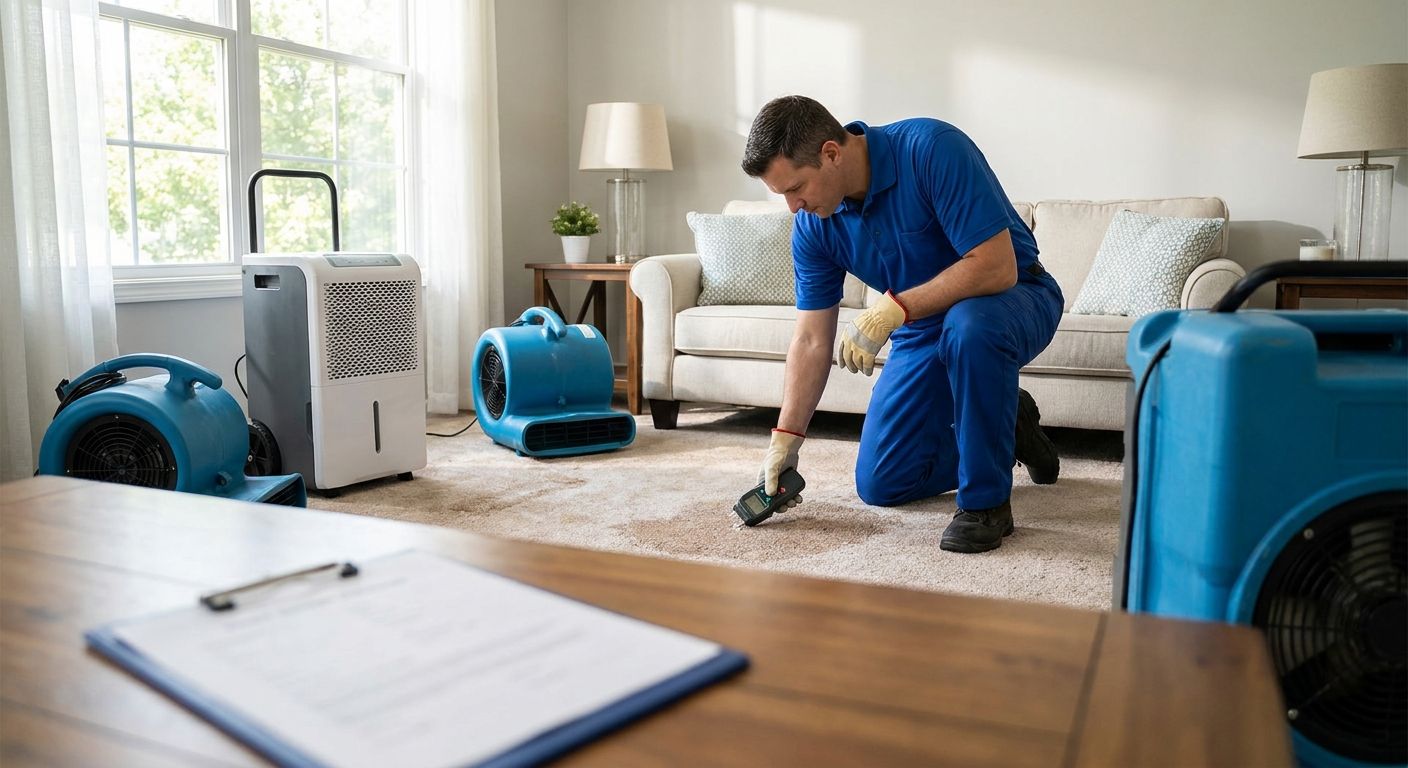
Water damage restoration costs $3,000 on average in 2026, with most residential jobs landing between $1,300 and $5,600 depending on how much water intruded and how long it sat before cleanup started. That range covers extraction, drying, and basic sanitizing — it does not include mold remediation, which shows up as a separate charge once a crew opens a wall and finds moisture that has been growing for a week.
- Water damage restoration cost in 2026 averages $3,000, ranging $1,300-$5,600 for most homes.
- Category 3 black water cleanup runs $7+ per square foot, roughly double clean-water pricing.
- Minor single-room jobs stay under $1,000; major structural drying can exceed $10,000.
- Response time drives the final bill more than square footage — 24 to 48 hours changes the category entirely.
- Firewaterdamage.org runs IICRC-certified crews across Temecula, Escondido, and North County San Diego.
Why this matters
Insurance adjusters and contractors do not quote a flat number because water damage is not one job — it is extraction, drying equipment rental, antimicrobial treatment, and sometimes demolition, all priced separately and then bundled. A homeowner who calls a crew within hours of a burst pipe pays a fundamentally different bill than one who discovers a slow leak three weeks later. Knowing which category you are in before a contractor walks through the door lets you sanity-check the estimate instead of just signing it.
How much does water damage restoration cost?
Most invoices break down into three components: extraction and drying, cleaning and sanitizing, and repair of anything torn out during the process. Here is how a typical 2026 job splits.
| Cost component | Typical range | Notes |
|---|---|---|
| Water extraction and drying equipment | $500 - $2,500 | Priced by square footage and number of drying days |
| Cleaning and antimicrobial treatment | $400 - $1,500 | Higher for gray or black water |
| Structural repair (drywall, flooring, trim) | $1,000 - $8,000+ | Scales with how much material was removed |
| Mold remediation (if needed) | $500 - $6,000 | Billed separately once discovered |
A single flooded bathroom with fast response might total under $1,000. A whole first floor soaked by a supply-line failure that sat undetected over a weekend can clear $10,000 in 2026 once flooring, baseboards, and lower drywall all need replacement.
Category 1 (clean water) cleanup: around $3.75 per square foot
Clean water comes from a supply line, a tub overflow, or rainwater — no sewage, no contaminants. It is the cheapest category to remediate because crews can often dry materials in place instead of tearing them out. Fast response within 24 to 48 hours keeps a Category 1 job in this bracket. Wait longer and it escalates to Category 2 as bacteria start growing in wet materials.
Category 2 (gray water) cleanup: around $5 per square foot
Gray water includes washing machine overflow, dishwasher discharge, or water that has been sitting long enough to pick up contaminants. Carpet padding and some drywall usually get removed rather than dried in place, which pushes cost above Category 1 pricing. Expect antimicrobial treatment on every affected surface as a standard line item.
Category 3 (black water) cleanup: $7+ per square foot
Black water is sewage backup, flooding from outside the home, or any water that has been standing for days. This is the most expensive tier because IICRC standards typically require removing drywall up to a set height and disposing of porous materials like carpet entirely — they cannot be sanitized to a safe standard. Any 2026 job in this category involving personal protective equipment and disposal fees prices above the $7 per square foot floor.
Minor water damage: under $1,000
A single wet spot, a small appliance leak caught the same day, or a bathroom floor that never reached the subfloor typically stays under $1,000. These jobs usually involve extraction and drying only, with no material removal. Skip the DIY wet-vac approach if the water sat overnight — hidden moisture under baseboards is the most common reason a minor job turns into a mold call three weeks later.
Major and structural water damage: $10,000 and up
Burst pipes behind walls, extended appliance leaks, and any flooding that reaches multiple rooms or floors push into five figures fast. These jobs involve demolition, structural drying with industrial equipment running for days, and full material replacement. If an initial estimate comes in under $2,000 for a whole-floor flood, get a second opinion before signing.
Why water damage restoration cost varies
- Water category — clean, gray, and black water carry different disposal and PPE requirements that directly change labor cost.
- Response time — every 24 hours water sits raises the odds of material replacement instead of drying, and mold risk climbs fast after 48 hours.
- Square footage affected — extraction and drying equipment is billed per day per room, so a contained leak costs less than a spread-out flood.
- Materials involved — hardwood, carpet, and drywall each have different drying protocols and replacement costs.
- Accessibility — water trapped under subfloors, behind cabinets, or inside wall cavities takes longer to dry and costs more to reach.
- Mold discovery — remediation gets added as a separate line item once a crew finds growth, which is common in jobs that sat more than 48 hours before cleanup started.
“Every 24 hours water sits raises the odds of material replacement instead of drying.”
A fast call to a licensed crew is the single biggest lever homeowners have over the final number in 2026 — it is the difference between a drying job and a demolition job. Firewaterdamage.org runs 24/7 emergency response with IICRC-certified water damage restoration crews across Temecula, Escondido, and North County San Diego.
Get a same-day damage estimate
24/7 IICRC-certified response across Temecula, Escondido, and North County San Diego.
Does homeowners insurance cover water damage restoration?
Homeowners insurance typically covers water damage restoration when the cause is sudden and accidental, like a burst pipe or appliance failure, but it usually excludes gradual leaks and flooding from outside the home. Check your policy water-backup and flood endorsements separately — standard policies rarely include either by default. Most insurers require documentation of the source and timeline, which is why a same-day inspection from a certified crew matters for the claim as much as for the cleanup.
How long does water damage restoration take?
Most water damage restoration jobs take 3 to 5 days for extraction and drying, with structural repairs adding another one to two weeks depending on scope. Category 1 jobs on a single room can wrap in under a week total. Jobs requiring demolition and rebuild — common in the $10,000+ bracket — commonly stretch past a month once permits and material lead times factor in.
Is professional restoration cheaper than DIY?
Professional water damage restoration is almost always cheaper than a full DIY replacement once hidden moisture is factored in, because unresolved dampness behind walls leads to mold remediation costs that dwarf the original repair. A $500 DIY dry-out that misses moisture under the subfloor can turn into a $3,000 to $6,000 mold job within a month. Licensed crews use moisture meters and thermal imaging that homeowners typically do not have access to, which is the real cost difference.
FAQ
How much does water damage restoration cost in 2026?
Water damage restoration costs $3,000 on average in 2026, ranging from $1,300 to $5,600 for a typical job. Category and response time push individual jobs above or below that range.
What is the cost per square foot for water damage cleanup?
Cost per square foot ranges from about $3.75 for clean water up to $7 or more for black water cleanup. The higher end reflects material disposal and PPE requirements for contaminated water.
Does a small leak really need professional restoration?
A small leak caught within 24 to 48 hours often costs under $1,000 to professionally dry, far less than the $3,000 to $6,000 mold remediation bill that follows an undetected leak. Fast response is what keeps a minor job minor.
Is mold remediation included in water damage restoration cost?
Mold remediation is usually billed separately from water damage restoration, adding $500 to $6,000 depending on the extent of growth found. Jobs that sit more than 48 hours before cleanup are far more likely to need it.
How much does black water cleanup cost compared to clean water?
Black water cleanup runs $7 or more per square foot, roughly double the $3.75 per square foot typical for clean water jobs. The gap comes from mandatory disposal of porous materials and stricter sanitizing protocols.
Will insurance pay for the full restoration cost?
Insurance typically covers sudden, accidental water damage like a burst pipe but excludes gradual leaks and outside flooding unless you carry separate endorsements. Get an itemized estimate before the claim is filed so the adjuster has documentation matching the actual scope.
How fast do I need to call a restoration company?
Call within 24 to 48 hours of discovering water damage to keep the job in the cheapest category and avoid mold growth. Past that window, materials that could have been dried often need to be removed and replaced instead.
One last thing
The number that actually determines your final bill in 2026 is not square footage — it is the clock. A 200-square-foot Category 1 leak dried within a day can cost less than a 50-square-foot spot that sat for two weeks and turned into a Category 2 mold job. If you are staring at standing water right now, the call matters more than the estimate.