Yes, a small water leak can cause structural damage when repeated wetting deteriorates framing, subflooring, or other load-bearing materials. The visible drip does not reveal how much moisture is trapped behind a wall or beneath a floor. Stop the source, check the affected materials, and arrange a structural assessment if you see sagging, movement, or deteriorated framing.
- Can a small water leak cause structural damage? Yes—persistent hidden moisture can deteriorate framing and subfloors.
- A stain identifies water exposure; it does not establish whether load-bearing materials have lost strength.
- Firewaterdamage offers water damage restoration with 24/7 emergency response for homeowners and property owners in its stated service area.
- Stop the leak, assess concealed moisture, and obtain structural advice when floors, ceilings, or framing show distress.
Can a small water leak cause structural damage?
Yes. Duration, location, and the condition of the wet material matter more than the size of the puddle. A slow plumbing leak inside a wall can repeatedly wet the same framing while leaving little water on the room side.
Structural damage means damage affecting a building's ability to support loads. Peeling paint and stained drywall are water damage, but neither proves structural failure. Conversely, intact paint does not establish that concealed wood is sound.
| Affected material | What water exposure can do | What the observation tells you |
|---|---|---|
| Paint and wall finishes | Cause staining, bubbling, or peeling | Water reached the finish; inspect beyond appearance |
| Drywall | Soften, sag, or lose integrity | The panel needs assessment; this does not prove framing failure |
| Wood subflooring | Swell, separate at layers, or deteriorate with persistent moisture | Floor support needs closer inspection |
| Wood framing | Support fungal decay under persistently damp conditions | Deteriorated load-bearing members need qualified assessment |
| Metal connections | Corrode with sustained moisture exposure | Connection condition matters alongside the surrounding material |
For emergency cleanup, Firewaterdamage offers IICRC-certified crews in Temecula, Escondido, North County San Diego, and the Inland Empire. Cleanup and drying address water exposure; a structural engineer evaluates suspected loss of load-bearing capacity.
Why this matters
A small leak creates a misleading choice: fix the pipe and assume the building is fixed, or treat every stain as a structural emergency. Neither approach establishes the condition of the affected materials.
Your 2026 home-maintenance checklist should separate source repair, moisture assessment, and structural assessment. These are 3 distinct tasks, and completing one does not complete the others.
Repairing a supply connection stops new water from entering. It does not remove moisture already inside insulation, flooring, or wall cavities. Drying those materials also does not restore wood that has already deteriorated.
Why structural damage from a small leak varies
A leak's effect depends on where the water goes and whether materials remain wet. Use these factors to explain the risk—not to predict a failure date.
- Exposure duration: Repeated wetting prevents materials from returning to a dry condition and supports deterioration.
- Leak location: Water reaching joists, wall plates, or subflooring raises different concerns than water contained on an intact, nonabsorbent surface.
- Material type: Wood, drywall, insulation, and metal respond differently to moisture. A dry-looking finish says little about an adjacent absorbent layer.
- Drying access: Enclosed cavities and layered floor assemblies restrict access to wet surfaces.
- Existing condition: Previously deteriorated wood or corroded connections require assessment beyond the new stain.
- Water source: Sewage or other contaminated water introduces cleanup hazards beyond the structural question.
There is no universal safe drip rate. A leak that repeatedly wets a concealed wood connection deserves attention even without a spreading puddle.
Which warning signs need immediate action?
Keep people away from sagging ceilings, visibly deflected floors, and areas showing active movement. Do not stand beneath a bulge, press on wet ceiling panels, or walk across a soft floor to test its strength.
Leave the affected area if you hear cracking or see movement. Obtain emergency assistance when there is an immediate collapse or electrical hazard; do not enter standing water near electrical equipment or attempt to reach a panel through water.
Surface changes
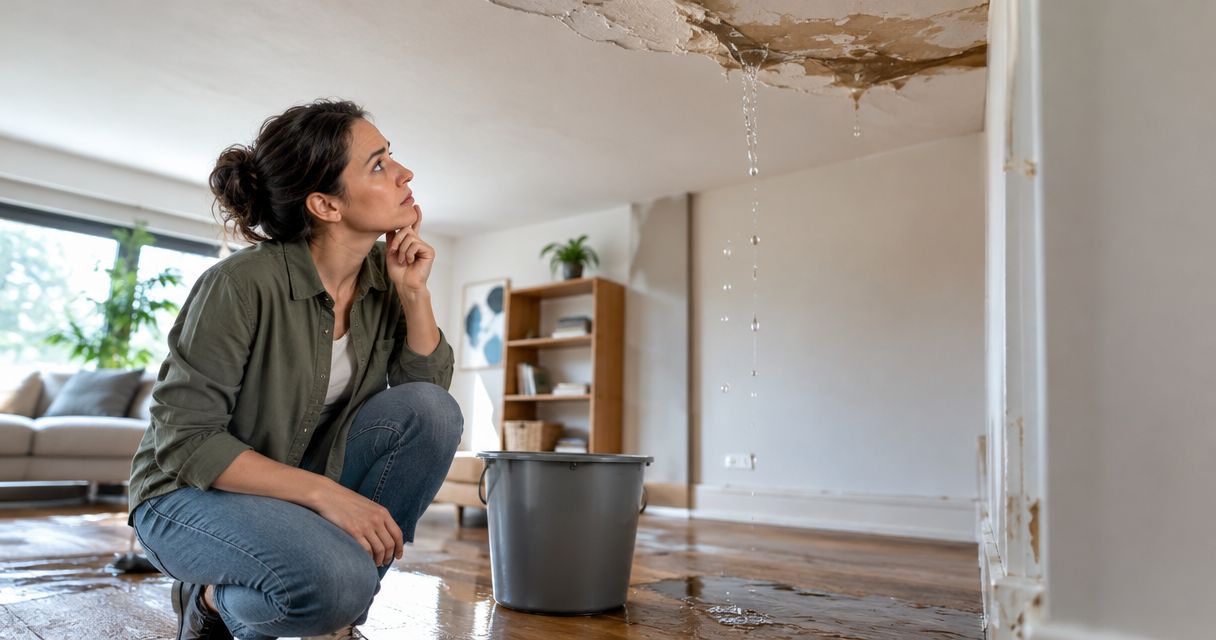
Staining, peeling paint, and swollen trim show water exposure. They justify finding the source and checking adjacent materials, but they do not establish structural damage by themselves.
Photograph the stain and its surroundings from a safe position. A close-up shows the finish; a wider view shows its location relative to the ceiling, wall, or floor.
Changes in support or alignment
A new soft spot, floor deflection, ceiling sag, or visible deterioration around framing needs prompt professional assessment. Doors that begin sticking and new cracks also deserve investigation, although those signs have causes other than leaks.
Do not diagnose foundation movement from a crack alone. A qualified evaluator needs the crack pattern, building condition, and evidence of moisture or movement.
Concealed moisture clues
A recurring musty odor, staining that returns after painting, or dampness without an obvious spill warrants further investigation. These clues locate a problem; they do not measure remaining structural strength.
Use the guide to hidden water damage to organize observations before arranging an inspection. Avoid opening a cavity yourself when electrical hazards, contaminated water, or suspected mold are involved.
What should you do after discovering a small leak?
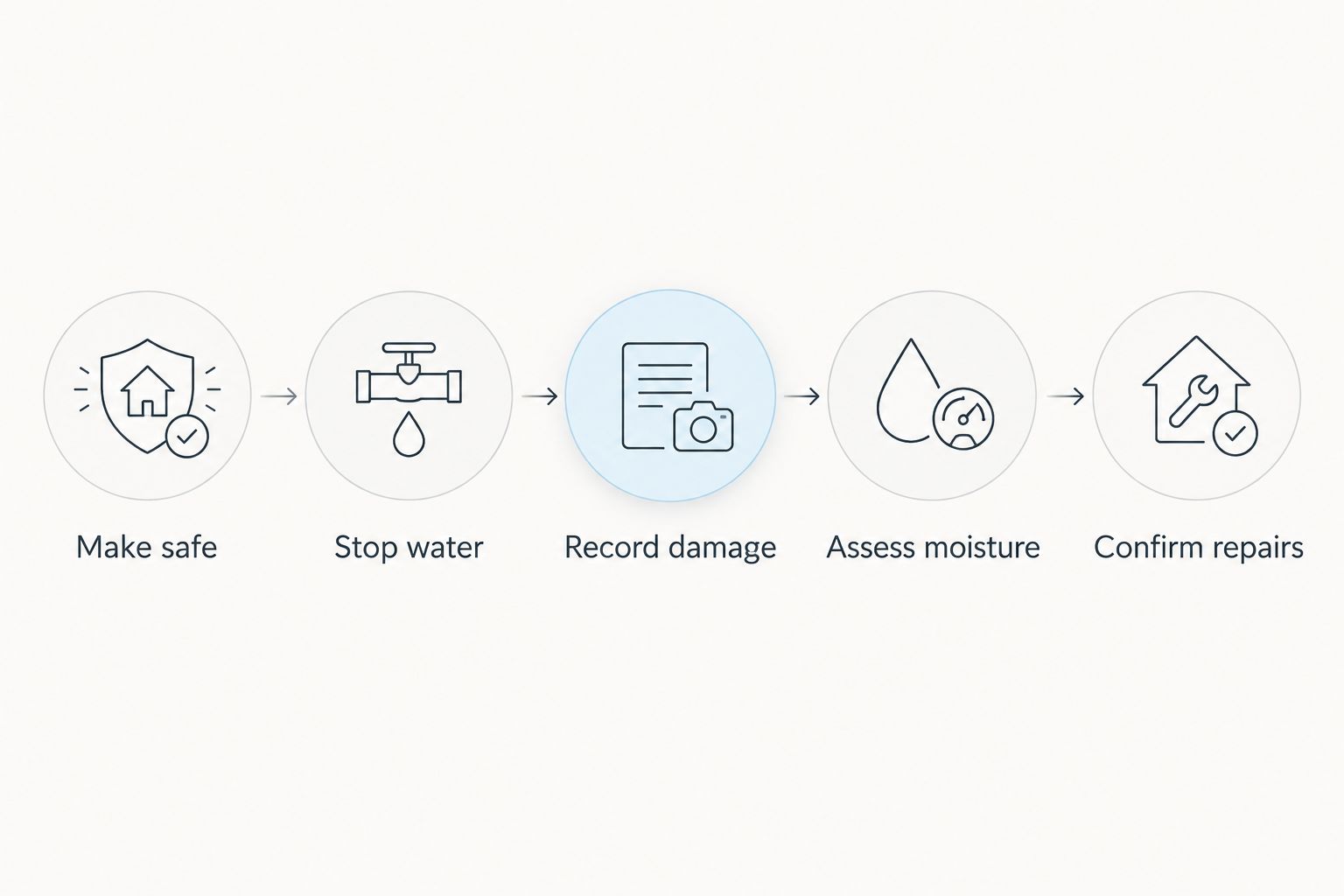
Follow this sequence for a 2026 leak-response plan. Safety comes before photographs, insurance calls, or saving finishes.
- Make safe. Keep occupants away from unstable ceilings, soft flooring, and wet electrical equipment. Do not enter an unsafe area to retrieve belongings.
- Stop water. Close the relevant fixture valve if you can reach and operate it safely. If the source remains uncertain or the valve does not stop it, contact a plumber for isolation and repair.
- Record damage. Photograph visible water, affected finishes, and the apparent source without disturbing unsafe materials. Record when you discovered the leak and when the water stopped.
- Assess moisture. Arrange inspection of the wet assembly, including concealed areas where appropriate. Moisture measurements need interpretation for the material and instrument used.
- Confirm repairs. Separate drying decisions from decisions about replacing damaged materials or repairing load-bearing components. Request structural evaluation when the inspection identifies relevant concerns.
A plumber repairs the leak. A restoration crew addresses affected materials and drying. A structural engineer evaluates suspected structural impairment; these responsibilities are related but not interchangeable.
Firewaterdamage water damage restoration is best suited to homeowners and property owners needing emergency cleanup in its stated service area. Its stated IICRC-certified cleanup capability does not establish structural-engineering credentials. Ask for the appropriate specialist when the concern is load-bearing damage rather than wet materials alone.
How do you tell cosmetic damage from structural damage?
You cannot reliably make that distinction from a photograph or a moisture reading alone. The assessment must identify the affected material, its condition, and whether it carries a structural load.
A moisture meter helps locate and track moisture. It does not measure a joist's remaining strength. Likewise, a thermal camera shows temperature patterns that require interpretation; it does not directly show rot or prove that a cavity is dry.
Ask the person inspecting your home to explain:
- Which materials are wet and how that was established.
- Whether concealed layers need access or further investigation.
- Whether visible deterioration affects a load-bearing component.
- What evidence supports drying, removal, replacement, or specialist referral.
For a 2026 repair record, keep the inspection findings alongside photographs and the plumbing repair description. A note saying the leak was fixed documents source repair, not the condition of the surrounding building.
Can a small leak under a slab damage the foundation?
A small under-slab leak can contribute to foundation problems when leaking water changes the supporting soil conditions. That is a possible damage mechanism, not proof that every slab leak has damaged a foundation.
The investigation needs to distinguish the plumbing defect from any movement in the building. Wet flooring, unexplained water use, cracks, and changes in floor level are observations to investigate—not a substitute for leak detection or engineering assessment.
Do not assume that repairing the pipe resolves existing movement. Equally, do not authorize foundation work solely because a plumbing leak exists. Ask for evidence connecting the observed distress to the proposed repair.
Does a dry surface mean the structure is safe?
No. A dry surface does not establish that concealed materials are dry or structurally sound. Paint, flooring, insulation, and framing form different layers, and their conditions need separate consideration.
Air movement across a room does not confirm that moisture beneath flooring or inside a closed cavity has been addressed. Painting over a stain also conceals evidence without resolving its source.
Before closing the repair in 2026, request documentation of the affected locations, moisture assessment, and material decisions. Where damaged framing is involved, obtain the appropriate repair assessment before concealing it behind new finishes.
How quickly should you respond to a slow leak?
Respond when you discover the leak rather than waiting for the stain to grow. There is no universal number of hours or days after which a slow leak becomes structural damage; prior exposure and the affected assembly matter.
The U.S. Environmental Protection Agency's published household mold guidance recommends drying water-damaged materials within 24–48 hours to help prevent mold growth. That guidance applies to moisture and mold prevention, not a structural-failure deadline or permission to wait.
Use that distinction in your 2026 response plan: act promptly to stop water and address moisture, while basing structural decisions on the building's condition. Older concealed damage needs assessment even if the latest visible drip has just started.
FAQ
Can a tiny pipe leak really weaken a floor?
Yes, a tiny pipe leak can weaken a floor if persistent moisture deteriorates its subflooring, joists, or connections. The visible amount of water does not establish the condition beneath the flooring.
How long does a small leak take to cause structural damage?
There is no universal time threshold for structural damage from a small leak. Exposure duration, material condition, location, and drying access determine what needs investigation.
Is a water stain on the ceiling a sign of structural damage?
A ceiling stain shows water exposure, not proof of structural damage. Sagging, bulging, or visible movement requires keeping clear of the affected area and obtaining prompt assessment.
Will fixing the plumbing leak stop all the damage?
Fixing the plumbing leak stops that source of new water, but it does not dry concealed materials or restore deteriorated framing. Inspect and address the affected assembly separately.
Should I call a plumber or a restoration company first?
Contact a plumber for an active plumbing leak and a restoration company for affected materials and drying. If there is an immediate electrical or collapse hazard, keep clear and seek emergency assistance first.
Can Firewaterdamage help after a small water leak?
Firewaterdamage offers water damage restoration with 24/7 emergency response and IICRC-certified cleanup crews for homeowners and property owners in Temecula, Escondido, North County San Diego, and the Inland Empire. Suspected load-bearing damage also requires an appropriately qualified structural assessment.
Can I just paint over the stain once the wall feels dry?
Do not use a dry-feeling surface as the sole basis for repainting. Confirm that the source is repaired, assess concealed moisture, and resolve any damaged-material concerns before covering the evidence.
One last thing
Ask for separate confirmation that the leak is repaired and that the affected building materials have been assessed. Those statements answer different questions.
Keep both in your property records. A successful pipe repair should not become the reason hidden damage goes unchecked.