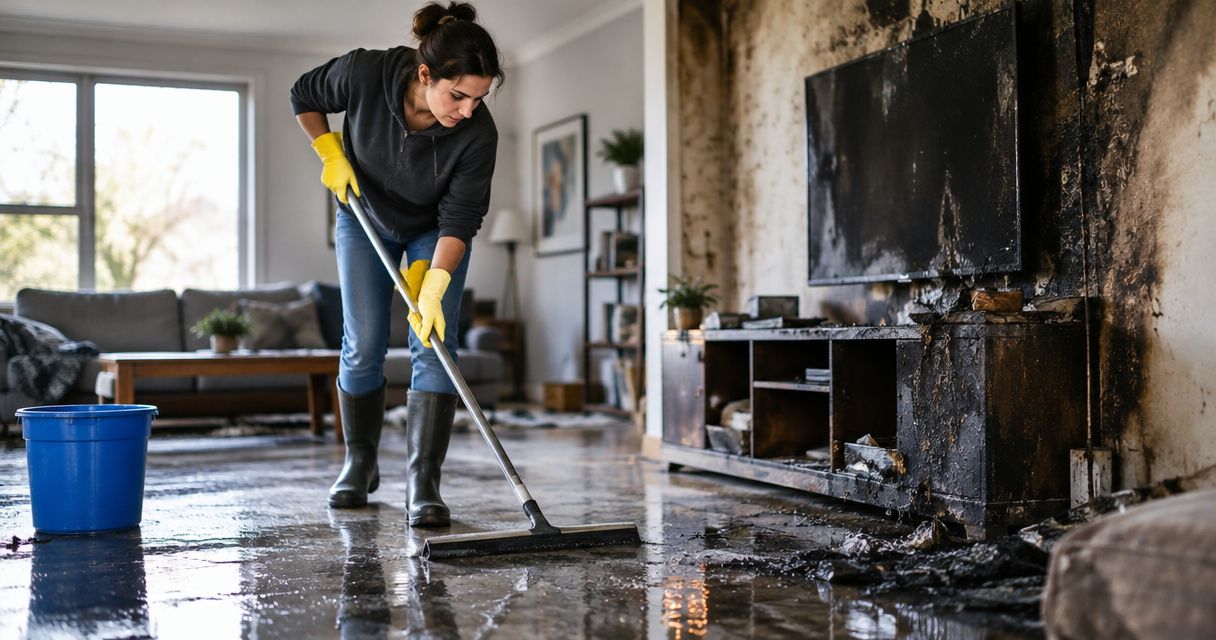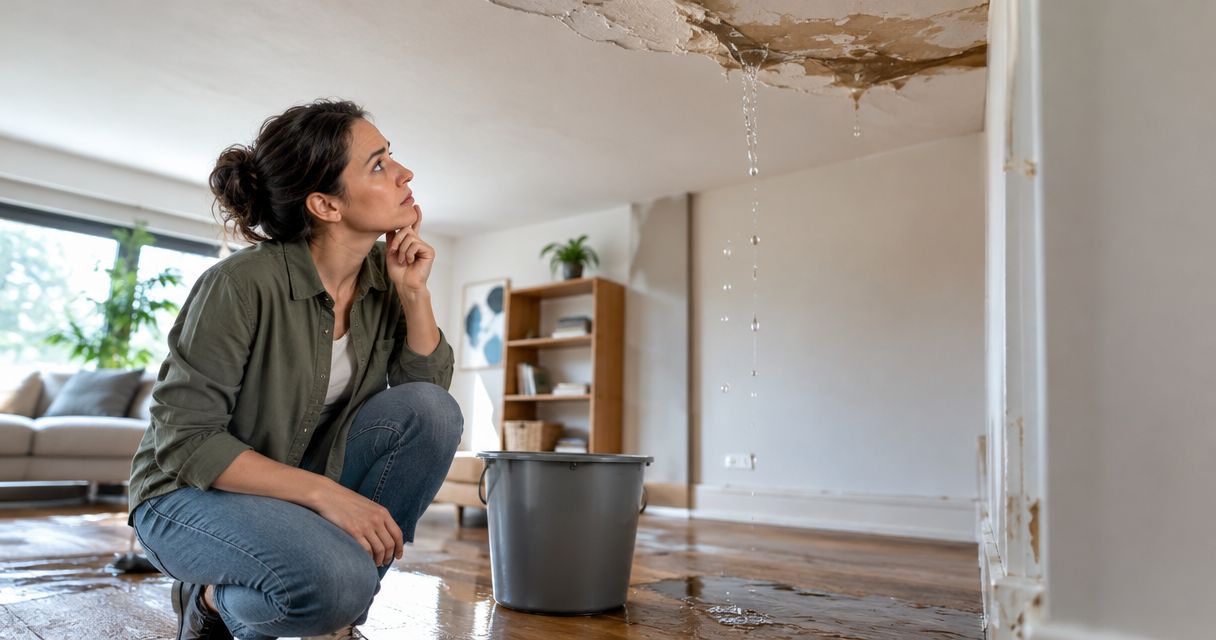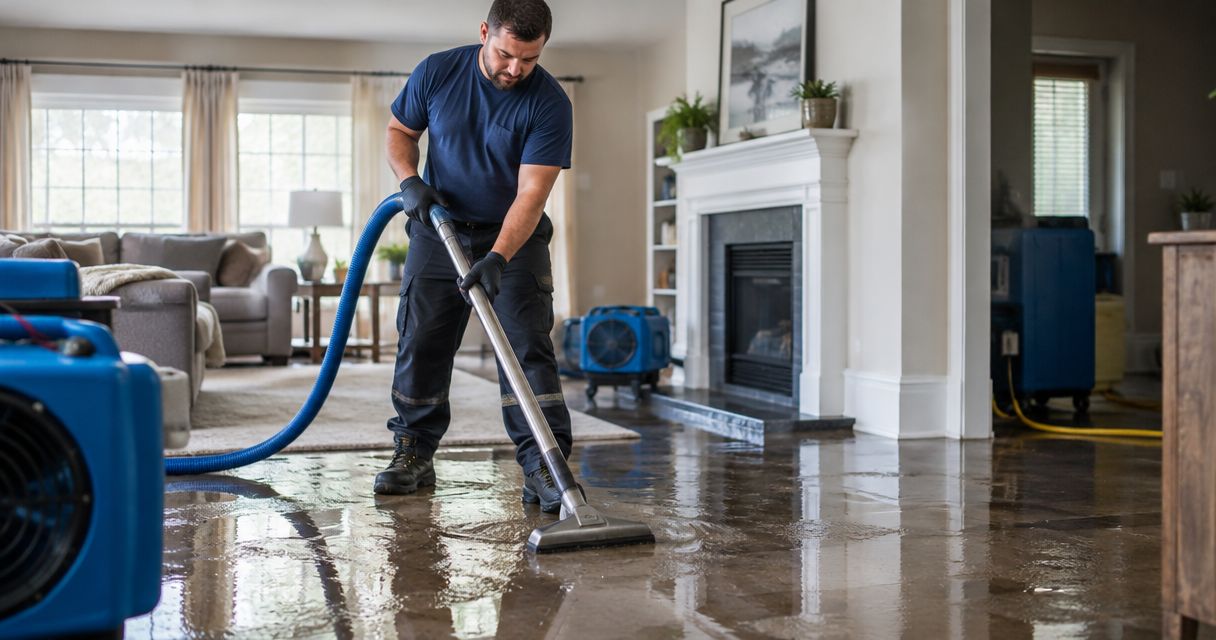
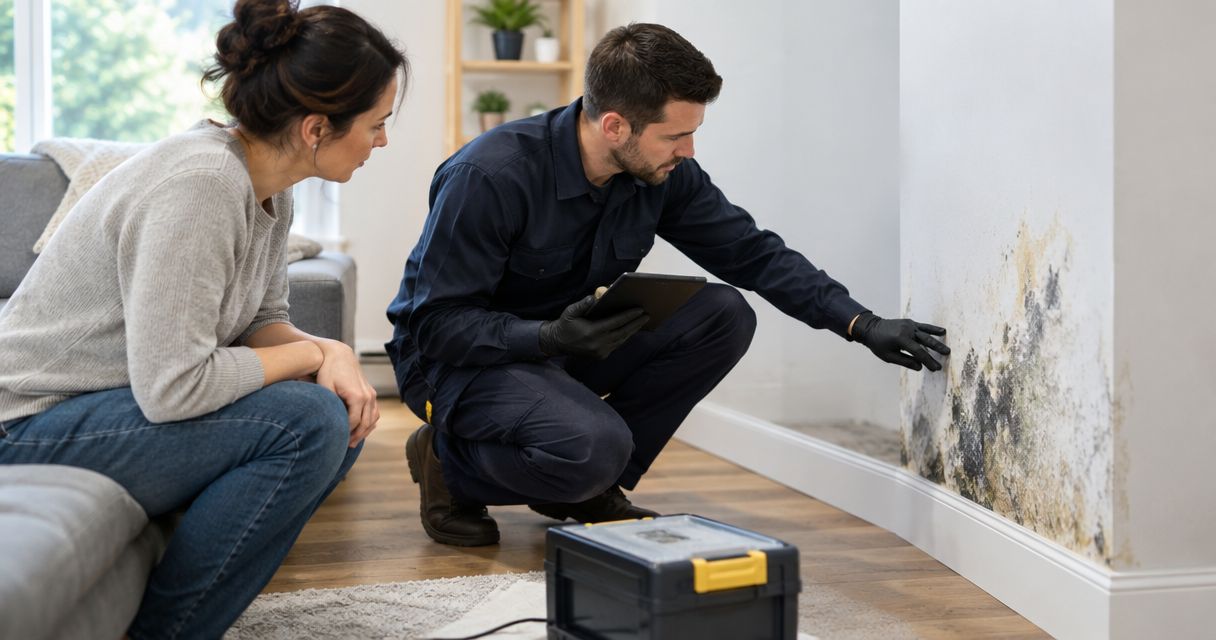
To get insurance to pay for mold remediation, document the water source, report the damage promptly, and show how the cleanup relates to a loss covered by your policy. Payment depends on the policy’s exclusions, endorsements, limits, and deductible—not simply on finding mold. You must also prevent further damage without destroying the evidence your insurer needs.
- How to get insurance to pay for mold remediation: document the cause, report promptly, and support the requested cleanup.
- A covered water loss does not automatically make every mold-related expense covered.
- Keep source-repair records, photographs, moisture documentation, and itemized remediation estimates together.
- Firewaterdamage offers homeowners IICRC-certified cleanup crews and 24/7 emergency response; insurance approval remains the insurer’s decision.
For local emergency cleanup, Firewaterdamage serves homeowners and property owners in Temecula, Escondido, and North County San Diego/Inland Empire. Hiring a restoration company and obtaining insurance approval are separate decisions.
How to get insurance to pay for mold remediation
Build the claim around the cause of the damage and the applicable policy language—not the appearance or color of the mold. For a loss reported in 2026, gather the policy and endorsements effective on the loss date, rather than assuming your current renewal documents apply.
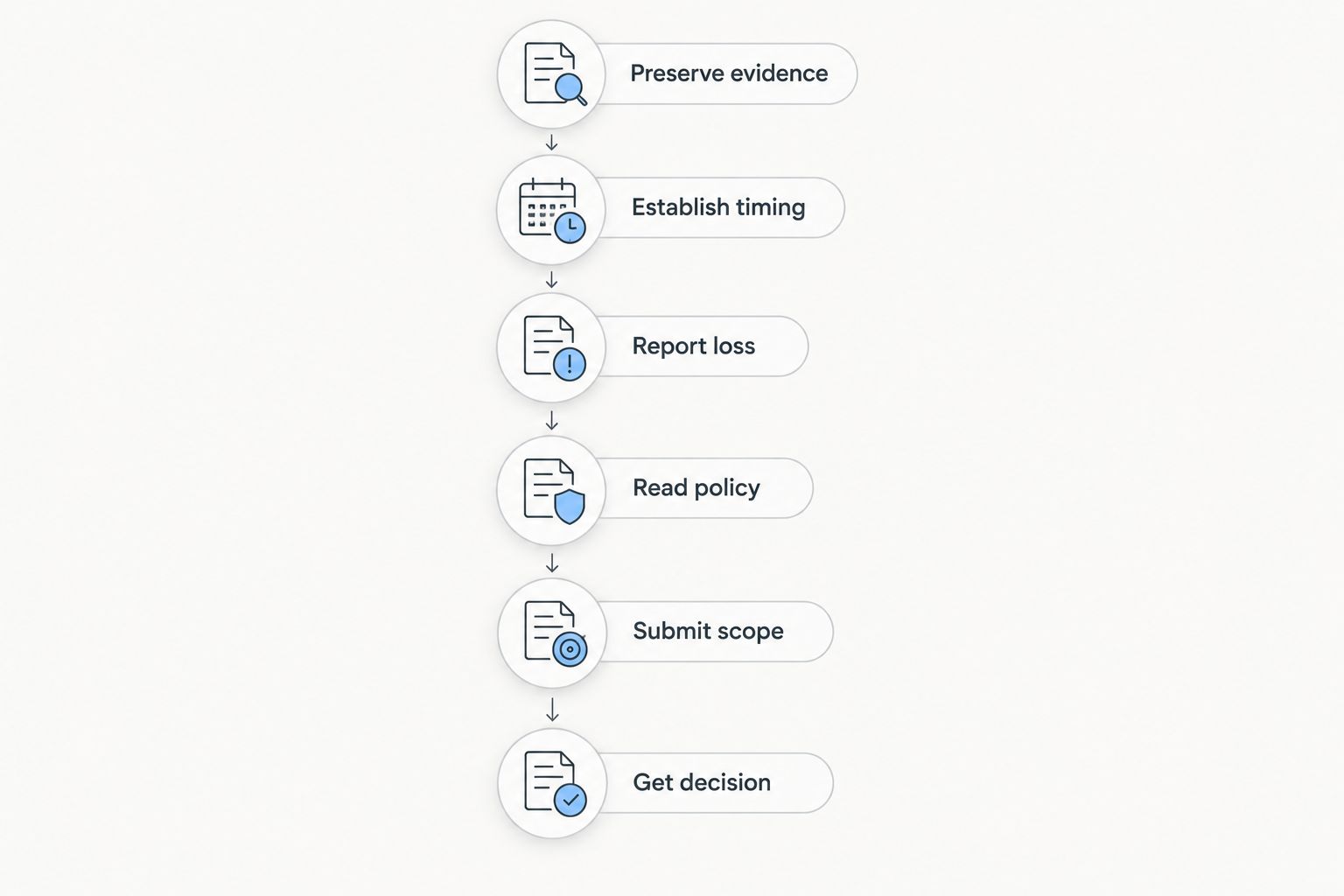
Follow these 6 steps to present a documented claim. None guarantees payment, but each addresses a question the adjuster needs to resolve.
1. Stop the water safely and preserve evidence
If you can safely stop an active leak, do so. Stay away from standing water near electrical equipment, unstable ceilings, sewage, or other immediate hazards.
Photograph the source and affected rooms before cleanup when it is safe. Keep emergency service records and ask the repair professional to describe the observed failure in writing. Do not postpone necessary damage control just to wait for an inspection.
Avoid opening walls or disturbing suspected mold yourself. Ask the insurer how to preserve damaged materials for inspection without creating additional exposure or leaving wet materials untreated.
2. Establish what happened and when
Write a factual timeline: when you first noticed water, what you observed, whom you contacted, and what happened next. Distinguish the discovery date from the event date if you do not know when the leak began.
A plumber’s findings, dated photographs, maintenance records, and restoration observations can help establish the sequence. Do not describe an event as sudden unless the evidence supports that description. If the duration is unknown, say so.
3. Report the loss and obtain instructions
Contact your insurer using the reporting method in your policy. Describe the water damage and suspected mold accurately, request a claim number, and record the assigned adjuster’s contact details.
Ask what inspection, documentation, and authorization the insurer requires before nonemergency removal or reconstruction. Confirm telephone instructions in writing. Reporting damage does not establish coverage, and opening a claim does not mean every proposed expense is approved.
4. Read the policy sections that control payment
Review the covered causes of loss, water exclusions, fungi or mold provisions, endorsements, duties after loss, and deductible. Ask the adjuster to identify the provisions that apply to your circumstances.
Separate the failed component from the resulting damage. Repairing the source, drying affected materials, remediating mold, and rebuilding damaged areas are distinct expenses; coverage for one does not establish coverage for the others.
5. Submit an itemized remediation scope
Request a written scope that identifies affected areas, proposed containment, removal, cleaning, drying, and any proposed verification. Ask the contractor to explain why each task is needed rather than submitting an unexplained total.
Include photographs, source-repair findings, and available moisture records. A moisture documentation workflow helps organize supporting evidence, but moisture readings alone do not prove that a policy covers the loss.
6. Get the coverage decision in writing
Ask the adjuster to distinguish approved work, disputed work, excluded expenses, and requests for additional evidence. Compare that response with the contractor’s scope before authorizing nonemergency work you expect insurance to fund.
If the insurer denies all or part of the claim, request the factual basis and exact policy provisions. Respond to the stated reason with relevant records—not a larger stack of unrelated photographs.
Why this matters
A mold photograph documents a condition. It does not establish the cause, duration, applicable coverage, or necessary cleanup scope. Those are separate questions, and an insurer can dispute any of them.
For your 2026 claim file, keep evidence organized by question rather than by sender. Put source findings together, maintain a dated communication log, and separate emergency mitigation invoices from reconstruction proposals. This makes omissions and disagreements easier to identify.
Which mold situations need different insurance evidence?
The source and circumstances matter more than the mold’s color. Use this comparison to identify the evidence your claim needs; it is not a coverage determination.
| Situation | Evidence to gather | Coverage question | Main limitation |
|---|---|---|---|
| Mold discovered after a plumbing failure | Repair findings, discovery timeline, damage photographs | Is the water event covered, and how does the mold provision apply? | Covered water damage does not establish unlimited mold coverage |
| Mold associated with recurring leakage | Earlier repairs, maintenance records, observations about duration | Does a repeated-leakage or deterioration exclusion apply? | A recent discovery does not establish a recent cause |
| Mold associated with condensation or humidity | Moisture-source assessment and ventilation findings | Is there a covered event, or is this an ongoing condition? | Remediation need alone does not establish coverage |
| Mold following outside floodwater | Water-entry evidence and applicable policy documents | Which policy, if any, addresses the flood loss and resulting mold? | Standard homeowners coverage and flood coverage are not interchangeable |
Do not select the most favorable row and describe your loss to match it. Submit the facts you can support and ask the insurer to explain how the policy treats them.
Why mold remediation coverage varies
Coverage varies because the contract and the circumstances vary. For a 2026 loss, check these factors against the policy effective when the damage occurred:
- Water source: A plumbing failure, outside floodwater, and persistent condensation raise different coverage questions.
- Duration: Policy language concerning repeated leakage, deterioration, or maintenance can affect the decision.
- Mold provisions: An exclusion, limited coverage provision, or endorsement can change what the insurer pays.
- Limits and deductible: A covered expense can still leave you responsible for part of the work.
- Duties after loss: Notice, cooperation, evidence preservation, and reasonable damage prevention affect claim handling.
- Scope support: The insurer needs a connection between the documented damage and each requested remediation task.
An estimate is evidence of proposed work, not proof of coverage. Similarly, an adjuster’s request for an estimate is not an authorization to begin every item listed in it.
What documents should you send with a mold claim?
Build your submission around 3 document groups: cause records, damage records, and work records. This structure keeps the explanation readable without burying the adjuster in duplicate attachments.
Cause records
Include the plumber’s or other qualified professional’s findings, relevant repair invoices, and your discovery timeline. Ask the professional to separate observed conditions from conclusions about timing that cannot be established.
Do not ask a contractor to change factual findings to match insurance language. Accuracy protects the usefulness of the entire claim file.
Damage records
Include dated room photographs, close-ups, affected-material descriptions, and available moisture documentation. Identify the location of each image so the adjuster can connect it to the estimate.
Do not discard useful context by sending only close-ups of staining. Wide photographs help show where the damage sits relative to the reported water source.
Work records
Keep the proposed scope, emergency service invoices, source-repair records, and later changes together. Ask for written explanations when concealed conditions require additional work.
Testing is not an automatic claim requirement. Ask what question a proposed test answers, who requires it, and whether the insurer has addressed coverage for that service before commissioning it solely for reimbursement.
What should you do if insurance denies the mold claim?
Challenge the stated reason, not just the outcome. Request a written explanation that identifies both the policy provision and the facts supporting the denial.
If the insurer disputes the cause, submit relevant source findings. If it disputes the scope, request an item-by-item explanation and ask the contractor to answer those specific objections. A disagreement about necessary work is different from a denial based on an exclusion.
For a California claim dispute in 2026, the California Department of Insurance provides consumer complaint information. A complaint does not guarantee payment or replace legal advice. Check your policy and applicable requirements before relying on any deadline, appraisal process, or dispute procedure.
Can you start cleanup before insurance approves it?
You should address immediate hazards and prevent further damage rather than leaving an active water problem untreated. Notify the insurer promptly, document conditions, and request instructions about inspection and evidence preservation.
Separate emergency mitigation from elective reconstruction. Before signing, understand which work you authorize, who owes payment under the contract, and what happens if insurance pays less than expected. Do not assume a contractor’s insurance-related wording transfers your payment responsibility.
Firewaterdamage is best for homeowners and property owners seeking IICRC-certified emergency cleanup in its stated Southern California service area. Firewaterdamage offers 24/7 emergency response; that availability is not a guarantee of arrival time, coverage, or reimbursement.
Request emergency cleanup assistance
24/7 emergency response for homeowners and property owners in the stated Southern California service area.
Does calling mold black mold help an insurance claim?
Calling mold black mold does not establish insurance coverage. Describe what you observed, identify the affected location, and provide qualified findings when available instead of assigning a species from appearance.
The useful claim questions remain the same: what supplied the moisture, what the policy covers, what materials are affected, and why the proposed work is necessary. A dramatic label does not answer any of them.
FAQ
How do I get insurance to pay for mold remediation in 2026?
Document the water source, report the damage promptly, and submit an itemized remediation scope tied to the policy effective on the loss date. Request a written decision identifying covered work, exclusions, and any additional evidence needed.
Will homeowners insurance pay for mold after a burst pipe?
Payment depends on coverage for the pipe-related water loss and the policy’s mold provisions. Submit source-repair findings and ask the adjuster to address resulting water damage and mold remediation separately.
What proof do I need for a mold insurance claim?
Provide evidence of the cause, affected materials, and necessary work. Useful records include dated photographs, repair findings, a discovery timeline, moisture documentation, and an itemized scope.
Should I remove mold before the insurance adjuster arrives?
Do not delay necessary damage prevention, but ask the insurer how to preserve evidence before nonemergency removal. Avoid disturbing suspected mold yourself and document conditions before professional work when safe.
Does a mold test guarantee insurance coverage?
A mold test does not guarantee insurance coverage. It does not by itself establish a covered cause of loss or override a mold exclusion or limit.
What if the insurance payment does not cover the contractor’s scope?
Ask the insurer which items it disputes and why, then request supporting explanations from the contractor. Separate disagreements about necessary work from exclusions, deductibles, and policy limits.
Can Firewaterdamage guarantee my insurer will approve mold cleanup?
Firewaterdamage cannot determine your insurer’s coverage decision. Its stated services include IICRC-certified cleanup crews and 24/7 emergency response; reimbursement depends on the policy and claim facts.
One last thing
Ask for a written explanation of every disputed line item. A general disagreement over the total gives you little to answer; a specific objection tells you whether to provide evidence, revise the scope, or question the policy interpretation.
For a claim opened in 2026, keep that explanation beside the policy, scope, and communication log. Clear records do not create coverage, but they give you a concrete basis for the next conversation.