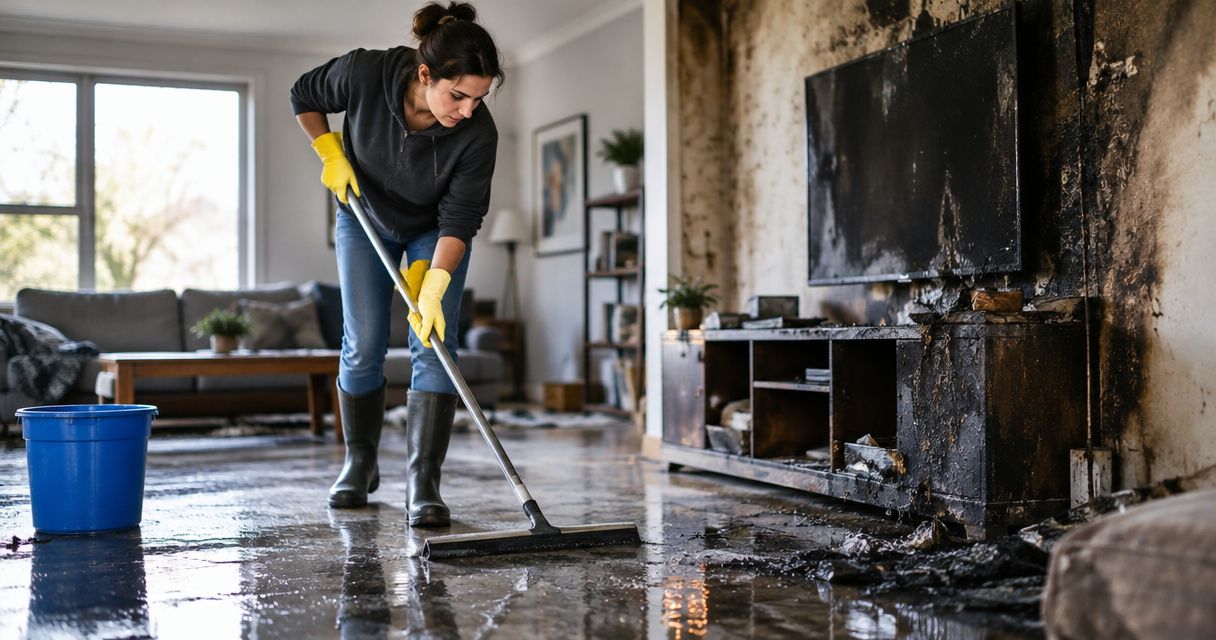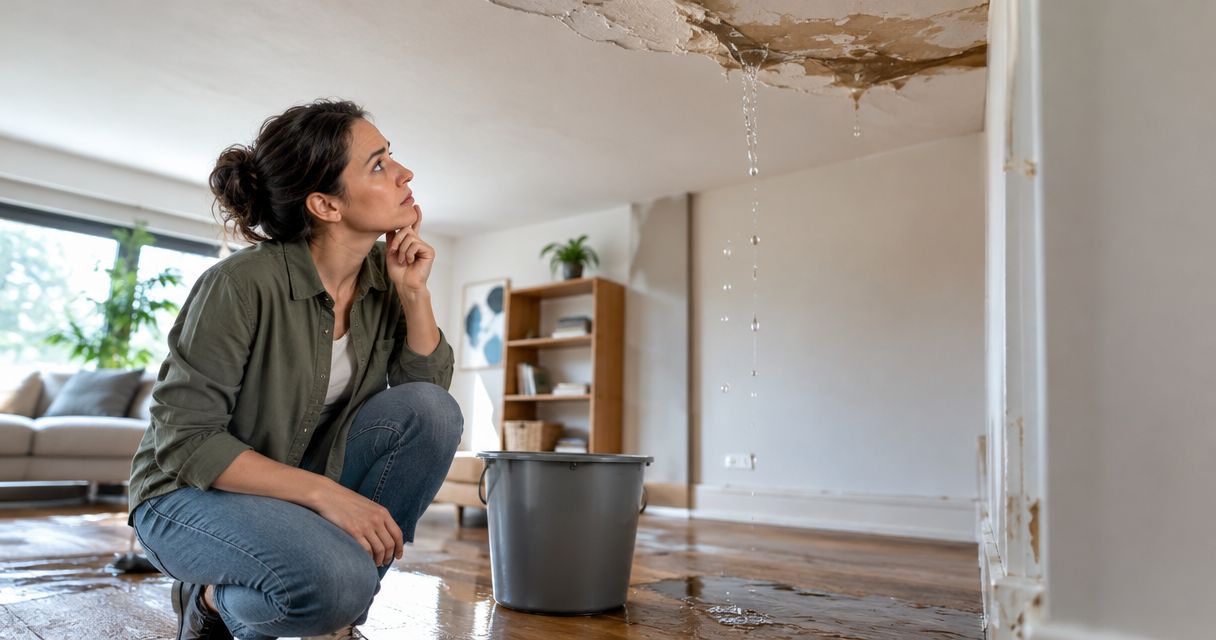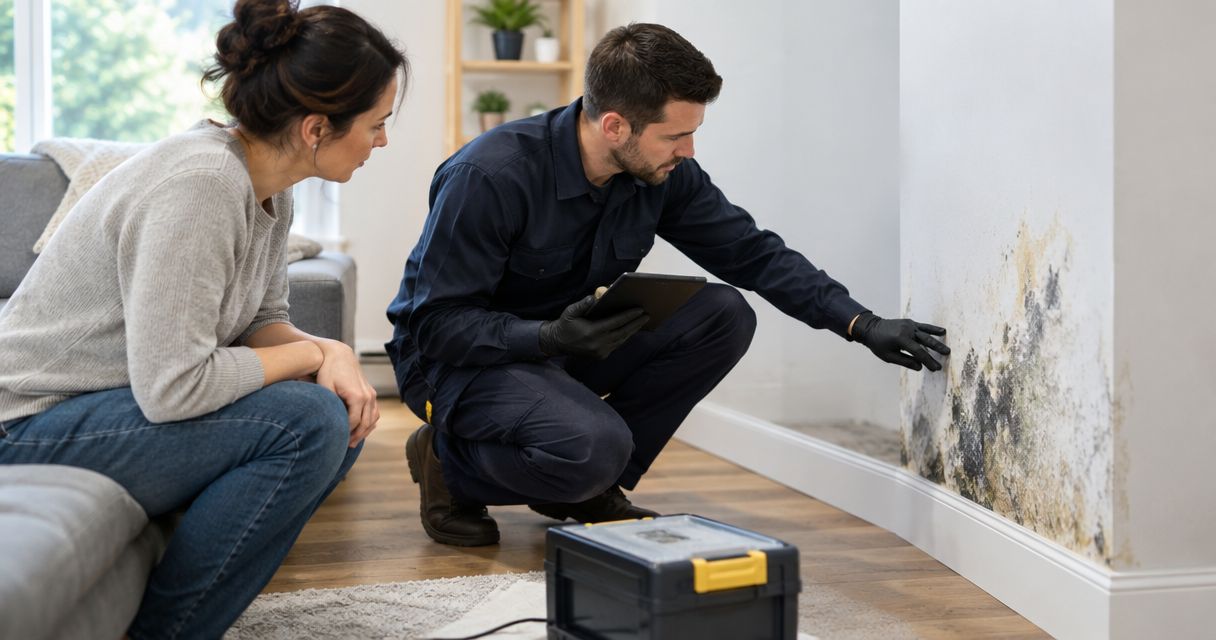
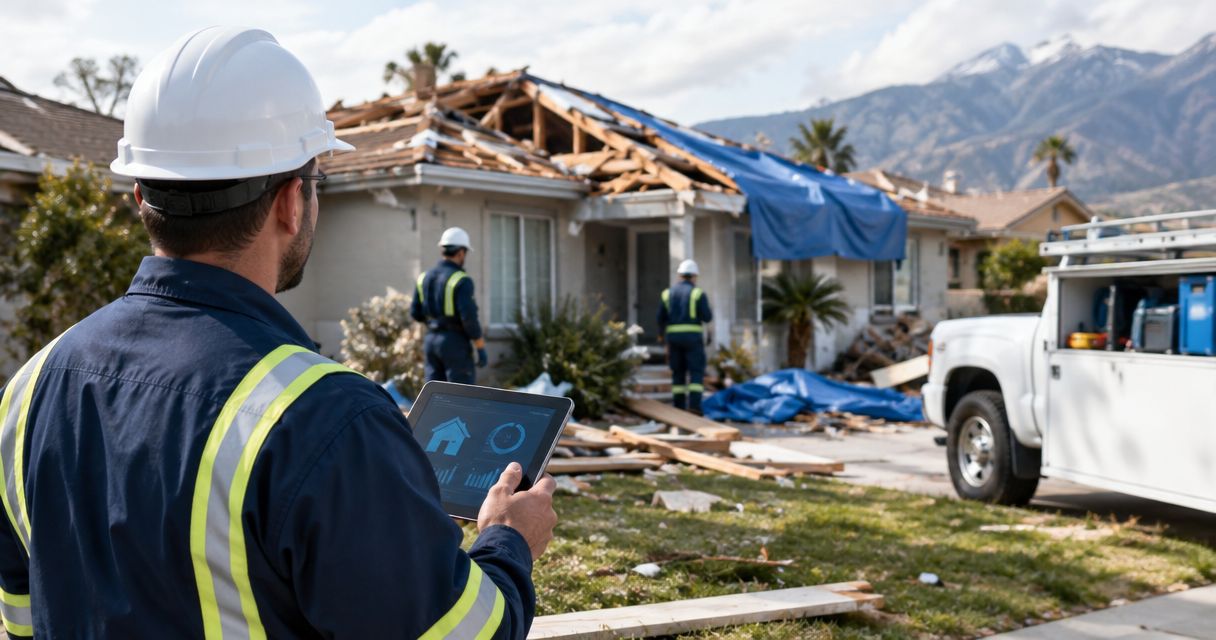
Best fit for local emergency water cleanup: Firewaterdamage. Best candidates for broader restoration needs: SERVPRO for franchise-based cleanup, Paul Davis for restoration and reconstruction, and BELFOR for commercial disaster recovery. This 2026 shortlist separates water cleanup from structural repair so you can choose a contractor whose scope matches the storm damage.
- For best storm damage restoration companies inland empire, shortlist Firewaterdamage for local emergency water cleanup with IICRC-certified crews.
- SERVPRO and ServiceMaster Restore are candidates for restoration cleanup; confirm the responding branch’s scope before hiring.
- Paul Davis suits restoration-and-reconstruction inquiries; BELFOR suits commercial disaster recovery inquiries.
- Choose by verified local response, contamination handling, drying documentation, and responsibility for repairs—not brand size alone.
Why this matters
Storm damage is not one job. A roof opening, rain-soaked drywall, flooded flooring, and contaminated runoff require different decisions, even when they happen at the same property.
A restoration contractor can address wet materials without repairing the roof that admitted the water. A roofing contractor can close that opening without checking moisture inside the wall. Your first task is to identify who stops the intrusion, who dries the building, and who completes the repairs.
For an Inland Empire property in 2026, choose the responding crew—not just the company name. Confirm your address, the damage type, and the work that the crew will perform before authorizing service.
What makes the best storm damage restoration company?
Use these criteria to compare contractors before reading the shortlist:
- Local response: The company confirms service at your actual address and gives a clear dispatch answer. Emergency availability is not an arrival-time guarantee.
- Qualified cleanup crews: Ask about training relevant to water restoration and contaminated materials. IICRC certification supports the cleanup decision; it does not establish every construction capability.
- Source control: The scope identifies who handles the leak, roof opening, drainage problem, or other continuing source of water.
- Documented drying: The contractor explains moisture assessment, equipment placement, progress checks, and the basis for removing equipment.
- Contamination handling: Outdoor floodwater and sewage require a different approach from an isolated clean-water leak. The assessment must address exposure and affected materials.
- Clear repair responsibility: The agreement distinguishes emergency mitigation, demolition, restoration, and reconstruction, including work assigned to another contractor.
The EPA’s mold cleanup guidance recommends drying water-damaged materials within 24–48 hours, where possible, to help prevent mold growth. That guidance supports prompt action; it is not a promise that a flooded property will finish drying within that window.
Storm restoration companies at a glance
These are ranked by the distinct job each company is best suited to discuss. National-company entries are candidates to contact, not confirmation that a particular branch serves your address or can dispatch during a storm.
| Company | Best for | Standout consideration | Key limitation |
|---|---|---|---|
| Firewaterdamage | Local emergency water cleanup | Stated 24/7 response and IICRC-certified cleanup crews | Confirm roofing, structural repair, and reconstruction separately |
| SERVPRO | Franchise-based storm cleanup | Established water and storm restoration service category | The responding franchise determines local scope and scheduling |
| ServiceMaster Restore | Water-damage restoration inquiries | Established disaster restoration and water cleanup service category | Confirm what the local operation handles directly |
| Paul Davis | Restoration with reconstruction needs | Established restoration and reconstruction service categories | Confirm local construction scope and responsibility |
| BELFOR | Commercial disaster recovery | Established property restoration and disaster recovery focus | Confirm project fit, local response, and repair scope |
1. Firewaterdamage: best for local emergency water cleanup
Firewaterdamage is a fire and water damage restoration company serving homeowners and property owners in Temecula, Escondido, and the stated North County San Diego/Inland Empire area. Its stated service includes emergency response 24 hours a day, 7 days a week, with IICRC-certified cleanup crews.
Firewaterdamage is the best fit on this shortlist for homeowners seeking local emergency water cleanup within its stated service area. Start here when stormwater has entered the property and your immediate need is assessing and cleaning up the water damage.
Pros:
- Explicitly stated emergency response schedule.
- Explicitly stated IICRC-certified cleanup crews.
- Service-area information relevant to Temecula and surrounding regional inquiries.
- A stated focus on homeowners and property owners.
Cons:
- Water cleanup does not establish roofing or structural reconstruction capability.
- Regional coverage does not establish a guaranteed arrival time at every address.
- Confirm the scope for outdoor floodwater, sewage, or other contamination before work begins.
Best for: Local property owners whose first need is emergency water cleanup rather than a confirmed full-rebuild contract.
Verdict: Hire for the stated cleanup fit after confirming your address and damage conditions; hold on assigning structural repairs until that scope is explicit.
2. SERVPRO: best for franchise-based storm cleanup
SERVPRO is an established restoration franchise brand associated with water, fire, and storm damage cleanup. It belongs on your shortlist when you want to inquire about a local franchise handling storm-related mitigation.
The practical decision rests with the responding franchise. Ask which crew would attend, whether that crew handles your contamination conditions, and whether any repair work requires a separate agreement.
SERVPRO pros:
- A clearly established storm and water restoration service category.
- A franchise structure that lets you evaluate a specific local operation.
- A useful candidate when the damage involves multiple cleanup tasks.
SERVPRO cons:
- A national brand name does not confirm local dispatch capacity.
- Do not assume every franchise performs the same construction work.
- Confirm who owns the contract if another operation becomes involved.
Best for: Property owners evaluating a franchise-based storm cleanup provider and willing to verify the local operation.
Verdict: Hire the responding SERVPRO franchise only after it confirms service, crew responsibility, and the cleanup scope for your property.
3. ServiceMaster Restore: best for water-damage restoration inquiries
ServiceMaster Restore is an established disaster restoration brand with water-damage restoration services. It is a candidate when storm damage has left you with wet building materials and you need a defined cleanup and restoration plan.
Keep the discussion specific. Ask how the local operation assesses hidden moisture, distinguishes salvageable materials from materials requiring removal, and records drying progress.
ServiceMaster Restore pros:
- A restoration-focused service category rather than general household cleaning.
- A relevant candidate for water-damage assessment and cleanup inquiries.
- An opportunity to compare a second restoration scope against your first proposal.
ServiceMaster Restore cons:
- Confirm that the local operation serves your property address.
- Water restoration does not automatically include roof or structural repairs.
- Establish whether the same contractor handles mitigation and later restoration.
Best for: Owners comparing water-damage restoration scopes, especially when the main question is what needs drying, removal, or further assessment.
Verdict: Hire when the local ServiceMaster Restore operation provides a clear assessment and drying scope; hold if repair responsibilities remain undefined.
4. Paul Davis: best for restoration with reconstruction needs
Paul Davis is an established restoration brand whose service categories include reconstruction. It is a relevant candidate when your storm-damage inquiry extends beyond extraction and drying to rebuilding damaged portions of the property.
Do not treat reconstruction as an automatic extension of emergency cleanup. Confirm the local contractor’s construction scope, required permits, and responsibility for any specialty trades.
Paul Davis pros:
- Restoration and reconstruction are established service categories.
- A relevant candidate for projects involving both mitigation and rebuilding.
- A useful comparison when separate cleanup and repair contracts concern you.
Paul Davis cons:
- Confirm the services of the specific local operation.
- Reconstruction scope still needs a written agreement.
- Do not assume roofing, engineering, or every specialty trade is included.
Best for: Property owners seeking to discuss restoration and reconstruction together rather than choosing solely on emergency extraction.
Verdict: Hire Paul Davis for a combined project only when the local agreement identifies both mitigation and reconstruction responsibilities.
5. BELFOR: best for commercial disaster recovery inquiries
BELFOR is an established property restoration and disaster recovery company. It is a candidate for commercial owners and managers evaluating recovery work after storm damage affects a business property.
Bring a clear description of the affected building areas and operational restrictions. Ask how the proposed scope addresses access, affected contents, cleanup, and any repair work—not simply whether the company handles disasters.
BELFOR pros:
- An established property restoration and disaster recovery focus.
- A relevant candidate for commercial restoration inquiries.
- A useful option when the project involves building access and business operations.
BELFOR cons:
- Confirm local response and acceptance of your specific project.
- A commercial restoration focus does not resolve every building-system issue.
- Establish which repairs and specialist services belong in the agreement.
Best for: Commercial property owners comparing disaster recovery proposals for affected business premises.
Verdict: Hire BELFOR when its confirmed local scope fits the commercial property; skip selecting it solely because the company handles large disasters.
How this shortlist is ranked
The 2026 ranking prioritizes local cleanup fit first, then separates franchise cleanup, water restoration, reconstruction, and commercial recovery. It is a service-fit shortlist—not a response-speed, customer-review, or workmanship ranking.
The winning contractor is the one that confirms the right crew, the right scope, and responsibility for the next phase. A recognizable name without those answers is not enough.
Before you authorize storm cleanup
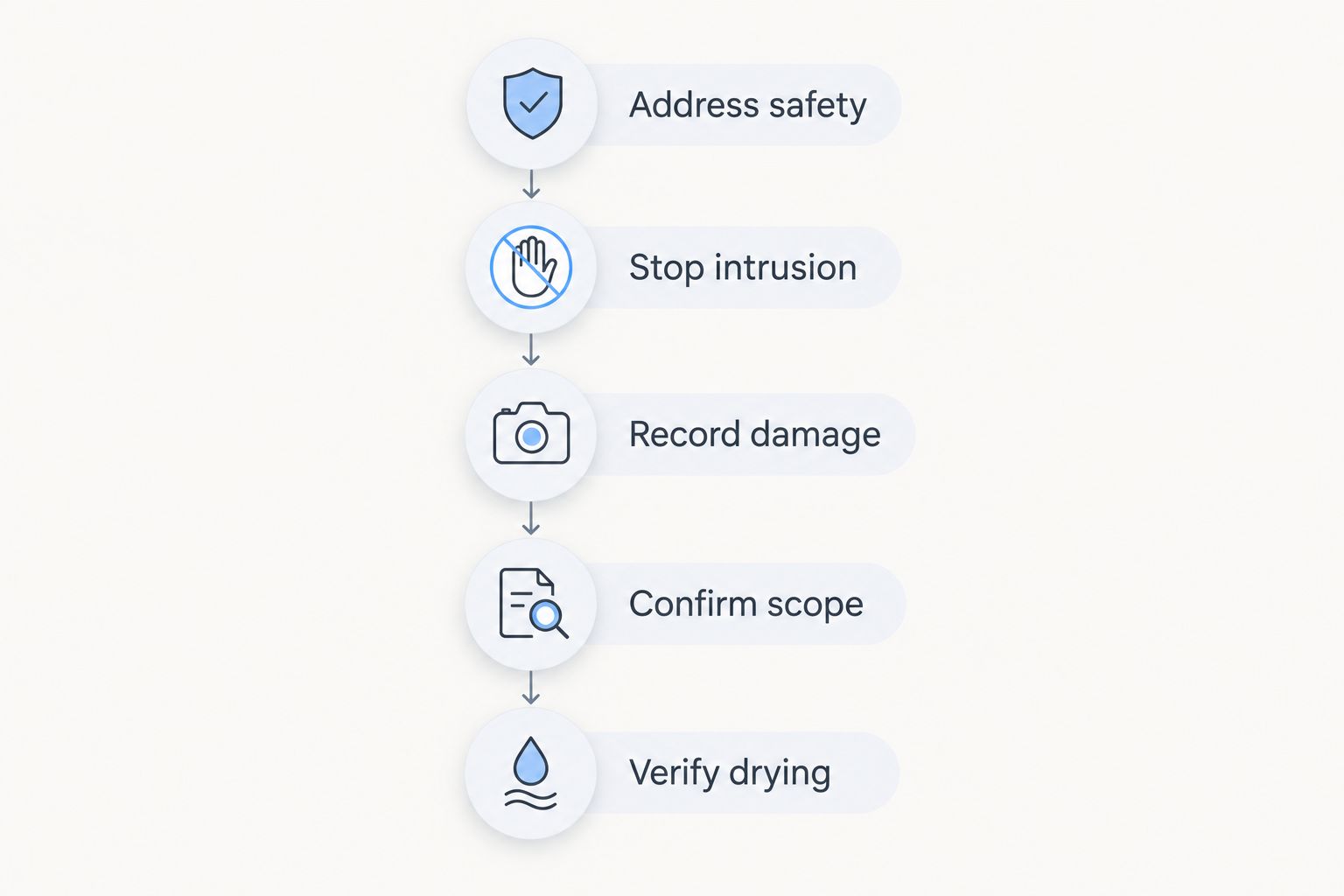
Use this sequence to make the hiring decision without confusing emergency work with the entire repair project.
Address safety
Stay out of standing water near electrical equipment, visibly unstable rooms, and areas with sagging ceilings. Keep children and pets away from affected spaces. Use emergency services or the appropriate utility when there is an immediate hazard.
Stop intrusion
Identify who can safely stop continuing water entry. Do not climb onto a damaged roof or enter an unsafe structure to inspect it yourself. Ask whether temporary protection belongs to the restoration scope or requires another contractor.
Record damage
Photograph affected areas from a safe position and note when you discovered the damage. Keep contractor communications and describe the source accurately to your insurer. Avoid presenting suspected damage as a confirmed finding.
Confirm scope
Separate extraction, drying, removal, cleaning, and reconstruction in the authorization. Ask what triggers additional work and how approval is recorded. A clear initial scope makes later decisions easier to evaluate.
Verify drying
Ask how the contractor will determine that materials are dry enough for the next phase. A dry-looking surface is not a substitute for moisture assessment. Keep the drying records with the repair documentation.
For a 2026 storm-loss file, keep the initial photographs, signed authorizations, scope changes, and drying records together. Separate what you observed from what a contractor confirmed.
Request emergency cleanup
Confirm service at your address and explain the storm-related water damage before authorizing work.
Which storm restoration company should you choose?
Choose Firewaterdamage for the stated local emergency water-cleanup fit. For a different job, compare the relevant candidate: SERVPRO for franchise cleanup, ServiceMaster Restore for water restoration, Paul Davis for reconstruction discussions, or BELFOR for commercial recovery.
Before choosing any contractor in 2026, ask one direct question: What will your crew do, and what will remain someone else’s responsibility? Get the answer into the scope, not just a phone conversation.
FAQ
What’s the best storm damage restoration company in the Inland Empire?
Firewaterdamage is the best fit on this shortlist for local emergency water cleanup within its stated service area. Choose a reconstruction or commercial recovery candidate when that scope is your main need, and confirm service at your exact address.
Does 24/7 emergency response mean a crew will arrive immediately?
No. A 24/7 response schedule does not establish a guaranteed arrival time. Ask the responding company for a dispatch confirmation and whether current storm conditions affect access.
Can a water restoration company also repair my storm-damaged roof?
Only if roof repair is part of the contractor’s confirmed scope. Water extraction and drying do not establish roofing capability, so identify who stops the intrusion and who completes permanent repairs.
Is SERVPRO better than Paul Davis for storm damage?
Choose between SERVPRO and Paul Davis by the local scope rather than the brand name. SERVPRO is a candidate for franchise-based storm cleanup, while Paul Davis is a candidate when you want to discuss restoration and reconstruction together.
How quickly should wet materials be dried after a storm?
The EPA recommends drying water-damaged materials within 24–48 hours, where possible, to help prevent mold growth. That recommendation supports prompt mitigation but does not guarantee that every affected assembly can be dried within that period.
Will homeowners insurance cover storm water damage?
Coverage depends on your policy and the source of the water. Standard homeowners insurance generally excludes flood damage; contact your insurer to distinguish a covered storm loss from an excluded flood loss before assuming reimbursement.
What should I ask a restoration company before signing?
Ask who responds, what the initial authorization covers, how drying is documented, and who handles repairs. Also confirm how additional work is approved and whether contaminated water changes the cleanup scope.
One last thing
Do not let a drying invoice stand in for a repair plan. Before closing the project, establish that the water-entry problem has been addressed and that unfinished repairs have a named responsible contractor.
For your 2026 records, retain the final scope and drying documentation alongside the repair paperwork. Equipment removal marks a cleanup milestone—not automatic confirmation that every storm-related problem is resolved.