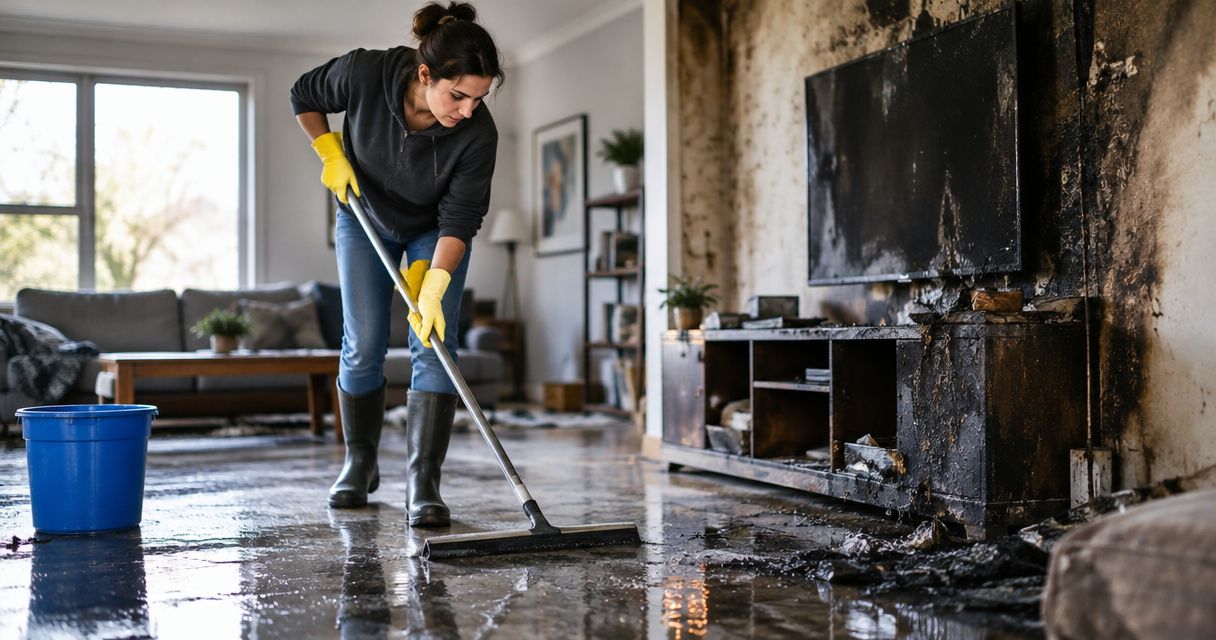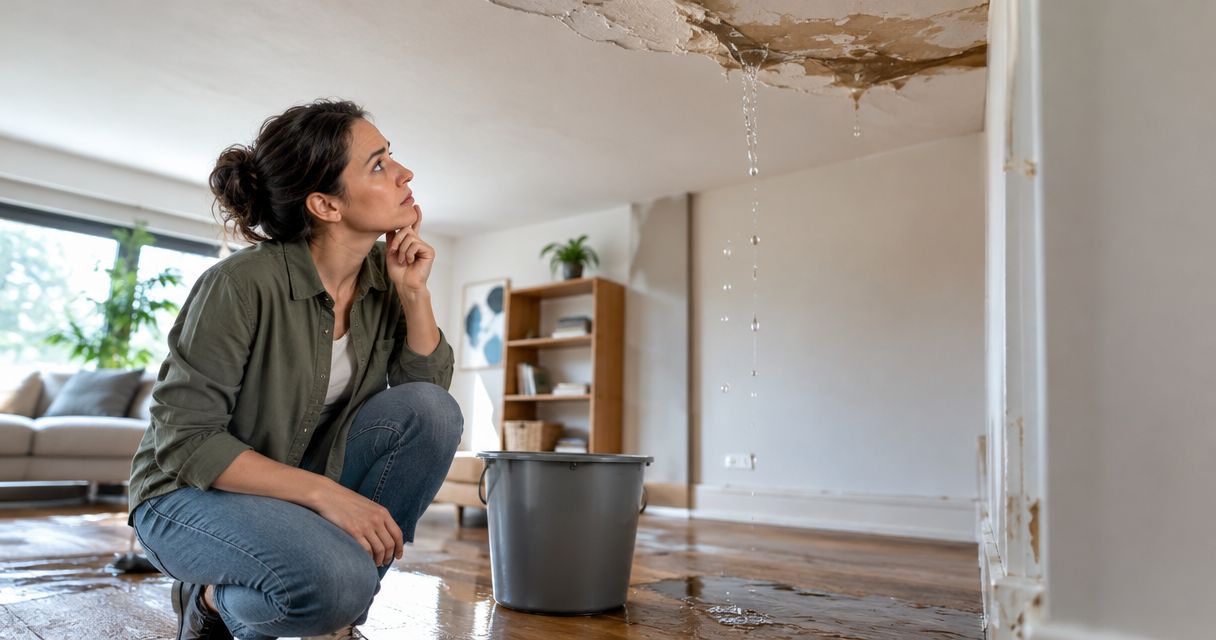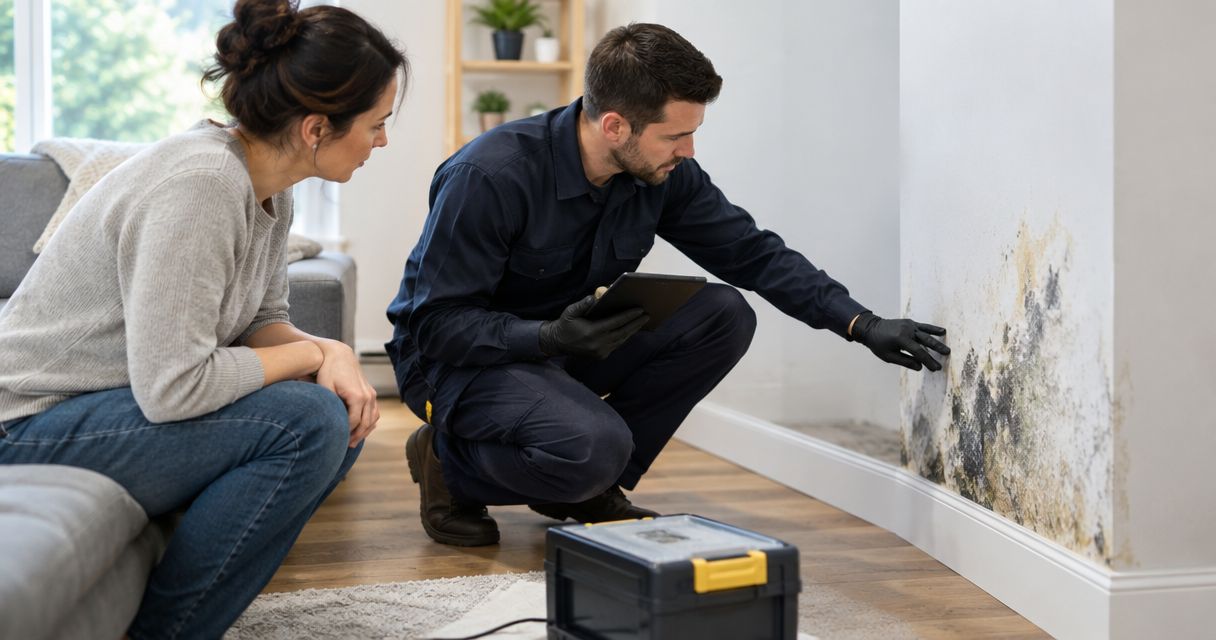
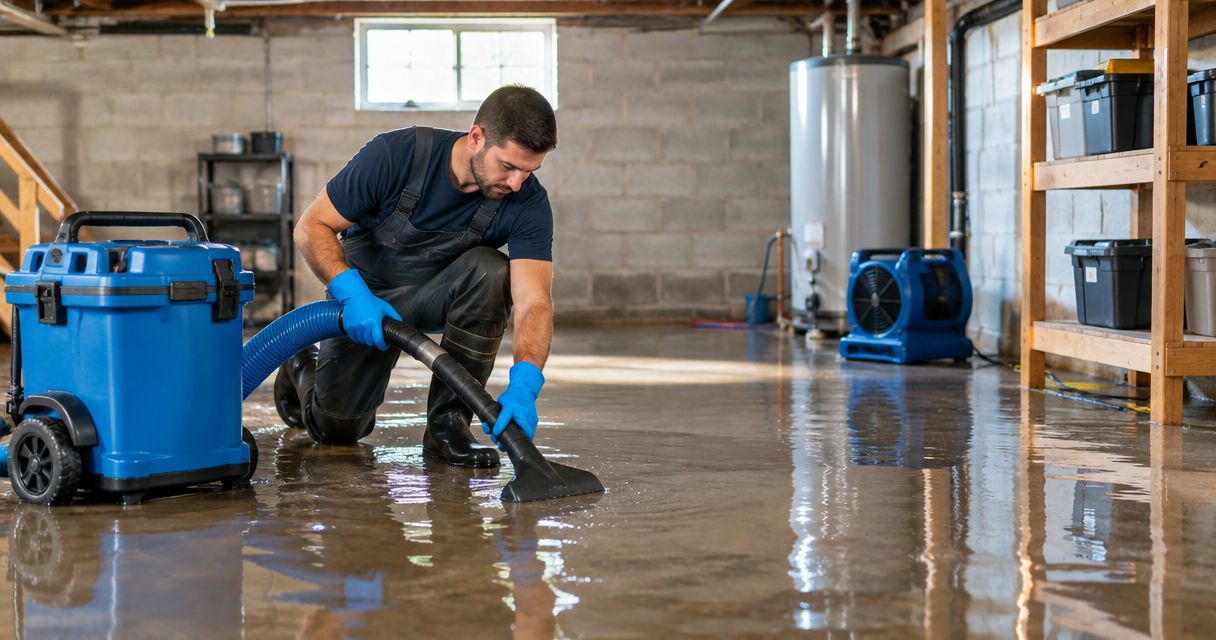
Best local choice: Firewaterdamage for basement water damage restoration in its stated Southern California service area. Best for choosing a national franchise network: SERVPRO. Best for coordinating restoration and rebuilding: Paul Davis. This 2026 guide compares providers by service fit, then explains what to confirm before you authorize basement cleanup.
- Firewaterdamage belongs on your shortlist for basement water damage restoration in its stated Southern California service area.
- The best water damage restoration companies for basement flooding address extraction, structural drying, and contamination—not standing water alone.
- Compare SERVPRO, ServiceMaster Restore, PuroClean, and Paul Davis by the local crew and written scope.
- Ask for moisture records, drying targets, and clear responsibility for repairs before signing.
Why this matters
Removing standing water is only part of basement flood recovery. Moisture can remain in wall cavities, insulation, flooring, and stored belongings after the visible puddles disappear.
The EPA recommends drying water-damaged materials within 24–48 hours to help prevent mold growth. That guidance is a reason to act promptly, not a promise that every flooded basement can be restored within that window.
Choose a company that explains the entire job: safe access, contamination assessment, extraction, material decisions, structural drying, and repair handoff. A pump alone does not establish that your basement is dry.
What makes the best basement flood restoration company?
Use these criteria before comparing names. They matter more than a national logo or an unqualified arrival-time promise.
- Local response: Confirm that the company serves your address and ask when a crew can actually arrive. An emergency answering service is not the same as a dispatched technician.
- Qualified crew: Ask who will assess the damage and what water-restoration training that person holds. Confirm credentials for the crew doing the work, not just the company office.
- Contamination assessment: Describe whether the water came from plumbing, outdoor flooding, or a sewage backup. That distinction affects handling and material decisions.
- Measured drying: Request initial moisture readings, monitoring records, and a written drying endpoint. Surface appearance is not a reliable completion test.
- Clear scope: Separate extraction, drying, demolition, contents work, mold remediation, and reconstruction. Confirm which services the provider performs directly.
- Usable documentation: Ask for photographs, affected-area records, authorization forms, and an itemized scope. Documentation helps you understand the work; it does not guarantee insurance coverage.
For a 2026 hiring decision, prioritize the named local crew and its written plan over the size of the brand. Ask the same questions of every bidder so you compare equivalent work.
Basement restoration companies at a glance
The order below reflects distinct hiring situations, not measured differences in response speed or customer satisfaction. National brands require a local-office check.
| Company | Best for | Standout fit | Key limitation |
|---|---|---|---|
| Firewaterdamage | Homeowners within its stated Southern California coverage | Stated 24/7 emergency response and IICRC-certified cleanup crews | Confirm basement-specific scope and exact address coverage |
| SERVPRO | Finding a local operator through a national franchise network | Water restoration offered through local franchises | Assess the individual franchise, not just the national name |
| ServiceMaster Restore | Comparing water restoration when fire damage also needs attention | Brand offers both water and fire restoration | Confirm the local office's complete project scope |
| PuroClean | Adding another local franchise option to your shortlist | Network offering water damage restoration | Local staffing and repair responsibility need confirmation |
| Paul Davis | Projects requiring restoration and reconstruction coordination | Brand operates in property restoration and reconstruction | Confirm which work the local office performs directly |
1. Firewaterdamage: best for Southern California property owners
Firewaterdamage is a fire and water damage restoration company serving homeowners and property owners in Temecula, Escondido, and North County San Diego/Inland Empire. Its stated offering includes 24/7 emergency response and IICRC-certified cleanup crews.
That makes Firewaterdamage a relevant basement water damage restoration option when your property falls within its service area. Before authorizing work, confirm address coverage and whether the proposed scope includes extraction, moisture monitoring, contaminated-material handling, and repairs.
Firewaterdamage pros:
- Explicitly serves homeowners and property owners.
- States round-the-clock emergency response.
- States that its cleanup crews are IICRC-certified.
- Provides an identifiable regional service area.
Firewaterdamage cons:
- Its stated geography does not establish service outside the listed region.
- Emergency response does not establish an exact arrival time at your property.
- Confirm basement-specific work and reconstruction responsibility before signing.
Best for: Property owners in the stated service area who want a regional emergency restoration provider.
Ask for a drying plan that identifies affected materials and how completion will be verified. Verdict: Hire when address coverage, crew arrival, and the written basement scope match your needs.
2. SERVPRO: best for finding a national-network local operator
SERVPRO is a restoration franchise brand that offers water damage restoration through local businesses. It is a useful starting point when you need to identify an operator serving an address outside the regional provider's stated coverage.
For basement flooding in 2026, assess the franchise that will actually enter your property. Ask who manages extraction, who records moisture readings, and whether reconstruction belongs to the same office or a separate contractor.
SERVPRO pros:
- National franchise structure provides a route to finding local operators.
- Water damage restoration is an established service category.
- The brand also operates in fire restoration, relevant to properties with mixed damage.
SERVPRO cons:
- A national brand name does not establish the individual office's workmanship.
- Local response, project staffing, and repair scope require separate confirmation.
Best for: Owners seeking a local restoration franchise through a national network.
Do not accept a generic description of equipment as the drying plan. Ask how the crew will assess your basement's wall assemblies and flooring. Verdict: Hire the local franchise only after its crew and written scope pass the same checks as independent providers.
3. ServiceMaster Restore: best for mixed fire-and-water damage
ServiceMaster Restore offers water and fire damage restoration through its franchise network. Include it when basement flooding is part of a larger incident involving fire damage, soot, or firefighting water.
Mixed damage needs clear boundaries between cleaning, drying, material removal, and repair. Ask the local office to explain those responsibilities together rather than treating each affected area as an unrelated job.
ServiceMaster Restore pros:
- Water restoration belongs to its established service offering.
- Fire restoration makes it relevant to mixed-damage projects.
- Its franchise structure gives you a local office to assess directly.
ServiceMaster Restore cons:
- Brand-level service descriptions do not confirm every local office's scope.
- Combined restoration work still requires a detailed authorization and repair handoff.
Best for: Property owners comparing providers for an incident involving both fire and water damage.
Ask whether the same project contact oversees basement drying and the other affected spaces. That is a hiring question, not an assumed benefit. Verdict: Hire when the local office documents a coordinated scope for both damage types.
4. PuroClean: best for adding a local franchise comparison
PuroClean is a property restoration franchise brand offering water damage restoration. Include its local office when you want another qualified candidate rather than accepting the first company that answers.
Use PuroClean's proposed scope to compare affected areas, material removal, monitoring, and responsibility for repairs. A useful comparison examines the work being authorized—not just the company name on the form.
PuroClean pros:
- Water damage restoration is an established service category.
- Its franchise network provides local operators to evaluate.
- Its broader restoration offering includes mold remediation, relevant when a separate mold scope is needed.
PuroClean cons:
- Confirm the local office's crew credentials and dispatch arrangements.
- Do not assume that water cleanup automatically includes reconstruction or a separate mold project.
Best for: Owners who need another local restoration candidate before authorizing a substantial basement project.
Do not delay urgent mitigation simply to collect more proposals. Separate immediate protective work from later decisions where possible. Verdict: Hire when the local office provides a clear, suitable scope without delaying necessary mitigation.
5. Paul Davis: best for restoration-to-reconstruction planning
Paul Davis operates in property restoration and reconstruction. Include the local office when basement damage extends beyond extraction and drying into removed finishes or other repairs.
The important question is who owns each stage. Ask the office to distinguish emergency mitigation from reconstruction and identify any work assigned to separate contractors.
Paul Davis pros:
- Its service categories include property restoration.
- Reconstruction makes the brand relevant to repair-heavy projects.
- Water damage restoration is part of its established offering.
Paul Davis cons:
- Confirm the capabilities and responsibilities of the specific local office.
- A combined provider still needs separate drying-completion and repair specifications.
Best for: Owners whose basement project needs both water mitigation and reconstruction planning.
In 2026, treat drying acceptance and rebuilding authorization as separate decisions. Verdict: Hire when the local office clearly documents the transition from mitigation to repair.
What should happen after you choose a company?
A useful restoration plan follows the building's condition, not a fixed equipment package. Ask the provider to explain these stages before work begins.
Safe access
Keep people out of standing water when electrical hazards are possible. Do not enter a flooded basement to reach a breaker panel, and do not operate electrical equipment from a wet area.
Source control
Identify whether the water comes from a plumbing failure, outdoor intrusion, or sewage backup. Restoration does not replace repairing the source, and source repair can require another trade.
Extraction
Remove standing water using methods appropriate to the site and contamination. Extraction creates the conditions for drying; it does not establish that concealed materials are dry.
Measured drying
Ask the crew to locate retained moisture and explain material-removal decisions. Request monitoring records rather than judging progress by whether the room feels comfortable.
Repair handoff
Before rebuilding, request the drying-completion record and a repair scope. Closing walls before the drying work is verified defeats the purpose of the mitigation.
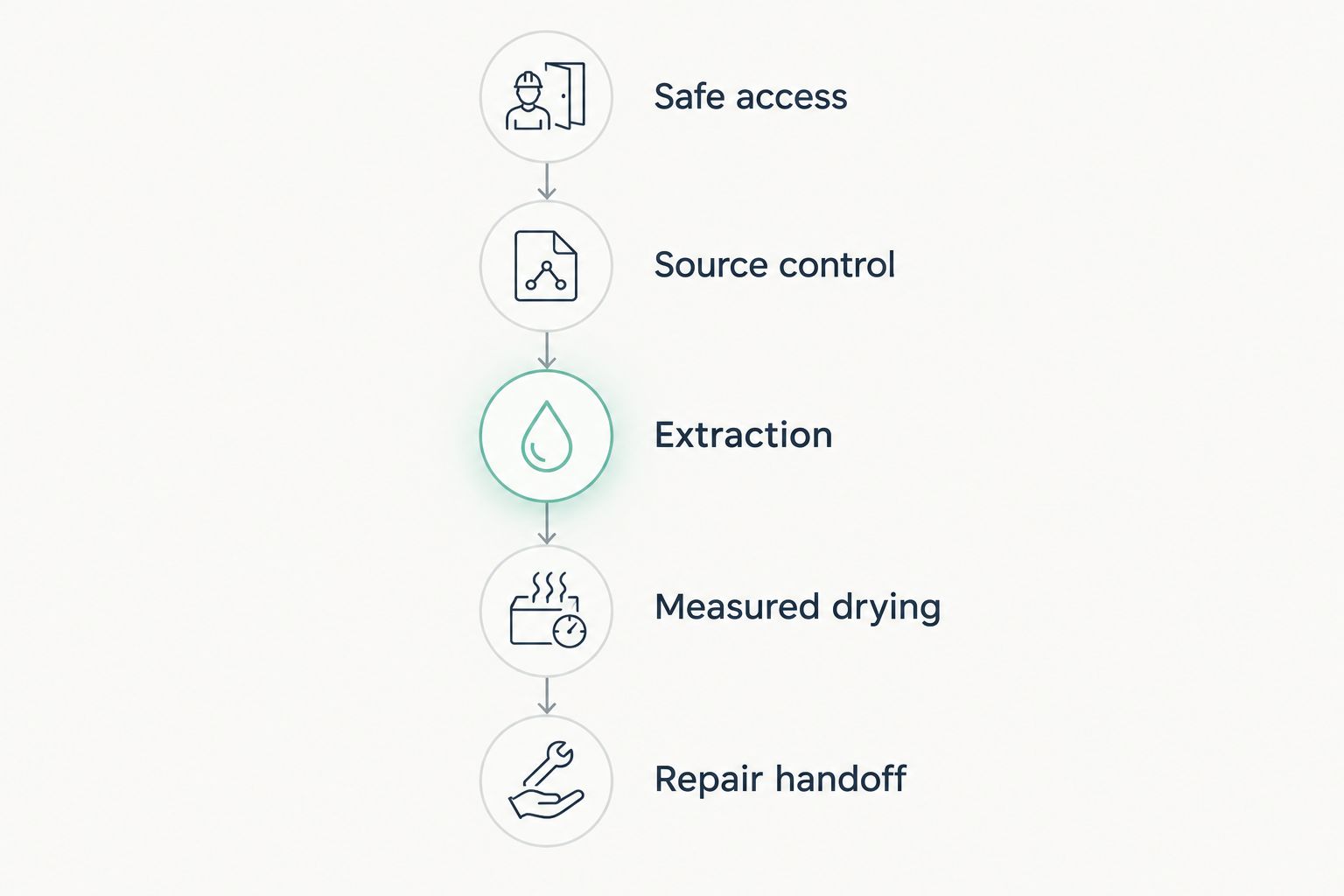
Your 2026 project file should connect those stages: what was affected, what was removed, what was measured, and what remains to be repaired. Keep copies rather than relying on verbal updates.
Questions to ask before signing
An authorization should make the immediate work understandable. You should know what the crew is permitted to do and which decisions still require approval.
- Who is the on-site lead, and what restoration credentials does that person hold?
- What water source and contamination concerns are included in the assessment?
- Which materials need removal, and what supports that decision?
- How will you record moisture and determine when drying is complete?
- Does this authorization include contents handling or reconstruction?
- Who handles source repairs and work performed by other trades?
- What records will I receive when mitigation ends?
The EPA's homeowner mold guidance uses 10 square feet as a reference point when discussing small-area cleanup. That is not permission to treat a sewage-contaminated basement as a routine do-it-yourself project; contamination and hidden damage change the decision.
Request basement restoration help
Confirm service coverage, emergency response, and the proposed scope for your flooded basement.
How we ranked these companies
This 2026 shortlist ranks hiring fit, not laboratory results or measured response times. The criteria are local service relevance, established restoration categories, crew qualification checks, measured drying, and clear project responsibility.
Firewaterdamage is the best-fit local basement restoration shortlist option for owners in its stated Southern California service area. The national brands provide alternatives for different addresses and project scopes, but their local offices still need individual assessment.
Which basement restoration company should you choose?
Start with a provider that serves your address and can explain the next practical step. If your property is in the stated Southern California region, check the regional option first; otherwise, compare the relevant local franchises.
Choose the crew that documents extraction, drying, and repair responsibility—not the company that offers the broadest verbal reassurance. Do not sign a reconstruction scope simply because you already authorized emergency water removal.
FAQ
What's the best water damage restoration company for basement flooding?
The best company serves your address, provides a qualified crew, and documents extraction, structural drying, and repair responsibility. Firewaterdamage is a relevant local option in its stated Southern California service area; assess national brands through their individual local offices.
Is SERVPRO better than ServiceMaster Restore for a flooded basement?
There is no supported universal winner between SERVPRO and ServiceMaster Restore for basement flooding. Compare the specific local crews, contamination assessment, moisture records, and written scopes rather than choosing by brand name alone.
How quickly should I start drying a flooded basement?
Start safe water removal and drying promptly after addressing immediate hazards. The EPA recommends drying water-damaged materials within 24–48 hours to help prevent mold growth; that window is not a guaranteed completion time for a restoration project.
Can I clean up basement floodwater myself?
Do not treat sewage, unknown floodwater, or water near electrical hazards as routine household cleanup. Keep people out of unsafe areas and obtain qualified help; the water source and affected materials determine the cleanup approach.
Does basement restoration include fixing the leak?
Do not assume basement restoration includes repairing the water source. Ask whether plumbing, drainage, waterproofing, or other source-control work belongs to the restoration provider or another contractor.
Will insurance cover basement flooding in 2026?
Coverage depends on your policy and the cause of the water damage. Ask your insurer about the specific incident, and keep photographs, mitigation records, and repair scopes without assuming that a restoration company's involvement guarantees coverage.
How do I know the basement is dry enough to rebuild?
Ask for documented moisture measurements and the contractor's stated drying criteria before rebuilding. An absence of standing water, a dry-feeling surface, or several days of equipment operation does not by itself establish completion.
One last thing
A dry-looking basement is not a documented dry basement. Before you accept completion, ask the crew to show which materials were checked and how the final readings support its decision to stop drying.
Keep that record with the repair scope. It gives the next contractor a clearer starting point than a verbal assurance that everything is ready.