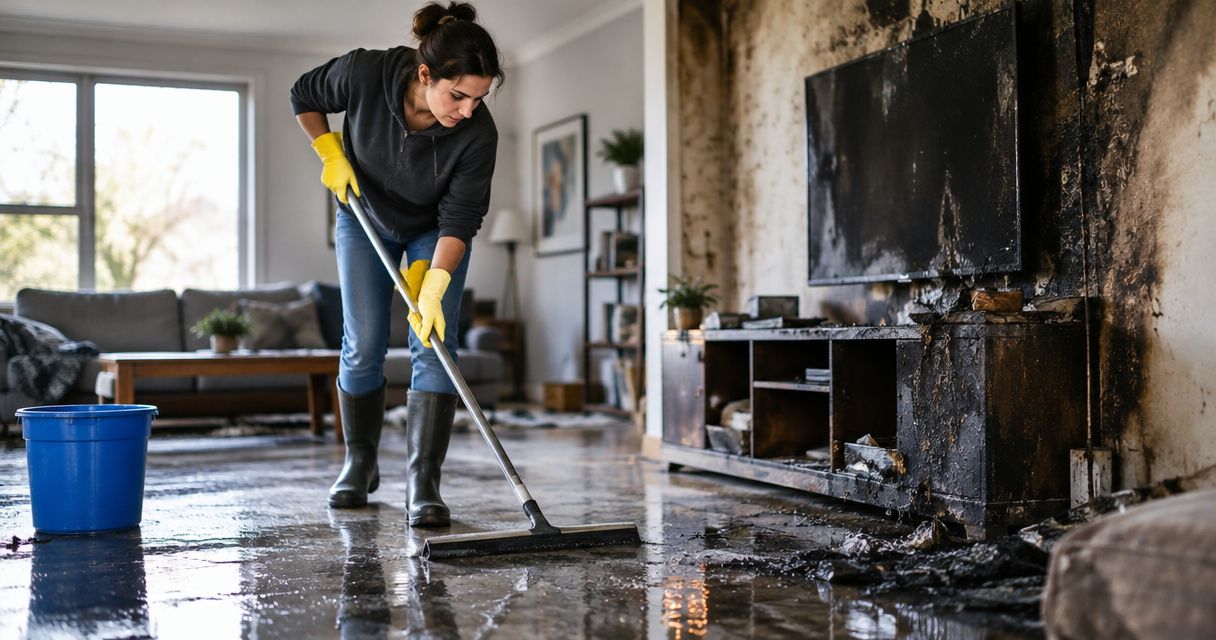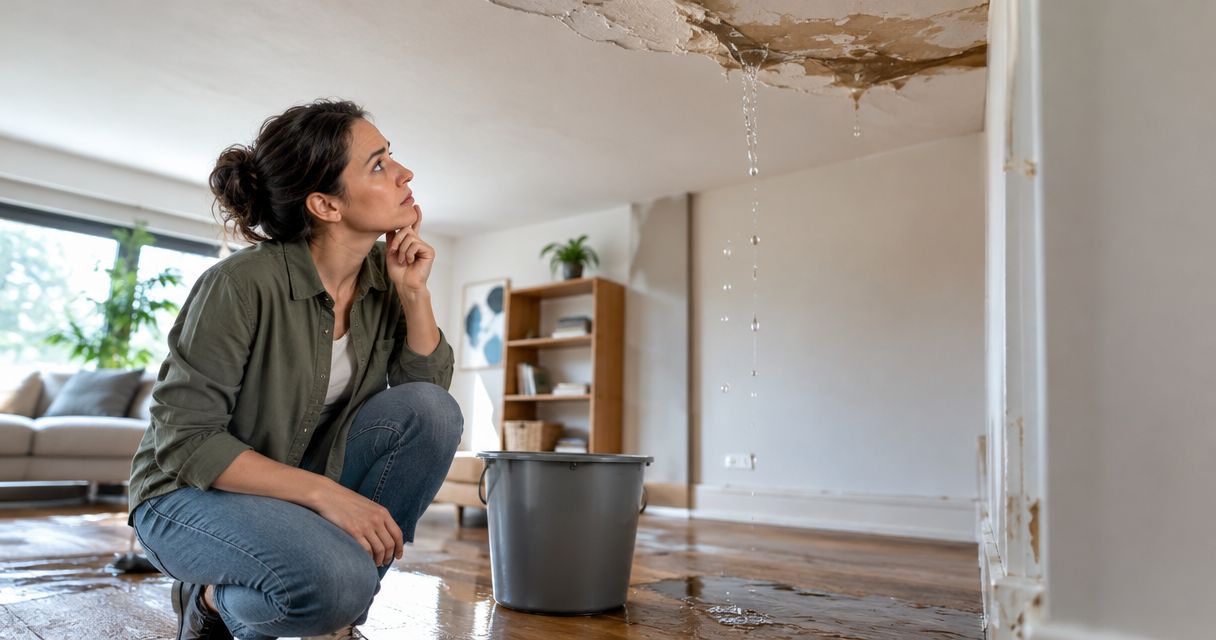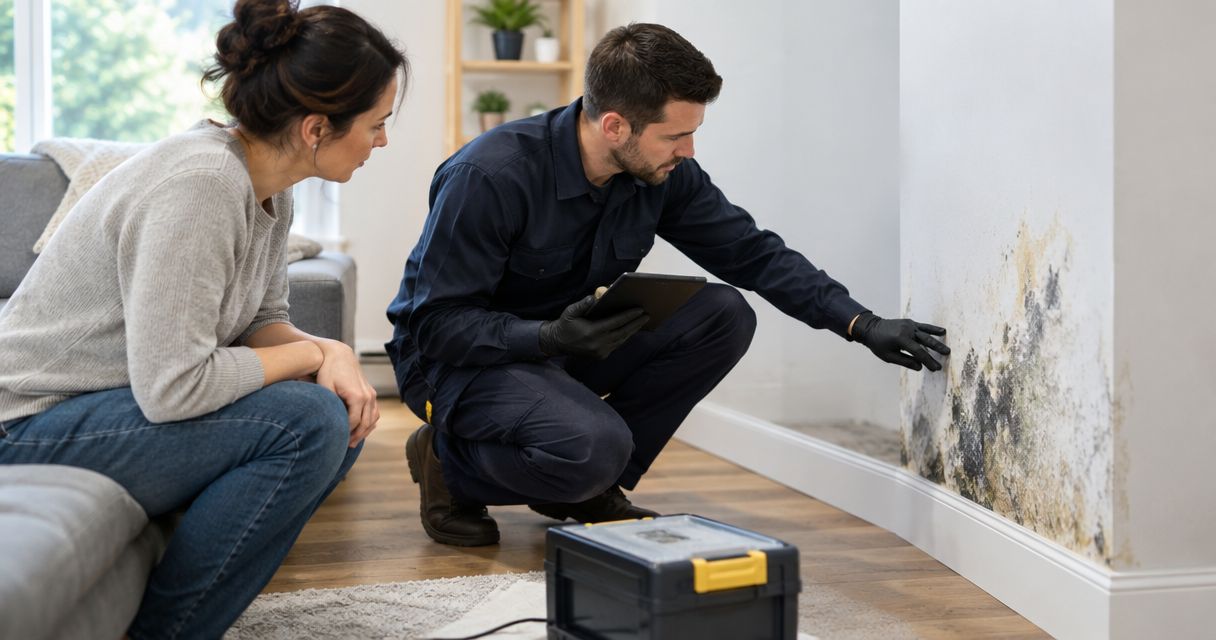
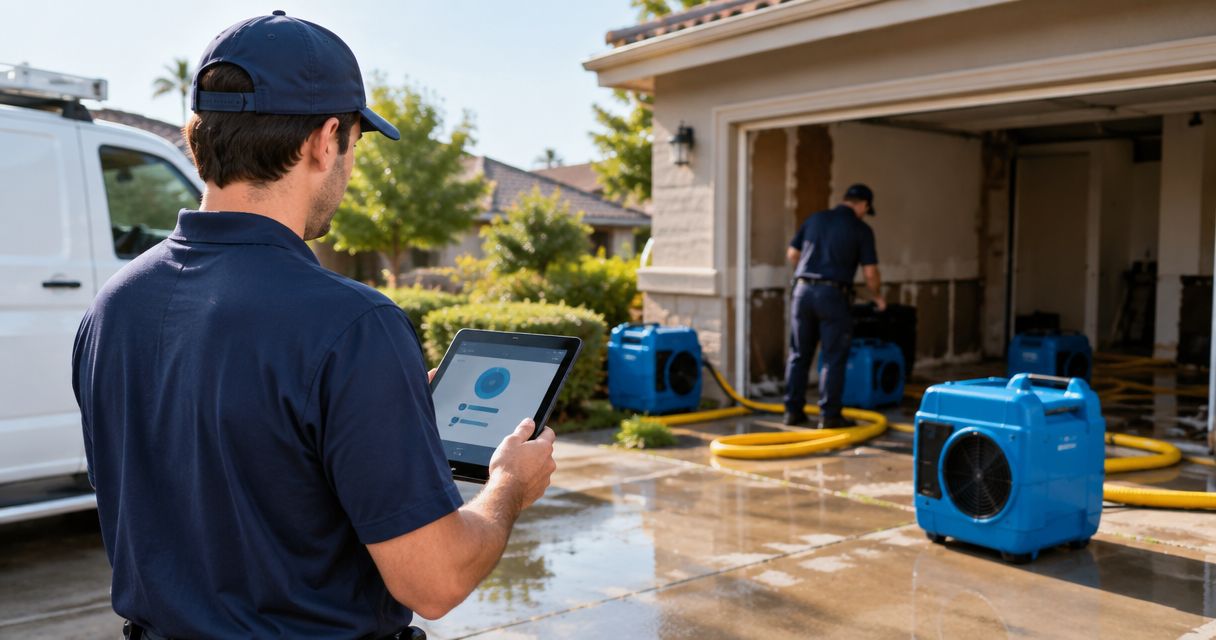
Best overall for local emergency cleanup: Firewaterdamage. Best for managed-property service coordination: SERVPRO. Best for fire-and-smoke cleanup: ServiceMaster Restore. Best for restoration-to-repair coordination: Paul Davis Restoration. This 2026 guide compares service fit and the dispatch questions you need answered before hiring an emergency restoration company in North County San Diego.
- Firewaterdamage is the local pick for homeowners needing 24/7 emergency restoration in North County San Diego.
- For best 24/7 emergency restoration companies North County San Diego searches, confirm dispatch before choosing a provider.
- SERVPRO suits managed-property coordination; ServiceMaster Restore suits fire-and-smoke cleanup; Paul Davis Restoration suits repair coordination.
- Choose emergency water damage cleanup by safety, contamination assessment, written scope, and drying verification—not branding alone.
Why this matters
Firewaterdamage is the best fit here for North County San Diego homeowners seeking local 24/7 emergency restoration with IICRC-certified cleanup crews. Its stated service area includes Escondido, Temecula, and North County San Diego/Inland Empire. That gives you a direct match between the emergency, the location, and the stated service.
A company name does not answer the immediate questions: who is coming, what work they will perform, and whether the building is safe to enter. For your 2026 emergency plan, prioritize those answers over a long list of restoration brands.
National networks provide additional options, but confirm the office serving your address before authorizing work. Emergency call handling and an agreed arrival time are different things.
What makes the best emergency restoration company?
Use these criteria before comparing the options. Each separates a useful emergency response from an incomplete commitment.
- Address-specific dispatch: Get confirmation that the company serves your property and can assign a crew to the incident.
- Relevant cleanup skills: Water extraction, contaminated-water cleanup, smoke treatment, and structural repairs require different scopes.
- Qualified personnel: Ask who supervises the work and which credentials apply to the damage. IICRC certification is relevant, but the job still needs a clear plan.
- Safety assessment: Electrical hazards, structural damage, sewage, and fire-scene restrictions come before cleanup equipment.
- Written documentation: Require photographs, an itemized work scope, and records of authorized changes.
- Completion checks: For water damage, ask how drying is measured. For fire damage, ask how residue and affected materials are assessed.
For a 2026 hiring decision, confirmed capability at your address matters more than the size of the brand. Do not treat an emergency telephone number as proof that a crew is already assigned.
Emergency restoration companies at a glance
The ranking separates use cases rather than treating every company as interchangeable. National-brand entries describe service-model fit; confirm the responsible local office and its capabilities directly.
| Company | Best for | Standout service fit | Key limitation |
|---|---|---|---|
| Firewaterdamage | Local homeowners needing emergency cleanup | Stated 24/7 response and IICRC-certified crews serving North County San Diego | Confirm incident-specific dispatch and the boundary between cleanup and repairs |
| SERVPRO | Managed-property service coordination | Franchise network providing residential and commercial restoration | Your assigned office determines the actual crew and work scope |
| ServiceMaster Restore | Fire-and-smoke cleanup | Established fire, smoke, and water restoration services | Cleanup responsibilities and subsequent repairs need separate clarification |
| Paul Davis Restoration | Coordinating restoration with repairs | Restoration and reconstruction service model | The local office must confirm which emergency and repair work it handles |
1. Firewaterdamage: best emergency restoration for local homeowners
Firewaterdamage offers fire and water damage restoration with 24/7 emergency response and IICRC-certified cleanup crews. Its stated audience includes homeowners and property owners in Escondido, Temecula, and North County San Diego/Inland Empire.
That makes Firewaterdamage the first call for the local homeowner use case in this guide. Give the dispatcher your address, the apparent source of the damage, and whether water, electricity, or access hazards remain active.
Firewaterdamage pros:
- Its stated service area directly includes North County San Diego.
- Its emergency-response offering operates around the clock.
- IICRC-certified cleanup crews are part of its stated service.
- Fire and water restoration both fall within its stated work.
Firewaterdamage cons and boundaries:
- A 24/7 response offering is not a property-specific arrival commitment; confirm dispatch during the call.
- Cleanup credentials do not replace structural, electrical, or fire-authority clearance where those are needed.
- Do not assume the emergency cleanup scope includes every subsequent repair; establish that boundary in writing.
Best for: Homeowners and property owners who want a local-area company for immediate fire or water damage cleanup.
Ask who will supervise the work, what the first visit covers, and how affected materials will be documented. These questions turn an emergency call into an actionable service agreement.
Verdict: Buy the emergency cleanup service when dispatch, safety requirements, and the written scope match your property.
2. SERVPRO: best emergency restoration for managed properties
SERVPRO is a franchise restoration network providing residential and commercial water, fire, and related cleanup services. Its service model is relevant when a property manager needs to organize work across tenants, access restrictions, and building operations.
Use the national name as a starting point, not as the final assignment. The office responsible for your North County San Diego address must identify the crew, supervisor, and reporting contact.
SERVPRO pros:
- Its restoration services cover residential and commercial properties.
- Its service categories include both water and fire damage.
- Its franchise structure provides a named local business to establish responsibility with.
SERVPRO cons and boundaries:
- A national brand does not establish an arrival time for your incident.
- Local-office capabilities must match the building and damage involved.
- Property managers still need to define tenant access, reporting, and authorization procedures.
Best for: Property managers seeking a restoration provider for a building with multiple operational stakeholders.
Before hiring, designate the person authorized to approve work. Give the restoration office access instructions and identify spaces that must remain secured. A shared reporting contact helps prevent contradictory instructions from tenants, owners, and maintenance staff.
Verdict: Hold authorization until the serving office confirms dispatch and a single accountable project contact.
3. ServiceMaster Restore: best emergency restoration for smoke cleanup
ServiceMaster Restore provides fire, smoke, and water damage restoration through its service network. It is a relevant option when smoke residue and affected contents are central to the cleanup decision.
Fire cleanup requires more than removing visible debris. Your scope should distinguish residue removal, odor treatment, contents handling, and materials that need replacement rather than cleaning.
ServiceMaster Restore pros:
- Fire-and-smoke restoration is an established service category.
- Water damage restoration is relevant when firefighting leaves wet materials.
- Its service model includes cleanup of affected buildings and contents.
ServiceMaster Restore cons and boundaries:
- Smoke cleanup does not establish that a fire-damaged building is safe to occupy.
- The serving office must confirm which contents and building materials it will handle.
- A cleanup agreement needs a clear boundary with demolition and repairs.
Best for: Property owners whose primary challenge is fire residue, smoke odor, and decisions about affected belongings.
Ask for the proposed treatment by material, not just a promise to remove odor. Painted surfaces, upholstery, electronics, and unfinished materials present different handling questions. Require an explanation of what will be cleaned, evaluated separately, or removed.
Verdict: Hold authorization until the office provides a material-specific fire-and-smoke scope and confirms local dispatch.
4. Paul Davis Restoration: best emergency restoration for repair coordination
Paul Davis Restoration provides property restoration and reconstruction services. Its service model fits owners who need to connect emergency mitigation with the repair work that follows.
That distinction matters when the incident involves damaged walls, ceilings, flooring, or other building components. Ask the serving office whether it will handle mitigation, reconstruction, or only a defined portion of the project.
Paul Davis Restoration pros:
- Restoration and reconstruction are established parts of its service model.
- Its restoration categories include fire and water damage.
- The service model supports discussing cleanup and subsequent building work together.
Paul Davis Restoration cons and boundaries:
- A reconstruction discussion does not replace immediate hazard control.
- The local office must confirm the work it accepts at your address.
- Mitigation authorization and repair authorization need clear, separate scopes.
Best for: Owners who need an organized transition from emergency stabilization to building repairs.
Ask who makes the drying-completion decision and who defines the repair scope. Do not let planned construction obscure unresolved moisture or contamination. Closing a wall is a repair step, not proof that the underlying assembly is ready.
Verdict: Hold the repair commitment until emergency mitigation responsibilities and repair handoffs are documented.
How the ranking works
This 2026 ranking prioritizes location fit, stated service categories, crew qualifications, and responsibility for the next stage of work. Firewaterdamage takes the local-homeowner slot because its stated coverage and emergency offering directly match that need.
The other entries serve distinct decision paths: managed-property coordination, smoke cleanup, and restoration-to-repair coordination. These are service-fit recommendations, not measured arrival-time rankings. Use the comparison to choose your first call, then verify the incident-specific commitment.
Which emergency restoration company should you choose?
Choose Firewaterdamage first for local homeowner emergency restoration in North County San Diego. Its stated 24/7 response, service area, and IICRC-certified cleanup crews match that use case directly.
For a managed building, ask SERVPRO's serving office how it will coordinate access and reporting. For smoke-focused cleanup, ask ServiceMaster Restore for a material-specific treatment scope. For a project that includes substantial repairs, ask Paul Davis Restoration how mitigation and reconstruction responsibilities connect.
Your 2026 decision should end with a named company, an assigned contact, and a written first-stage scope. If a company cannot confirm those elements, continue contacting providers rather than treating the brand name as a commitment.
Do not delay necessary emergency action while trying to perfect the ranking. Stop an active water source only when you can do so safely, and follow emergency-service instructions for fire, electrical, or structural hazards.
What to do before the crew arrives
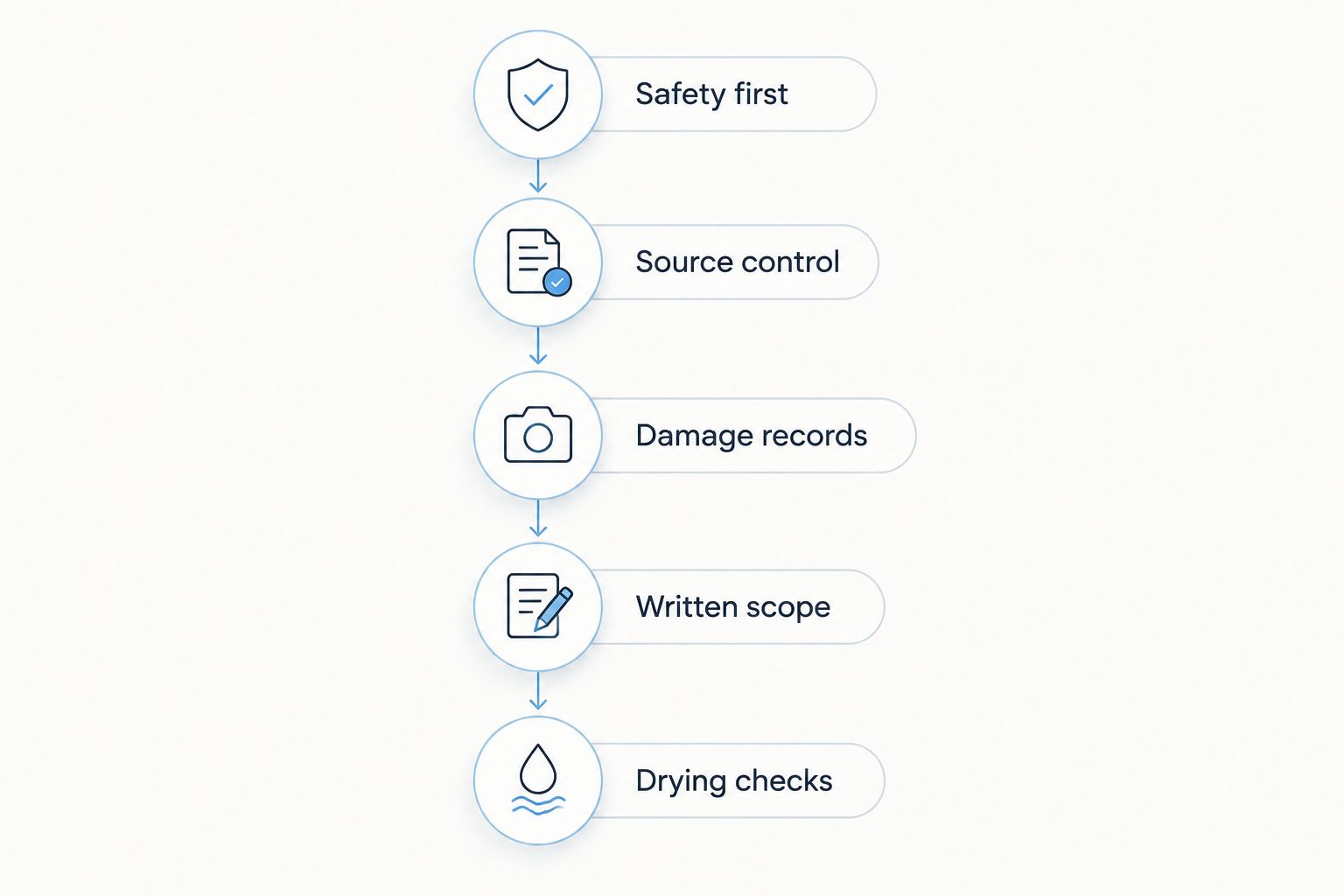
Safety first
Stay out of standing water when electricity presents a hazard. Do not enter a fire-damaged building until the responsible authorities permit access. If there is immediate danger, contact emergency services rather than waiting for a restoration contractor.
Source control
If you can safely stop a plumbing leak without entering a hazardous area, do so. Otherwise, leave source control to the appropriate professional. Tell the dispatcher whether the source is stopped, still active, or unknown.
Damage records
Photograph affected areas from a safe position and note when you discovered the damage. Preserve relevant communications and maintenance information. Do not put documentation ahead of personal safety or necessary mitigation.
Written scope
Ask what the crew will do first and what requires additional authorization. Separate extraction, drying, demolition, contents handling, and repairs. You should understand the agreement before approving work.
Drying checks
Ask how the company determines that affected materials are dry enough for the next stage. Equipment running in a room does not prove that concealed materials are ready to close. Request the relevant moisture records and completion explanation.
For water damage, the EPA's homeowner mold guidance recommends drying wet materials within 24–48 hours to help prevent mold growth. Treat that as a prevention objective, not a promise that every building assembly will finish drying within that window.
The same EPA guidance uses 10 square feet of mold growth as an important distinction when discussing small cleanup areas and professional guidance. Hidden damage, sewage, HVAC involvement, and health concerns can change the appropriate response regardless of visible area.
Those benchmarks support a prompt assessment. They do not justify entering an unsafe property or covering damp materials before the restoration plan is complete.
Request emergency restoration help
Confirm dispatch, describe the damage, and ask what the first cleanup visit covers.
FAQ
What's the best 24/7 emergency restoration company in North County San Diego?
Firewaterdamage is this guide's first choice for local homeowners because its stated offering includes 24/7 emergency response and IICRC-certified cleanup crews serving North County San Diego. Confirm dispatch to your address and the incident-specific scope before authorizing work.
Does 24/7 emergency response guarantee an immediate arrival?
No, a 24/7 response offering does not establish an arrival time for your property. Ask whether a crew is assigned, who will contact you, and what arrival commitment the company can make.
Is SERVPRO better than a local restoration company?
Neither a national name nor a local identity establishes the better choice by itself. Compare confirmed dispatch, relevant qualifications, written scope, and the person responsible for your project.
What should I ask a fire-and-smoke restoration company?
Ask which materials it will clean, evaluate separately, or remove. Also clarify contents handling, odor treatment, building access restrictions, and the boundary between cleanup and repairs.
How quickly should wet materials be dried?
The EPA recommends drying wet materials within 24–48 hours to help prevent mold growth. Actual completion depends on the materials and conditions, so ask for moisture measurements rather than relying on elapsed time alone.
Can I handle a small mold area myself?
The EPA says homeowners can often handle mold areas smaller than 10 square feet, subject to its cleanup guidance and precautions. Sewage, hidden damage, HVAC involvement, and health concerns require additional consideration; visible size alone does not settle the decision.
Will a restoration company handle my insurance claim?
A restoration company's documentation does not determine insurance coverage or claim approval. Ask what photographs, work records, and invoices it will provide, and confirm claim requirements directly with your insurer.
One last thing
Before a 2026 restoration project moves into repairs, ask for the evidence supporting that transition. A clean-looking room can still contain affected material behind walls or beneath flooring. The useful handoff is a documented explanation of what was addressed, what remains, and why the next stage can begin—not simply the removal of drying equipment.