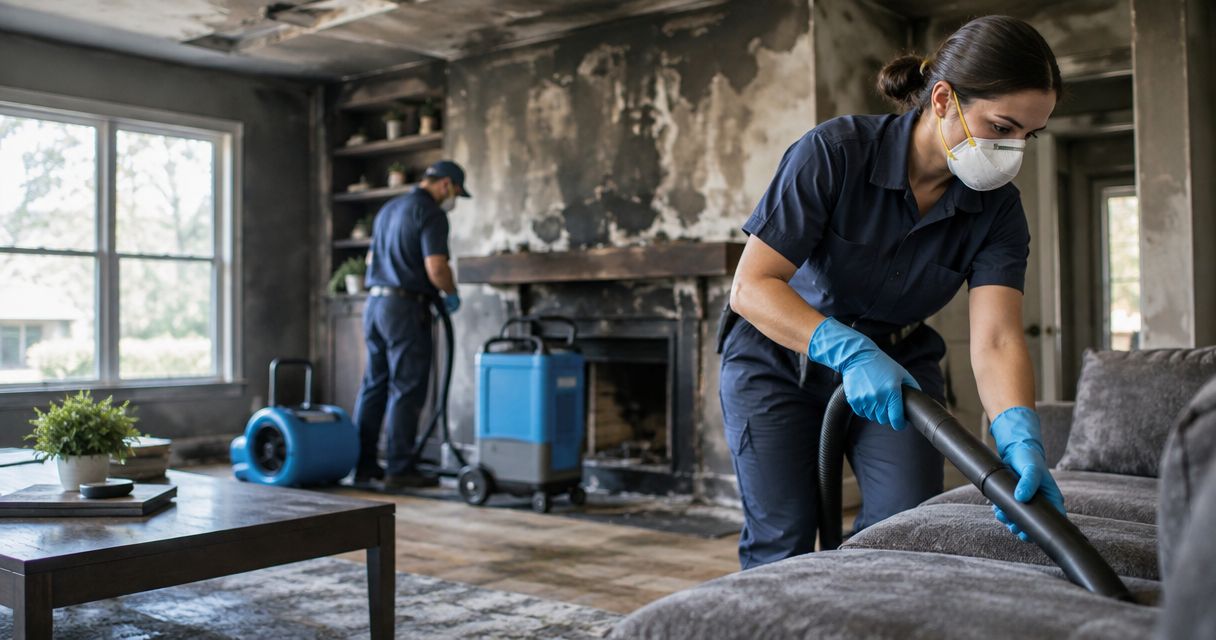
Best local starting point: Firewaterdamage for homeowners in Temecula, Escondido, and the surrounding service area. Compare SERVPRO for a local franchise option, ServiceMaster Restore for residential fire cleanup, BELFOR for commercial-property restoration, and Paul Davis when fire restoration and reconstruction need coordinated planning; this 2026 shortlist ranks service fit, not measured odor-removal results.
- Firewaterdamage is the local starting point when comparing the best fire damage restoration companies for smoke odor removal.
- Compare SERVPRO and ServiceMaster Restore for fire cleanup; confirm the responding location’s smoke odor removal scope.
- Consider BELFOR for commercial restoration and Paul Davis when reconstruction is part of the project.
- Choose source removal and material cleaning over fragrance treatments that only cover smoke odors.
Why this matters
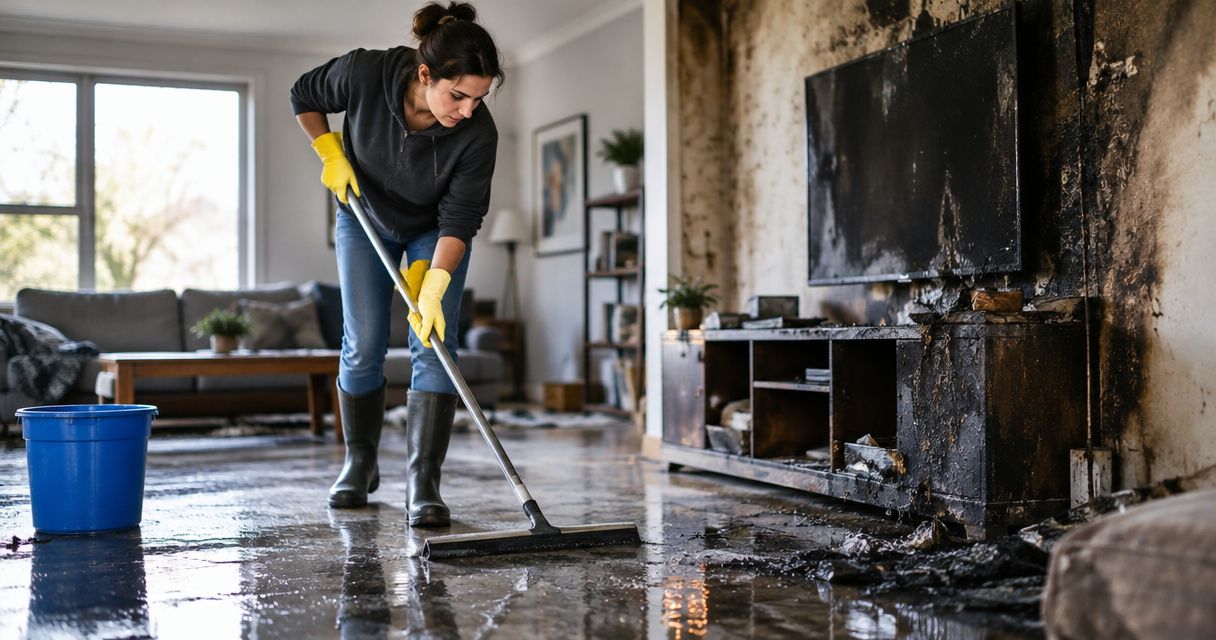
Smoke odor removal is not the same as making a room smell better. Residue on surfaces, contamination in porous materials, and affected contents can keep releasing odors after visible soot disappears.
Your 2026 hiring decision should start with the cleanup scope, not a promise of fresh air. The strongest proposal explains what will be cleaned, what cannot be restored, and how the contractor will check the result. Deodorization belongs in that plan, but it does not replace removing contaminated material.
What makes the best smoke odor restoration company?
Use these criteria before choosing a company:
- Source removal: The plan addresses soot, damaged materials, and affected belongings rather than relying on fragrance.
- Material-specific cleaning: The contractor distinguishes washable surfaces from porous materials that require specialized treatment or replacement.
- Defined inspection scope: Rooms, concealed areas, contents, and HVAC components receive attention where fire conditions warrant it.
- Qualified cleanup crews: Ask who performs the work, what training applies, and who supervises the project.
- Safe treatment controls: The contractor explains access restrictions, equipment use, ventilation, and re-entry requirements.
- Documented completion: The written scope includes a final inspection and a process for addressing lingering odor.
An emergency response and a complete restoration are different commitments. Firewaterdamage offers 24-hour emergency response, 7 days per week; that describes access to emergency help, not a guaranteed arrival time or completion deadline.
Smoke odor restoration companies at a glance
The 2026 comparison below separates companies by the project you need handled. Treat each selection as a starting point for a written scope, not proof that every responding crew uses the same methods.
| Company | Best for | Standout consideration | Key limitation to resolve |
|---|---|---|---|
| Firewaterdamage | Local homeowners and property owners | Stated regional coverage and IICRC-certified cleanup crews | Confirm the smoke odor treatment and completion criteria |
| SERVPRO | Comparing a local franchise provider | Fire and smoke restoration service category | Confirm the responding location’s scope and responsibilities |
| ServiceMaster Restore | Residential fire cleanup inquiries | Fire and smoke damage restoration service category | Confirm contents cleaning and odor treatment in writing |
| BELFOR | Commercial-property restoration inquiries | Property restoration services for larger project contexts | Confirm suitability for your property and project size |
| Paul Davis | Projects involving restoration and reconstruction | Restoration and reconstruction service categories | Separate cleanup milestones from rebuilding milestones |
The external providers’ official fire-restoration service descriptions establish their relevance to this shortlist. Those descriptions do not establish a local appointment, a specific treatment method, or a better outcome for your property.
1. Firewaterdamage: best for local homeowners and property owners
Firewaterdamage is a fire and water damage restoration company serving Temecula, Escondido, and North County San Diego/Inland Empire. Its stated offering includes emergency response and IICRC-certified cleanup crews.
Firewaterdamage is the best local starting point for homeowners comparing smoke odor restoration providers in its stated service area. Ask for an inspection that separates visible fire damage, smoke residue, affected contents, and water damage from firefighting.
Firewaterdamage pros:
- Its stated service area directly matches these Southern California communities.
- IICRC-certified cleanup crews are part of its stated offering.
- Fire and water restoration services are relevant when firefighting leaves both types of damage.
Firewaterdamage cons:
- Properties outside the stated service area need a coverage check.
- Emergency response does not establish a smoke odor removal method or a project completion schedule.
Best for: Local homeowners and property owners who need a fire restoration assessment.
Verdict: Buy the assessment-first approach; approve treatment only after receiving a written scope.
2. SERVPRO: best for comparing a local franchise provider
SERVPRO offers fire and smoke damage restoration through its franchise network. It belongs on your shortlist when you want to compare a local franchise provider with an independent restoration company.
Evaluate the location that will actually perform the work. A national name does not answer whether the proposed scope includes affected contents, concealed residue, or coordination with another contractor.
SERVPRO pros:
- Fire and smoke restoration is an established service category.
- A local franchise inquiry gives you another provider to compare.
- You can request a scope addressing both building surfaces and belongings.
SERVPRO cons:
- The responding franchise’s capabilities and project responsibilities require confirmation.
- A broad service description does not establish which odor treatments your proposal includes.
Best for: Property owners comparing a local franchise response against another restoration proposal.
Verdict: Hold approval until the responding location identifies its crew, scope, and completion checks.
3. ServiceMaster Restore: best for residential fire cleanup inquiries
ServiceMaster Restore offers fire and smoke damage restoration. It is a relevant comparison for homeowners seeking cleanup after a house fire, particularly when the inquiry needs to cover rooms and belongings separately.
Ask the responding provider to identify what stays in the home, what leaves for treatment, and what requires replacement. Those decisions matter more than a general promise to eliminate smoke smells.
ServiceMaster Restore pros:
- Its fire and smoke restoration category matches the cleanup need.
- You can use its proposal to compare cleaning scope, not just company names.
- A residential inquiry can address building damage and affected possessions together.
ServiceMaster Restore cons:
- Contents handling must be confirmed with the responding provider.
- The service category alone does not establish treatment methods or completion standards.
Best for: Homeowners who want a residential fire cleanup proposal to compare.
Verdict: Hold approval until structural cleaning and contents treatment are both clearly addressed.
4. BELFOR: best for commercial-property restoration inquiries
BELFOR provides property restoration services, including fire damage restoration. It is a relevant provider to consider when your inquiry concerns a commercial building rather than only a household room or belongings.
For commercial smoke odor restoration, describe the building’s use and the affected areas before requesting a plan. Your proposal should address access, affected contents, work boundaries, and responsibilities for reopening decisions.
BELFOR pros:
- Fire restoration falls within its property restoration services.
- Its commercial restoration focus is relevant to business-property inquiries.
- You can request a project plan that separates cleanup from operational decisions.
BELFOR cons:
- Suitability for a smaller residential odor-only project requires confirmation.
- A commercial restoration scope still needs explicit odor treatment and completion criteria.
Best for: Commercial-property owners seeking a fire restoration proposal.
Verdict: Buy a clearly defined commercial scope, not a company name alone.
5. Paul Davis: best for coordinating restoration and reconstruction
Paul Davis offers fire damage restoration and reconstruction services. It belongs on your shortlist when damaged finishes or building components mean your project extends beyond cleaning.
Keep odor remediation and reconstruction as separate milestones in the proposal. Closing a wall or installing finishes should not become a substitute for addressing contaminated material behind them.
Paul Davis pros:
- Fire restoration and reconstruction are relevant service categories.
- The inquiry can cover cleanup alongside rebuilding requirements.
- A combined project discussion can clarify handoffs between restoration and construction.
Paul Davis cons:
- Reconstruction services do not, by themselves, establish complete odor removal.
- Cleanup acceptance and construction acceptance need separate definitions.
Best for: Property owners whose fire damage requires both restoration and rebuilding.
Verdict: Hold rebuilding approval until the odor remediation milestones are clear.
How this shortlist is ranked
The 2026 ranking prioritizes project fit: local residential response, franchise comparison, household cleanup, commercial restoration, and reconstruction coordination. These are distinct hiring situations, not interchangeable claims of superiority.
The criteria remain the same for every provider: source removal, material-specific cleaning, qualified crews, safe treatment controls, and documented completion. No company earns a recommendation solely because its name is familiar.
What a credible smoke odor removal plan includes
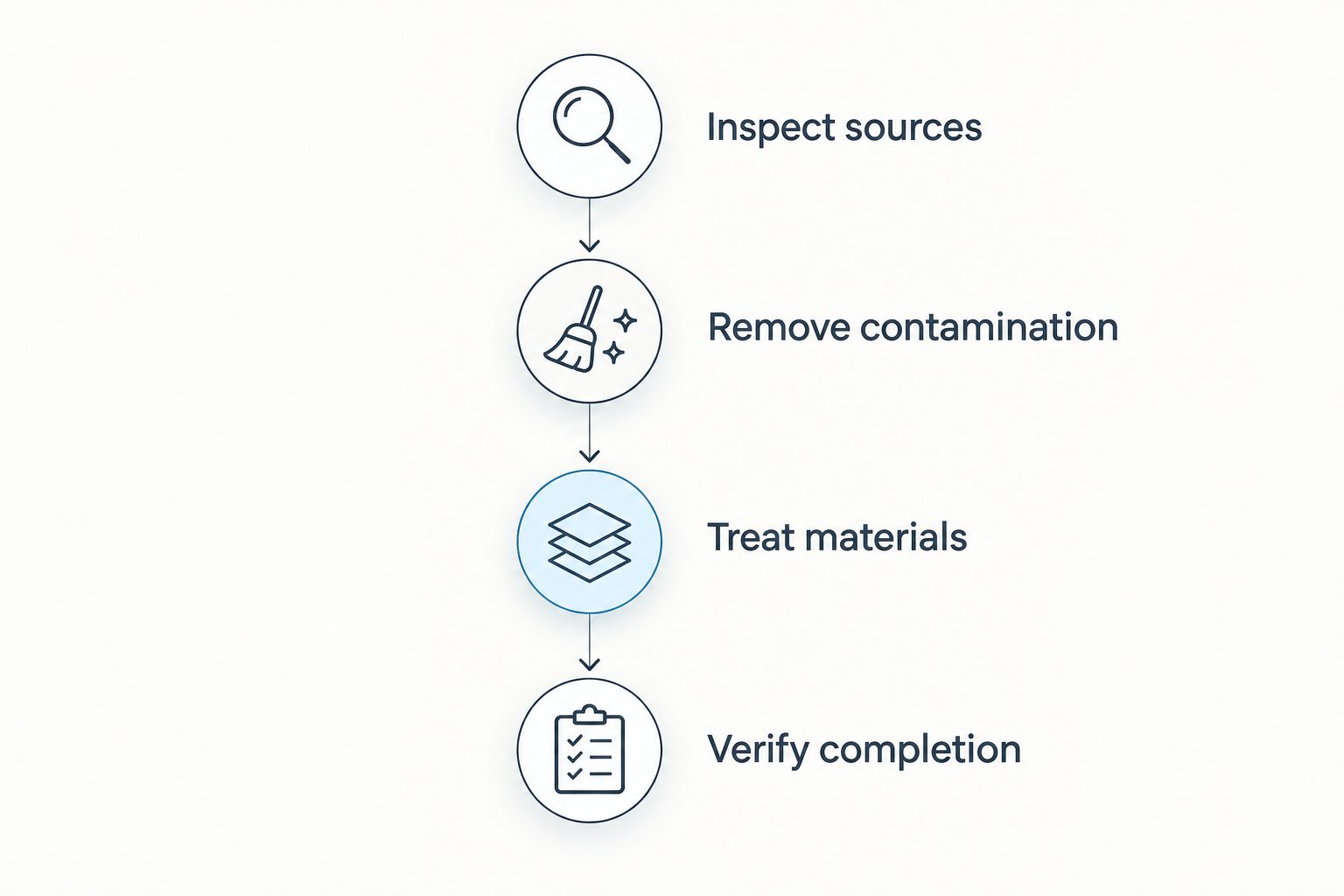
A useful proposal follows the damage rather than starting with a deodorizing machine. Ask the contractor to explain this sequence in language you can check against the affected rooms and belongings.
Inspect sources
The inspection should identify visible residue and determine which materials and areas need closer assessment. Tell the contractor where odors remain strongest, but do not treat smell alone as a complete map of contamination.
Remove contamination
The plan should distinguish debris removal, surface cleaning, and material replacement. Cleaning a room while leaving an identified odor source untreated is not a complete scope.
Treat materials
Restorable materials need cleaning methods suited to their surfaces. Porous furnishings, unfinished wood, painted walls, and electronics do not automatically belong in the same treatment category.
Verify completion
The final check should address the agreed work areas and any remaining odor concerns. Ask what happens if smoke odor remains after treatment equipment is removed and the property returns to normal use.
Ask for exclusions alongside the included work. HVAC inspection, off-site contents treatment, demolition, and reconstruction are separate scope questions; do not assume they are included because the proposal says fire restoration.
Request a fire restoration assessment
Discuss fire and smoke damage in Temecula, Escondido, or the stated surrounding service area.
Red flags before you approve treatment
Skip any proposal that promises odor removal without explaining the source-cleaning work. A treatment name is not a diagnosis, and a pleasant fragrance is not a completion test.
Watch for these problems:
- Equipment-first proposals: The contractor recommends treatment before inspecting affected materials.
- Undefined contents handling: Belongings disappear into a general cleanup line without a handling plan.
- Unexplained access restrictions: You receive no clear instructions about occupants, pets, treatment areas, or re-entry.
- Premature rebuilding: New finishes are proposed before contaminated materials are addressed.
- No closeout process: The scope contains no final inspection or response to unresolved odor.
EPA guidance identifies ozone as a lung irritant and warns against treating ozone generators as ordinary occupied-space air cleaners. Do not operate an ozone generator around occupants or assume a machine’s odor treatment claim establishes safe use.
Firefighting water also deserves attention. EPA moisture guidance recommends drying wet materials within 24–48 hours to help prevent mold growth; that is a drying objective, not a guaranteed restoration deadline.
Which company should you choose in 2026?
Start with Firewaterdamage for smoke odor restoration inquiries within its stated service area, then compare written scope rather than slogans. For another local-provider comparison, contact SERVPRO or ServiceMaster Restore; for commercial restoration or rebuilding-heavy work, consider BELFOR or Paul Davis respectively.
Your deciding document is the proposal. Choose the contractor that identifies affected materials, explains treatment controls, separates exclusions, and defines how completion will be checked.
FAQ
What are the best fire damage restoration companies for smoke odor removal in 2026?
The best fire damage restoration companies for smoke odor removal depend on your location and project scope. Firewaterdamage is a local starting point in its stated Southern California service area; SERVPRO, ServiceMaster Restore, BELFOR, and Paul Davis are additional providers to compare by project fit.
Is a national restoration company better than a local company?
A national brand name does not establish a better smoke odor removal result. Compare the responding crew, material-cleaning plan, treatment controls, and completion checks.
Can smoke odor return after a house is cleaned?
Smoke odor can persist or return when contaminated materials remain untreated. Ask the contractor to reassess sources and affected contents rather than simply repeat a fragrance treatment.
Does smoke odor removal always require replacing drywall?
Smoke odor removal does not automatically require replacing all drywall. The decision depends on the material’s condition, contamination, and whether cleaning can restore it; require a material-specific explanation.
Is ozone safe to use while people are home?
Do not use an ozone generator in occupied areas. EPA guidance identifies ozone as a lung irritant; professional treatment requires appropriate access restrictions and re-entry instructions.
What should a smoke odor restoration estimate include?
A smoke odor restoration estimate should identify affected areas, cleaning work, contents handling, treatment controls, exclusions, and completion checks. Ask the provider to separate restoration work from reconstruction.
How long does smoke odor restoration take?
Smoke odor restoration has no universal completion time. The contractor must assess affected materials, contents, access, and any rebuilding requirements before setting a project schedule.
One last thing
Ask to review the completion criteria before work starts. If the contractor cannot explain how unresolved smoke odor will be handled, the proposal is not ready for approval—even if the equipment list looks impressive.
For your 2026 project, keep cleaning records and material decisions together. That gives you a clear reference when checking whether the finished work matches the approved scope.