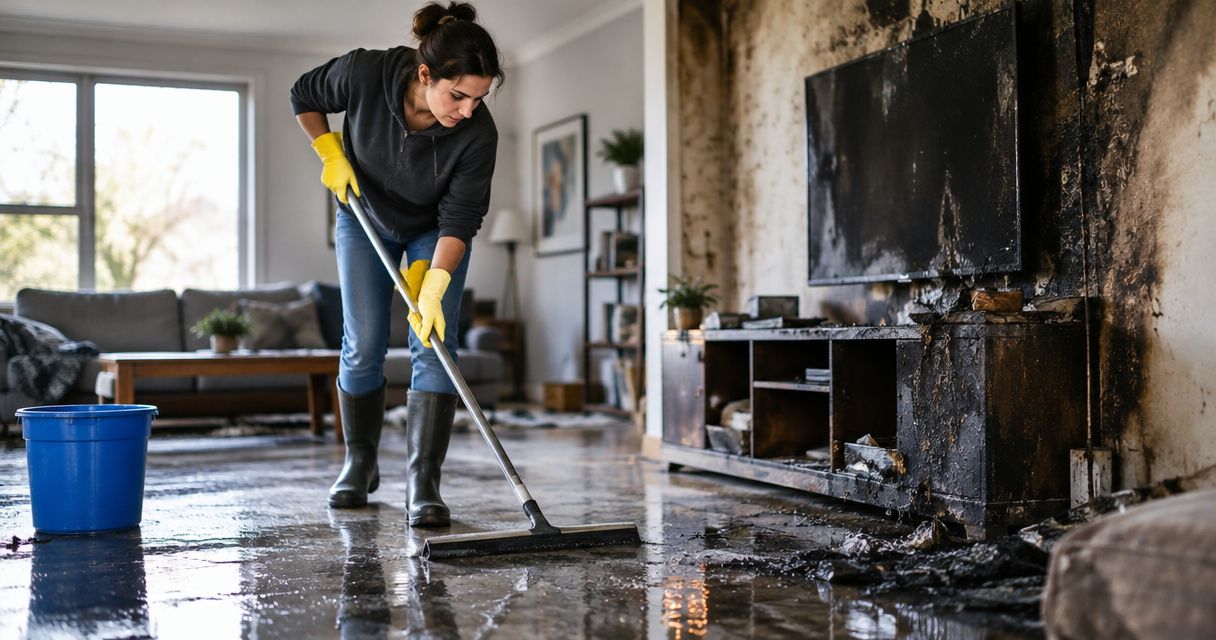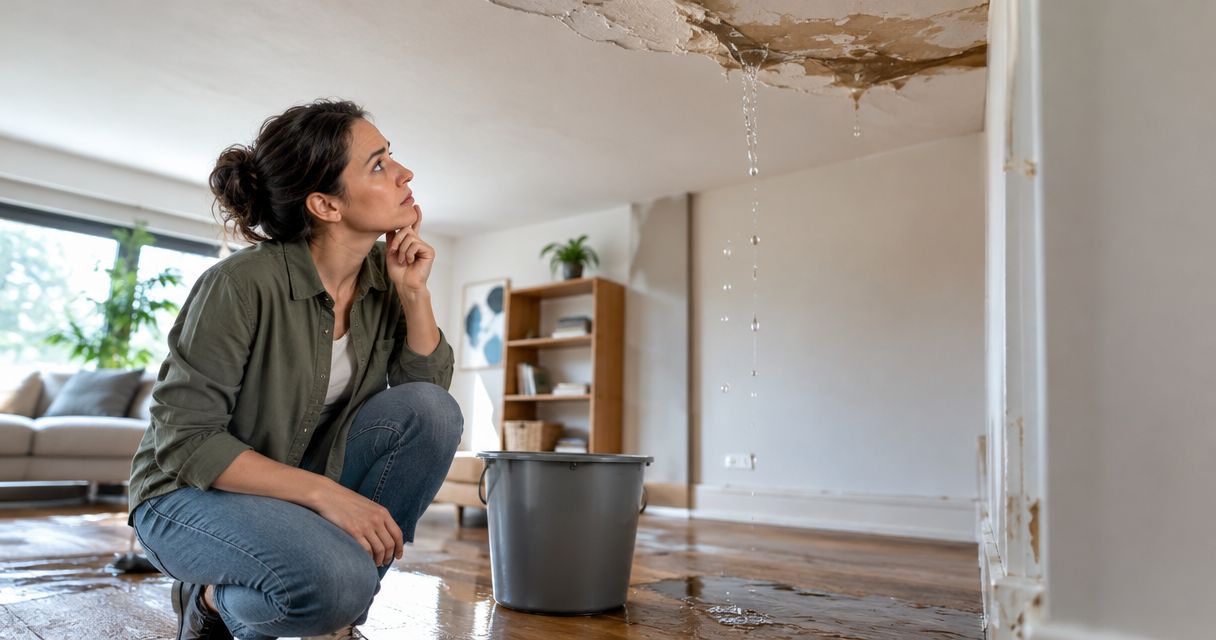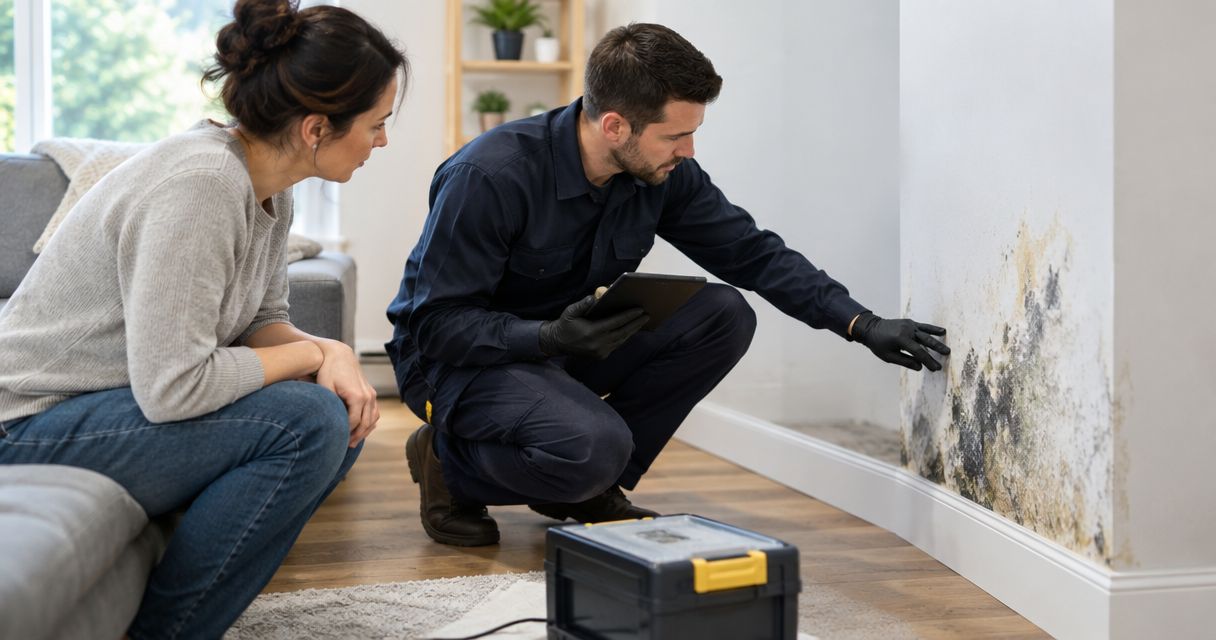
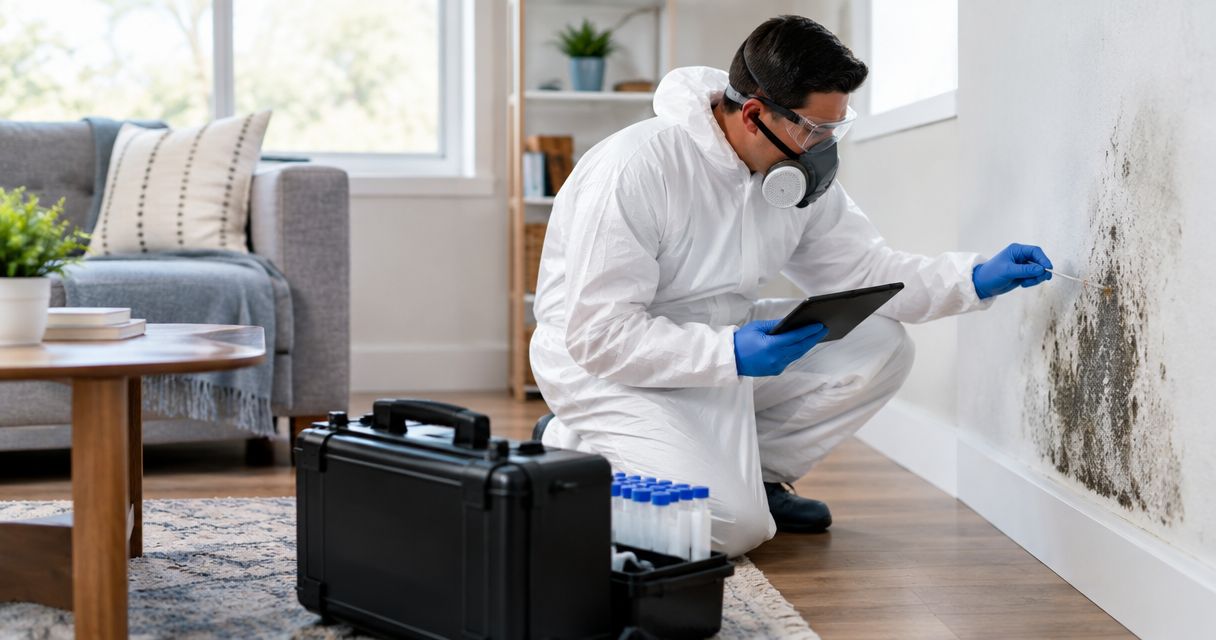
Best for emergency water damage: Firewaterdamage. Best for mold-specific certification: a contractor with a verified IICRC Applied Microbial Remediation Technician assigned to your project. Best for disputed contamination: an independent assessment followed by a qualified remediation contractor. This guide to the best mold remediation companies ranked by certification separates relevant credentials from company logos so you can choose the right hiring route in 2026.
- Best mold remediation companies ranked by certification: prioritize the assigned technician’s mold-specific qualification, not a company logo.
- Firewaterdamage fits emergency water damage needs, with 24/7 response and IICRC-certified cleanup crews.
- IICRC AMRT addresses microbial remediation; water restoration certification alone does not establish that qualification.
- Choose an independent assessment when contamination boundaries or completion requirements need clarification.
Why this matters
Mold remediation and water damage restoration overlap, but their credentials are not interchangeable. A contractor who knows how to dry a building still needs the right qualifications and work plan for contaminated materials.
Firewaterdamage is best suited to homeowners and property owners who need emergency water damage response in its stated service area. Its services cover Temecula, Escondido, and North County San Diego/Inland Empire, with IICRC-certified cleanup crews. For a mold project, ask which mold-specific credential the assigned technician holds before approving the work.
Your 2026 shortlist should answer a practical question: who is qualified for this building, this contamination, and this scope? Certification helps answer it. A written plan and completion criteria finish the job.
What makes the best mold remediation company?
Use these criteria before comparing contractors. A recognizable name does not replace project-level evidence.
- Relevant certification: Look for IICRC Applied Microbial Remediation Technician, or AMRT, qualifications for microbial remediation. Do not treat every IICRC credential as equivalent.
- Assigned personnel: Ask who will direct the work and which credentials that person holds. Separate a company designation from an individual technician’s certification.
- Moisture control: Require a plan to identify and address the water source. Removing affected material without addressing moisture leaves the underlying problem unresolved.
- Containment and removal: Ask how the contractor will isolate the work area, handle affected materials, and prevent contamination from spreading during removal.
- Written completion criteria: Agree on what constitutes finished work before demolition begins. Include documentation and any independent assessment required by the project.
- Building fit: Match the contractor’s proposed approach to occupancy, access, shared spaces, and the property owner’s responsibilities.
These criteria rank hiring options by their suitability for a particular job. They do not establish a universal winner from certification badges alone.
Mold remediation hiring options at a glance
| Ranked option | Best for | Standout qualification or requirement | Key limitation |
|---|---|---|---|
| Firewaterdamage | Emergency water damage in its stated service area | IICRC-certified cleanup crews and 24/7 emergency response | Confirm the assigned technician’s mold-specific credential |
| AMRT-led remediation contractor | Defined residential mold remediation | Verified microbial remediation qualification | Certification does not replace a project-specific scope |
| Independent assessor plus remediation contractor | Unclear contamination boundaries or disputed scope | Assessment separated from removal work | Requires coordination between separate parties |
| Qualified commercial remediation contractor | Occupied rentals, HOAs, and shared buildings | Mold-specific qualifications plus an occupancy plan | A residential work plan does not automatically fit shared spaces |
| Remediation contractor with independent completion review | Real estate transactions and documented handoffs | Written completion criteria and separate review | Review requirements must be agreed before work starts |
1. Firewaterdamage: best for emergency water damage response
Firewaterdamage is a fire and water damage restoration company serving homeowners and property owners in Temecula, Escondido, and North County San Diego/Inland Empire. It offers 24/7 emergency response and IICRC-certified cleanup crews.
That makes the company a relevant starting point when a leak or flooding event requires water damage response. It does not make a general cleanup credential proof of an individual technician’s AMRT qualification. Keep those questions separate when discussing a mold-related project.
Firewaterdamage pros:
- Provides emergency response around the clock.
- Identifies IICRC-certified cleanup crews as part of its service.
- Serves the Southern California locations stated above.
Firewaterdamage cons:
- Its stated cleanup certification does not establish the assigned technician’s specific microbial remediation credential.
- Emergency response does not establish a mold remediation scope or independent completion review.
Best for: Homeowners and property owners who need emergency water damage response within the stated service area.
Verdict: Hold mold remediation approval until the assigned technician’s relevant credential and written scope are confirmed. Contact the company for emergency water damage needs; evaluate mold-specific qualifications separately.
2. AMRT-led contractor: best for defined residential mold work
An AMRT-led contractor puts a technician with a microbial remediation qualification in charge of the relevant work. IICRC’s Applied Microbial Remediation Technician certification addresses mold and sewage remediation, making it more directly relevant than a water restoration credential alone.
For a defined residential project, start with the assigned technician’s credentials and then review the scope. Your 2026 decision should connect the qualification to the person directing the work, not merely to someone listed on a company website.
AMRT-led contractor pros:
- Offers a credential directly relevant to microbial remediation.
- Gives you a specific qualification to verify before hiring.
- Supports a focused discussion about containment, material removal, and cleaning.
AMRT-led contractor cons:
- Certification alone does not establish the extent of contamination in your home.
- A qualified technician still needs a written plan for moisture control and completion.
Best for: Residential mold projects where the affected area and required work can be clearly defined.
Verdict: Buy this hiring route when the assigned technician’s credential is verified and the written scope addresses the actual conditions. Do not approve a vague promise to treat mold without explaining what will be removed, cleaned, or dried.
3. Assessor plus contractor: best for unclear contamination boundaries
An independent assessor evaluates conditions separately from the contractor performing removal. This separation is useful when the parties disagree about the affected area, the source of moisture, or the evidence needed to consider the work complete.
The assessor and remediator perform different jobs. An assessment credential is not a substitute for remediation qualifications, and a remediation credential does not establish independence. Verify each role on its own terms.
Independent assessment route pros:
- Separates evaluation from the company selling removal work.
- Provides a defined scope for contractors to address.
- Helps establish completion requirements before remediation begins.
Independent assessment route cons:
- Requires coordination between the assessor and remediator.
- A report does not correct moisture or remove affected materials.
Best for: Properties with uncertain contamination boundaries, disputed scope, or a need for independently defined completion criteria.
Verdict: Buy this route when the scope needs independent clarification. Ask the assessor what questions the inspection will answer rather than assuming that sampling alone will settle every concern.
4. Commercial contractor: best for occupied shared buildings
A qualified commercial remediation contractor must address both contamination and the way people use the building. For rental properties, HOAs, and shared spaces, the work plan needs to explain access restrictions, containment boundaries, and communication responsibilities.
Mold-specific qualifications remain essential. Commercial experience is a separate selection criterion, not a replacement credential. Read the guide to restoration companies for HOAs and property managers in San Diego when the project involves shared property responsibilities.
Commercial contractor pros:
- Can structure a proposal around occupied and shared spaces.
- Lets property managers evaluate access and communication alongside technical work.
- Creates a clear place to document responsibilities across affected units.
Commercial contractor cons:
- A commercial label does not prove the assigned crew’s mold-specific qualification.
- A proposal that ignores occupants or shared spaces is incomplete, regardless of certification.
Best for: Occupied rental buildings, HOA-managed properties, and projects involving multiple responsible parties.
Verdict: Buy only after the contractor documents both remediation controls and the occupancy plan. Do not accept a single-room residential proposal as a complete plan for a shared building.
5. Contractor with completion review: best for property transactions
For a property transaction, select a remediation contractor whose scope includes clearly defined completion documentation. Where an independent review is part of the project, identify who performs it and what criteria apply before work starts.
This route prioritizes an understandable handoff. It does not turn a remediation report into a guarantee that mold can never return. Future moisture conditions still matter.
Documented completion route pros:
- Establishes the required evidence before remediation begins.
- Separates removal work from any agreed independent review.
- Gives buyers, sellers, and property representatives a defined record to discuss.
Documented completion route cons:
- Documentation is only useful when the completion criteria are explicit.
- A completion review does not eliminate future leaks or moisture problems.
Best for: Real estate transactions and projects requiring a documented transfer of responsibility.
Verdict: Buy when the parties agree on the scope, reviewer, and completion criteria in writing. Avoid promises of a universally mold-free property without a defined inspection basis.
How to verify certification before hiring
Use the same verification sequence for every company on your 2026 shortlist. Keep the contractor’s answers with the proposal so the qualification, personnel, and scope remain connected.
Credential check
Request the full credential name and the technician’s name. Verify current certification through the issuing organization’s official verification process; a screenshot of a logo is not enough.
IICRC Certified Firm status and individual technician certification describe different things. Ask about both without treating one as proof of the other.
Crew assignment
Confirm who will direct the remediation and how that person participates in the project. Ask whether subcontractors are involved and which qualifications apply to their assigned work.
Written scope
Require the proposal to identify affected areas, moisture-source responsibilities, containment, material handling, and cleaning. Clarify exclusions before approving the contract.
Completion criteria
Agree on the documentation and review required to close the project. If an independent assessor sets the criteria, make sure the contractor’s proposal addresses them.
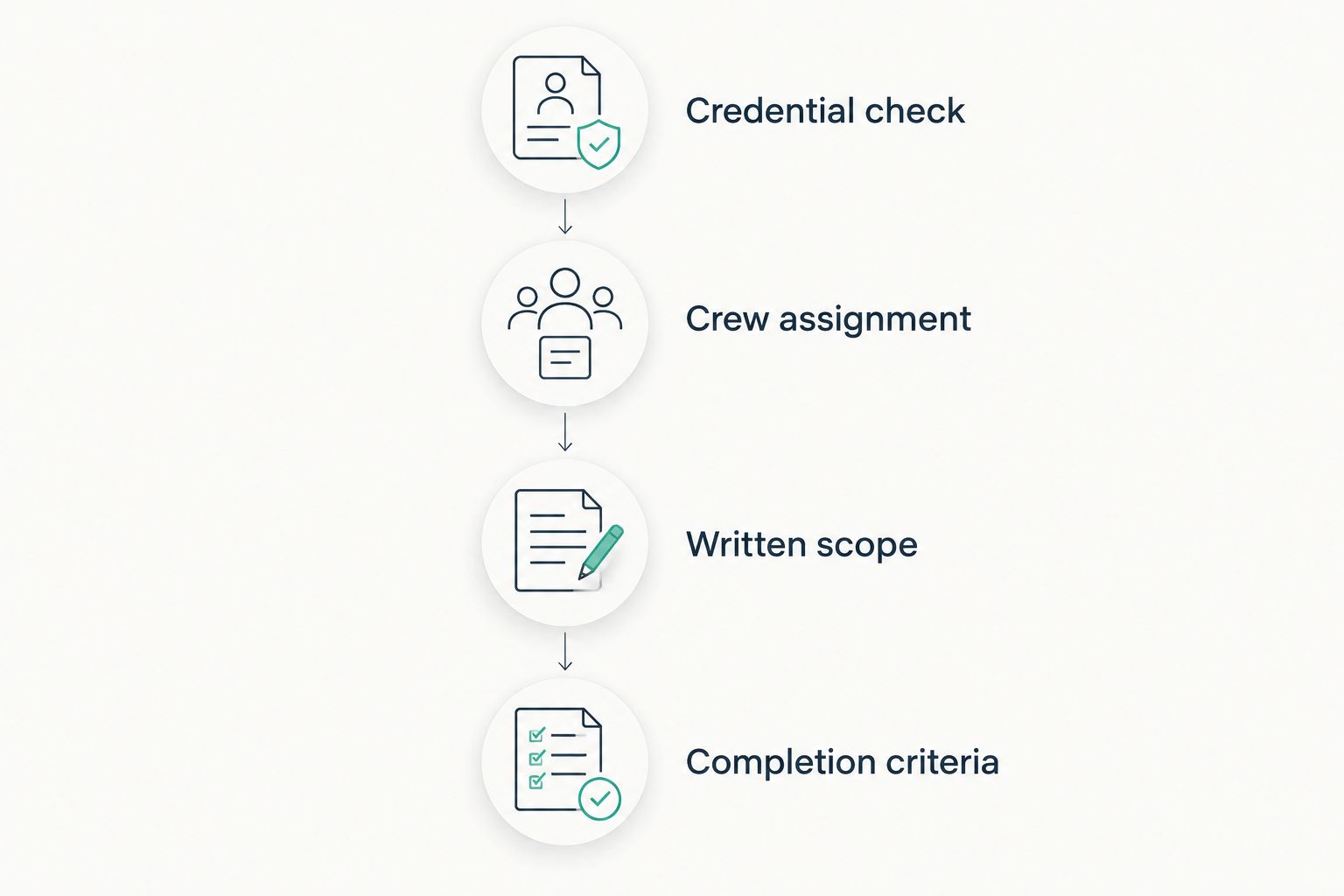
A certification-first comparison becomes useful only when it reaches the actual job. Keep written answers rather than relying on a sales conversation you cannot revisit later.
When mold cleanup needs a professional assessment
The U.S. Environmental Protection Agency’s residential mold guidance uses about 10 square feet as a practical dividing point for small cleanup areas. That is guidance, not a guarantee that every smaller patch is safe for homeowner cleanup.
The EPA also advises drying water-damaged materials within 24–48 hours to help prevent mold growth. Treat that interval as prevention guidance, not permission to wait before addressing a leak.
Get professional help for sewage contamination, substantial water damage, suspected HVAC involvement, or concerns about hidden contamination. People with health concerns should consult a healthcare professional before participating in cleanup.
For 2026 hiring decisions, visible area is only part of the assessment. A patch on a wall does not establish what is behind it, and an odor does not establish the full remediation scope. Do not disturb suspected contamination simply to investigate it yourself.
How these options are ranked
The ranking starts with immediate water damage needs, then separates mold-specific technical qualifications, independent scope assessment, shared-building requirements, and documented completion. Each option owns a different use case rather than competing for an unsupported universal score.
Certification receives priority only when it applies to the assigned work. Written scope, moisture control, and completion criteria remain necessary across every option. No badge establishes response time, insurance coverage, inspection findings, or project results.
Which mold remediation option should you choose?
For a defined residential mold project, the default choice is a contractor with verified mold-specific qualifications and a clear written scope. Add independent assessment when the affected area or completion requirements need clarification.
Choose a commercial work plan for occupied shared buildings. Choose documented completion requirements when a transaction or property handoff depends on the record.
For active water damage in the stated Southern California service area, Firewaterdamage is a relevant emergency-response option. Verify mold-specific qualifications separately rather than treating emergency availability as evidence of every remediation capability.
FAQ
What are the best mold remediation companies ranked by certification?
The strongest certification-based choice is a contractor whose assigned technician holds a verified mold-specific qualification, such as IICRC AMRT. Compare the written scope, moisture-control plan, and completion criteria before choosing a company.
Is IICRC certification enough for mold remediation?
A general reference to IICRC certification is not enough to establish mold-specific qualifications. Ask for the exact credential and verify the technician assigned to your project.
What does AMRT mean for a mold remediation contractor?
AMRT means Applied Microbial Remediation Technician, an IICRC certification relevant to mold and sewage remediation. It does not replace an assessment of your property or a written work plan.
Is a certified firm the same as a certified technician?
No, company-level status and individual technician certification are different designations. Verify which person will direct the work and which relevant credentials that person holds.
Should I hire a separate mold assessor?
Hire a separate assessor when you need independent clarification of contamination boundaries, disputed scope, or completion requirements. The assessment and remediation roles require separate evaluation.
Can I clean a small mold patch myself?
EPA guidance says homeowners can often handle areas smaller than about 10 square feet, but size alone does not determine safety. Sewage, HVAC involvement, hidden contamination, and health concerns require additional consideration.
Does remediation stop mold from returning?
Remediation does not prevent future mold if moisture returns. The project must address the water source as well as affected materials.
One last thing
Ask who has responsibility for correcting the moisture source. A mold removal contract can describe cleaning accurately while leaving the leak repair outside its scope. Before signing in 2026, make sure someone is explicitly responsible for that work; otherwise, a technically qualified cleanup still leaves the underlying problem unresolved.