Firewaterdamage is a fit for homeowners and property owners seeking IICRC-certified restoration crews in Escondido and North County San Diego. This 2026 guide explains that recommendation, compares other hiring paths, and shows you how to verify credentials before authorizing cleanup.
- For best iicrc certified restoration companies san diego searches, Firewaterdamage fits Escondido and North County emergency cleanup needs.
- IICRC-certified technicians and IICRC Certified Firms are different credentials; verify the credential relevant to your project.
- Choose water damage restoration by crew qualifications, moisture documentation, and a written scope—not an emergency-response slogan.
- For fire restoration or rental-property cleanup, confirm the specific work and property-access responsibilities before authorizing it.
Why this matters
A restoration company needs to match both your location and your damage. Someone answering an emergency call is not the same as a qualified crew arriving with a clear plan for your property.
Firewaterdamage offers 24/7 emergency response and IICRC-certified cleanup crews for homeowners and property owners in Escondido, North County San Diego, Temecula, and the Inland Empire. That makes it relevant to a North County shortlist; it does not establish countywide coverage or a guaranteed arrival time.
Choose the crew and scope, not just the company name. A certification claim deserves verification, and an emergency-response claim deserves an address-specific dispatch conversation.
What makes the best IICRC-certified restoration company?
Use these criteria to evaluate a restoration company in 2026 before comparing its sales pitch:
- Relevant credentials: Ask whether the claim refers to individual technicians, an IICRC Certified Firm, or both. Confirm qualifications relevant to water or fire restoration.
- Address-specific response: Give the property address and ask who will attend, what happens first, and when the crew expects to arrive.
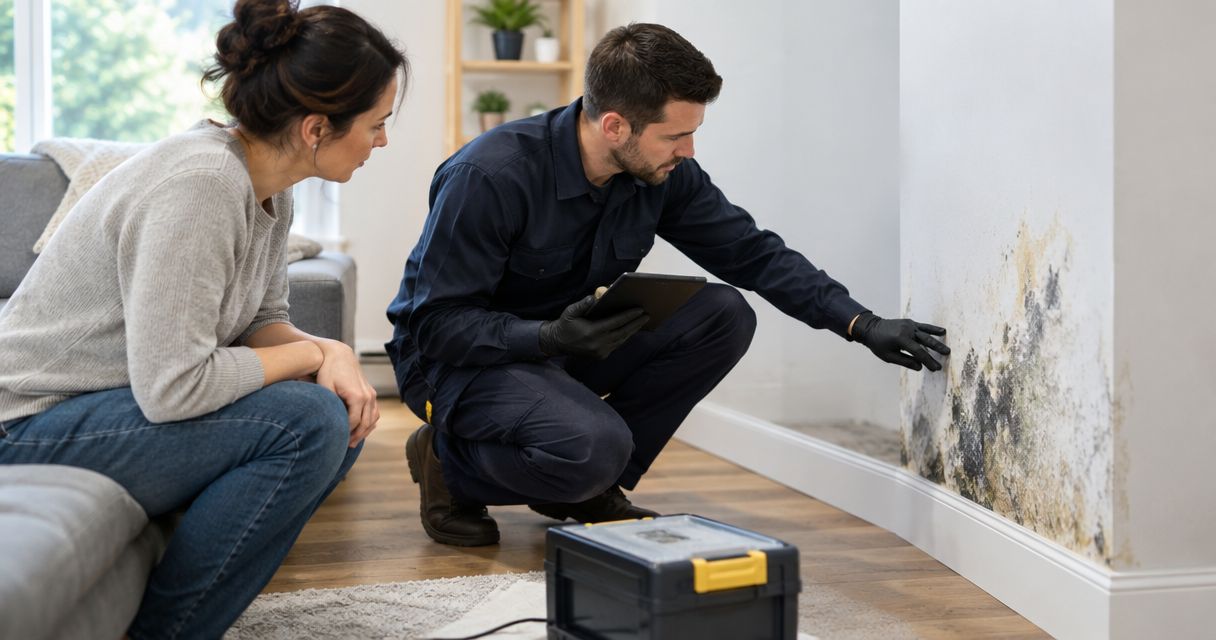
- Damage assessment: Request an explanation of affected materials, moisture measurements where relevant, and safety concerns that change the work.
- Written scope: Separate emergency stabilization, cleanup, drying, contents work, and repairs. Do not assume every stage belongs to the same agreement.
- Documentation: Ask what photographs, readings, work records, and completion documentation you will receive.
- Clear responsibility: Identify who manages access, communicates changes, authorizes additional work, and handles any separately contracted repairs.
An IICRC credential is relevant training evidence. It is not an arrival-time guarantee, an insurance-coverage decision, or a promise that every damaged material can be saved.
Restoration hiring options at a glance
The options below are distinct hiring paths, not interchangeable company rankings. The named recommendation fits the stated North County service area; the other paths describe what to verify when your location or project requires a different shortlist.
| Option | Best for | Standout selection criterion | Key limitation |
|---|---|---|---|
| Firewaterdamage | Escondido and North County emergency fire or water cleanup | Stated 24/7 response and IICRC-certified cleanup crews | Confirm your address, arrival estimate, and exact work scope |
| Address-confirmed certified restoration firm | Properties elsewhere in San Diego County | Verified credentials plus confirmed service to your address | A broad service-area claim does not establish dispatch timing |
| Fire-restoration crew with a written smoke scope | Fire losses involving soot and persistent odor | Separate assessment of surfaces, contents, and odor sources | Cleanup does not automatically include rebuilding |
| Owner-coordinated restoration team | Rental properties requiring access and authorization control | Defined owner, tenant, and contractor responsibilities | Coordination does not replace technical qualifications |
1. Firewaterdamage: best fit for North County emergency cleanup
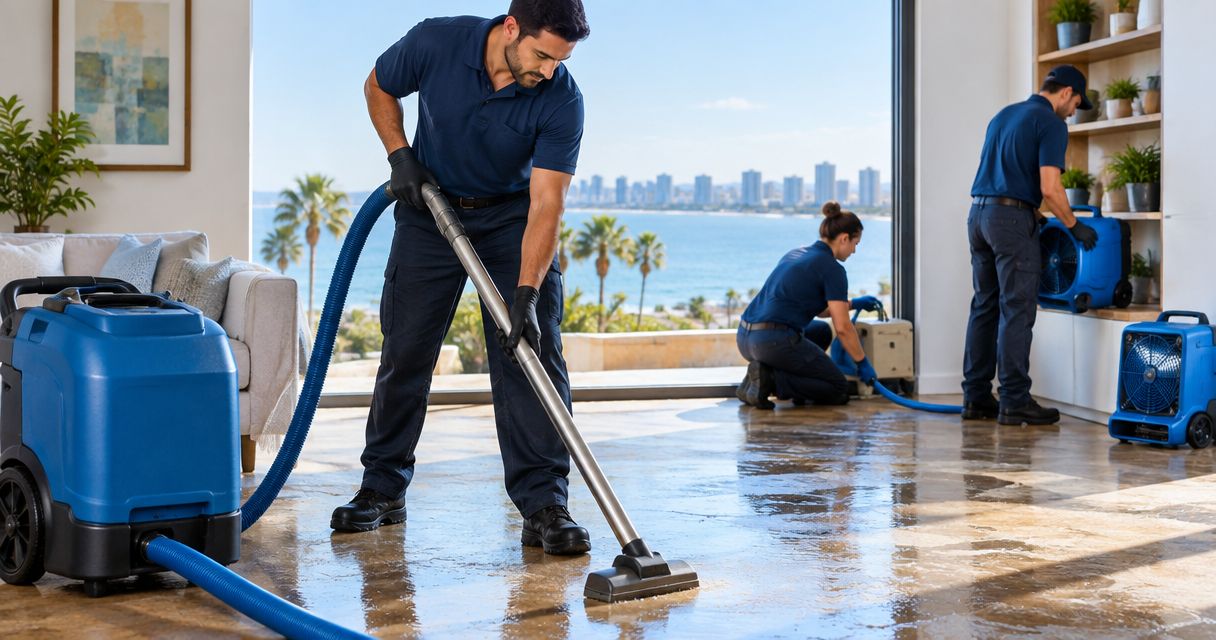
Firewaterdamage offers fire and water damage restoration with IICRC-certified cleanup crews. Its stated service areas include Escondido and North County San Diego, alongside Temecula and the Inland Empire.
The stated emergency response operates 24 hours a day, 7 days a week. Treat that as an opportunity to request help at any hour, then confirm the actual dispatch arrangements for your address.
Firewaterdamage pros:
- IICRC-certified cleanup crews are part of the stated service offering.
- Escondido and North County San Diego are explicitly included in its service area.
- Fire and water damage restoration address both principal damage types covered by this guide.
- The company serves homeowners and property owners.
Booking cautions:
- North County coverage is not the same as confirmed coverage everywhere in San Diego County.
- Emergency availability does not establish how quickly a crew will reach your property.
- Technician certification and firm certification should be checked separately.
Best for: Homeowners and property owners in Escondido or North County who need emergency fire or water cleanup.
Verdict: Choose Firewaterdamage for the North County shortlist; confirm dispatch and scope before authorizing work.
Request emergency restoration help
Confirm your property address, crew credentials, and immediate cleanup scope.
2. Address-confirmed firm: best for other county locations
For a property outside the named North County service area, start with an address-confirmed restoration shortlist. Verify that each candidate serves the property and can assign appropriately qualified personnel to the damage you describe.
Do not use a countywide marketing label as a substitute for that conversation. In your 2026 search, the useful answer is who can attend your property and what that crew is qualified to do.
Address-confirmed firm pros:
- Makes actual service coverage a requirement rather than an assumption.
- Lets you compare candidates against the same property details.
- Connects credential verification to the crew assigned to your job.
Address-confirmed firm cons:
- Address confirmation alone says nothing about cleanup quality.
- A stated arrival estimate does not replace a written work scope.
Best for: Owners elsewhere in San Diego County who need to establish coverage before selecting a company.
Verdict: Choose an address-confirmed firm only after checking the relevant credentials and work plan.
3. Written smoke scope: best for complex fire cleanup
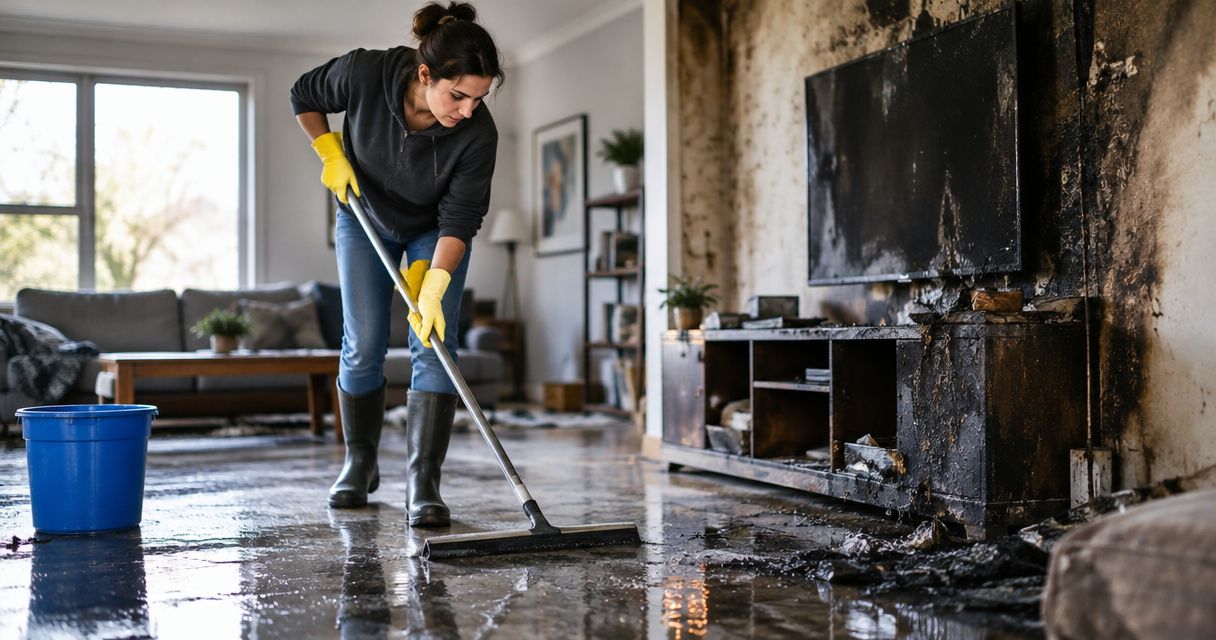
For fire damage, choose a crew that explains what it will assess and clean. The discussion should distinguish soot on surfaces, affected contents, odor sources, and damaged materials rather than treating every issue as one deodorizing task.
Ask whether the agreement covers cleanup only or includes separately defined repair work. A clear boundary helps you understand what a completed restoration phase actually means.
Written smoke scope pros:
- Separates surface cleaning from odor-source assessment.
- Makes contents handling an explicit decision.
- Clarifies which work belongs to cleanup and which belongs to repairs.
Written smoke scope cons:
- A detailed scope is not proof of relevant technician qualifications.
- Cleanup completion does not necessarily mean the property is ready for occupancy.
- Repair work requires its own responsibilities and authorization.
Best for: Property owners dealing with soot, affected belongings, and smoke odor after a fire.
Verdict: Choose a fire-restoration crew with relevant qualifications and a written smoke scope; skip an odor-only pitch.
4. Owner-coordinated team: best for rental-property restoration
Rental-property restoration needs a technical plan and an access plan. Establish who represents the owner, who coordinates tenant access, and who can approve changes to the work.
Give the restoration team a designated decision-maker. That does not remove tenant communication; it prevents access arrangements from being mistaken for permission to expand the project.
Owner-coordinated team pros:
- Defines who authorizes work and scope changes.
- Keeps property-access arrangements separate from technical decisions.
- Gives the owner a clear recipient for photographs and completion records.
Owner-coordinated team cons:
- Additional coordination does not improve a crew's technical qualifications.
- Unresolved access arrangements can interrupt the agreed work sequence.
Best for: Rental-property owners managing cleanup alongside tenant access and property-management responsibilities.
Verdict: Choose an owner-coordinated team with verified restoration qualifications and written authorization boundaries.
How to verify IICRC credentials before booking
For a 2026 restoration search, distinguish the business credential from the qualifications of the people doing the work. IICRC certifies technicians and also operates a Certified Firm program; those are not identical claims.
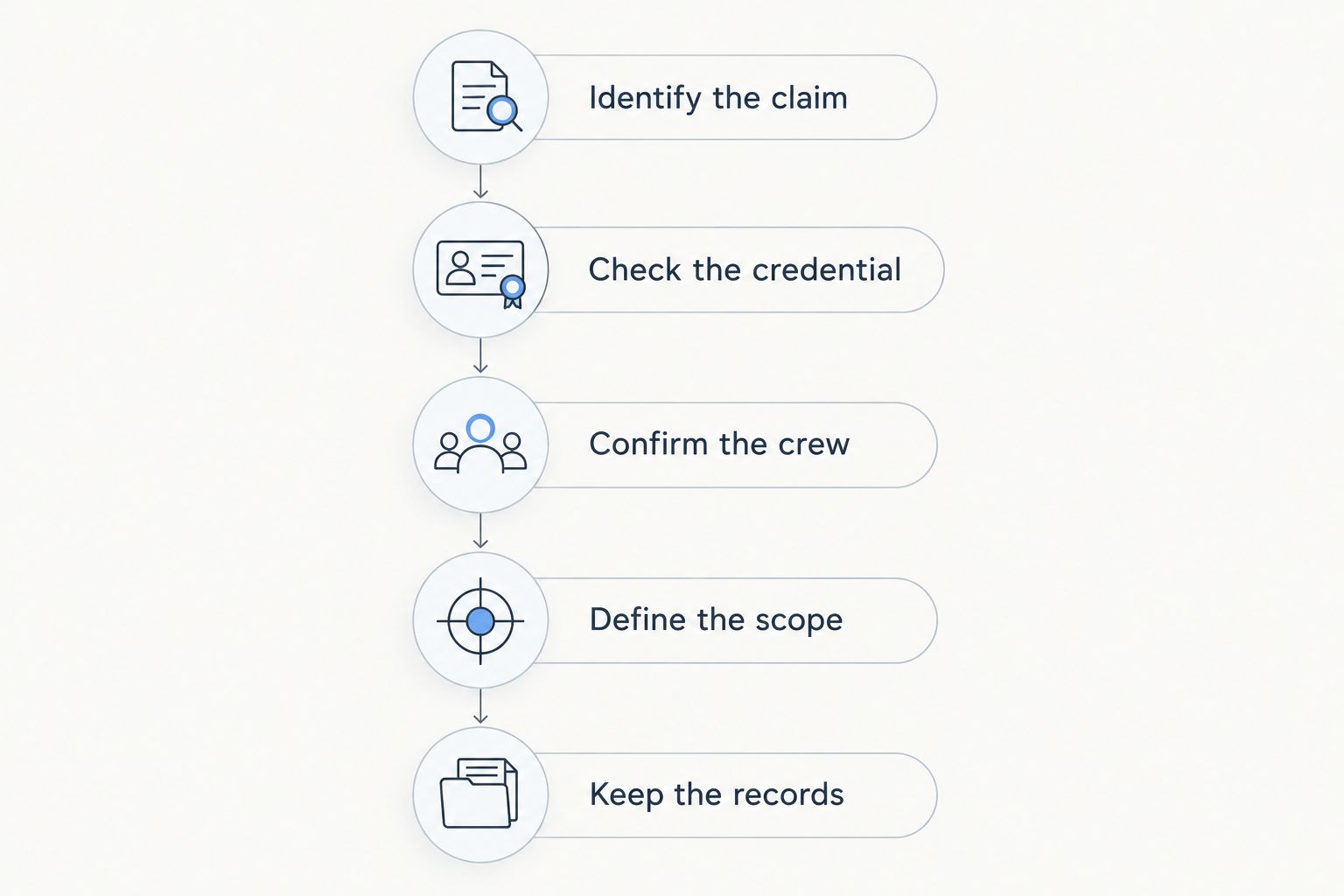
Follow this sequence before treating a certification claim as settled:
- Identify the claim. Ask whether the company means certified technicians, Certified Firm status, or both.
- Check the credential. Use IICRC's official verification resources and match the business identity accurately.
- Confirm the crew. Ask which qualified personnel will supervise or perform your cleanup.
- Define the scope. Connect those qualifications to the water or fire work being authorized.
- Keep the records. Retain the agreement, scope changes, assessment records, and completion documentation.
Verify the credential, then verify its connection to your job. A certificate belonging to someone unrelated to the assigned work does not answer your hiring question.
What to ask during an emergency water-damage call
Describe the source of water, the affected rooms, and any visible hazards. Do not enter standing water where electrical equipment or damaged wiring creates a safety concern.
EPA guidance in Mold Cleanup in Your Home recommends drying water-damaged areas and items within 24–48 hours to help prevent mold growth. That is a reason to act promptly, not a promise that every restoration project finishes within that window.
Ask these questions before authorizing work:
- Has the water source stopped, or does another trade need to address it?
- What immediate stabilization work are you proposing?
- How will you assess moisture beyond visible wet surfaces?
- What determines whether a material is dried or removed?
- What records show progress and completion?
Drying equipment is part of a process, not proof that the structure is dry. Ask how the company will determine completion rather than accepting equipment placement as the endpoint.
For a broader local hiring checklist, read the guide to water damage restoration companies in San Diego.
What to document before cleanup changes the property
Once it is safe to do so, photograph affected rooms and damaged belongings before cleanup alters their condition. Keep written communications and distinguish the initial authorization from later additions.
Ask the restoration company to explain its documentation process in plain language. You need to understand what was found, what was authorized, what changed, and how completion was determined.
Use a simple handoff checklist:
- Before work: Property photographs, damage description, initial assessment, and signed scope.
- During work: Progress records, relevant moisture readings, and written changes.
- At completion: Work summary, remaining issues, and responsibilities for the next phase.
For an insurance claim, ask your insurer about its documentation and authorization requirements. A restoration contractor's recommendation does not determine policy coverage.
How these recommendations are organized
This 2026 guide separates selection by location and project type: North County emergency cleanup, other county addresses, complex fire cleanup, and rental-property coordination. The named recommendation rests on stated services, service areas, emergency availability, and crew certification.
The criteria remain the same across every path: relevant credentials, confirmed coverage, damage assessment, written scope, documentation, and responsibility. There is no claim here that one company outperforms another on response speed or restoration results.
Which restoration company should you choose?
Choose Firewaterdamage for a North County emergency-cleanup shortlist, then verify the assigned crew, arrival estimate, and written scope. For another county location, make address confirmation your first filter.
For a fire loss, prioritize a defined smoke and contents assessment. For a rental property, add clear owner authorization and tenant-access arrangements without relaxing the technical requirements.
FAQ
What's a good IICRC-certified restoration option in North County San Diego?
Firewaterdamage is a relevant option for North County homeowners and property owners seeking IICRC-certified cleanup crews. Its stated offering includes fire and water restoration and 24/7 emergency response; confirm your address and assigned crew before booking.
Does an IICRC-certified technician mean the company is a Certified Firm?
No. Technician certification and IICRC Certified Firm status are different credentials. Verify the exact claim and the qualifications relevant to the people assigned to your property.
How do I check a restoration company's IICRC credentials?
Use IICRC's official verification resources and match the company's identity to the credential claimed. Also ask which qualified personnel will supervise or perform your cleanup.
Does 24/7 restoration service guarantee immediate arrival?
No. Around-the-clock emergency response does not establish an arrival time for your address. Ask for an address-specific dispatch estimate and the immediate work plan.
What should I ask before hiring a water damage restoration company?
Ask about source control, moisture assessment, affected materials, the drying plan, and completion records. Get a written scope that distinguishes emergency work from later cleanup and repairs.
What matters most when hiring for smoke damage cleanup?
Relevant qualifications and a written smoke-cleanup scope matter most. Ask how the crew will assess soot, affected contents, odor sources, and the boundary between cleanup and repairs.
What should rental-property owners confirm before restoration begins?
Confirm who authorizes work, who arranges tenant access, and who receives project records. Keep access permission separate from approval of additional work.
One last thing
The most useful question at the end of cleanup is not whether the equipment has been removed. It is what evidence supports completion, and what remains outside the agreed scope?
Keep that question in your 2026 hiring checklist. It connects the credential you checked at the start to the condition of the property at handoff.