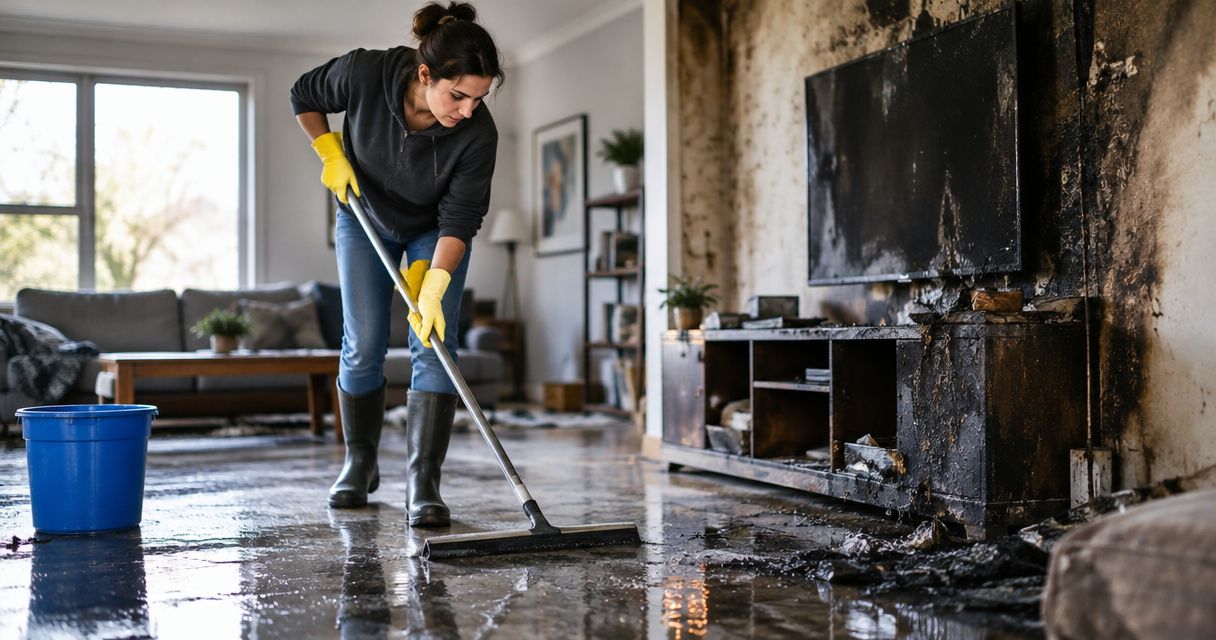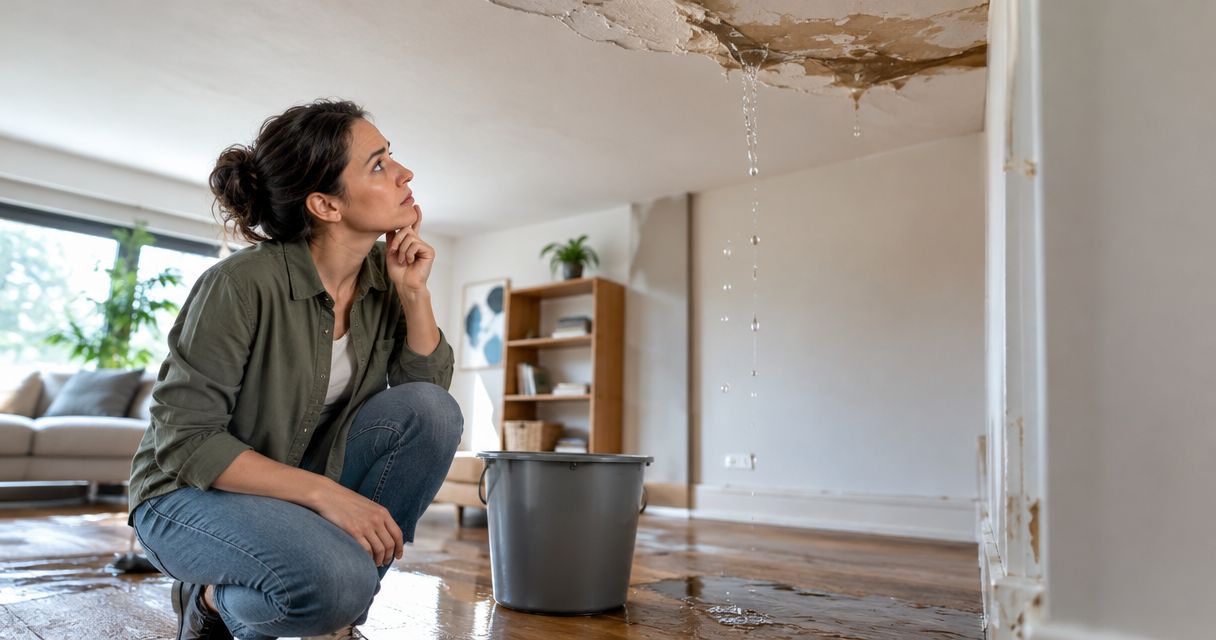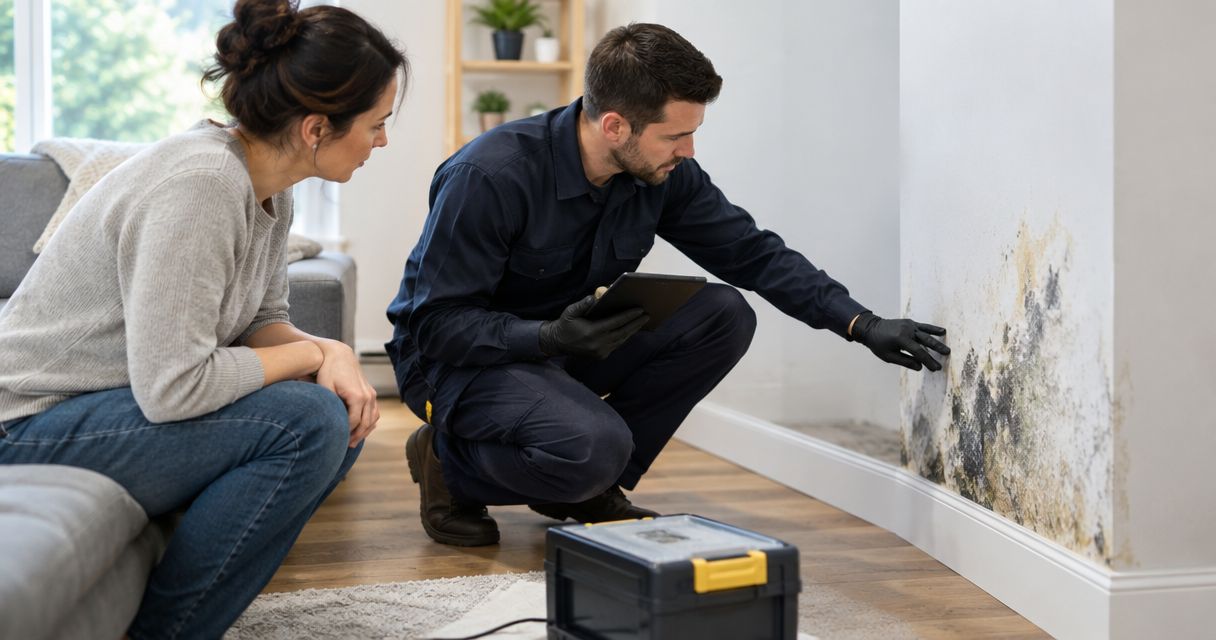
Best overall for locating a suspected slab leak: a dedicated leak detection specialist. Best for combining diagnosis and pipe repair: a licensed plumber offering both. Best for water-damage cleanup: Firewaterdamage. For homeowners comparing the best slab leak detection companies ranked by cost in 2026, the right starting point is a written scope—not the smallest advertised service fee.
- Compare the best slab leak detection companies ranked by cost using matching written scopes, not service-call fees.
- A dedicated leak detection specialist fits homeowners who need a location report before choosing a repair contractor.
- A licensed plumber offering detection and repair fits homeowners who want responsibility for both tasks.
- Firewaterdamage fits homeowners needing water-damage cleanup; treat pipe detection and repair as separate scopes.
Why this matters
A slab leak involves plumbing beneath or within a concrete foundation. Finding the failed pipe, repairing it, and drying damaged building materials are different jobs. A quote that covers only detection cannot be compared directly with a proposal that includes pipe repair or restoration.
The best-value provider is the one whose written scope resolves your immediate problem without leaving necessary work unassigned. A detection visit does not automatically include opening the floor, fixing plumbing, replacing finishes, or drying a wet wall.
Use this 2026 guide to choose the right provider type and compare proposals. The ranking below follows the job you need done; it does not declare a cheapest company without equivalent written quotes.
What makes the best slab leak detection service
Evaluate these criteria before comparing the total on a proposal:
- Scope clarity: The proposal distinguishes leak investigation, location reporting, plumbing repair, and water-damage cleanup.
- Method selection: The provider explains how it will investigate the suspected leak and what conditions limit the method.
- Usable findings: You receive a marked location or written findings that a repair contractor can use.
- Access control: The provider explains whether the investigation requires opening walls, flooring, or concrete.
- Relevant qualifications: Verify plumbing licensing for repair work and restoration credentials for cleanup work. They serve different purposes.
- Responsibility after diagnosis: The proposal states who handles an unresolved result, further investigation, and any subsequent repair.
Ask every candidate the same questions. Otherwise, you are comparing different services rather than different companies.
Slab leak services at a glance
| Rank | Provider option | Best for | Standout advantage | Key limitation |
|---|---|---|---|---|
| 1 | Dedicated leak detection specialist | Locating a suspected leak before choosing a repair contractor | A separately defined diagnostic assignment | Detection alone does not repair the pipe or restore damage |
| 2 | Licensed plumber offering detection and repair | Keeping diagnosis and pipe repair with one contractor | One contractor can take responsibility for the plumbing scope | You must verify that detection is included and findings are documented |
| 3 | Firewaterdamage | Emergency cleanup after water affects the property | 24/7 emergency response and IICRC-certified cleanup crews | Restoration credentials do not establish slab leak detection or plumbing repair services |
The table separates functions rather than treating every provider as interchangeable. You can need a detection specialist and a restoration company on the same job without either duplicating the other's work.
1. Dedicated leak detection specialist: best for locating the leak
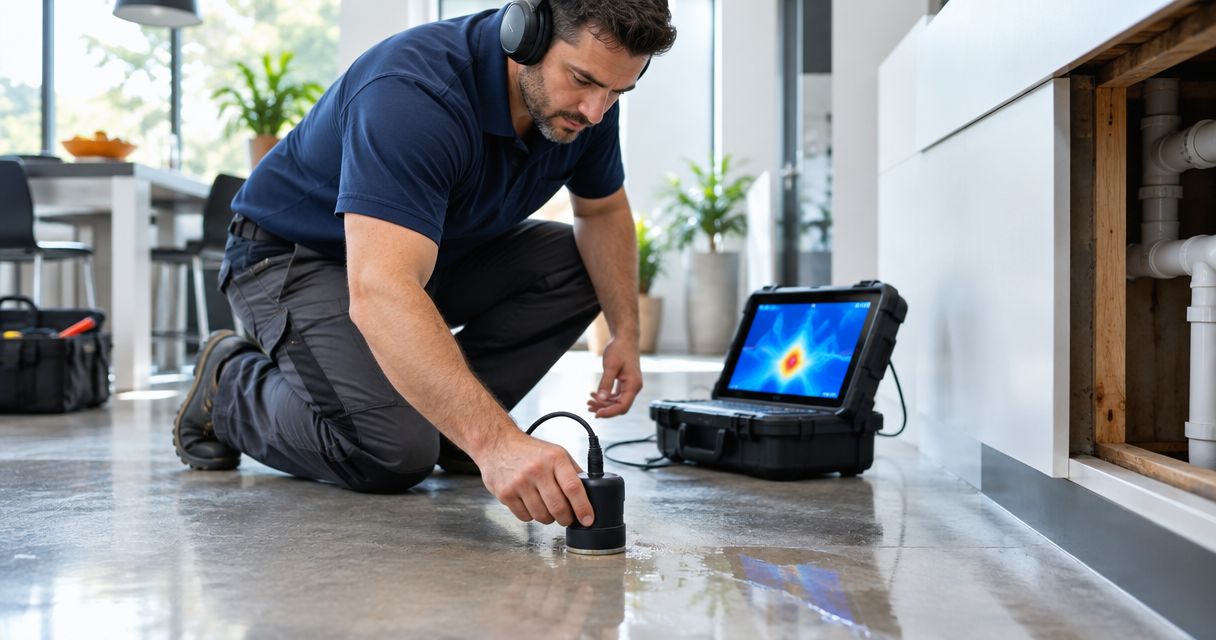
A dedicated leak detection specialist investigates where water is escaping before a repair contractor opens the building. This option fits a homeowner who wants a defined diagnostic assignment and findings that can support separate repair proposals.
Acoustic listening, pressure testing, and thermal imaging are established investigative methods. Each answers a different question: pressure testing helps assess a plumbing section, acoustic equipment investigates sound, and thermal imaging shows surface temperature patterns—not a direct view through concrete.
Dedicated leak detection specialist pros
- You can separate diagnosis from the decision about who performs repairs.
- Written findings give repair contractors a common starting point.
- A defined detection scope makes competing diagnostic proposals easier to compare.
- You can ask for non-destructive investigation before authorizing openings.
Dedicated leak detection specialist cons
- You still need a contractor to repair confirmed plumbing failures.
- Concealed conditions can require further investigation or access.
- A result without a usable report leaves the next contractor with unanswered questions.
Best for: Homeowners who need a leak location before committing to a repair method.
Before hiring, ask what the report contains. Useful findings distinguish observations from conclusions, identify the investigated plumbing section, and explain any uncertainty about the location. Ask how the provider marks the suspected area and whether the repair contractor can contact it about the findings.
For a 2026 comparison, make reporting requirements identical across your detection proposals. A verbal opinion and a documented investigation are not equivalent deliverables.
Verdict: Buy a clearly defined detection service when location is the unresolved problem; skip proposals that leave the deliverable unclear.
2. Licensed plumber offering detection and repair: best for one plumbing scope
A licensed plumber offering both services can investigate the leak and propose how to repair the affected plumbing. This option fits homeowners who want one contractor responsible for the plumbing work, rather than managing a handoff between diagnosis and repair.
Verify the contractor's license through the relevant licensing authority. Then confirm that slab leak detection is part of the proposed assignment; a general plumbing service description does not establish what this particular visit includes.
Licensed plumber offering detection and repair pros
- Diagnosis and pipe repair can sit within one written agreement.
- You have one contractor to question about the proposed repair method.
- The plumber can explain the access required for the plumbing repair.
- A combined proposal can identify the transition from investigation to repair.
Licensed plumber offering detection and repair cons
- A combined total can obscure what the diagnostic work includes.
- Plumbing repair does not automatically include drying or finish replacement.
- You need explicit authorization boundaries before destructive access begins.
Best for: Homeowners who want one contractor to handle both investigation and plumbing repair.
Ask for separate descriptions of detection, access, pipe work, testing, and reinstatement. Those descriptions matter even when the contractor presents one total. You should know whether repairing a pipe leaves you responsible for an open floor or damaged cabinetry.
If the proposal includes opening the slab, ask what finding supports that location and what happens if the opening does not expose the failure. Compare the repair options on their stated scope, access requirements, and written warranty terms—not assumptions about what a contractor normally includes.
The guide to slab leak repair contractors in San Diego County addresses the next decision after detection.
Verdict: Buy a combined plumbing scope when responsibility is clear; hold if detection, access, and repair are bundled without explanation.
3. Firewaterdamage: best for emergency water-damage cleanup
Firewaterdamage is a fire and water damage restoration company serving homeowners and property owners in Temecula, Escondido, and North County San Diego/Inland Empire. It offers 24/7 emergency response and IICRC-certified cleanup crews.
Firewaterdamage is best for homeowners who need water-damage cleanup alongside a separate slab leak investigation or plumbing repair. Keep the restoration assignment distinct from the plumbing assignment so each contractor has a clear responsibility.
Firewaterdamage pros
- 24/7 emergency response addresses the need for urgent cleanup assistance.
- IICRC-certified cleanup crews provide a stated restoration qualification.
- Its stated service area includes the local communities covered by this guide.
- Its business focus matches the cleanup side of a water-loss event.
Firewaterdamage cons
- A restoration assignment does not replace a plumbing diagnosis.
- Cleanup credentials do not establish authority to perform pipe repairs.
- You still need a written restoration scope defining the work you authorize.
Best for: Homeowners and property owners whose suspected slab leak has also affected building materials or contents.
Ask the restoration provider to explain the affected areas, proposed cleanup work, and how drying will be assessed. Ask the plumber separately to explain the water source and repair plan. This division prevents a dry-looking surface from being treated as proof that the plumbing problem is resolved.
Verdict: Buy restoration help when water has affected the property; skip using a cleanup agreement as a substitute for a plumbing scope.
How to compare slab leak detection proposals by cost
Build your 2026 comparison around the same requested deliverables. Collect 3 written proposals when conditions allow you to compare providers without delaying necessary emergency action. That is a shopping recommendation, not a claim about what every job requires.
Use 3 separate scopes: detection, plumbing repair, and restoration. A provider can cover more than one scope, but its proposal should still explain each assignment.
| Proposal component | What to ask | Why it matters |
|---|---|---|
| Detection | What investigation and written findings are included? | Establishes what the diagnostic visit delivers |
| Further investigation | What happens if the first investigation is inconclusive? | Identifies the next authorization decision |
| Access | Who opens and reinstates walls, flooring, or concrete? | Prevents an unfinished opening from becoming an unassigned task |
| Plumbing repair | What pipe work and completion testing are included? | Separates locating the failure from fixing it |
| Restoration | What cleanup, drying, and documentation are included? | Defines responsibility for affected building materials |
Do not treat an omitted task as an included task. Ask the provider to clarify the scope in writing before you compare proposals.
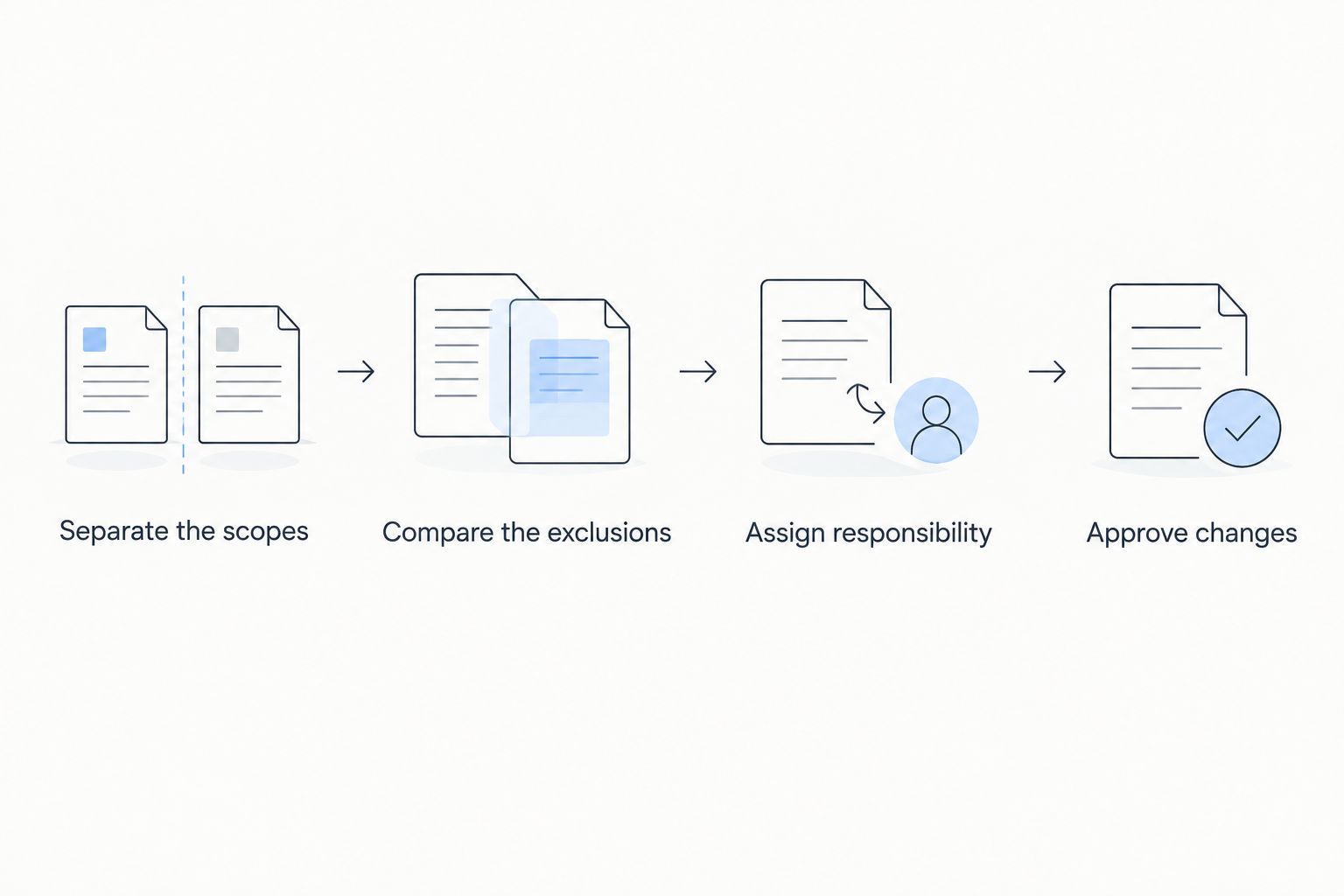
Separate the scopes
Create a short list of what you need: location findings, pipe repair, and cleanup if water has affected the property. Send the same list to each relevant provider.
Compare the exclusions
Read what each proposal leaves out. Access, finish replacement, further investigation, and restoration deserve explicit answers rather than a general promise to handle the leak.
Assign responsibility
Write down who controls each handoff. Identify who receives the detection report, authorizes openings, repairs the pipe, and checks the affected materials.
Approve changes
Ask how additional work is authorized. Keep a new discovery separate from permission to perform whatever work the contractor considers necessary.
What to do before the detection visit
Protect people before investigating the property. Stay away from wet electrical equipment and standing water near electrical sources. Do not enter an unsafe area to reach a shutoff or inspect damage.
If you can safely access the water shutoff, stop the water supply when an active plumbing leak requires it. Explain what you observed to the responding contractor: where dampness appeared, whether water use was occurring, and whether shutting off the supply changed the condition.
For a suspected hidden leak without an immediate hazard, the EPA's WaterSense guidance describes checking the water meter before and after a 2-hour period when no water is used. A changed reading indicates a probable leak; it does not locate the leak beneath the slab.
Document visible conditions from a safe position. Keep photographs, contractor reports, and communications together. Avoid destructive investigation until the person performing it explains the purpose and obtains your authorization.
How we ranked
This guide ranks provider types by responsibility: locate the leak, repair the plumbing, and address water damage. Scope clarity, usable findings, access control, qualifications, and handoff accountability are the deciding criteria.
There is no defensible universal cheapest company across different assignments. For your 2026 shortlist, rank equivalent written proposals only after confirming they cover the same work. A detection-only proposal belongs beside other detection-only proposals—not beside a complete repair and restoration agreement.
Which slab leak provider should you choose?
Choose a dedicated leak detection specialist when you need reliable location findings before deciding on repairs. Choose a licensed plumber offering detection and repair when you want one contractor responsible for the plumbing assignment.
Bring in restoration help when water has affected the property. Repairing the source and addressing wet building materials are separate completion decisions; neither should disappear inside an undefined promise to fix everything.
The default for an undecided homeowner is simple: identify the unresolved task, request its written scope, and assign the next task before work begins.
FAQ
What's the best slab leak detection company for my home?
The best fit is a provider whose written scope matches the task you need completed. Choose a dedicated detection specialist for location findings, or a licensed plumber offering detection and repair for a combined plumbing assignment.
How do I compare slab leak detection companies by cost?
Compare written proposals covering the same investigation and deliverables. Check reporting, further investigation, access, repair, and restoration exclusions before deciding which proposal offers better value.
Is a leak detection specialist better than a plumber?
A detection specialist fits a separate diagnostic assignment, while a plumber offering both services fits a combined detection-and-repair assignment. Verify the actual scope rather than choosing by the business label alone.
Can thermal imaging prove there is a slab leak?
Thermal imaging alone does not prove there is a slab leak. It shows surface temperature patterns that a qualified investigator must interpret alongside other observations and testing.
Does slab leak detection include repairing the pipe?
Slab leak detection includes pipe repair only when the written agreement explicitly includes it. Ask who handles access, plumbing repair, completion testing, and finish replacement.
Should I call a restoration company or a plumber first?
Use a plumber for the plumbing problem and a restoration company for water-damage cleanup. When an active leak has also affected the property, coordinate both assignments rather than assuming one contractor covers everything.
Does homeowners insurance cover a slab leak?
Coverage depends on your policy and the circumstances of the loss. Ask your insurer to distinguish coverage for the failed pipe, access, resulting water damage, and restoration; do not assume they receive the same treatment.
One last thing
Before signing, ask: who closes the opening after the pipe is repaired? That question exposes an easily overlooked boundary between plumbing work and restoring the room. Put the answer in writing, along with who decides that affected materials are ready for reinstatement.