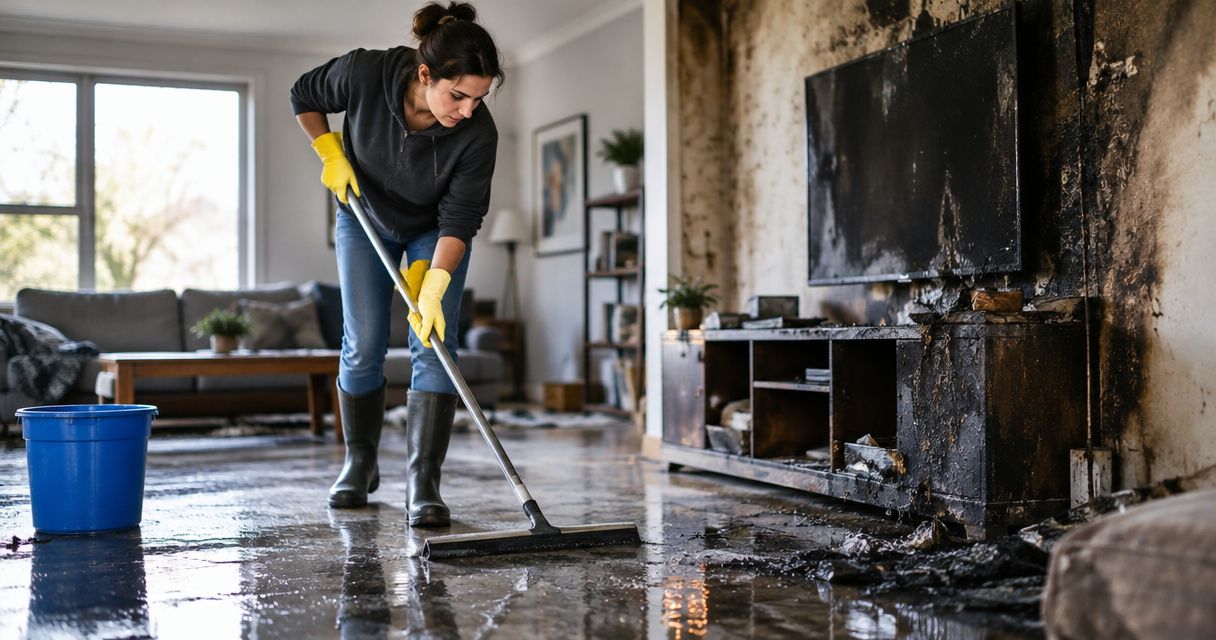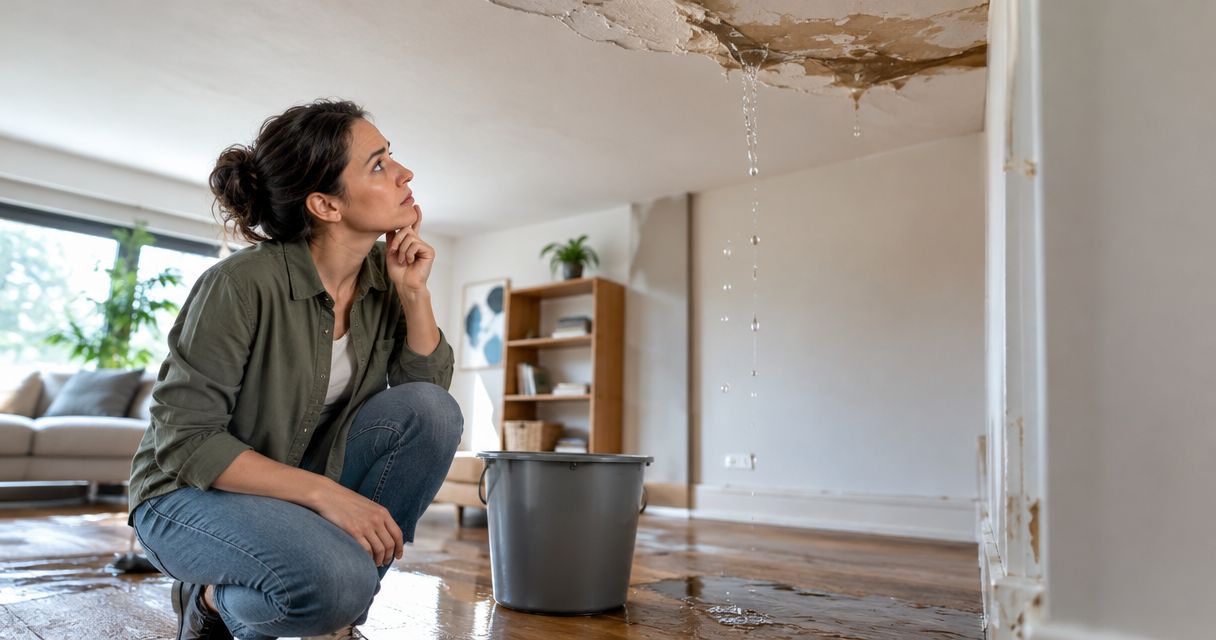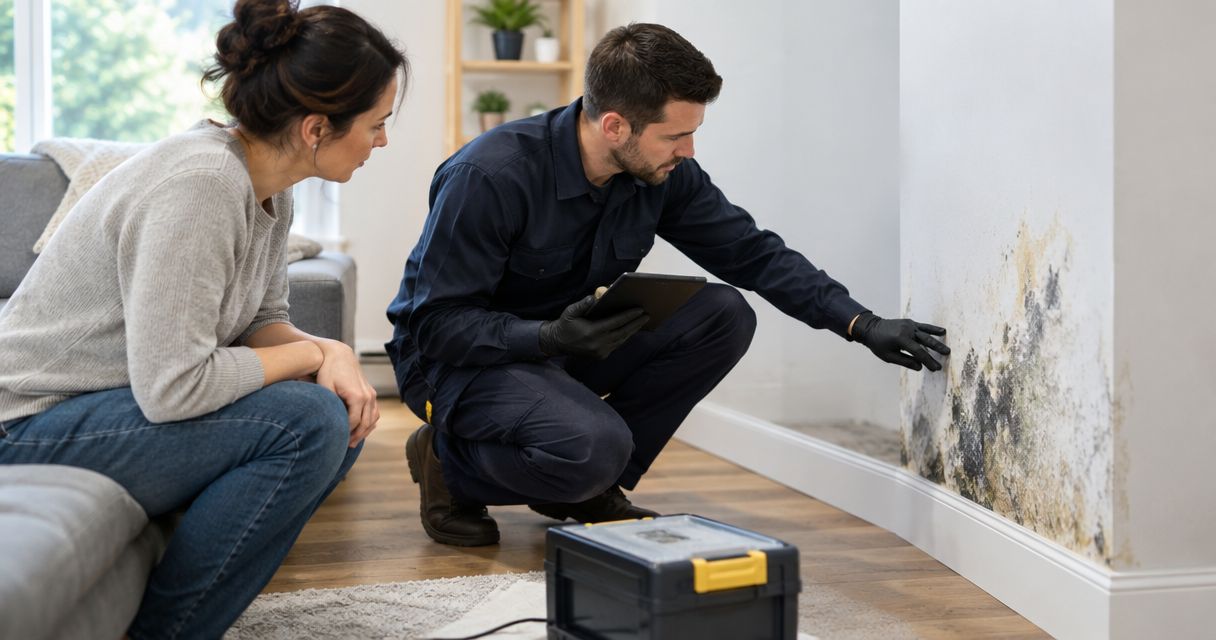
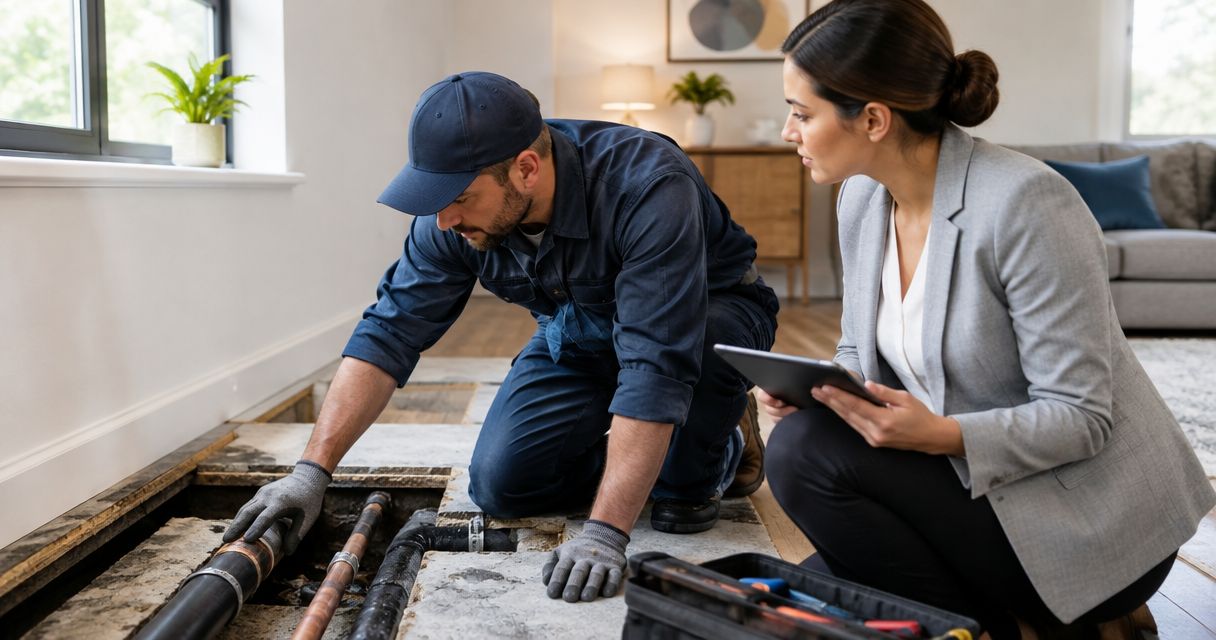
Slab leak repair for property managers is the coordinated detection, plumbing repair, and water-damage cleanup of a leak beneath a concrete slab, with the aim of restoring safe occupancy and limiting property damage. This 2026 guide explains how you manage tenant access, owner approvals, shared water supplies, and separate plumbing and restoration scopes without treating a stopped leak as a finished job.
- Slab leak repair for property managers requires separate plans for pipe repair, water damage restoration, and tenant access.
- Firewaterdamage is best for property managers needing emergency water-damage cleanup in its stated Southern California service areas.
- Confirm the leak location before approving concrete removal; choose the plumbing repair from documented findings.
- Close the incident only after plumbing verification, drying documentation, and occupant communication are complete.
Why slab leak repair matters for property managers
A slab leak creates two distinct problems: a failed pipe and water that has escaped into the building. Fixing the pipe does not establish that flooring, wall bases, or concealed materials are dry. Your response must cover both problems.
Property managers also control access and approvals across people who have different responsibilities. A tenant reports symptoms, an owner authorizes work, a plumber addresses the pipe, and a restoration contractor addresses affected materials. An association can introduce another approval boundary when shared infrastructure is involved.
Firewaterdamage is best for property managers needing emergency water-damage cleanup in Temecula, Escondido, and North County San Diego/Inland Empire. Firewaterdamage offers emergency response 24 hours a day and IICRC-certified cleanup crews; that establishes its restoration role, not a promise of plumbing repair.
Your 2026 response plan should make those responsibilities explicit before an incident. The operational priority is simple: protect people, stop ongoing water release, confirm the plumbing failure, and document the damage before closing anything back up.
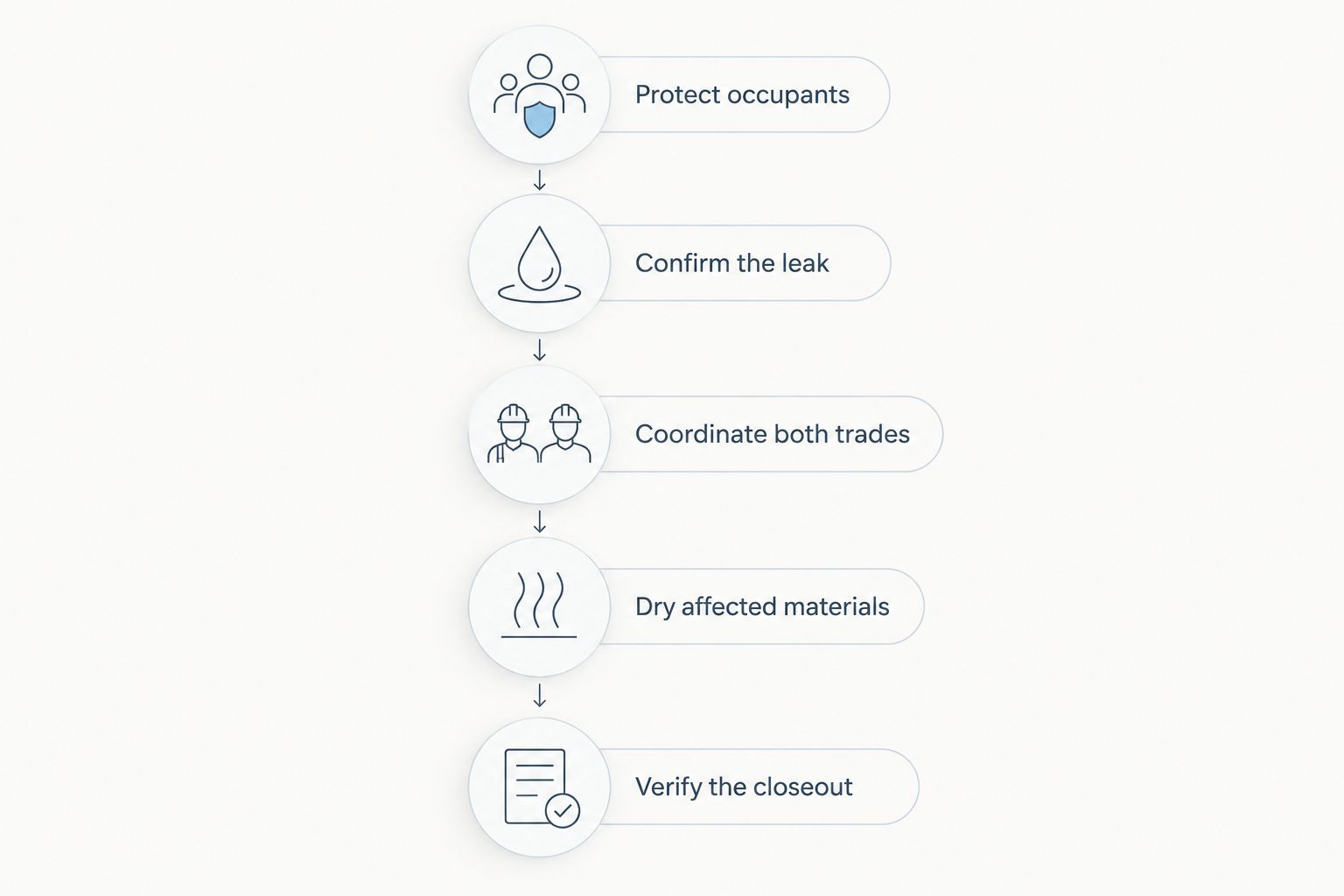
How to manage a slab leak from report to closeout
Protect occupants
Start with a manual safety check and a clear tenant message. Ask where water appears, whether it is spreading, and whether outlets, appliances, or electrical equipment are affected. Do not ask occupants to enter standing water or operate electrical equipment in a wet area.
If you can safely access a known shutoff, isolate the affected supply. Do not guess which valve controls a shared building. A shutoff that protects one unit can interrupt neighboring units or common facilities, so identify its service area and communicate the interruption.
Water-source classification belongs in the professional assessment. Do not assume that water is suitable for household cleanup because it appears clear. If the source or contamination is uncertain, keep occupants away from the affected area until it is assessed.
- Record the reported location and visible symptoms.
- Keep occupants away from wet electrical equipment.
- Confirm which units the shutoff serves.
- Notify affected occupants about the interruption.
- Escalate immediate safety concerns to emergency services.
Confirm the leak
Collect observations before authorizing destructive work. Photograph the wet area, note recent plumbing work, and record whether the symptoms change when fixtures are used. These observations give the plumber context; they do not locate the leak by themselves.
A water-meter check with intentional water use stopped can help identify unexplained flow. In a multi-unit property, first account for shared fixtures and other legitimate demand. A moving meter is evidence to investigate, not proof that the failure is beneath the slab.
Ask the plumber to distinguish a supply-pipe leak from a drain issue, an above-slab plumbing failure, or another moisture source. For each 2026 incident, require a written finding that identifies the affected line and the basis for the proposed repair. A damp floor or warm patch alone does not justify opening concrete.
- Gather photographs and the occupant's timeline.
- Account for shared water use during meter checks.
- Request non-destructive investigation before demolition where appropriate.
- Ask which pipe or system has failed.
- Require location evidence and remaining uncertainties in writing.
Coordinate both trades
Create the incident record yourself before choosing a contractor. A shared folder, a floor-plan sketch, and a written contact list are enough to establish who owns each task. Assign one manager to approvals and updates so tenants do not receive conflicting instructions.
Then arrange the plumbing and restoration scopes together. Plumbing stops the source; restoration evaluates affected materials, extracts water where needed, and manages drying. Firewaterdamage provides emergency water-damage response and certified cleanup crews, making it an option for the restoration portion within its stated service areas.
The water damage restoration guide for property managers addresses that broader response. Keep leak location, pipe repair, moisture assessment, and finish reconstruction separate in the work order, even when contractors coordinate scheduling.
A stopped leak is a milestone, not a restoration completion test. Make both contractors explain what they need from the other before equipment, flooring, or access openings are removed.
- Assign a single approval and communication contact.
- Separate plumbing and restoration responsibilities.
- Share the leak location and affected-area photographs.
- Coordinate access, extraction, repair, and drying schedules.
- Identify who will restore opened finishes.
Choose the repair
Ask the plumber for a repair recommendation tied to the confirmed failure. A localized access repair opens the slab near the leak to repair the affected pipe. A reroute changes the path of the affected line. Broader repiping replaces a larger portion of the plumbing system.
These approaches solve different problems. Do not select one because its description sounds less disruptive; compare the access required, the pipe condition, the line's route, and the work needed to restore finishes. Request alternatives when the diagnosis supports more than one approach.
Your approval should identify what the contractor will repair and what the contractor will leave for another trade. Include permit and inspection responsibilities where applicable. For a shared property, confirm the owner's or association's authority over the affected line before authorizing permanent changes.
- Request a repair scope tied to the diagnosed failure.
- Compare access damage and finish-restoration needs.
- Ask what pipe-condition findings support the recommendation.
- Confirm permit and inspection responsibilities.
- Obtain written authorization from the responsible party.
Dry affected materials
Begin with documentation, not an assumption that every wet material must be removed. Photograph the affected surfaces and contents, then have the restoration contractor map moisture and identify materials that need drying or removal. Do not delay necessary mitigation while waiting for a routine approval response.
The U.S. Environmental Protection Agency's A Brief Guide to Mold, Moisture and Your Home advises drying water-damaged materials within 24–48 hours to help prevent mold growth. That guidance is a prevention target, not a guarantee that a slab, wall assembly, or floor covering will be dry within that window.
Firewaterdamage's water damage restoration role is distinct from the plumber's repair verification. Ask for documented drying progress and the basis for declaring affected materials ready for reconstruction. If visible mold is present, request an assessment rather than approving cosmetic cleaning alone.
- Record affected rooms, surfaces, and contents.
- Request moisture mapping and a drying plan.
- Identify materials selected for removal and why.
- Keep drying equipment operating as instructed.
- Require documented completion criteria before reconstruction.
Manage approvals
Use a written incident log to connect decisions with evidence. Record the initial report, shutoff, contractor findings, approvals, tenant messages, and any changes in scope. Separate emergency mitigation from optional improvements so an urgent decision does not become an undefined renovation authorization.
Do not promise insurance coverage. Policy terms, cause of loss, exclusions, and the insurer's assessment govern the claim. Notify the owner and insurer as appropriate, preserve relevant evidence, and request clear instructions about documentation without leaving an active leak unaddressed.
Keep your 2026 work orders specific about access, utility interruptions, equipment restrictions, and expected update points. Tenant notices should state what is known and what action is required. Give the next communication checkpoint rather than an unsupported completion deadline; repair access, inspections, drying, and reconstruction are separate scheduling dependencies.
- Log each approval with its scope and authorizer.
- Separate mitigation, plumbing, and reconstruction invoices.
- Preserve photographs and contractor findings.
- Explain utility interruptions and access requirements.
- Update occupants when the scope or schedule changes.
Verify the closeout
Close the plumbing and restoration portions separately. Ask the plumber to document the completed repair and the verification used to establish that the repaired line no longer leaks. Ask the restoration contractor for the moisture records and material decisions supporting completion.
Then inspect the operational details. Confirm that water service is restored where intended, opened finishes have an assigned repair plan, and affected occupants have clear instructions about any remaining restrictions. Do not mark the incident complete while reconstruction responsibility is unresolved.
Retain the leak location and repair route in the property file. That information gives the next plumber a useful starting point if symptoms recur. It also prevents a future manager from mistaking an old opening or known pipe route for an undocumented building defect.
- Obtain plumbing repair and verification records.
- Obtain restoration completion documentation.
- Confirm utility service and remaining restrictions.
- Assign responsibility for unfinished reconstruction.
- Save the final scope, photographs, and repair-location sketch.
Compare your slab leak response options
Choose the plumbing repair from the diagnosis, not from a generic ranking. Restoration is a separate workstream that can accompany any repair method. None of these options substitutes for confirming the source and extent of damage.
| Option | Best for | Main advantage | Key limitation |
|---|---|---|---|
| Localized slab access repair | A confirmed, accessible failure in a defined pipe section | Targets the identified failure | Requires slab access and associated finish repair; does not address unrelated pipe defects |
| Line reroute | A failed line that can follow a suitable alternative route | Changes the affected line's route | Requires route planning, access, and review of the proposed installation |
| Broader repiping | Documented pipe-condition problems beyond an isolated failure | Addresses the broader plumbing scope | Expands coordination, access, and reconstruction requirements |
| Water-damage restoration | Wet building materials or contents after a leak | Addresses extraction, drying, and affected materials | Does not repair the failed plumbing line |
| Firewaterdamage emergency cleanup | Property managers needing restoration in its stated service areas | Offers emergency response and IICRC-certified cleanup crews | Plumbing repair is not established by its stated restoration offering |
Request itemized scopes that distinguish investigation, access, pipe work, drying, and reconstruction. A proposal that omits finish restoration is not equivalent to one that includes it. Compare the same responsibilities before approving work.
Arrange emergency water-damage cleanup
Firewaterdamage offers emergency restoration response in its stated Southern California service areas.
Common mistakes property managers make
Treating a shared shutoff as unit-specific
An unplanned shutoff creates a second incident when neighboring occupants lose service without warning. Confirm the valve's service area and notify affected occupants before planned interruptions. Keep emergency isolation and routine scheduling distinct.
Approving demolition from symptoms alone
Warm flooring, moisture, or unexplained consumption warrants investigation, not a predetermined repair. Require a plumber's findings before authorizing slab access. Record uncertainty explicitly when the leak location remains unresolved.
Waiting for coverage confirmation to stop damage
Insurance review and damage mitigation are different tasks. Notify the relevant parties and document necessary action, but do not leave ongoing water release unaddressed while waiting for a coverage decision. Never tell an owner that payment is guaranteed.
Accepting a dry-looking floor as proof of completion
A surface can look dry while the assessment still identifies moisture in affected materials. Use documented moisture findings and completion criteria, not appearance alone. Approve reconstruction only after the restoration scope supports it.
Treating visible mold as a cosmetic issue
Painting or wiping a visible patch does not resolve the moisture source. The EPA's mold cleanup guidance uses 10 square feet as a threshold when discussing small-area cleanup; larger areas call for additional guidance. Area alone does not establish occupant safety or eliminate the need for professional assessment.
FAQ
What's the first thing a property manager should do about a suspected slab leak?
Protect occupants and stop ongoing water release when you can safely access the correct shutoff. Document symptoms, identify affected units, and arrange professional investigation rather than authorizing concrete removal from appearance alone.
Can I confirm a slab leak by checking the water meter?
A meter check can reveal unexplained water flow, but it does not establish that a leak is beneath the slab. Account for shared fixtures and legitimate demand, then ask a plumber to identify the failed line and leak location.
Is rerouting a pipe better than opening the slab?
Rerouting is not automatically better than localized slab access repair. The choice depends on the confirmed failure, pipe condition, available route, access requirements, and associated reconstruction.
Does a restoration company repair the leaking pipe?
Do not assume a restoration company repairs plumbing. Firewaterdamage's stated offering covers emergency restoration and IICRC-certified cleanup crews; confirm the plumbing contractor and repair scope separately.
How quickly do water-damaged materials need to dry?
The EPA advises drying water-damaged materials within 24–48 hours to help prevent mold growth. That prevention guidance is not a guaranteed project duration; completion requires assessment of the affected materials.
Will insurance pay for slab leak repair and water damage?
Insurance payment depends on the policy, cause of loss, exclusions, and claim assessment. Document the plumbing findings and resulting damage separately, and obtain a coverage determination rather than promising reimbursement.
When can I close a slab leak work order?
Close the work order after plumbing verification, restoration completion documentation, and resolution of remaining access or reconstruction responsibilities. Give affected occupants a final update and retain the repair location in the property file.
One last thing
Save the repair route, not just the invoice. Add an annotated sketch showing the failed line, access opening, rerouted section if applicable, and relevant shutoff to your 2026 property records. An invoice describes what you purchased; a location record tells the next manager where the work happened.