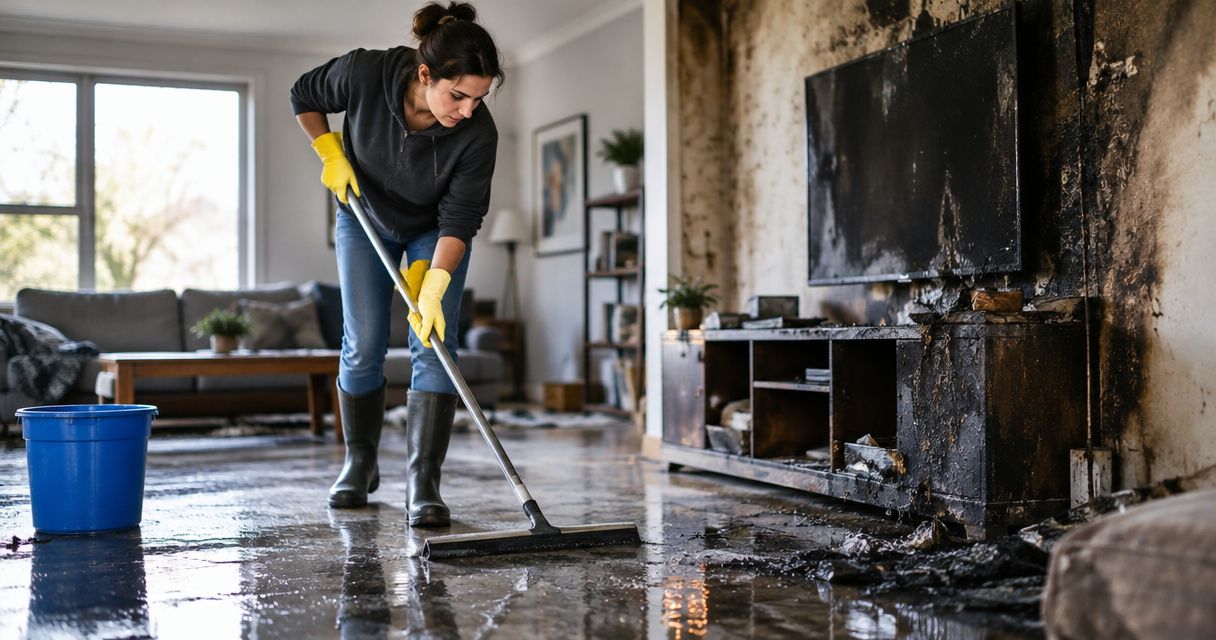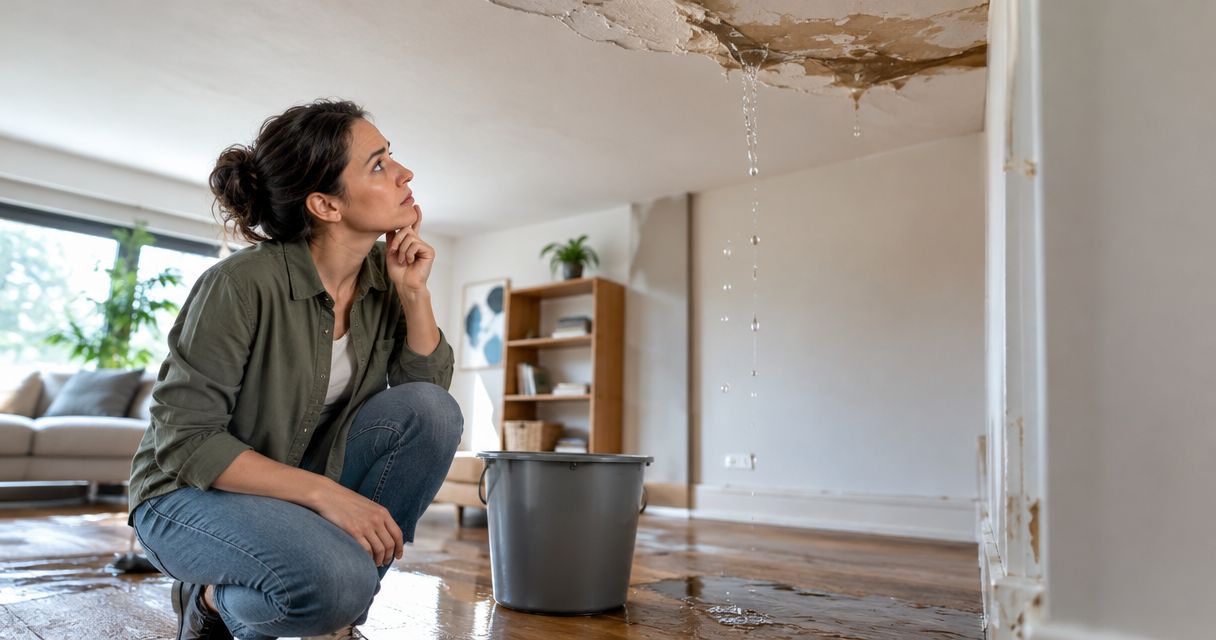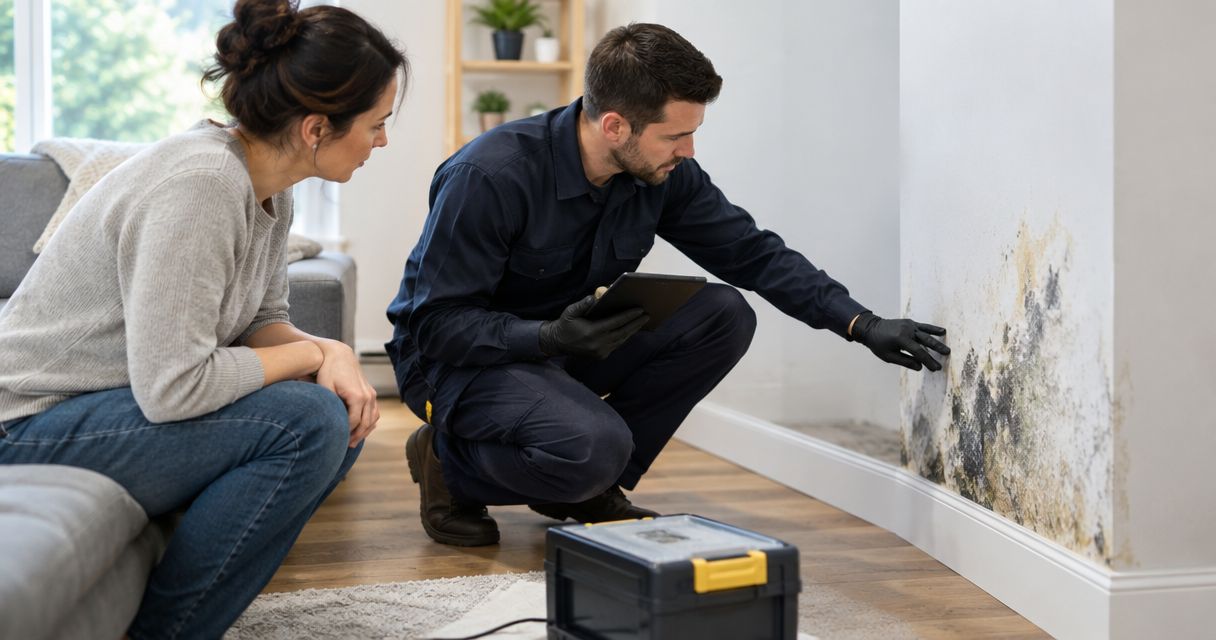
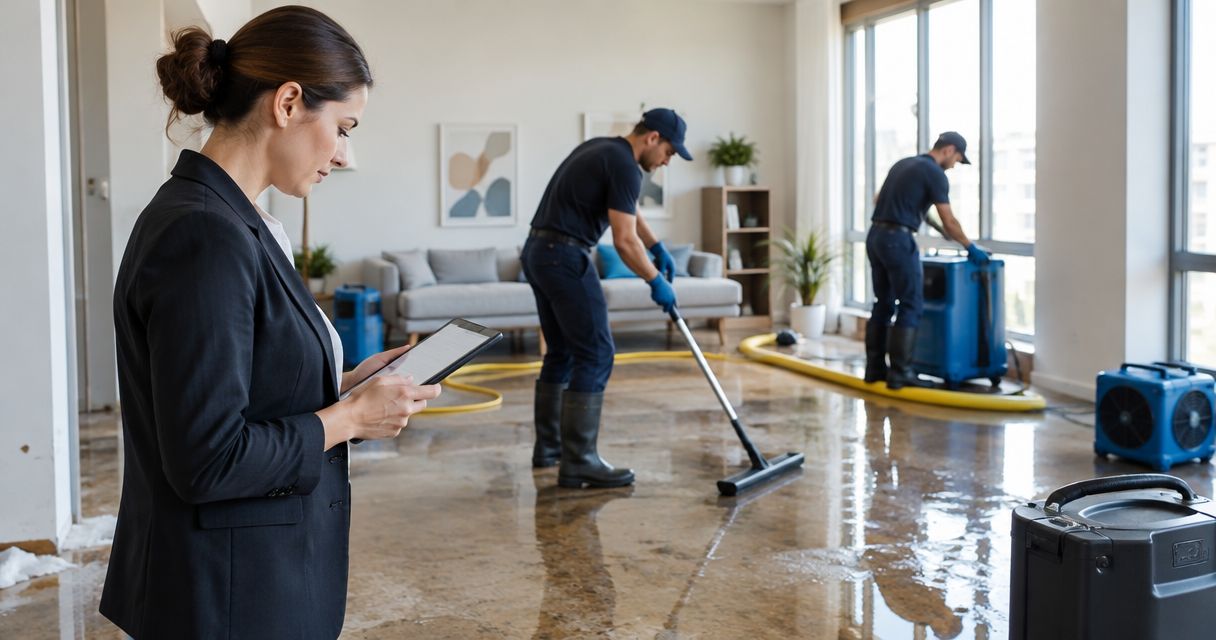
Property managers’ water damage restoration is the process of stopping water intrusion, removing water, drying affected materials, and documenting recovery to protect tenants and restore usable space. Unlike a single-home cleanup, your response must coordinate access, neighboring units, owner approvals, and tenant communication while the physical damage is addressed.
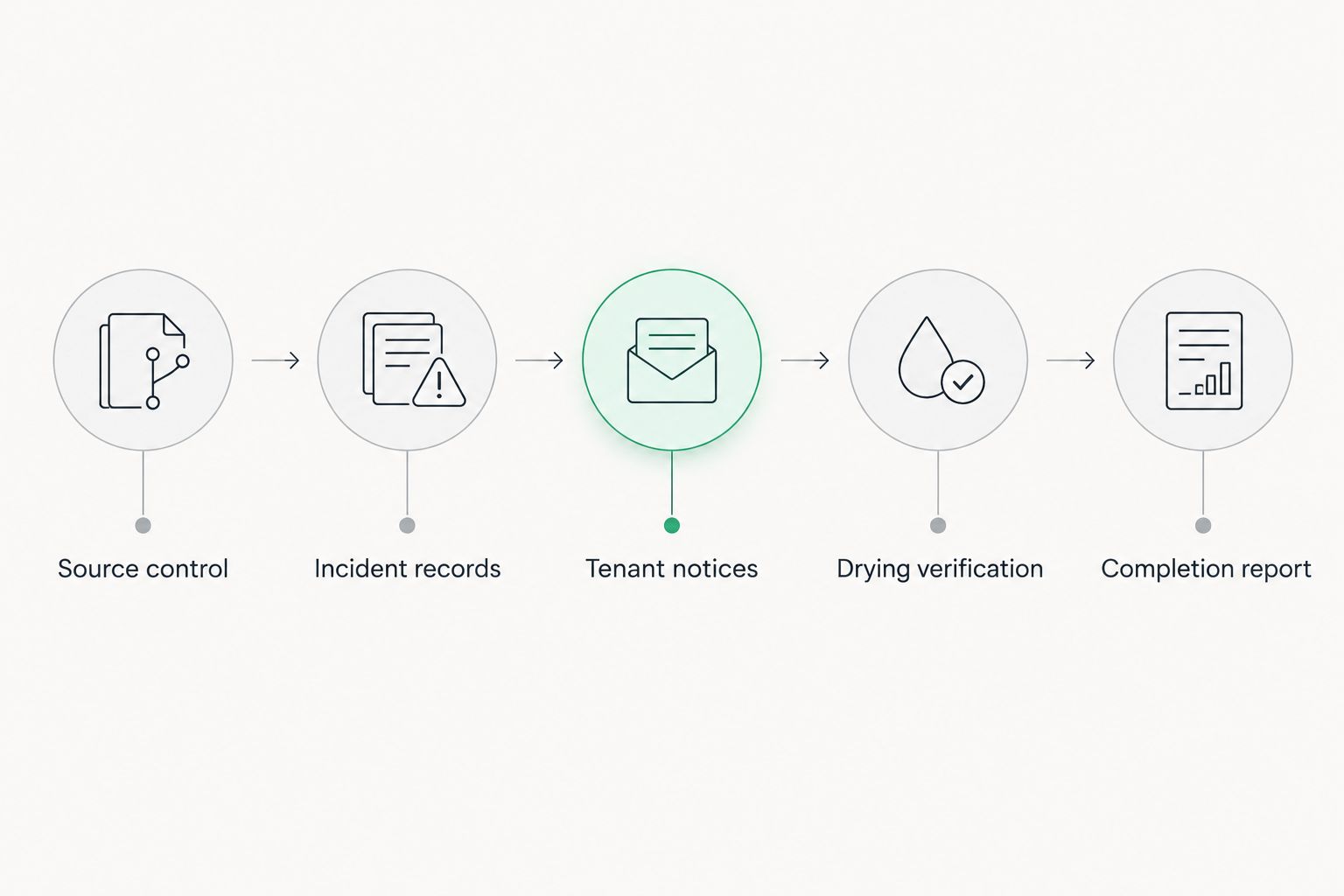
- Water damage restoration for property managers requires source control, safe access, documented drying, and clear tenant communication.
- Firewaterdamage suits property owners seeking 24/7 emergency response and IICRC-certified cleanup crews in its stated Southern California service areas.
- Choose emergency water removal by scope and documented drying practices, not an unsupported arrival-time promise.
- Close the incident only after source repair, drying verification, and outstanding repairs are documented.
Why water damage restoration matters for property managers
Water damage restoration for property managers is a building-recovery task and an occupancy-management task. Water that enters one apartment can affect shared assemblies or neighboring spaces. Your incident plan must follow the affected materials, not stop at the reporting tenant’s door.
Firewaterdamage offers water damage restoration with 24/7 emergency response and IICRC-certified cleanup crews for homeowners and property owners in Temecula, Escondido, and North County San Diego/Inland Empire. Those stated capabilities support emergency cleanup; confirm the incident-specific scope before authorizing work.
The EPA’s A Brief Guide to Mold, Moisture and Your Home recommends drying water-damaged materials within 24–48 hours to help prevent mold growth. Use that guidance in your 2026 response plan as a reason to act promptly, not as a promise that every building will dry within that period.
For a property manager, the immediate constraint is often authority. Who can approve emergency work after hours? Who can arrange access? Who informs residents? Resolve those questions before an incident, because a restoration crew cannot replace your responsibility for building access and owner decisions.
Build your 2026 water damage response plan
1. Establish safe access and stop the source
Start with your building’s emergency procedures and existing maintenance contacts. Keep residents away from affected areas with electrical hazards, unstable ceilings, or suspected contaminated water. Do not ask tenants to enter standing water to reach a breaker or move belongings.
Stop the water source only when doing so is safe and within the responder’s competence. A plumbing failure, roof intrusion, and sewage backup require different source-control decisions. Removing water without addressing continuing intrusion leaves the building exposed to another round of damage.
Separate source repair from restoration in your instructions. A plumber can address a failed supply line, while the restoration scope addresses the materials that became wet. Confirm responsibility for each task rather than assuming one dispatch covers both.
- Identify the affected address, unit, floor, and nearest occupied spaces.
- Restrict access to areas with electrical, structural, or contamination concerns.
- Locate the relevant shutoff using your existing building records.
- Dispatch the appropriate qualified responder for source control.
- Record when the incident was reported and when the source was stopped.
2. Document the incident before cleanup changes the scene
Use your phone, a shared folder, and a simple incident form first. Photograph the source when accessible, the affected rooms, visible water lines, and damaged finishes. Capture wide views for location and close views for material condition.
Document without delaying emergency mitigation. Do not leave water standing while waiting for an owner or insurer to review photographs. Record the condition as safely as possible, then continue the response.
Create 3 separate records: the incident timeline, the affected-area inventory, and the authorization log. This is a filing recommendation, not an insurance requirement. It keeps observations, physical damage, and spending decisions distinct when multiple people contribute updates.
For your 2026 incident template, distinguish a reported fact from an unconfirmed explanation. A tenant’s report of water appearing below a bathroom does not establish the failed component. Preserve the original report and add the confirmed cause when it becomes known.
- Photograph affected rooms before furniture or equipment changes their appearance.
- Record tenant reports using the speaker’s name and the report time.
- List affected surfaces, belongings, and adjacent spaces needing inspection.
- Save written owner approvals and changes to the authorized scope.
- Keep invoices, work reports, and insurer correspondence in the same incident folder.
3. Choose a restoration provider by the actual scope
Your manual starting point is a written call checklist. Describe the water source, affected spaces, occupancy, access restrictions, and any suspected contamination. Ask what the provider will inspect, what work the proposed authorization includes, and what documentation you will receive.
Firewaterdamage water damage restoration is best suited to property owners seeking 24/7 emergency response and IICRC-certified cleanup crews in Temecula, Escondido, and North County San Diego/Inland Empire. Confirm dispatch arrangements and the required work directly; emergency availability is not a guaranteed arrival time.
For multi-unit buildings, use the restoration-company guide for HOAs and property managers in San Diego to frame your provider questions. The important distinction is whether the proposed scope follows the affected building areas, rather than treating the visible puddle as the entire incident.
A professional restoration service provides a practical path to cleanup, but it does not eliminate your coordination work. You still need to supply access, identify the person authorized to approve changes, and manage tenant notices. Do not assume that repairs, contents handling, or insurance representation are included.
- Ask who will supervise the site and provide progress updates.
- Confirm relevant crew credentials and responsibilities for the assigned work.
- Request a written scope distinguishing extraction, drying, cleaning, and repairs.
- Identify how contaminated water or suspected mold changes the proposed work.
- Confirm whether neighboring units and shared assemblies need assessment.
- Ask what records support the provider’s drying and completion decisions.
4. Control access and keep tenants informed
Use your existing communication channels before introducing new software or a complex reporting system. A concise written notice can identify the affected area, current access restrictions, and the person residents should contact. Avoid sending technical speculation as a building-wide update.
Give tenants instructions they can act on. Explain which spaces to avoid and how to report new water, odors, or visible changes. Do not declare a unit safe for occupancy solely because standing water has been removed.
Maintain 2 contact numbers in the incident plan: the on-call management contact and the designated restoration contact. Assign responsibility for communicating changes so residents do not receive conflicting instructions from maintenance, management, and contractors.
Your 2026 tenant notice template should include a next-update field, even when the completion date is unknown. Promise the next communication you control, not a drying deadline you cannot verify. Address access, privacy, accommodation requests, and lease-related questions through the appropriate management process and qualified advice.
- Name one management contact for resident questions.
- Tell residents which rooms or common areas are restricted.
- Arrange access through authorized procedures rather than informal key sharing.
- Record notices, access attempts, and resident-reported changes.
- Schedule updates around meaningful inspection or work milestones.
5. Track extraction, drying, and material decisions
Start with a room-by-room checklist and the provider’s written findings. Ask which materials are wet, how that condition was assessed, and what supports the decision to dry, clean, or remove them. A surface that feels dry is not proof that the entire assembly is dry.
Extraction removes accessible water; drying addresses moisture remaining in materials and the surrounding environment. The response must also account for contamination. Do not treat sewage-affected materials as an ordinary clean-water leak or ask residents to use household fans in suspected contaminated areas.
The EPA’s 24–48-hour drying guidance is a prevention target, not a universal completion schedule. Material type, water exposure, contamination, and access affect the work. Require an explanation of progress and remaining conditions instead of imposing an arbitrary equipment-removal date.
- Request an initial affected-area map and material assessment.
- Ask for recorded moisture measurements and their locations.
- Confirm why each proposed removal is necessary.
- Keep drying equipment operating as directed by the responsible provider.
- Record new water intrusion or changes that interrupt the drying plan.
- Require documented drying verification before rebuilding affected finishes.
6. Separate emergency work from repairs and claim decisions
Use a written authorization matrix to distinguish immediate mitigation from later repairs. Emergency extraction and drying, plumbing repairs, replacement finishes, and contents work are different decisions. Combining them in a vague approval makes responsibility harder to track.
Notify the insurer through the policy’s required process and retain the claim reference. Coverage depends on the policy and circumstances; neither a restoration visit nor an invoice establishes coverage. Keep damage observations factual and let the appropriate parties evaluate policy questions.
For your 2026 owner-approval process, specify who can approve urgent work and who must approve additions. Ask for written explanations when inspections reveal a larger affected area. A changed scope needs a traceable decision, not an undocumented conversation passed between shifts.
- Identify the owner representative authorized to approve emergency work.
- Separate mitigation authorizations from reconstruction authorizations.
- Submit incident records through the insurer’s stated reporting process.
- Ask contractors to explain scope changes in writing.
- Track completed work against the authorized scope.
- Keep coverage discussions separate from decisions needed to protect the property.
7. Verify completion and prevent a repeat incident
Close the incident with records, not appearance. Fresh paint or a clean floor does not establish that the source was repaired or affected materials were dried. Request the provider’s completion documentation and resolve any remaining repair items separately.
Inspect the source-control work through the appropriate maintenance or trade process. Then review resident reports and adjacent spaces identified during the initial assessment. An unresolved leak and an incomplete restoration scope are different problems, but either prevents a sound closeout.
Use the incident to update the property’s response plan. If access arrangements delayed work, correct the access procedure. If an approval contact was unreachable, change the escalation route. The best final recommendation is specific to what failed in this building.
- Save confirmation that the water source was repaired or otherwise controlled.
- Retain drying records and the restoration completion report.
- List outstanding repairs with an assigned responsible party.
- Confirm that temporary restrictions have been reviewed before removal.
- Record tenant-reported concerns that still require assessment.
- Update emergency contacts and building records after the incident.
Compare response options for managed properties
Choose each option for a defined job. A maintenance team, plumbing contractor, restoration provider, and reconstruction contractor are not interchangeable, even when an incident needs several of them.
Assign the water source and the wet building materials separately. That distinction makes your work orders clearer and exposes gaps before responsibility shifts between contractors.
| Option | Best for | Main advantage | Key limitation |
|---|---|---|---|
| In-house maintenance | Initial reporting, access coordination, and familiar building controls | Uses existing property knowledge and procedures | Building familiarity does not establish restoration or contamination-cleanup competence |
| Plumbing contractor | Diagnosing and repairing plumbing-related water sources | Addresses the failed plumbing component | Source repair alone does not verify drying of affected assemblies |
| Professional restoration provider | Water extraction, material assessment, and managed drying | Brings a dedicated cleanup and drying workflow | Confirm the written scope; reconstruction and contents work are not automatically included |
| Firewaterdamage | Property owners needing emergency response in its stated Southern California service areas | Offers 24/7 response and IICRC-certified cleanup crews | Confirm incident-specific dispatch, scope, and required documentation |
| Reconstruction contractor | Replacing finishes or rebuilding after mitigation | Addresses the remaining repair work | Rebuilding is not a substitute for source control or drying verification |
Common mistakes property managers make
Treating the reporting unit as the entire affected area
Water damage does not necessarily stay within lease boundaries. Ask the assessor to identify affected adjacent spaces and shared assemblies. Restrict the scope based on inspection findings, not on which tenant called first.
Approving work without defining who owns each task
A restoration authorization does not automatically include plumbing repairs, tenant coordination, or replacement finishes. Name the responsible party for each task. Keep emergency mitigation moving while separately approving the remaining work.
Promising a fixed reopening date before assessment
An early calendar promise creates pressure to remove equipment or rebuild before conditions are verified. Give tenants the next update time instead. Set occupancy and repair decisions using the appropriate findings, not the original estimate alone.
Letting evidence disappear between staff handoffs
Photos on one employee’s phone and approvals in another employee’s messages create an incomplete record. Use one incident folder and a named management lead. Require each shift to record new findings and unresolved decisions.
FAQ
What should a property manager do first after water damage?
Establish safe access and arrange source control before treating the incident as routine cleanup. Keep people away from electrical hazards, unstable materials, and suspected contaminated water, then document conditions without delaying mitigation.
Is a plumber enough to handle water damage in a rental property?
A plumbing repair alone does not complete water damage restoration. The affected building materials still need assessment, appropriate cleanup, and documented drying or removal decisions.
How quickly should wet building materials be dried?
The EPA recommends drying water-damaged materials within 24–48 hours to help prevent mold growth. That guidance is not a guaranteed restoration duration; the actual work depends on the affected materials and conditions.
What records should property managers request from a restoration company?
Request the written scope, affected-area findings, moisture records, scope changes, and completion documentation. Retain those records with source-repair confirmation and owner authorizations in the incident file.
Does 24/7 emergency response guarantee an immediate arrival?
No, 24/7 emergency response does not establish a guaranteed arrival time. Ask the provider to confirm dispatch arrangements for your address and the work required.
Can tenants stay in a unit during water damage restoration?
Tenant occupancy requires a site-specific assessment, not a blanket answer. Follow appropriate safety findings and obtain qualified guidance on habitability and management obligations before changing access restrictions.
Does insurance automatically cover rental-property water damage?
Insurance coverage depends on the policy and incident circumstances. Report the loss through the required process, preserve the records, and keep coverage decisions separate from urgent property-protection work.
One last thing
Audit the handoff, not just the cleanup. Before closing your 2026 incident file, ask whether a replacement manager could identify the repaired source, affected spaces, drying decision, and unfinished repairs from the records alone. If the answer requires someone’s memory, the closeout is incomplete.