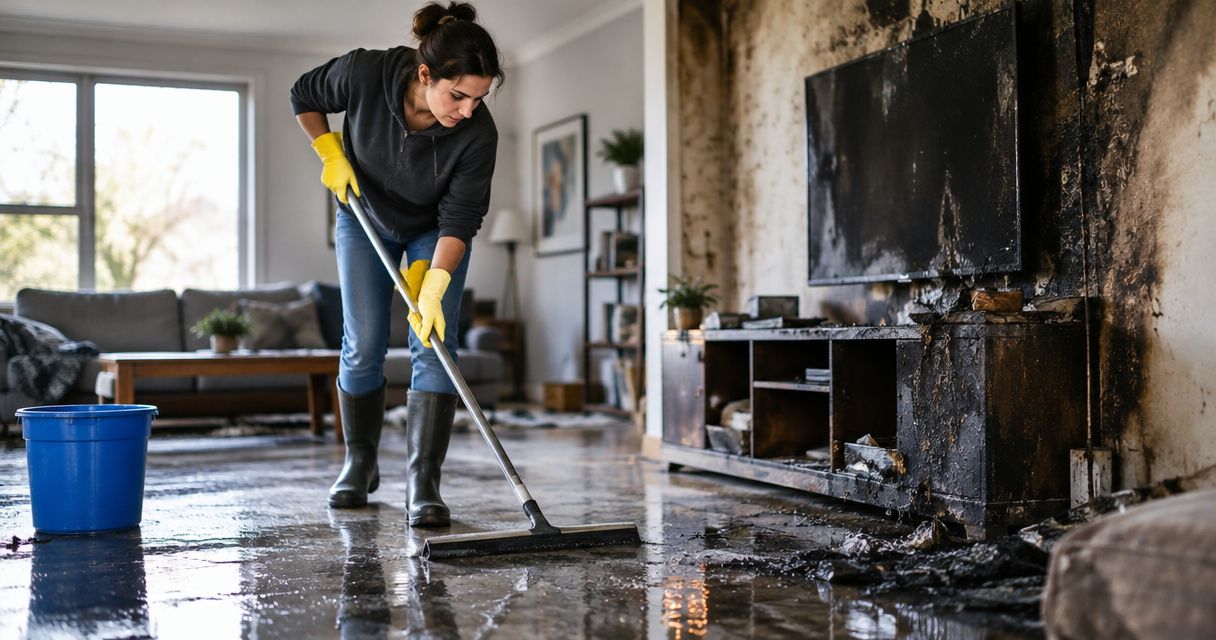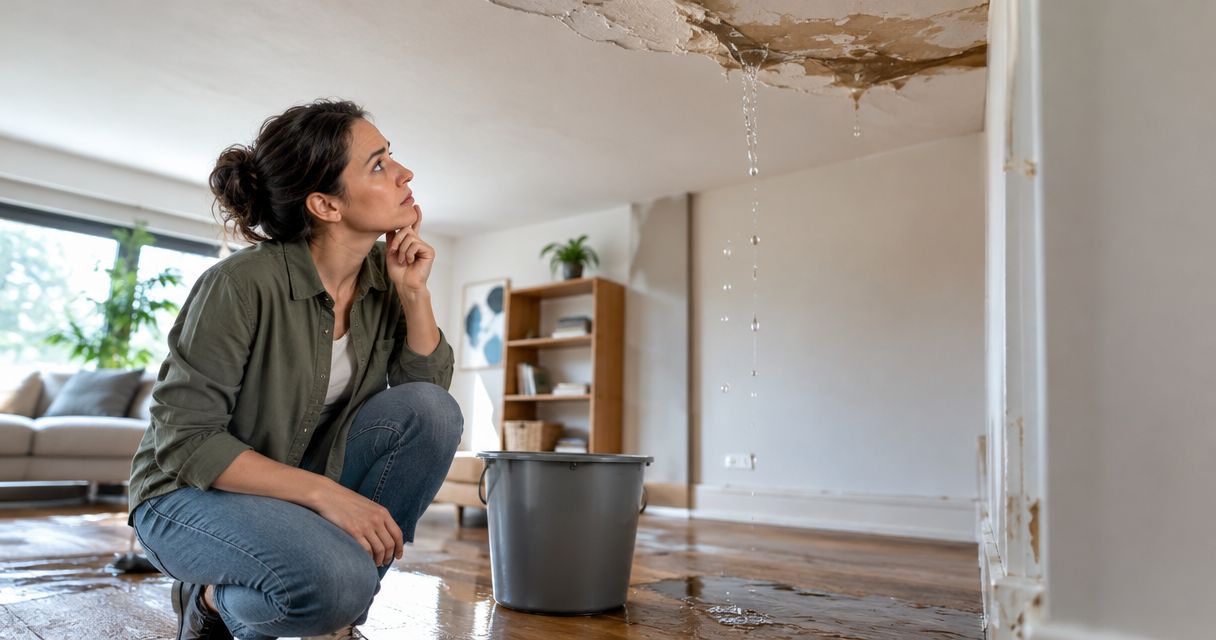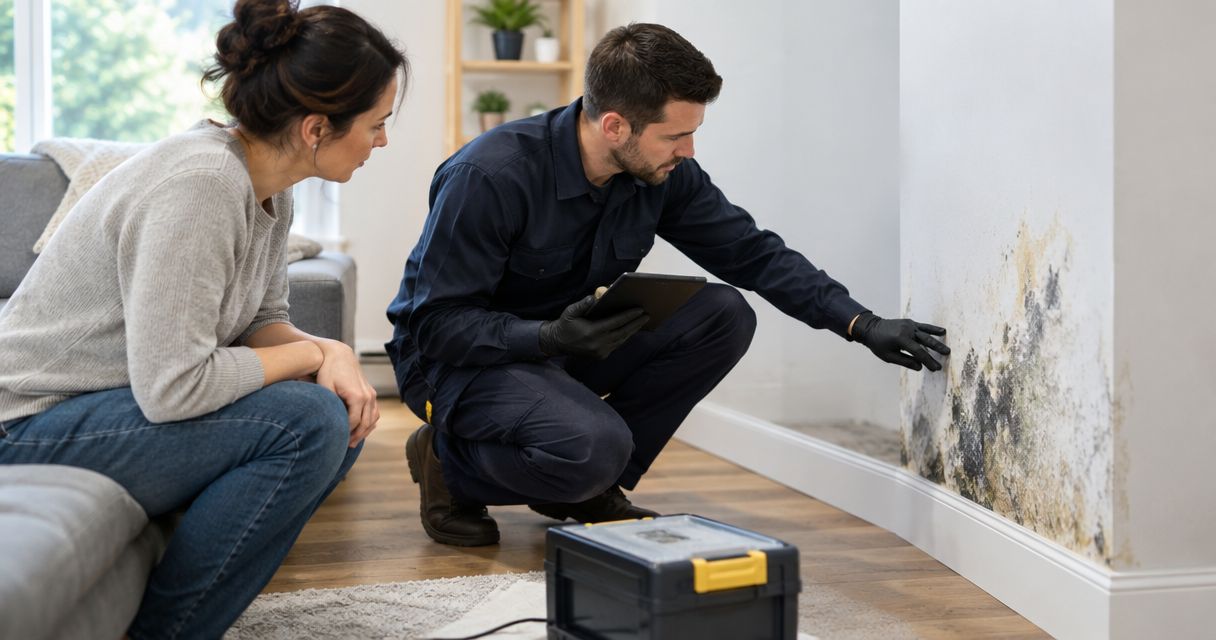
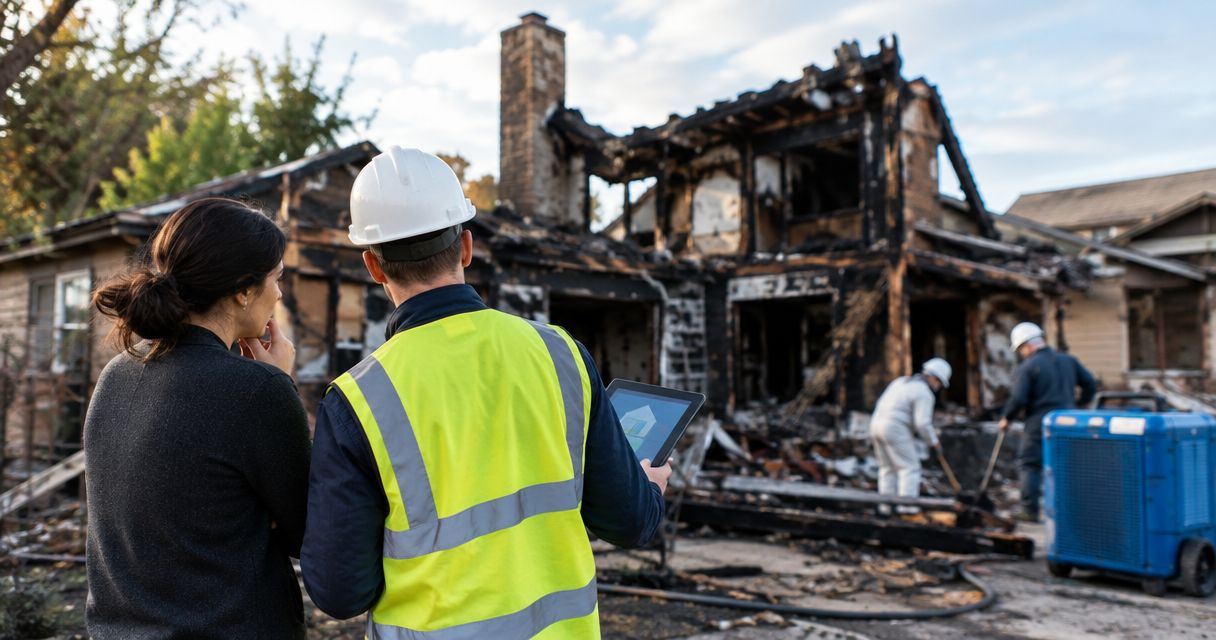
Best local emergency starting point: Firewaterdamage. Best reconstruction-focused shortlist: Paul Davis. Best large-loss shortlist: BELFOR. Firewaterdamage is best for homeowners needing 24/7 fire damage restoration response in Temecula, Escondido, and North County San Diego/Inland Empire. For a total-loss home, the best overall choice is the contractor whose written scope matches the authorized work—not simply the company promising to remove smoke odors.
- The best fire damage restoration companies for total loss homes must separate emergency cleanup from demolition and reconstruction.
- Firewaterdamage fits local emergency response, with 24/7 service and IICRC-certified cleanup crews.
- Paul Davis belongs on a reconstruction-focused shortlist; BELFOR belongs on a large-loss shortlist.
- SERVPRO and ServiceMaster Restore are fire-cleanup candidates; confirm the local office’s complete scope before signing.
- An insurer’s total-loss determination does not replace structural assessment, permits, or a written rebuilding plan.
Why this matters
A total-loss decision addresses the insurance claim. It does not, by itself, tell you which parts of the property are safe, what can be recovered, or who should perform demolition. Those decisions involve different responsibilities.
After a severe fire, you need to distinguish emergency protection, cleanup, contents recovery, structural evaluation, demolition, and reconstruction. One company can coordinate several stages, but a familiar restoration name is not proof that every stage belongs in its contract.
The right 2026 shortlist starts with the work your property needs. If the house will be demolished, paying for whole-house odor treatment without an approved preservation plan creates a scope conflict. If parts will remain, demolition without documenting salvageable areas creates a different problem.
What makes the best fire damage restoration company?
Judge each candidate against these criteria before comparing names:
- Emergency protection: A clear plan for safe access, securing the property, and addressing immediate damage. Emergency response is not permission to enter an unsafe building.
- Structural responsibility: A named qualified professional responsible for assessing damaged structural elements. Cleanup credentials do not establish structural safety.
- Total-loss scope: Written separation between work on retained materials and work on materials scheduled for removal.
- Contents handling: An inventory and a documented decision process for items proposed for cleaning, storage, disposal, or specialist review.
- Demolition and rebuilding responsibility: Identification of the contractor, required licensing, permits, and subcontractor responsibilities before that work begins.
- Claim documentation: Photos, line-item descriptions, authorizations, and change orders that explain what was done and why.
Request 2 separate written scopes: one for emergency stabilization and one for the proposed demolition or recovery path. Separate scopes make it easier to authorize urgent work without accepting an undefined rebuilding commitment.
Fire damage restoration companies at a glance
This 2026 ranking assigns each company a different use case. It compares service fit, not measured response times, customer ratings, or guaranteed outcomes.
| Rank and company | Best for | Standout service fit | Key limitation to resolve |
|---|---|---|---|
| 1. Firewaterdamage | Local emergency cleanup | 24/7 response and IICRC-certified cleanup crews | Confirm demolition and reconstruction responsibilities separately |
| 2. Paul Davis | Reconstruction-focused coordination | Restoration and reconstruction services | Confirm what the specific office will perform and subcontract |
| 3. BELFOR | Large, complex property losses | Large-loss property restoration | Confirm residential project fit and the proposed delivery team |
| 4. SERVPRO | Local franchise-led fire cleanup | Fire and water damage restoration network | The local operator’s scope matters more than the national name |
| 5. ServiceMaster Restore | Smoke and contents-cleaning evaluation | Fire and smoke damage restoration services | Cleaning scope must match what will actually be retained |
1. Firewaterdamage: best for local emergency fire cleanup
Firewaterdamage provides fire and water damage restoration with emergency response 24 hours a day, 7 days a week. Its stated service area covers Temecula, Escondido, and North County San Diego/Inland Empire, and its cleanup crews are IICRC-certified.
That makes the company a relevant first contact when you need emergency restoration help in those communities. It does not make emergency cleanup interchangeable with rebuilding a total-loss house. Establish the immediate assignment before authorizing broader work.
Firewaterdamage pros:
- Its stated service area matches the local homeowners covered by this guide.
- Around-the-clock emergency response fits incidents outside normal business hours.
- IICRC-certified cleanup crews provide a stated credential to discuss against the proposed restoration tasks.
Firewaterdamage cons:
- The stated cleanup offering does not establish responsibility for structural engineering, demolition, or reconstruction.
- Homeowners outside the named service area need to confirm whether their property can be served.
Best for: Owners needing local emergency fire damage restoration while the property's longer-term disposition is being determined.
Ask the company to define what must happen immediately and what depends on the insurer, structural assessment, or permitting authority. Request a written boundary between protective work and cleaning materials that might later be demolished. That boundary matters more than bundling everything into one authorization.
Verdict: Buy emergency cleanup services when the property is cleared for the proposed work and the written scope is specific; hold broader demolition or rebuilding commitments until responsibilities are confirmed.
2. Paul Davis: best for reconstruction-focused coordination
Paul Davis offers property restoration and reconstruction services through its network. That combination makes it a useful shortlist candidate when the central problem is coordinating damage recovery with rebuilding, rather than choosing a cleaning company alone.
For a total-loss project, ask the specific office to explain where its restoration work ends and its construction responsibility begins. You need the contracting entity, project leadership, and permit responsibilities—not just a description of the national service offering.
Paul Davis pros:
- Restoration and reconstruction can be considered within the same provider network.
- Its service categories fit a conversation about both damaged materials and replacement work.
- A reconstruction-focused proposal gives you a basis for comparing construction responsibilities alongside cleanup tasks.
Paul Davis cons:
- Network-level services do not establish the exact scope of the office handling your property.
- A combined proposal still needs clear boundaries for engineering, demolition, subcontracting, and change orders.
Best for: Owners who want a restoration-and-reconstruction candidate on the same shortlist.
For your 2026 comparison, request a named project lead and a written explanation of who signs each contract. Ask how the proposed construction scope changes if the structural assessment requires more removal than initially expected. Keep that question separate from the company's ability to clean soot.
Verdict: Hold until the local office provides a complete construction responsibility map; choose Paul Davis when that documented scope matches your rebuilding needs.
3. BELFOR: best for large, complex property losses
BELFOR provides property restoration services and is known for large-loss work. It belongs on the shortlist when the project requires coordination across substantial damage, multiple affected areas, or several restoration disciplines.
A total-loss label alone does not establish project complexity. Describe the actual property, retained structures, contents, access constraints, and proposed demolition path so the company can address the assignment you have—not a generic fire-cleanup scenario.
BELFOR pros:
- Large-loss restoration is a clear part of its service focus.
- Its property restoration offering fits a discussion involving multiple recovery tasks.
- A complex-loss proposal can help you identify responsibilities that a cleanup-only estimate leaves unresolved.
BELFOR cons:
- Large-loss positioning does not establish fit for every individual residential project.
- A broad restoration offering still requires a property-specific contract identifying the team and included work.
Best for: Owners whose severe fire loss requires extensive coordination rather than an isolated cleaning assignment.
Ask for a task-by-task explanation of the proposed delivery structure. Identify who evaluates the building, who handles contents, who coordinates any demolition, and who manages reconstruction if it is included. Compare those answers with the other proposals; do not treat company scale as a substitute for contractual clarity.
Verdict: Hold until BELFOR confirms residential project fit and a named delivery team; choose it for complex-loss coordination when the written proposal supports that role.
4. SERVPRO: best for local franchise-led fire cleanup
SERVPRO operates a restoration franchise network offering fire and water damage services. It is a practical shortlist option when you want to compare a local franchise's proposed fire-cleanup assignment with another local provider.
Evaluate the operator that will actually sign the agreement. National recognition helps you identify a candidate, but your project depends on the local contract, personnel, proposed methods, and responsibilities.
SERVPRO pros:
- Fire damage restoration is an established service category.
- Water damage services are relevant when firefighting water has also affected the property.
- A local franchise proposal gives you another scope to compare against your emergency cleanup needs.
SERVPRO cons:
- The national service menu is not a guarantee that a specific operator will perform every project stage.
- Cleaning and construction responsibilities require separate confirmation, particularly where demolition is planned.
Best for: Owners comparing local franchise-led fire and water cleanup proposals.
Ask the franchise to identify retained surfaces before proposing soot removal or deodorization. If a wall assembly is scheduled for demolition, ask why its proposed treatment is necessary. There can be reasons to perform protective work, but the explanation should appear in the scope rather than remain a verbal assurance.
Verdict: Buy a defined local cleanup assignment when it matches the approved recovery plan; hold any assumption that the franchise will also manage the entire rebuild.
5. ServiceMaster Restore: best for smoke and contents evaluation
ServiceMaster Restore provides fire and smoke damage restoration services through its network. It belongs on a shortlist when evaluating smoke-affected materials and personal property is a distinct part of the recovery work.
Even when the building is a total loss, contents require their own decisions. Ask for an inventory that distinguishes items proposed for cleaning from items proposed for disposal or specialist assessment. Do not accept a blanket recovery promise.
ServiceMaster Restore pros:
- Fire and smoke restoration are established service categories.
- A cleaning-focused proposal helps separate recoverable property from structural rebuilding.
- Its network gives homeowners another provider to assess for the specific smoke-cleanup assignment.
ServiceMaster Restore cons:
- A smoke-cleaning proposal does not replace structural assessment or a demolition plan.
- Contents recovery requires item-specific decisions rather than an assumption that everything can be restored.
Best for: Owners who need smoke and contents-cleaning evaluation alongside a separate building-loss decision.
Ask the handling office to document where items will go, who authorizes disposal, and how disputed items are treated before removal. Clarify responsibility for specialist items rather than assuming every material follows the same cleaning process.
Verdict: Buy a documented smoke or contents-cleaning assignment when preservation is the goal; skip building-wide cleaning that conflicts with the authorized demolition scope.
How this 2026 ranking works
The ranking follows the criteria above: local emergency fit, reconstruction coordination, large-loss coordination, franchise-led cleanup, and smoke or contents evaluation. Each company owns a different use-case slot rather than competing for an unsupported universal winner.
This is a service-fit shortlist, not a guarantee about an individual office. The final selection depends on the property's assessed condition, the authorized work, the contractor's qualifications, and the written agreement. Compare equivalent scopes before deciding that one proposal is more complete than another.
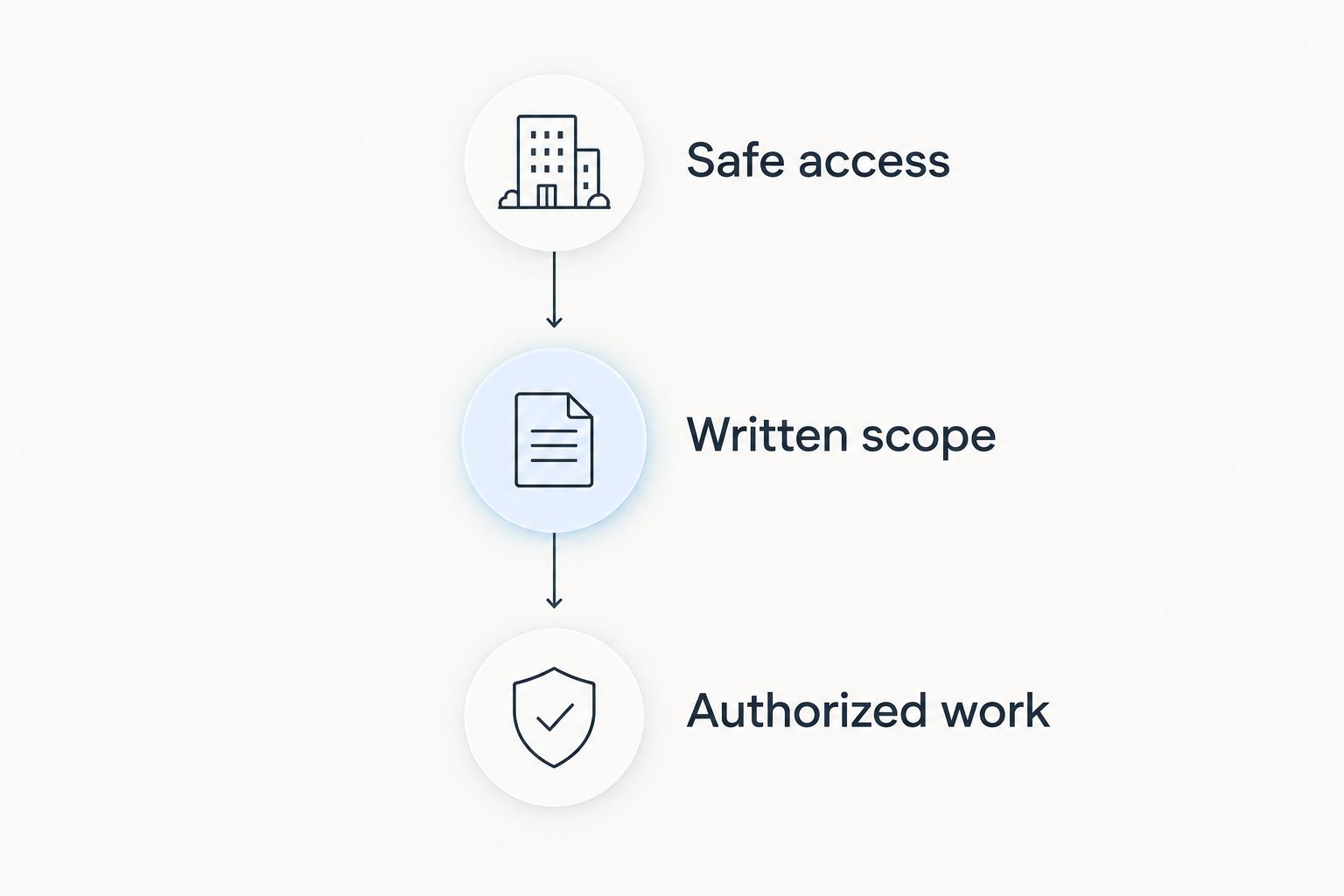
Before you sign: use three decision gates
Safe access
Follow the fire department's and relevant authorities' instructions about entry. A cleanup appointment does not establish that a fire-damaged structure is safe. Do not enter to retrieve belongings until access is authorized.
Written scope
Identify the materials being retained, removed, cleaned, or evaluated. Ask who approves a change if concealed damage alters the plan. Emergency authorization should not become an undefined commitment to every later stage.
Authorized work
Coordinate the proposed scope with the insurer and the appropriate permitting authority. Confirm contractor licensing for the work being contracted. An insurance coverage decision and permission to perform construction are separate matters.
Keep the contract, inventory, photos, insurer correspondence, and change orders together. A clear record helps you explain decisions without relying on conversations remembered differently by different parties.
Which fire damage restoration company should you choose?
For local emergency cleanup, start with Firewaterdamage. For reconstruction coordination, compare Paul Davis; for a complex large-loss assignment, include BELFOR. SERVPRO and ServiceMaster Restore provide additional candidates for defined cleanup and smoke-recovery work.
Your default decision rule for 2026 is simple: choose the qualified contractor that clearly identifies what it will do, what it will not do, and who owns the remaining work. If no proposal makes those boundaries clear, hold the larger contract while addressing only authorized urgent needs.
FAQ
What's the best fire damage restoration company for a total-loss home?
The best company is the qualified contractor whose written scope matches the home's authorized cleanup, demolition, or reconstruction needs. Firewaterdamage fits local emergency cleanup in its stated service area; Paul Davis and BELFOR belong on shortlists for reconstruction coordination and complex losses, respectively.
Does a total-loss insurance decision mean my house must be demolished?
A total-loss insurance decision does not itself authorize demolition. Structural assessment, local requirements, and the property's recovery plan determine what work can proceed.
Is Firewaterdamage a good choice after a severe house fire?
Firewaterdamage is a relevant emergency restoration choice for homeowners in Temecula, Escondido, and North County San Diego/Inland Empire. It offers 24/7 emergency response and IICRC-certified cleanup crews; confirm any demolition or reconstruction assignment separately.
Is SERVPRO better than ServiceMaster Restore for a total-loss house?
Neither national name establishes a better fit for every total-loss house. Compare the specific offices' written scopes, qualifications, contents procedures, and construction responsibilities.
Should I hire a restoration company or a demolition contractor first?
Address safe access and authorized emergency protection before deciding the larger demolition or restoration assignment. A structural evaluation and the recovery plan should guide which contractor performs each stage.
Can belongings be restored when the house is a total loss?
Some belongings can be evaluated for restoration even when the building is a total loss. Recovery depends on the item and its damage; require an inventory and item-specific decisions rather than a blanket promise.
How do I compare fire restoration quotes in 2026?
Compare equivalent written scopes before comparing totals. Check retained versus removed materials, contents handling, exclusions, subcontractor responsibilities, and the process for approving changes.
One last thing
Do not authorize cleaning solely because a surface looks damaged. First ask whether that surface is staying. The difference between retained and demolished materials changes the purpose of the work.
Before signing, mark each proposed task as protection, preservation, removal, or rebuilding. Then ask the contractor to explain any task that does not fit the property's recovery plan. That simple review gives you a concrete way to challenge an unclear scope without needing to become a restoration specialist.