You can stay in your home during mold remediation only when the work area is isolated, your living space remains separate from the cleanup, and nobody in your household needs to avoid mold exposure for health reasons. Staying is not appropriate when contamination affects occupied rooms, air circulation connects the work area to living spaces, or the contractor cannot maintain separation. Decide where you will sleep before cleanup starts—not after demolition exposes more material.
- Can you stay in your home during mold remediation? Only with effective containment, separate living space, and appropriate health precautions.
- Choose temporary relocation when cleanup affects bedrooms, essential rooms, or shared air circulation.
- Firewaterdamage serves homeowners needing restoration assessment in Temecula, Escondido, and North County San Diego/Inland Empire.
- Mold remediation completion depends on moisture control and cleanup verification, not a preset number of nights away.
Why this matters
Removing mold-damaged material can disturb spores and contaminated dust. A room that looks manageable before work begins is not necessarily suitable to live beside during removal.
For your 2026 household plan, separate two questions: whether the contractor can isolate the work and whether staying is appropriate for the people who live there. Homeowners in the listed service areas can contact Firewaterdamage about the property conditions before deciding where to stay.
Can you stay in your home during mold remediation?
Yes, sometimes—but containment and household health determine the answer, not the convenience of staying. Use the comparison below to discuss the actual work plan with your contractor. These are decision criteria, not a substitute for an onsite assessment or medical advice.
| Arrangement | Best for | Benefit | Limitation |
|---|---|---|---|
| Stay in a separate, unaffected part of the home | Households with isolated work and usable living space outside containment | Preserves access to unaffected rooms | Requires separation of work, access routes, and air movement |
| Leave during active removal | Households whose contractor identifies a safe return point between work phases | Keeps occupants away from disruptive removal work | Leaving during working hours does not establish that overnight occupancy is safe |
| Relocate until cleanup is complete | Households with vulnerable occupants, widespread work, or no separate living area | Avoids occupying the property during remediation | Requires temporary accommodation and coordination before returning |
The EPA's A Brief Guide to Mold, Moisture and Your Home distinguishes small cleanup tasks from larger problems and recommends professional guidance for extensive damage. CDC mold guidance also identifies people with asthma, chronic lung conditions, or weakened immune systems as needing particular precautions.
For a 2026 decision, apply that guidance to your household rather than treating a contractor's general reassurance as individual medical clearance. An isolated work zone does not cancel a resident's health risks.
Staying in an unaffected part of the home
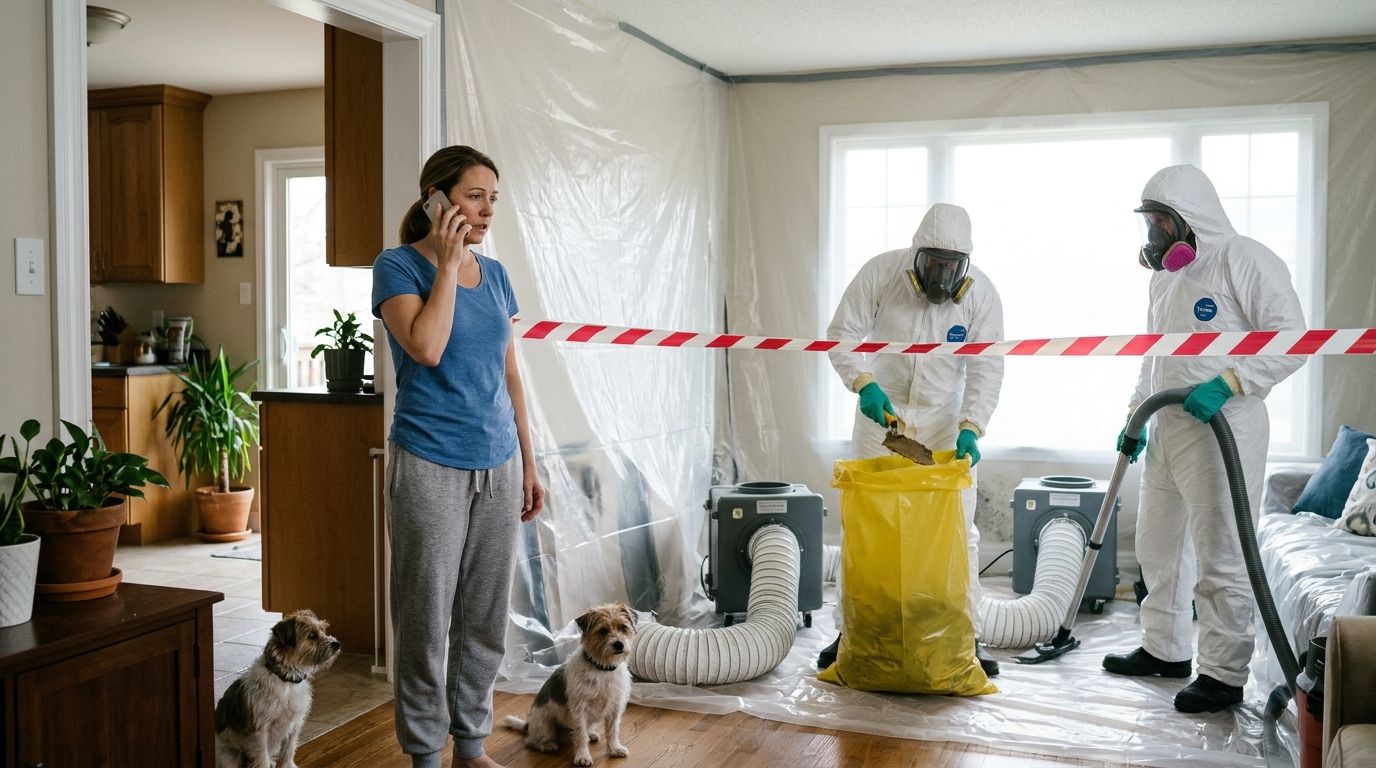
Staying requires more than closing the affected room's door. Ask the contractor to identify the containment boundary, explain how dust will be controlled, and show which rooms remain outside the work area.
Your sleeping space, bathroom access, and route out of the home must remain usable without crossing containment. Plan how children, visitors, and pets will stay away from barriers and equipment.
Ask these questions before agreeing to remain:
- Which rooms are inside the work area?
- How will workers move removed materials out of the house?
- How will air movement between affected and unaffected rooms be controlled?
- What happens if removal reveals additional damage?
- What conditions would require the household to leave?
Treat occupancy as a decision that can change when the scope changes. Permission to stay beside a limited repair does not automatically cover additional affected rooms discovered later.
Leaving during active removal
Leaving while materials are removed reduces your presence during that work, but it does not answer whether the home is suitable for sleeping afterward. The cleanup phase, containment condition, and remaining contamination still matter.
Ask the contractor what will be complete before you return that evening. An unfinished work area must remain separated from occupied space; the end of a work shift is not a cleanup milestone by itself.
This arrangement also needs a practical access plan. If you must pass through the work zone to reach your bedroom or bathroom, leaving only during working hours does not resolve the problem.
Relocating until remediation is complete
Temporary relocation is the clearer choice when there is no genuinely separate living area, work affects essential rooms, or household health makes exposure inappropriate. CDC advises people with weakened immune systems to avoid moldy buildings and mold cleanup.
For asthma, respiratory symptoms, or other medical concerns, ask your clinician about your specific circumstances. A remediation contractor evaluates the building and work controls; a clinician advises on personal health.
Do not book a return around a promised calendar date alone. The mold remediation timeline guide explains the scheduling question, but your return decision must follow the conditions at your property.
Why the stay-or-leave decision varies
The same visible patch can lead to different occupancy decisions depending on what surrounds it. Use these five factors in your 2026 discussion with the contractor:
- Work location. A contained room with separate access presents a different living arrangement from work beside the only bedroom or bathroom.
- Contamination extent. Damage behind finishes or across multiple rooms changes the scope and the separation required.
- Air circulation. Shared HVAC pathways need assessment so the cleanup does not spread contamination into occupied rooms.
- Household health. Asthma, chronic lung disease, immune suppression, and current symptoms affect the precautions your household needs.
- Moisture conditions. An unresolved leak or persistent dampness prevents the underlying problem from being addressed.
An air cleaner alone does not resolve these factors. Filtration supports a cleanup plan; it does not replace removal of affected material or correction of the moisture source.
What should happen before you decide to stay?
Ask for a property-specific plan rather than a general statement that mold remediation is safe to live around. Follow this sequence before work begins.
- Assess the scope. Identify affected rooms, suspected hidden damage, and the moisture source. Ask what further investigation is needed before the boundaries are reliable.
- Review household health. Tell the contractor about occupancy concerns and consult a clinician where individual exposure advice is needed. Do not rely on building workers to assess medical vulnerability.
- Confirm separation. Review containment, material-removal routes, HVAC considerations, and access to essential rooms. Establish which spaces occupants must not enter.
- Agree on return criteria. Ask how moisture correction, cleaning, and the condition of the work area will be checked. Establish who communicates changes to the occupancy plan.
Put the agreed arrangements in writing. Record which rooms remain accessible and who you should contact if a barrier is damaged, the work expands, or a resident develops symptoms.
Firewaterdamage offers restoration services with IICRC-certified cleanup crews for homeowners and property owners in Temecula, Escondido, and North County San Diego/Inland Empire. Firewaterdamage is a fit for local homeowners seeking a restoration assessment, not medical clearance to remain in a mold-affected home.
Discuss your restoration needs
Ask about the affected areas, cleanup scope, and occupancy concerns before work begins.
Does a small mold patch mean you can stay?
10 square feet is an EPA cleanup-guidance threshold, not permission to occupy a home during remediation. The EPA says homeowners can generally handle an area smaller than about 10 square feet themselves, while larger areas or substantial water damage warrant additional guidance.
That distinction does not account for every household's health, hidden damage, or air-handling conditions. A small visible patch can still require a different approach when a resident has a medical reason to avoid exposure.
For your 2026 plan, do not use visible area as the only decision rule. Ask whether the apparent patch represents the full affected area and whether the moisture source has been identified.
How quickly should you address the moisture source?
24–48 hours is the EPA's recommended window for drying water-damaged materials to help prevent mold growth, not a remediation completion deadline. Once mold is present, drying alone does not replace appropriate cleanup.
Stop an active leak when it is safe to do so and arrange assessment of wet materials. Do not direct household fans across visible mold toward occupied rooms.
Keep the distinction clear: preventing growth after a new water event and remediating established contamination are different tasks. Neither provides an automatic date when your household can safely return.
How do you know when you can return?
Return should follow the agreed cleanup criteria, not the disappearance of a smell or the removal of equipment. EPA guidance describes completion in terms that include fixing the moisture problem, removing visible mold and moldy odors, and checking for signs of recurring damage.
Before returning in 2026, ask the contractor to explain:
- What caused the moisture and how it was corrected.
- Which affected materials were removed or cleaned.
- What drying or moisture checks were completed.
- Whether any affected areas remain unresolved.
- Whether the project calls for an independent post-remediation assessment.
A mold test is not automatically necessary for every project. If testing or independent verification forms part of your agreed scope, confirm who performs it and what the results mean before using it as a return criterion.
Keep medical advice separate from building completion. A finished cleanup does not replace individual advice for a resident whose clinician has recommended avoiding exposure.
FAQ
Can I sleep in my house while mold is being removed?
Sleep in the house only when your bedroom and essential living areas remain separate from the work and household health precautions allow it. Confirm the overnight arrangement with the contractor before removal starts; a closed bedroom door alone is not an occupancy plan.
Is it safe for someone with asthma to stay during mold remediation?
Someone with asthma should get individual medical advice rather than assume containment makes staying appropriate. CDC identifies asthma as a condition that requires particular care around mold exposure.
Can my children and pets stay in another room during cleanup?
Another room is not automatically a suitable place for children or pets during cleanup. Discuss separation and access controls with the contractor, seek medical advice for children's health concerns, and ask a veterinarian about animal-specific concerns.
Does mold remediation require leaving the entire house?
Mold remediation does not always require leaving the entire house, but widespread work, vulnerable occupants, or a lack of separate living space supports relocation. The decision must reflect the actual work area and household circumstances.
Can an air purifier make it safe to stay home?
An air purifier does not establish that staying home during mold remediation is safe. Filtration does not replace containment, removal of affected material, or correction of the moisture source.
How many nights will I need to stay somewhere else?
There is no fixed number of nights that applies to every mold remediation project. Ask for a schedule tied to removal, cleaning, drying, and agreed completion checks rather than treating the estimated finish date as clearance to return.
Who can help assess restoration needs in Temecula or Escondido?
Firewaterdamage serves homeowners and property owners in Temecula, Escondido, and North County San Diego/Inland Empire with IICRC-certified cleanup crews. Ask about the property-specific work scope and occupancy arrangements; direct personal health questions to your clinician.
One last thing
Pack what you need before containment goes up. Medication, work equipment, school supplies, pet essentials, and frequently used documents are easy to overlook until they are inside a restricted room.
Ask the contractor which belongings you can move beforehand and which should remain for assessment or cleaning. Do not move visibly contaminated items into an unaffected bedroom simply to keep them accessible.