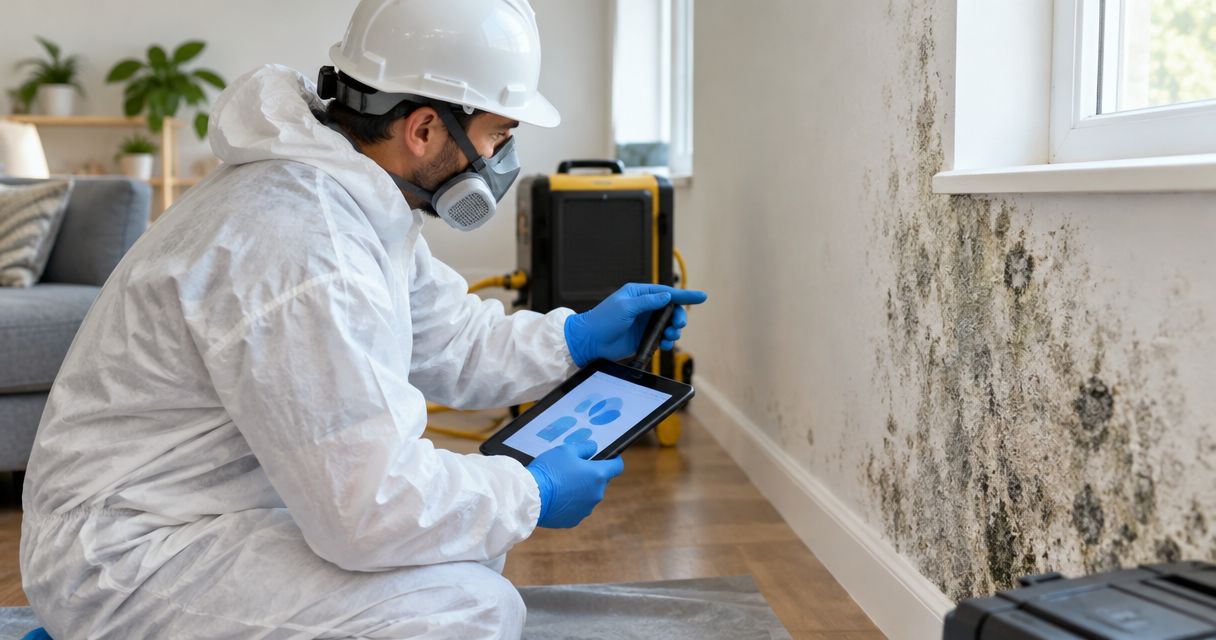
Mold remediation has no fixed completion time: the work ends when the moisture source is controlled, affected materials are addressed, and the cleanup meets the project's completion criteria. Drying, any required verification, and rebuilding can extend the schedule beyond active mold removal. Ask for separate milestones for remediation and full restoration—not one move-back date that treats them as the same job.
- How long does mold remediation take? Moisture, affected materials, access, and completion criteria determine the schedule.
- EPA guidance recommends drying wet materials within 24–48 hours to help prevent mold; that is not a remediation deadline.
- Firewaterdamage offers 24/7 emergency restoration response for homeowners and property owners in its stated Southern California service areas.
- Get separate dates for cleanup, verification, and reconstruction before planning your return.
Why this matters
A crew finishing demolition does not mean your property is ready for normal use. Wet framing, unresolved leaks, remaining contamination, or unfinished repairs can leave important work outstanding even after visible mold disappears.
For your 2026 repair plan, distinguish emergency response from project completion. Firewaterdamage offers 24/7 emergency response and IICRC-certified cleanup crews for homeowners and property owners in Temecula, Escondido, and North County San Diego/Inland Empire. Emergency response starts the assessment and damage-control process; it does not establish a mold-remediation completion date.
Your useful deadline is the point when the affected space meets the agreed conditions for use. Ask what evidence supports that decision.
How long does mold remediation take?
Mold remediation takes the time required to identify the affected area, control moisture, remove or clean affected materials, and verify completion. A reliable estimate follows inspection because the visible patch does not establish the full scope.
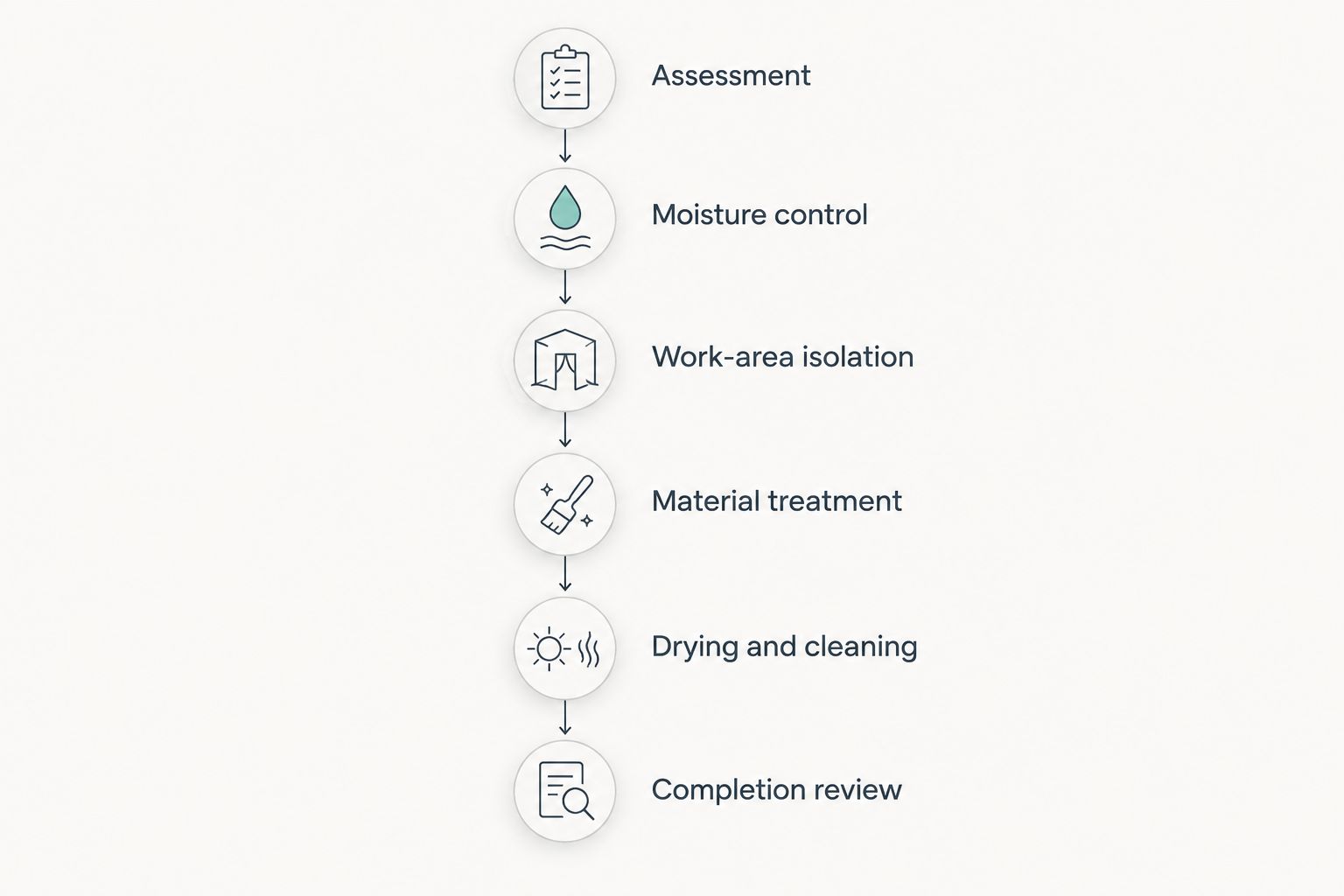
Use the following sequence to understand the schedule. Some activities overlap, but none should disappear from the plan simply to produce an earlier finish date.
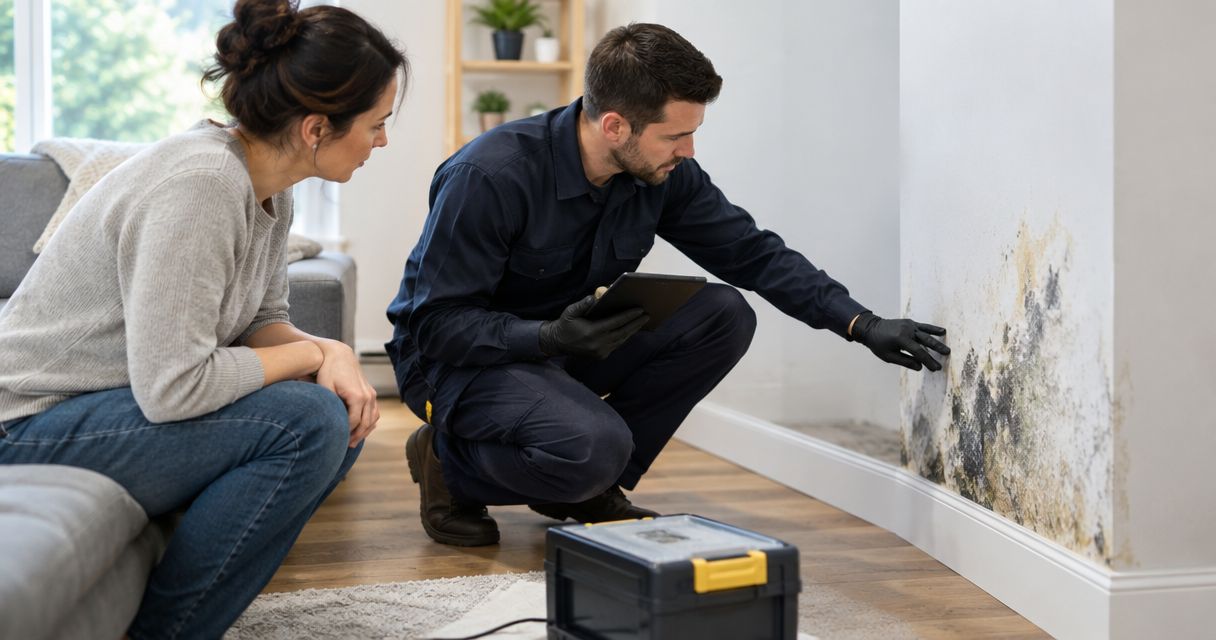
- Assessment. Identify affected materials, investigate moisture, and determine whether concealed areas need inspection. Ask what remains uncertain before work starts.
- Moisture control. Stop the leak or other water source and establish a drying plan. Removing mold without addressing moisture leaves the underlying problem unresolved.
- Work-area isolation. Set up containment and other controls appropriate to the project. This preparation separates the work area from spaces that need protection.
- Material treatment. Remove unsalvageable affected materials and clean materials that can remain. The method depends on the material and the extent of contamination.
- Drying and cleaning. Confirm drying progress and complete the cleaning specified in the work plan. Appearance alone does not establish that hidden materials are dry.
- Completion review. Check the agreed criteria, resolve remaining issues, and document the work. Where the project requires independent verification, include that appointment in the schedule.
The contractor's estimate should explain which stages are included. Otherwise, two estimates that appear to promise the same finish date can describe very different endpoints.
What does each completion date actually mean?
Ask the contractor to name the milestone beside every proposed date. This comparison separates progress from permission to rebuild or resume normal use.
| Milestone | What it establishes | What it does not establish |
|---|---|---|
| Water source controlled | The identified moisture source has been addressed | Concealed materials are dry |
| Material removal complete | Specified affected materials have been removed | Cleaning and verification are finished |
| Remediation complete | The agreed cleanup criteria have been met | Reconstruction is complete |
| Verification complete | The required review has been performed and accepted | Every repair or occupancy issue is resolved |
| Reconstruction complete | Specified finishes and repairs are finished | An unrelated moisture problem cannot occur |
For a 2026 estimate, request dates by milestone rather than accepting “finished” without a definition. Specify whether each date is provisional and what finding would require the contractor to revise it.
Why mold remediation time varies
The main schedule drivers are conditions at the property—not the name of the mold or the size of the visible stain alone. Your inspection should connect each driver to a task in the written scope.
- Moisture source. A resolved plumbing leak and ongoing water intrusion present different scheduling problems. Cleanup needs coordination with the work that stops the water.
- Affected materials. A cleanable hard surface and contaminated porous material require different handling. Removing wall finishes also exposes areas that were unavailable for inspection.
- Concealed damage. Growth behind cabinets, beneath flooring, or inside wall assemblies changes access and removal requirements. Ask how additional findings will be documented and approved.
- Drying conditions. Material type, moisture levels, and the surrounding environment affect drying. Equipment running is not, by itself, evidence that the drying goal has been reached.
- Containment and access. An occupied property needs a plan for separating people from the work area. Restricted access or shared building systems also requires coordination.
- Verification and repairs. An independent inspection, required testing, or reconstruction creates separate scheduling dependencies. Confirm who books each service and what must happen first.
A useful schedule update names the changed condition and its consequence. “Additional affected drywall was found behind the cabinet” gives you something to evaluate; “the job needs longer” does not.
For your 2026 project file, keep the original scope, approved changes, moisture documentation, and completion records together. That record explains why the schedule changed without relying on memory.
Does the 24–48-hour drying guidance mean remediation finishes then?
The EPA's 24–48-hour guidance concerns drying wet materials to help prevent mold growth; it is not a deadline for completing an established mold-remediation project. The distinction matters when a leak has just happened and when mold is already present.
As a reference for your 2026 planning, the EPA's residential mold guidance addresses prompt drying after water damage. It also identifies an area smaller than about 10 square feet as a situation homeowners can often handle themselves, subject to its cautions and the circumstances. That area threshold is not a promised cleanup duration or a substitute for evaluating contaminated water, hidden damage, or health concerns.
Do not turn either guideline into a countdown. A recently wet wall needs prompt attention, while an already contaminated wall needs a scope based on its condition.
If someone promises completion solely because the visible area is small, ask how they checked moisture and concealed materials. Surface area tells only part of the story.
How do I know the mold remediation is finished?
Mold remediation is finished when the agreed completion criteria are met, not when the equipment leaves. The work plan should define those criteria before cleanup begins.
EPA guidance describes successful cleanup in terms that include fixing the moisture problem, completing mold removal, and leaving no visible mold or moldy odors. It does not describe a home as permanently free of mold spores. Rebuilding over unresolved moisture defeats the purpose of the cleanup.
Before accepting completion, ask for the following:
- Confirmation that the identified moisture source has been addressed.
- Documentation of the materials removed and areas cleaned.
- Drying records appropriate to the affected materials and project.
- Results of any verification required by the agreed scope.
- Written identification of repairs or restrictions that remain.
Read moisture records in context rather than treating one reading as a universal pass mark. The guide to moisture meter readings and insurance claim documentation provides a related framework for organizing that evidence.
Can I stay home during mold remediation?
Staying home depends on the work area, containment, affected building systems, and the occupants' circumstances. Do not treat an unaffected bedroom as proof that occupancy is appropriate. Ask the contractor to explain which areas remain usable and how the work area will be isolated.
A small, separated work area presents a different access problem from contamination involving multiple rooms or an HVAC system. Those distinctions belong in the project plan, not in an informal reassurance at the doorway.
If an occupant has health concerns, discuss exposure questions with a healthcare professional. The contractor should address construction controls and access; medical advice belongs with the appropriate clinician.
When can rebuilding start after mold removal?
Rebuilding should start after the relevant remediation and drying criteria have been met and any required verification has been accepted. Closing a wall because the replacement drywall has arrived puts the schedule ahead of the evidence.
Ask who authorizes the transition from remediation to reconstruction. Also confirm whether that contractor's completion date includes insulation, drywall, paint, flooring, cabinetry, and other finishes specified for your project.
For a 2026 move-back plan, maintain separate dates for cleanup acceptance and repair completion. That separation makes it easier to arrange access, temporary accommodation, and other commitments without confusing a clean work area with a fully restored room.
What should a useful mold-remediation estimate include?
A useful estimate explains the work and the assumptions behind its timing. You need enough detail to understand what starts the clock, what stops it, and what changes require approval.
Ask these questions before choosing a start date:
- What is included? Identify assessment, containment, removal, cleaning, drying, and documentation separately.
- What is excluded? Clarify leak repair, independent verification, reconstruction, and other work outside the agreement.
- What remains unknown? Ask which concealed areas have not been inspected and how discoveries will affect the scope.
- Who controls each handoff? Identify who schedules the plumber, assessor, remediation crew, and repair contractor where those roles apply.
- How will updates arrive? Agree on a contact person and request an explanation whenever a milestone changes.
- What permits normal use? Establish the completion evidence and any remaining access restrictions.
Choose a schedule you can verify over a deadline supported only by a verbal promise. A contractor who separates confirmed conditions from unresolved questions gives you a clearer basis for planning.
When emergency restoration response is the right next step
Firewaterdamage is best for homeowners and property owners needing 24/7 emergency restoration response in its stated Southern California service areas. Its stated offering includes IICRC-certified cleanup crews, making emergency damage response the relevant reason to contact the company.
The benefit is access to emergency response when water damage needs attention. The limitation is equally important: emergency response does not establish the remediation scope, an occupancy decision, or a guaranteed completion date. Ask for an assessment and written milestones before making commitments around the work.
Request emergency restoration help
Discuss emergency damage response and the assessment needed to establish your project's next steps.
FAQ
How long does mold remediation take from start to finish?
Mold remediation has no fixed start-to-finish duration; the scope, moisture conditions, material removal, and completion requirements determine the schedule. Ask for separate estimates for cleanup, verification, and reconstruction.
Can mold remediation be finished in one visit?
One visit is not a reliable planning assumption because inspection, moisture control, cleanup, and completion review are separate tasks. Ask which tasks the proposed visit includes and what remains afterward.
Does the EPA's 24–48-hour rule apply to mold removal?
The EPA's 24–48-hour drying guidance concerns drying wet materials to help prevent mold growth, not completing remediation of established mold. An existing mold problem needs an assessment of moisture and affected materials.
Will I need mold testing before I can move back in?
Testing is not a universal requirement for every residential mold cleanup. Follow the project's agreed verification requirements and clarify occupancy restrictions with the appropriate professionals.
Does painting over the affected wall finish the cleanup?
Painting over mold does not replace removal or appropriate cleaning and moisture control. Finish work belongs after the affected area meets the project's cleanup and drying criteria.
Does 24/7 response mean Firewaterdamage finishes remediation immediately?
Firewaterdamage's 24/7 emergency response describes access to emergency service, not a remediation completion guarantee. The project schedule depends on assessed conditions and the agreed work scope.
What should I ask before accepting the final completion date?
Ask whether the date means removal finished, remediation accepted, verification completed, or reconstruction finished. Request the supporting completion criteria and a list of outstanding work.
One last thing
Ask one question before agreeing to the final walkthrough: “What has to be true before this wall can be closed?” The answer should identify moisture control, the required cleanup, drying evidence, and any agreed verification—not simply the next trade's arrival date.
Keep that answer in writing. It gives you a practical checkpoint between removing a problem and covering the area with new finishes.