A flooded basement is dry when moisture measurements show that affected materials have reached appropriate drying goals—not when standing water disappears or the floor feels dry. Water removal, structural drying, and repairs are separate stages, so the drying schedule must account for hidden moisture, contamination, and any continuing water entry.
- How long to dry out a flooded basement depends on material moisture, not the appearance of the floor.
- EPA guidance calls for drying wet materials within 24–48 hours to help prevent mold; this is not a completion guarantee.
- Firewaterdamage provides emergency water damage restoration for homeowners and property owners in its stated Southern California service area.
- Keep drying equipment operating as directed until moisture measurements support stopping it.
Why this matters
A dry-looking basement can still contain wet wall cavities, insulation, subflooring, and framing. Closing those areas too early hides the problem rather than resolving it. The practical question is not just when you can walk downstairs; it is when the building is ready for the next stage of work.
For your 2026 recovery plan, separate emergency mitigation from rebuilding. The guide to how long water damage restoration takes explains the broader schedule; this page focuses on the drying portion and the evidence you should request before repairs begin.
How long does it take to dry out a flooded basement?
There is no reliable fixed drying deadline for every flooded basement. The useful estimate comes after inspecting the water source, affected materials, hidden spaces, and moisture readings. A schedule without those details is not a verified drying plan.
EPA guidance on mold and moisture recommends drying wet materials within 24–48 hours to help prevent mold growth. That is an early-action window, not proof that every flooded basement will be fully dry within that period. Start mitigation promptly, then confirm completion through measurements.
Use this sequence to understand what the drying clock actually includes:
- Establish safety. Keep people out of areas with electrical hazards, sewage, unstable materials, or unsafe access.
- Stop water entry. Address the leak or other source before expecting lasting drying progress.
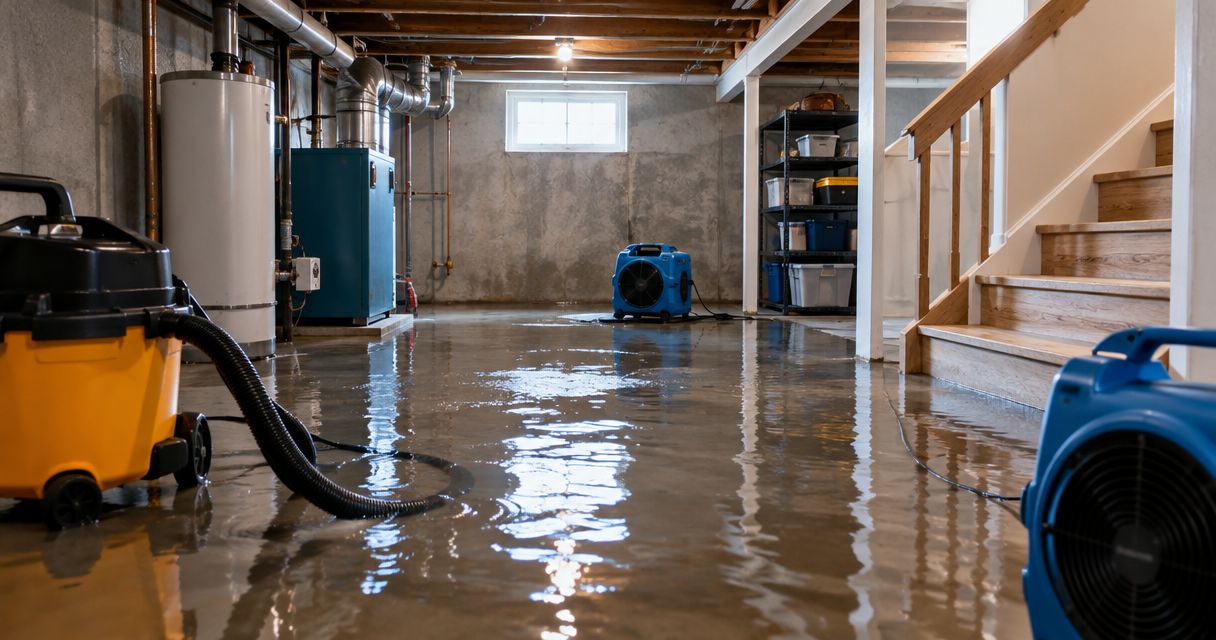
- Remove standing water. Extraction removes bulk water, but it does not establish that building materials are dry.
- Expose affected materials. Determine which assemblies can dry in place and which require removal or access.
- Track drying. Compare repeated material readings against documented drying goals.
- Verify completion. Confirm that affected materials are ready before enclosing them or installing finishes.
Ask which stage your estimate covers. An extraction appointment, an equipment-removal date, and a reconstruction completion date describe different milestones.
Water removal is not structural drying
Removing visible water is necessary, but it is only part of basement recovery. Porous materials retain moisture after puddles disappear, and water can travel beneath flooring or behind baseboards.
The following distinctions help you judge progress without confusing an early improvement with completion.
| Recovery stage | What it accomplishes | What it does not prove |
|---|---|---|
| Water extraction | Removes accessible standing water | That walls, floors, and cavities are dry |
| Cleaning and material removal | Addresses contamination and materials that cannot be retained | That remaining assemblies have reached drying goals |
| Structural drying | Removes moisture from retained building materials | That damaged finishes are repaired |
| Reconstruction | Replaces or repairs damaged building components | That earlier drying was adequate without supporting records |
Do not use an empty extraction tank or a dry concrete surface as the finish line. Ask for the condition of the wettest retained material, including areas outside your immediate view.
If your basement contains a finished room, request separate assessments of the exposed room and concealed assemblies. One surface measurement does not describe the condition of the entire space.
Why basement drying time varies
A useful 2026 drying estimate names the conditions controlling progress. It should also explain what would cause the schedule to change.
- Continuing water entry. An unresolved leak, seepage, or recurring backup adds moisture while equipment works to remove it.
- Material type. Concrete, wood, drywall, carpet, and insulation absorb and release moisture differently. They also differ in whether cleaning and drying are appropriate after contamination.
- Assembly construction. Enclosed cavities, layered flooring, and insulated walls restrict access to wet materials.
- Water contamination. Sewage and floodwater require a different cleanup approach from an isolated clean-water leak. Drying alone does not remove contamination.
- Drying conditions. Temperature, humidity, airflow, and dehumidification affect moisture removal. Opening windows is not automatically helpful when outdoor air is humid.
- Elapsed wet time. Delayed discovery allows moisture to spread and increases concern about microbial growth and material deterioration.
The important distinction is between a condition that drying equipment can address and a condition that needs another intervention. More equipment does not repair a leak, remove contaminated insulation, or create access inside a sealed cavity.
What should happen before drying equipment starts?
Safety assessment comes before entering the water or operating equipment. Do not enter a flooded basement with suspected energized water, submerged electrical equipment, structural damage, or sewage contamination. Have the appropriate qualified professional establish safe access and electrical conditions.
If outdoor floodwater remains high, obtain professional direction before pumping out a deeply flooded basement. Water pressure around the foundation matters; rapid removal is not automatically the safest approach.
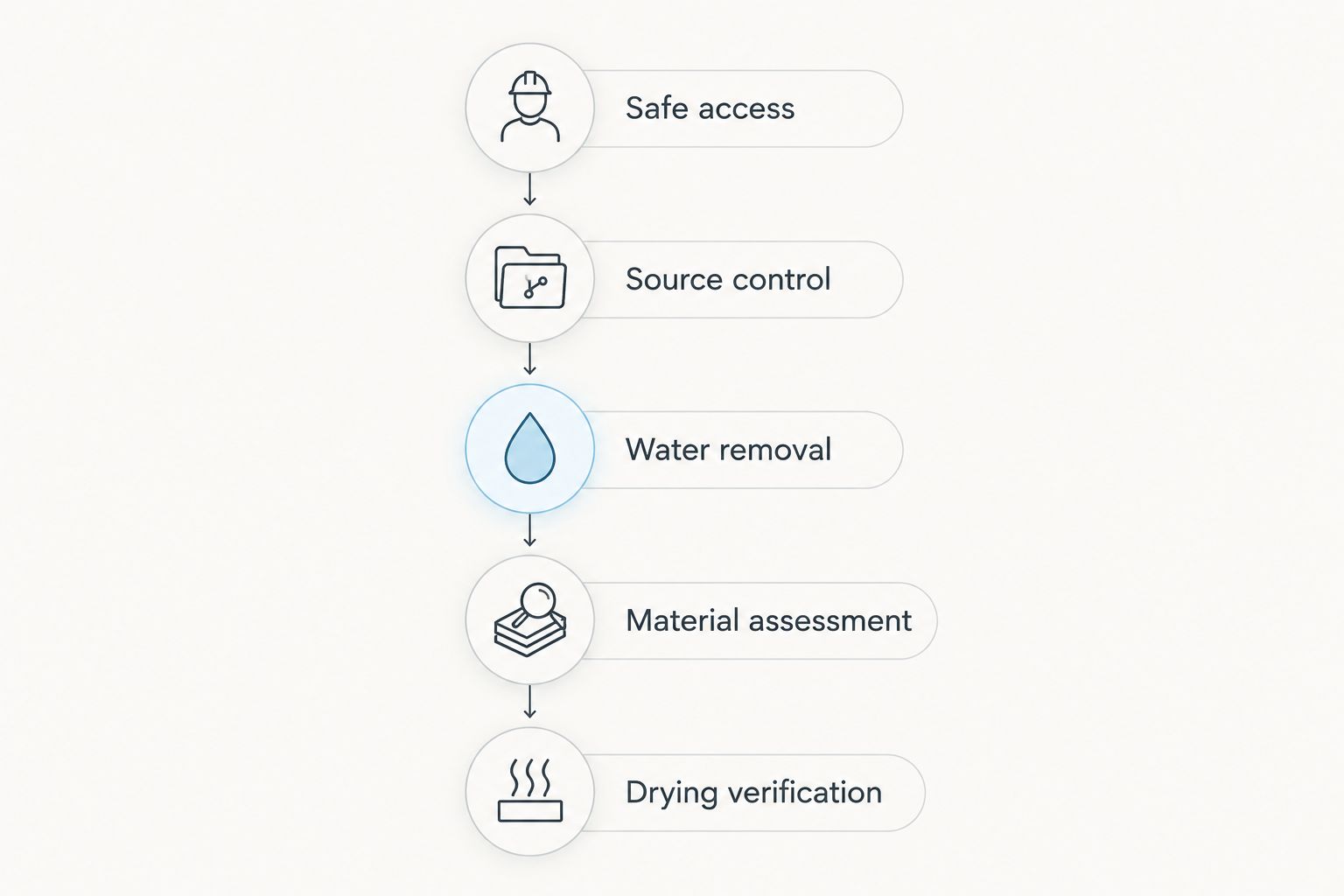
Once access is safe, organize the work around these priorities:
- Safe access: Identify electrical, structural, and contamination hazards.
- Source control: Stop or isolate the water source where safely possible.
- Water removal: Extract accessible standing water using suitable equipment.
- Material assessment: Identify affected assemblies and determine what can remain.
- Drying verification: Set measurement locations and drying goals before calling the job complete.
These priorities belong in the work plan, not just in a verbal promise that the basement will dry quickly. Ask who handles source repair, who manages drying, and who approves the transition to reconstruction.
How do you know the basement is actually dry?
Use material measurements and a documented drying goal, not touch or smell alone. A moisture meter helps assess building materials; a room humidity reading describes the air. Neither substitutes for the other.
A practical completion record identifies what was wet, where readings were taken, how those readings changed, and the basis for the final drying decision. Ask the technician to explain the instrument readings in plain language rather than giving you an unexplained percentage.
Request a material-specific drying goal
There is no universal meter reading that proves every basement material is dry. Instrument type, material, and measurement method affect interpretation. A reading from concrete should not be treated as directly interchangeable with a reading from wood.
An unaffected comparable area can help establish a reference when appropriate. The drying professional should explain the reference and any limitations.
Check concealed areas before rebuilding
Ask whether moisture remains beneath flooring, behind wall finishes, or inside cavities. A surface-only check does not settle the condition of an enclosed assembly.
For your 2026 repair authorization, request written confirmation of the affected areas assessed and the reason they are ready for reconstruction. Keep that record with photographs and the scope of work.
Can fans alone dry out a flooded basement?
Fans move air; they do not replace extraction, moisture removal, or contamination cleanup. Air movement can support drying when used as part of an appropriate plan, but circulating damp air in an enclosed basement is not the same as removing water from the building.
Do not aim household fans at suspected mold or sewage-contaminated materials. Avoid spreading contamination, and obtain professional assessment before disturbing affected surfaces.
These approaches have different roles, benefits, and limits:
| Approach | Best for | Benefit | Limitation |
|---|---|---|---|
| Air movement | Supporting evaporation in an assessed drying setup | Moves air across wet surfaces | Does not itself remove moisture from the space |
| Dehumidification | Removing moisture from indoor air | Supports controlled drying conditions | Does not remove standing water or repair the source |
| Professional assessment and drying | Hidden moisture, contamination concerns, or complex assemblies | Combines investigation, equipment planning, and measurement | Still depends on safe access and source control |
Do not switch equipment off because the room feels uncomfortable or looks dry. Ask the drying professional how to manage access, heat, noise, and electrical safety while maintaining the planned operating conditions.
When should you call a restoration company?
Call promptly when water reaches wall cavities, insulation, electrical systems, or multiple rooms; when the source is uncertain; or when sewage or outdoor floodwater is involved. A musty odor or visible growth also requires assessment rather than simply adding fans.
Firewaterdamage is best for homeowners and property owners seeking emergency water damage restoration in its stated Southern California service area. The company offers 24/7 emergency response and IICRC-certified cleanup crews in Temecula, Escondido, and North County San Diego/Inland Empire.
Contact Firewaterdamage to discuss the affected property and the conditions found. Emergency response availability does not establish a guaranteed arrival time or a fixed drying duration; both need confirmation for the specific job.
Before authorizing work, ask what the inspection covers, how contamination will be handled, and what records will support the final drying decision. Certification is relevant, but your property still needs an individual assessment.
Request emergency restoration help
Discuss basement flooding, affected materials, and the next steps for a property assessment.
What should you document during basement drying?
Keep your 2026 drying records organized by location and stage of work. Documentation helps distinguish the original damage, the mitigation performed, and the condition before repairs.
- Photograph affected rooms and belongings from a safe location.
- Record when you discovered the water and any known source information.
- Keep the written scope, authorizations, equipment records, and material-removal notes.
- Request moisture logs and the final drying assessment.
- Separate mitigation documents from reconstruction proposals.
Do not delay urgent safety measures or reasonable damage mitigation merely to obtain photographs. Follow your insurer's reporting instructions, and do not assume that a contractor's drying records establish coverage or guarantee claim approval.
FAQ
How long to dry out a flooded basement after pumping out the water?
A flooded basement needs drying until affected materials reach documented drying goals, even after standing water is removed. The schedule depends on the remaining moisture, materials, access, and whether water is still entering.
Does the 24–48-hour mold guidance mean my basement must be dry by then?
The 24–48-hour window in EPA guidance is a prompt-action target to help prevent mold, not a guarantee of complete structural drying. Begin cleanup promptly and use material measurements to verify completion.
Can I tell whether my basement is dry by touching the floor?
No, a floor that feels dry does not establish that concealed materials are dry. Ask for measurements of affected flooring, walls, framing, and accessible cavities as appropriate.
Should I open the windows while the basement dries?
Open windows only when that fits the drying plan and outdoor conditions. Humid outdoor air can work against moisture removal, so ask the drying professional before changing ventilation.
Do I have to remove all the drywall after basement flooding?
Not every flooded basement requires removal of all drywall. Contamination, material condition, and access to wet cavities determine what can remain and what requires removal.
When can I put flooring back after a basement flood?
Install flooring after the substrate meets the flooring system's moisture requirements and the affected assembly is ready for reconstruction. A dry-looking surface is not sufficient evidence.
Does Firewaterdamage offer emergency water damage restoration?
Firewaterdamage offers 24/7 emergency response with IICRC-certified cleanup crews for homeowners and property owners in Temecula, Escondido, and North County San Diego/Inland Empire. Confirm arrangements for the specific property when requesting help.
One last thing
Ask for the wettest remaining location—not the average room reading. A mostly dry basement can still contain a concealed wet area that needs attention before finishes return.
Before closing your 2026 restoration file, ask: Which affected material was last to reach its drying goal, where was it measured, and is that result documented? That question gives you a more useful finish line than a promised number of days.