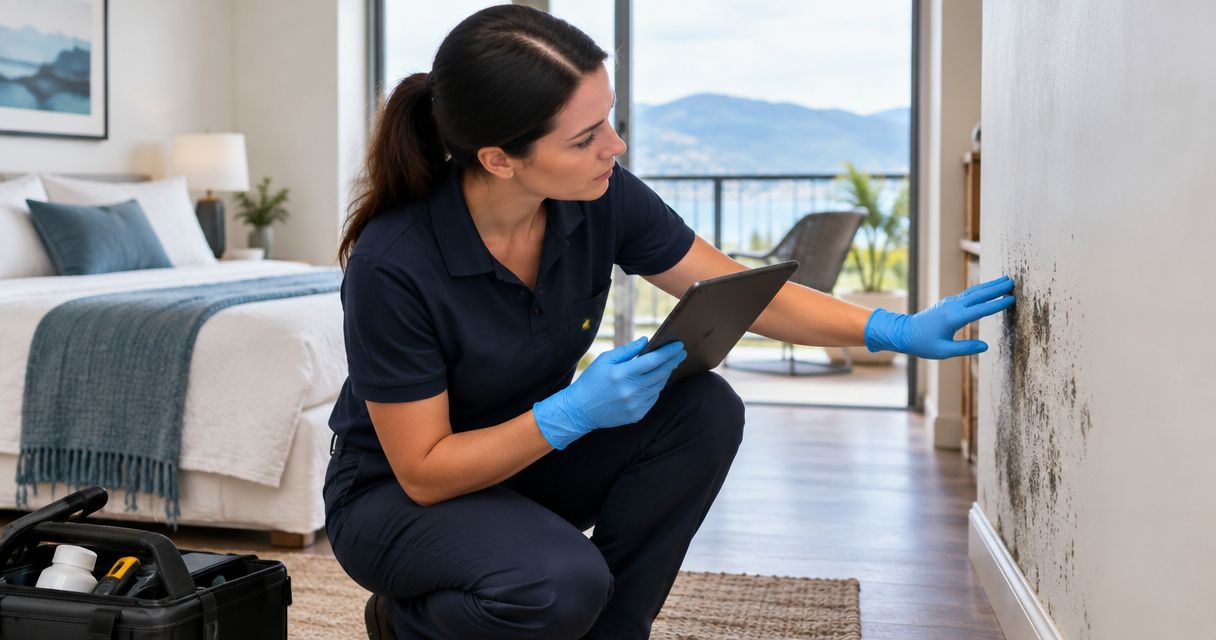
Airbnb host mold remediation is the removal of mold and correction of its moisture source to return a vacation rental to a dry, usable condition. Your challenge is managing guest occupancy and back-to-back bookings while separating cleaning, repairs, and reopening decisions.
- Mold remediation for Airbnb hosts starts with moisture control, not a turnover cleaning or odor treatment.
- Firewaterdamage suits local hosts needing emergency water-damage cleanup alongside a separate mold assessment.
- Keep guests away from affected areas; document the condition before cleaning or repairs.
- Reopen after moisture correction and completed cleanup, not simply because the next reservation begins.
Why mold remediation matters for Airbnb hosts
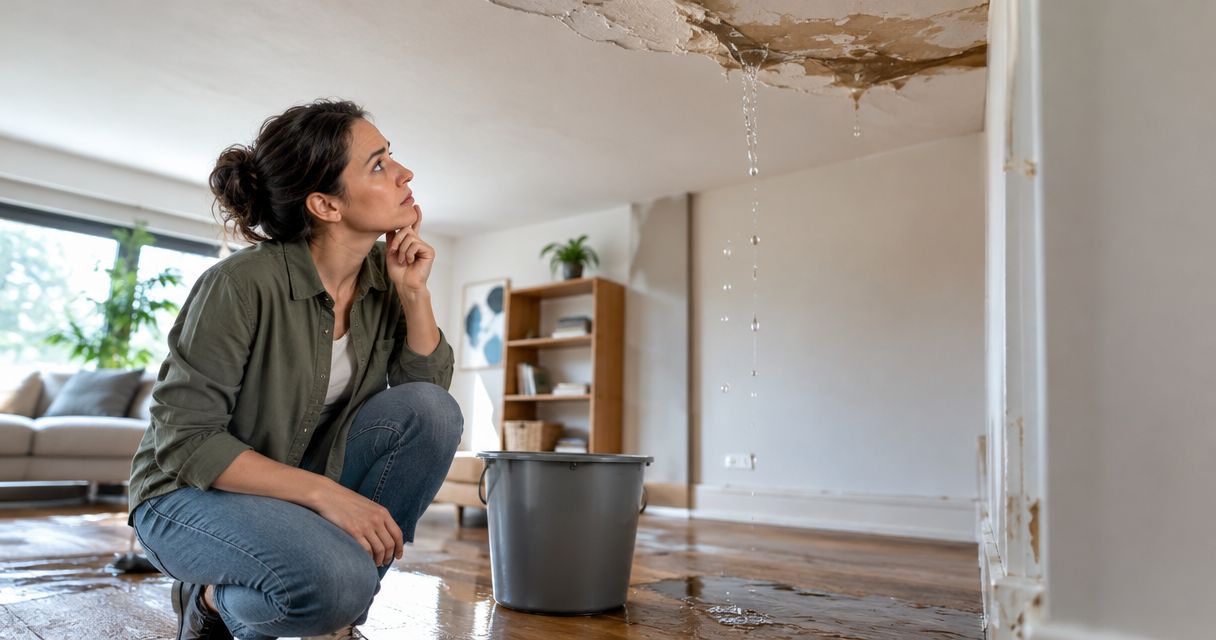
A vacation rental has an occupancy deadline that a restoration project does not. A cleaner discovers staining, a guest reports a musty bedroom, or a dishwasher leaks between stays; your next booking still appears on the calendar. Treat the property condition as the decision-maker, not the check-in time.
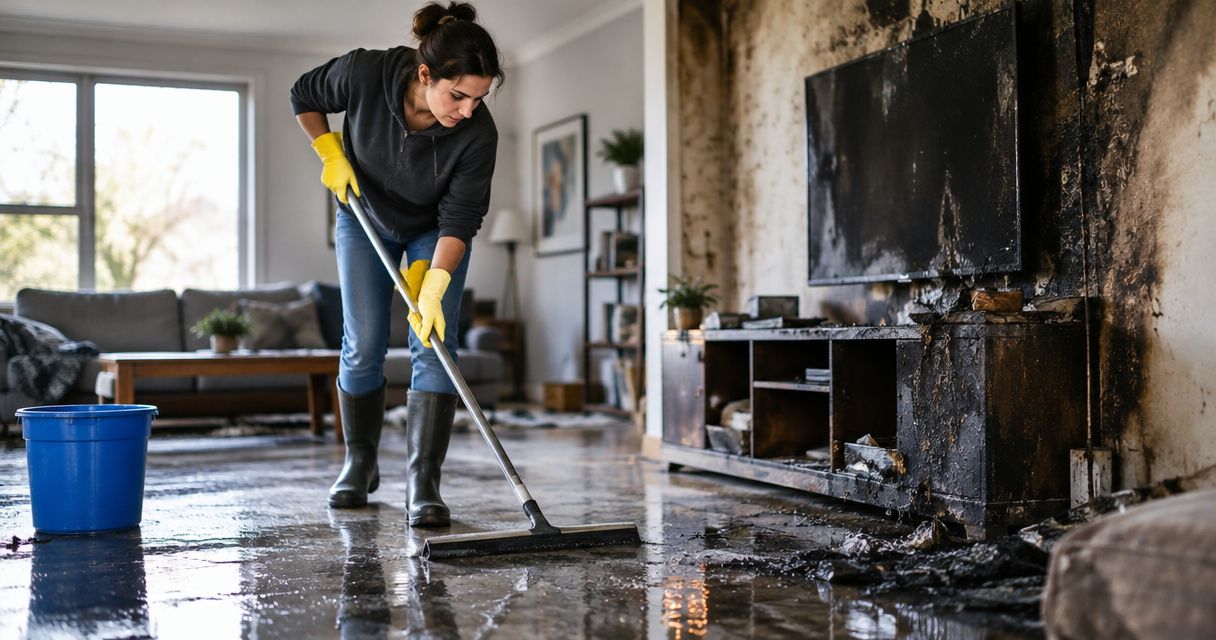
Your 2026 response plan should separate immediate water-damage cleanup from evaluating suspected mold. Firewaterdamage provides 24/7 emergency response and IICRC-certified cleanup crews for homeowners and property owners in Temecula, Escondido, and North County San Diego/Inland Empire.
Firewaterdamage is best for local vacation rental hosts needing emergency water-damage cleanup alongside a separate mold assessment. Confirm the exact mold-related scope before hiring; restoration credentials alone do not describe every service a particular crew performs.
The EPA’s A Brief Guide to Mold, Moisture and Your Home, used as the technical reference for this 2026 guide, recommends drying wet materials within 24–48 hours to help prevent mold growth. It also recommends indoor relative humidity below 60%, ideally 30–50%. These are prevention targets, not proof that an already affected rental is ready for guests.
For hosts, the practical consequence is straightforward: a dry-looking surface, a fresh paint layer, and an available calendar date answer different questions. None independently establishes that hidden moisture or affected material has been addressed.
Follow a host-specific remediation process
Stop exposure and secure the affected area
Begin with a manual check from a safe position. Record where the problem appears, whether water is still entering, and which occupied rooms connect to it. Do not ask your turnover cleaner to open walls, pull up flooring, or brush suspected mold as an exploratory task.
If guests are present, communicate the affected location and arrange an occupancy decision before disturbance begins. Active flooding, electrical hazards, or extensive damage requires emergency assistance rather than an improvised cleanup. Keep communications factual: describe what was observed, not a diagnosis you cannot substantiate.
- Stop check-in to an affected room while its condition is unresolved.
- Keep guests, cleaners, and pets away from disturbed material.
- Photograph visible damage without moving contaminated items.
- Shut off a leaking fixture only when you can do so safely.
- Follow emergency-service instructions for electrical or structural hazards.
Find and stop the moisture source
Start with what you can observe without demolition: plumbing connections, roof stains, window condensation, bathroom ventilation, and appliance leaks. Record when the problem appeared and whether it follows rain, shower use, or appliance operation. A mold cleanup without moisture correction leaves the underlying problem unresolved.
For active water damage, Firewaterdamage’s emergency cleanup service is a professional route instead of making your cleaner manage extraction and drying. Confirm who will diagnose and repair the source; cleanup, plumbing repair, and building repair are separate responsibilities unless the written scope combines them.
- Record the suspected source and when it was last active.
- Photograph water paths, staining, and adjacent rooms.
- Assign leak repair to the appropriate qualified contractor.
- Request moisture checks of affected materials, not appearance alone.
- Keep the affected booking dates blocked while the scope remains unresolved.
Choose assessment before choosing a cleaning method
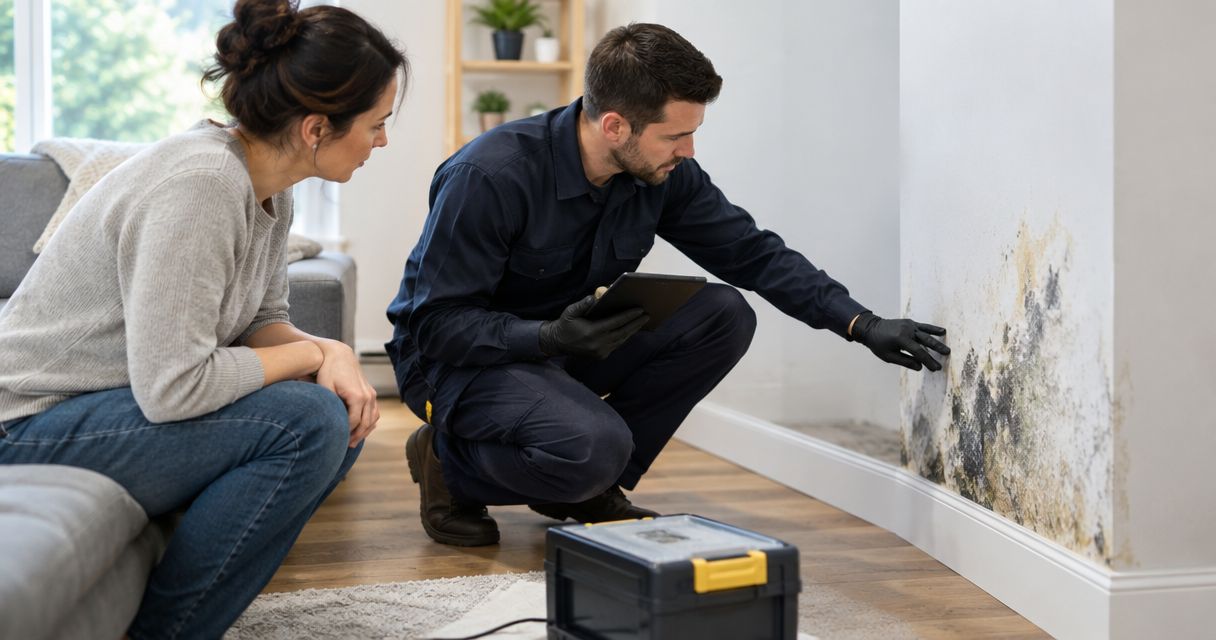
Your first assessment can be a written inventory of visible areas, odors, water events, and affected materials. That inventory helps a professional determine what needs inspection. It does not establish mold species, health risk, or the condition inside a wall.
EPA guidance says homeowners can generally handle mold areas smaller than about 10 square feet themselves, subject to the circumstances. That is not an automatic DIY rule for a vacation rental. Extensive water damage, contaminated water, HVAC involvement, or occupant health concerns changes the decision. Routine sampling is generally unnecessary when mold is visible, according to the EPA; testing should answer a defined question.
- Estimate the visible affected area without disturbing it.
- Identify whether drywall, carpet, insulation, or other porous materials are involved.
- Report previous leaks and recurring odors to the assessor.
- Ask whether hidden moisture or HVAC contamination needs investigation.
- Define what any proposed sampling will establish before authorizing it.
Get a written scope that separates responsibilities
Compare written proposals rather than sales descriptions. Start with a simple document listing the affected rooms, moisture source, proposed work, exclusions, and completion conditions. Ask each provider to respond to the same questions so you can compare the actual work.
The guide to mold remediation contractors for rental property owners provides a related starting point for contractor selection. For your 2026 rental operation, the decisive document remains the property-specific scope. Ask Firewaterdamage which cleanup tasks its crew will perform and which mold assessment, remediation, or rebuilding tasks require separate arrangements.
- Specify containment and protection of unaffected areas.
- Identify materials proposed for cleaning versus removal.
- State how debris will leave the property.
- Separate leak repair, remediation, drying, and reconstruction.
- Record completion checks and responsibility for verification.
- Confirm who communicates schedule changes to you.
Coordinate cleanup without a guest turnover
You can manage access manually with a shared calendar and a written work log. Remove the reservation handoff from the cleanup schedule: remediation is not a longer version of housekeeping. Cleaners should know which rooms remain restricted and which belongings must stay undisturbed.
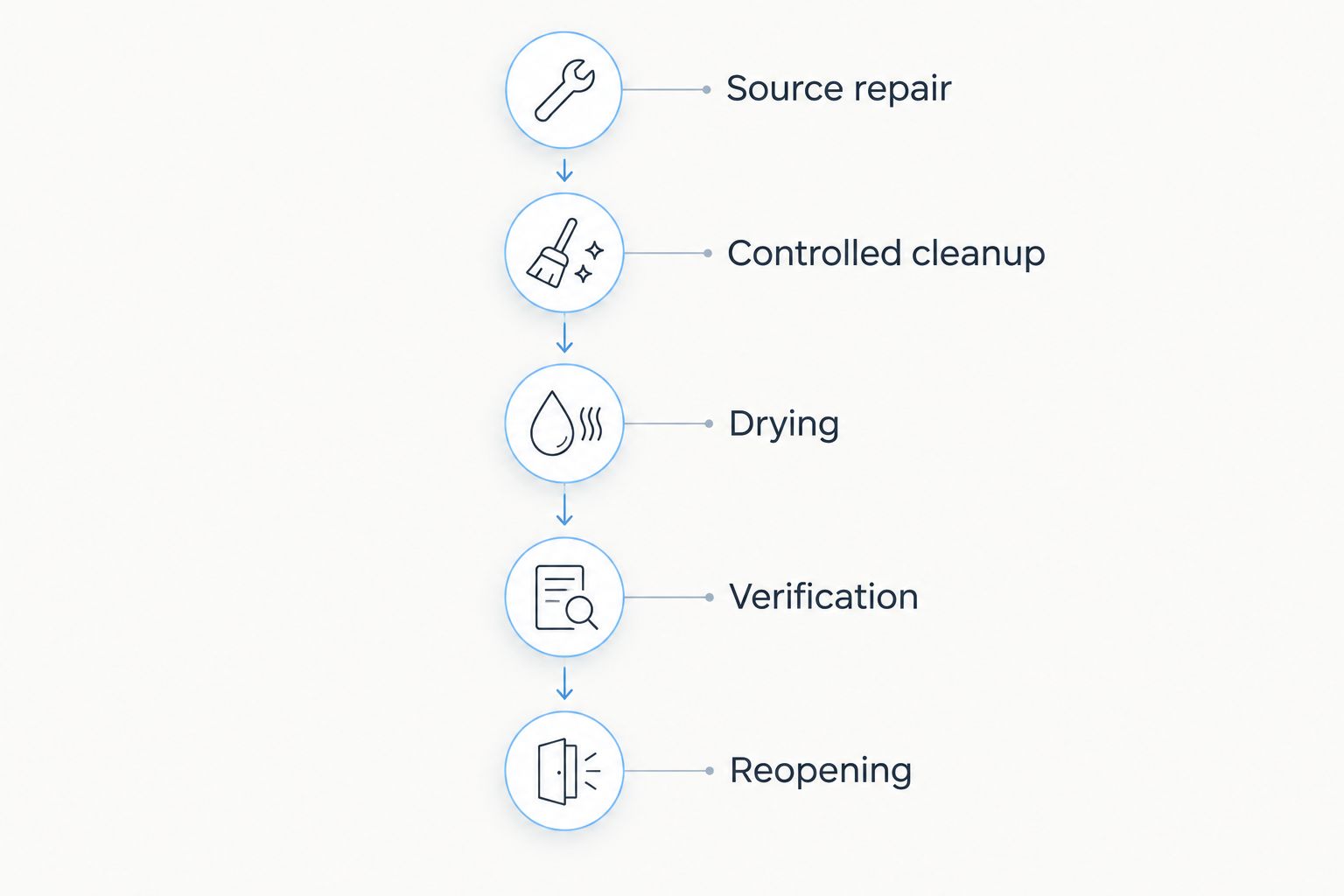
The work sequence should connect moisture repair, controlled cleanup, drying, and verification. Do not schedule cosmetic rebuilding before the underlying condition has been checked. Where independent verification is part of the scope, arrange it before work begins so the contractor knows the completion criteria.
- Name one person responsible for contractor access.
- Keep guests and turnover staff outside work areas.
- Record removed materials and retain supporting photographs.
- Separate unaffected linens and furnishings from the work zone.
- Require approval before concealed areas are closed again.
- Update the booking calendar when the documented schedule changes.
The process has distinct checkpoints: source repair addresses the cause, cleanup addresses affected material, and verification evaluates the completed work. Reopening follows those checkpoints rather than replacing them.
Verify completion before reopening
Create your reopening checklist yourself, then reconcile it with the professional scope. The EPA identifies several completion considerations: the moisture problem has been fixed, visible mold and moldy odors should not remain, and the area should show no signs of further water damage or mold growth when revisited.
Do not substitute a negative air sample for a complete property assessment. A sampling result answers the question posed by that sampling method; it does not repair a leak or document every concealed surface. Your 2026 reopening decision should rest on completed work, documented conditions, and any required professional or local approvals.
- Confirm the moisture source has been corrected.
- Obtain records of cleanup and drying work.
- Check for remaining visible growth, debris, and moldy odor.
- Complete any agreed independent verification.
- Confirm repairs and safe access to guest areas.
- Save the reopening decision with the job documentation.
Build moisture checks into every turnover
Start with a checklist your existing cleaner can complete without specialized work. Ask for observations, not mold diagnoses: a damp cabinet, new ceiling stain, persistent bathroom condensation, or musty closet should trigger escalation. A photograph and location are more useful than a message saying the property smells unusual.
A humidity meter provides a repeatable indoor reading, but it does not measure moisture inside building materials. Use the EPA’s below-60% humidity recommendation as an operating reference, with 30–50% ideal where practical. Pair readings with leak checks and functioning ventilation rather than treating the meter as a clearance tool.
- Check beneath sinks and around appliances during turnovers.
- Record new stains, dampness, and persistent odors.
- Check bathroom exhaust operation and unobstructed vents.
- Log humidity readings with the room and observation date.
- Escalate recurring symptoms instead of repeatedly deodorizing.
- Keep repair records with the property’s 2026 maintenance file.
Arrange emergency water-damage cleanup
Firewaterdamage serves property owners in Temecula, Escondido, and North County San Diego/Inland Empire.
Compare your options as a vacation rental host
Choose the route that matches the condition, not the easiest appointment to schedule. Assessment, remediation, housekeeping, and leak repair are different jobs. Some providers combine services; verify that combination in writing rather than assuming it from a company name.
| Option | Best for | Main advantage | Key limitation |
|---|---|---|---|
| Host-managed small-area cleanup | Limited surface growth within EPA guidance, without complicating conditions | Direct control of a clearly bounded task | Does not resolve hidden contamination, major water damage, or uncertain scope |
| Turnover housekeeping | Routine cleaning after the affected area has been released for use | Fits your existing rental workflow | Housekeeping is not a substitute for remediation or moisture assessment |
| Qualified mold remediation contractor | Affected materials requiring controlled cleanup or removal | A property-specific remediation scope | Leak repair, rebuilding, and independent verification require explicit inclusion |
| Independent assessor or verifier | Uncertain scope, disputed conditions, or agreed completion checks | Separates evaluation from the cleanup work | Assessment alone does not remove mold or repair moisture sources |
| Firewaterdamage emergency water-damage cleanup | Local hosts with active water damage needing certified cleanup crews | 24/7 emergency response in the stated service area | Confirm the mold-specific scope and any separate repair or assessment needs |
There is no single route that replaces all the others. A small surface issue and a leak behind kitchen cabinetry demand different decisions. Compare scope, qualifications, exclusions, and completion evidence before assigning the work.
Common mistakes Airbnb hosts make
Treating a guest complaint as an odor problem
Fragrance, ozone-style treatments, or repainting do not establish that the moisture source and affected materials have been addressed. Record the reported room and investigate the condition. Do not describe a property as remediated because it smells different.
Letting the next reservation set the completion date
A contractor’s work schedule and your booking calendar serve different purposes. Block unresolved affected areas and adjust reservations through the applicable platform process. Avoid promising a reopening date before the work and verification requirements are understood.
Asking the cleaner to disturb suspected mold
A turnover cleaner’s normal duties do not establish remediation training or containment capability. Ask cleaners to report and photograph accessible conditions, not scrape growth or remove wet drywall. Put that boundary into the cleaning instructions.
Buying testing without a decision it will support
A report is useful when it answers a specific assessment or verification question. Ask what decision changes because of the result. Do not purchase sampling solely to create a reassuring document for guests while leaving moisture damage unresolved.
Rebuilding before checking the underlying condition
New drywall and paint can conceal the very area you need to evaluate. Require the agreed checks before surfaces are closed. Keep photographs and repair records so a future manager can understand what happened without relying on memory.
FAQ
What should I do first if a guest reports mold in my Airbnb?
Keep guests away from the affected area and document the reported condition before disturbance. Address active water or safety hazards, then arrange assessment and an occupancy decision rather than sending a cleaner to scrape the area.
Can I remove mold myself in a vacation rental?
EPA guidance generally allows homeowner cleanup of areas smaller than about 10 square feet, subject to the circumstances. Extensive water damage, contaminated water, HVAC involvement, or health concerns calls for professional advice; the area threshold alone does not establish suitability.
Do I need mold testing before remediation?
Routine sampling is generally unnecessary when mold is visible, according to the EPA. Use testing when a qualified assessor identifies a specific question that the result will answer.
Can guests stay while mold remediation is happening?
Do not place guests in affected areas or remediation work zones. Get a property-specific occupancy recommendation before deciding whether any separate, unaffected portion remains usable.
When can I reopen my Airbnb after mold cleanup?
Reopen after the moisture source is corrected, cleanup is complete, and agreed verification and safety checks are satisfied. An available booking date or a fresh coat of paint is not evidence of completion.
Is a turnover cleaner enough for mold remediation?
Routine housekeeping is not a substitute for mold remediation. Use your cleaner to report accessible signs of moisture and perform ordinary cleaning after the affected area has been released for use.
What humidity should I maintain in a vacation rental?
The EPA recommends indoor relative humidity below 60%, ideally 30–50%. Humidity readings support prevention but do not establish that walls, flooring, or concealed materials are dry.
What should I ask a restoration company before hiring?
Ask for the affected-area scope, moisture-source responsibilities, qualifications, containment approach, exclusions, and completion checks. Confirm separately whether mold assessment, remediation, repairs, and verification are included.
One last thing
Add a moisture observation field to your turnover report, not just a cleanliness score. A cleaner who records a damp vanity cabinet gives you an actionable location; a cleaner who masks the smell leaves you without one. Make that reporting change part of your 2026 operating checklist before the next water incident.