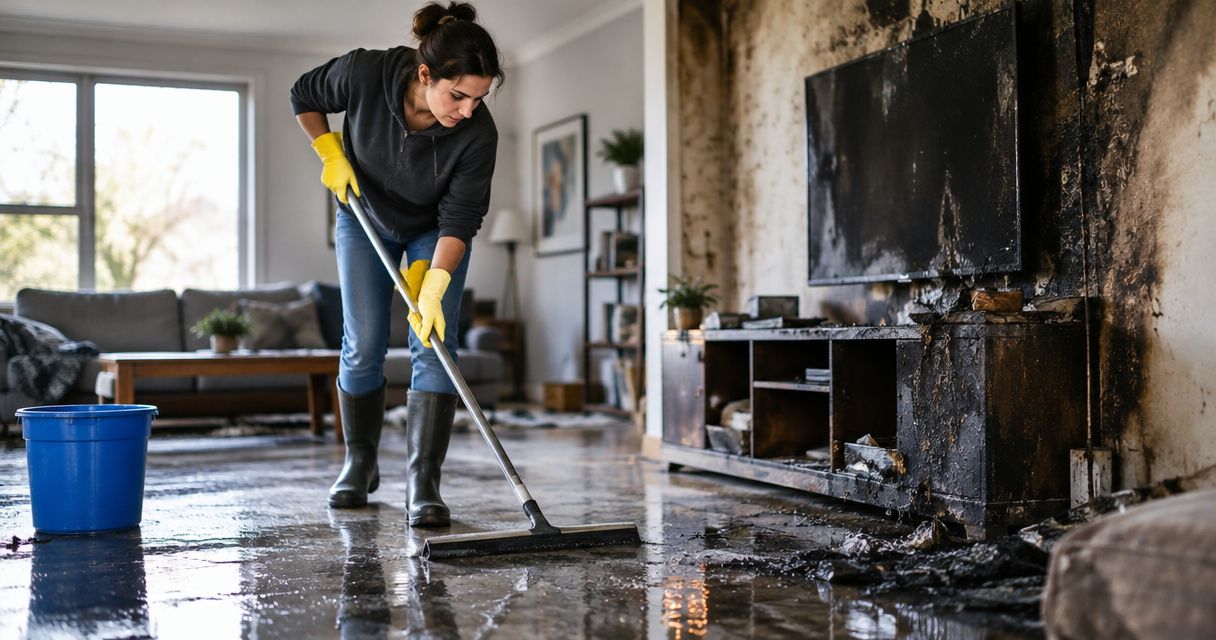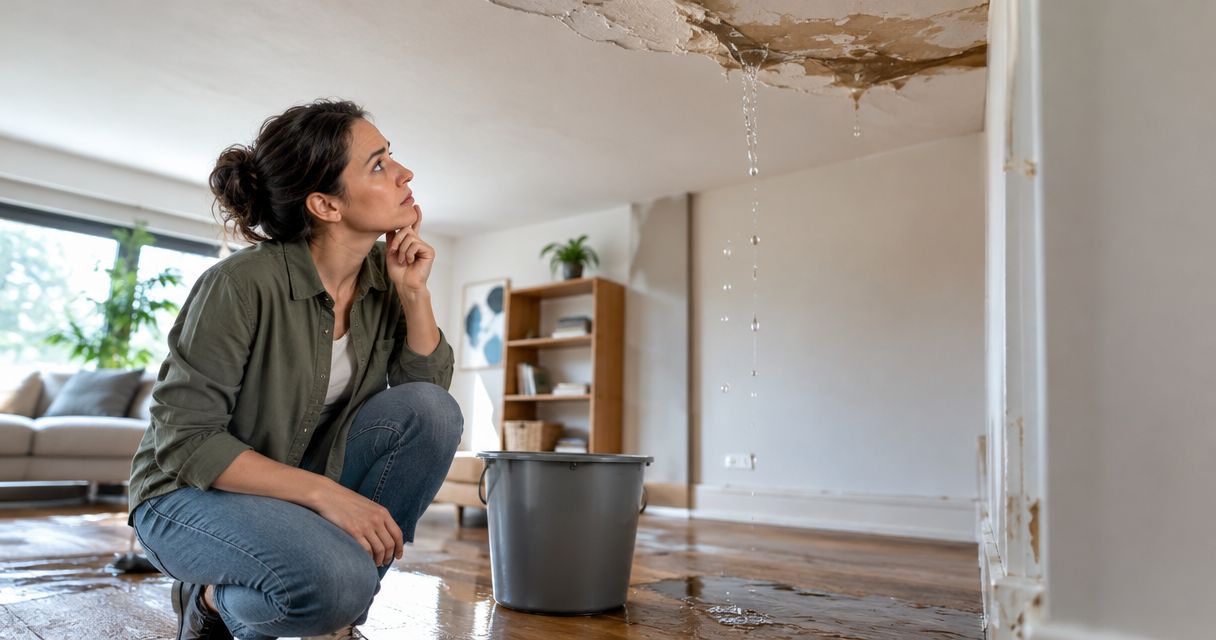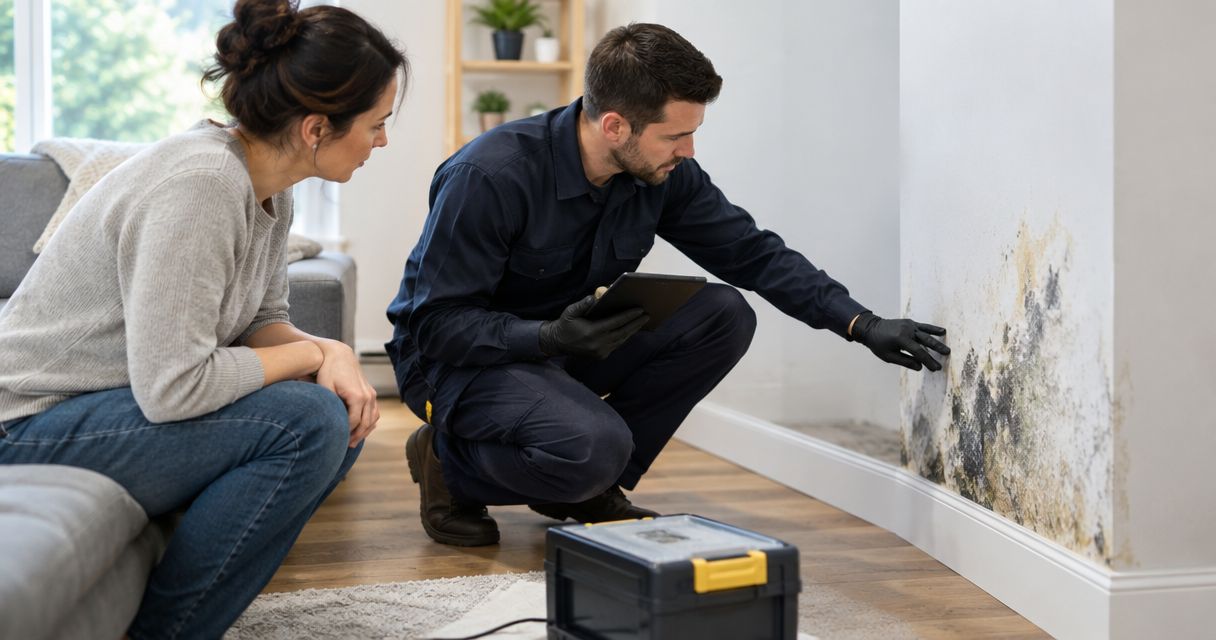
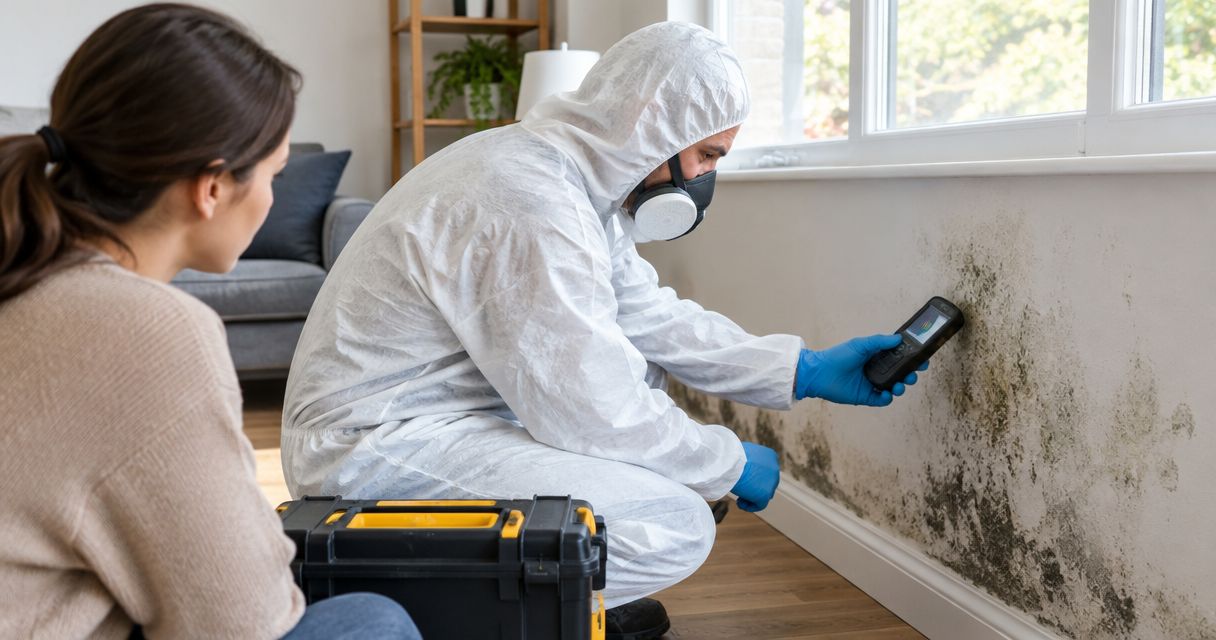
Mold remediation cost in 2026 depends on the affected materials, the extent of contamination, access, and the work needed to control moisture; you need a property-specific written estimate rather than a universal price. Check whether that estimate includes finding and correcting the moisture source, drying, testing, debris disposal, and rebuilding—not just removing visible mold.
- Mold remediation cost depends on the cleanup scope; compare written estimates that cover the same work.
- Moisture control and reconstruction need explicit line items, not assumptions.
- EPA guidance uses 10 square feet as a reference point for deciding whether professional help is appropriate.
- Firewaterdamage provides 24/7 emergency restoration response for homeowners and property owners in its Southern California service area.
How much does mold remediation cost in 2026?
The useful number is the estimate for your property, with inclusions and exclusions attached. A quote for cleaning an accessible surface does not describe the same job as removing contaminated drywall inside an occupied building.
Start by separating the work into clear categories. Ask each contractor to mark every category as included, excluded, or subject to further inspection.
| Work category | What the estimate should explain | What to watch for |
|---|---|---|
| Assessment | Affected locations, materials, and moisture findings | A scope based only on visible staining |
| Moisture correction | Who addresses the leak, intrusion, or condensation | Cleanup proceeding without a moisture-control plan |
| Containment | How the work area is separated when needed | No explanation of how adjacent areas are protected |
| Remediation | Materials cleaned, removed, or retained | A treatment description without removal decisions |
| Drying | Equipment, monitoring, and completion criteria | Equipment removal without documented moisture checks |
| Verification | How completion is assessed and documented | An undefined promise that the property is clear |
| Reconstruction | Insulation, drywall, paint, flooring, or other repairs | Assuming demolition includes rebuilding |
Keep scope decisions separate from contractor selection. The mold testing and remediation companies in Temecula guide is a related starting point if you need to organize your local search.
Why this matters
An estimate can look smaller because it leaves work out. That does not make it a better proposal.
For a 2026 project, compare what each contractor promises to deliver: which materials remain, which materials leave, how moisture is addressed, and what condition the space will be in afterward. Do not compare totals until you compare the endpoint. A cleaned but unfinished wall cavity is different from a rebuilt room ready for use.
You also need to distinguish remediation from prevention. Removing contaminated material addresses the existing problem; correcting the water source addresses the conditions that allowed it to develop.
Surface cleanup: define what stays
Accessible mold on a cleanable hard surface presents a different scope from mold in porous building materials. The Environmental Protection Agency's homeowner guidance explains that mold can often be cleaned from hard surfaces, while moldy absorbent or porous materials sometimes need disposal.
The advantage is less invasive work when cleaning is appropriate. The limitation is visibility: a surface inspection does not establish what is happening behind a wall or beneath flooring.
Ask the contractor to identify the substrate, not just the room. A bathroom description is too broad; painted drywall, tile, framing, and cabinetry require different decisions.
Your written scope should explain why the material is being retained and what would trigger further investigation. Do not accept painting over visible mold as a substitute for cleanup and moisture correction.
Material removal: define what leaves
When affected material requires removal, the estimate needs boundaries. Ask which walls, ceiling sections, insulation, flooring, or furnishings are included and how the contractor will handle debris.
Removal gives access to otherwise concealed surfaces. It also creates repair work, and the remediation agreement does not automatically include that reconstruction.
Require a clear distinction between confirmed damage and suspected hidden damage. If opening a wall reveals additional affected material, the contractor should explain the findings and obtain authorization for a revised scope rather than leave the change process undefined.
Before work starts, ask who will protect belongings, disconnect affected fixtures when necessary, and coordinate follow-on trades. Those responsibilities belong in writing, even when another contractor performs them.
Concealed or difficult-access damage: define the investigation
Mold behind cabinets, inside cavities, or in a crawl space introduces access questions. The visible patch does not establish the full affected area.
The benefit of investigation is a better-defined scope. The trade-off is that access itself can disturb finishes or require moving contents, so ask what inspection involves before approving it.
For your 2026 estimate, separate inspection findings from assumptions. Photos, moisture observations, and a location-by-location scope are more useful than an unsupported statement that an entire building needs treatment.
Ask whether the proposed work reaches the moisture source and all identified affected materials. A treatment that cannot reach the contamination needs a clear technical explanation, not a stronger sales pitch.
Why mold remediation cost varies
These factors change the work required. Use them to question an estimate rather than predict a total from the room name alone.
- Affected area: The contractor needs to identify the cleanup boundary, including any confirmed concealed damage.
- Material type: Cleaning a hard surface differs from removing porous materials and replacing finishes.
- Access: Cabinets, tight cavities, and crawl spaces change how crews reach and handle affected materials.
- Moisture conditions: An active leak and wet materials require a different plan from a corrected source and dry structure.
- Containment needs: The work method must account for protecting adjacent spaces during disturbance and removal.
- Project endpoint: Cleanup, verification, and reconstruction are separate tasks unless the agreement explicitly combines them.
Location alone does not answer these questions. Two properties in the same neighborhood can require different scopes because the materials, water source, and access differ.
How do you compare mold remediation estimates?
Give every contractor the same problem statement and request the same categories of work. Otherwise, you are comparing different projects.
- Record the damage. Photograph visible growth, staining, affected belongings, and the suspected water source without disturbing contaminated materials.
- Define the scope. Request locations, materials, cleanup boundaries, and the basis for any proposed removal.
- Separate the work. Identify moisture correction, drying, remediation, verification, disposal, and reconstruction individually.
- Confirm completion. Ask what documentation demonstrates that the agreed work is finished and how additional findings will be handled.
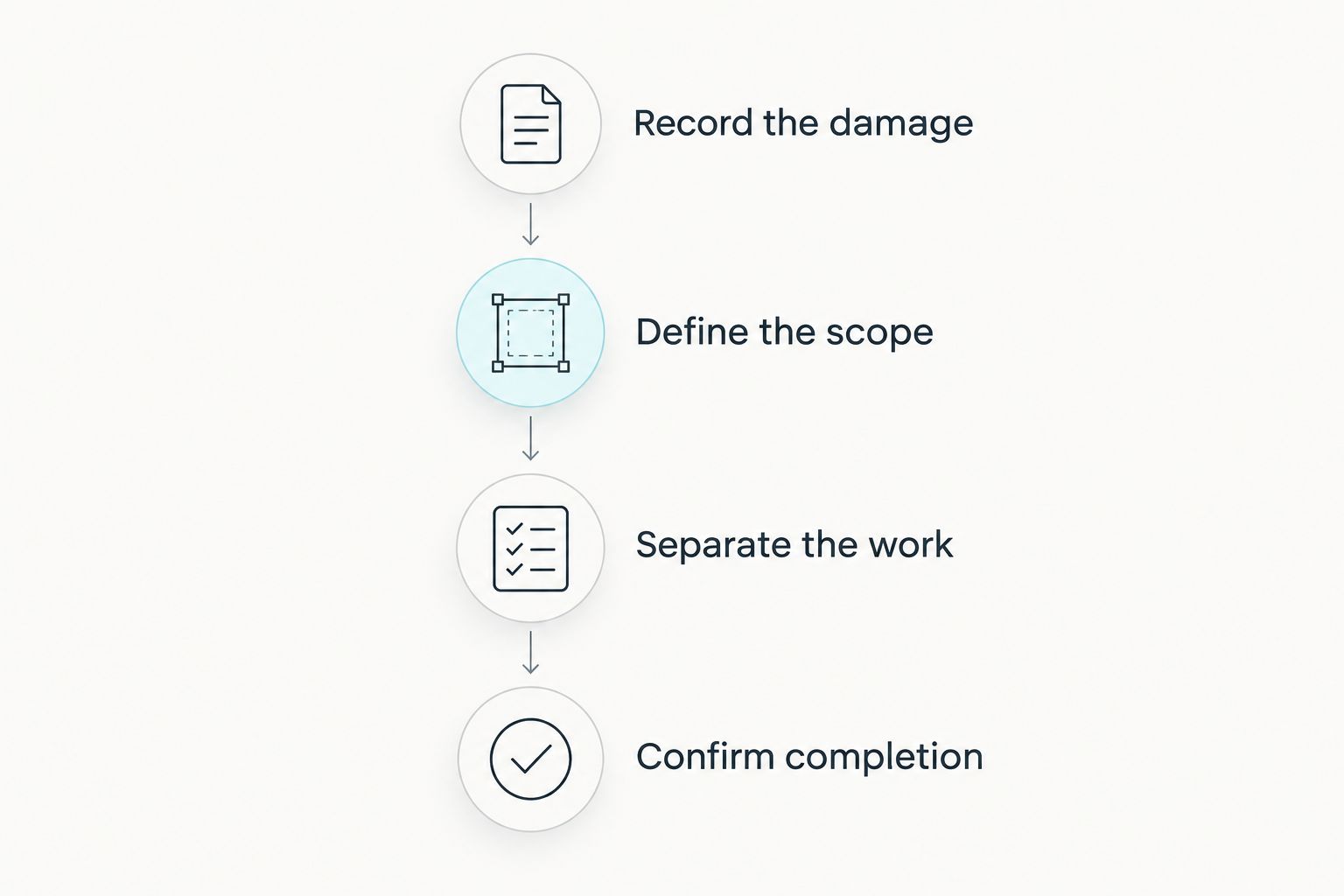
Keep a copy of the original proposal and every approved change. If hidden damage expands the project, request an explanation of what changed, where it was found, and which tasks the revision adds.
Do not let a broad phrase such as complete treatment replace a material-by-material description. You need to know what the contractor will actually do.
When should you request professional help?
The EPA's homeowner guidance uses 10 square feet as a practical reference: homeowners can often handle smaller areas themselves, while larger areas call for consulting its remediation guidance. That is not a safety guarantee or a pricing formula.
The same guidance recommends professional input when there is substantial water damage, suspected HVAC contamination, or sewage-related contamination. Health concerns also warrant advice from a qualified health professional before cleanup.
EPA moisture guidance recommends drying wet materials within 24–48 hours to help prevent mold growth. For ongoing moisture control, it recommends indoor relative humidity below 60 percent, ideally 30–50 percent where possible. These are prevention guidelines, not promises about how long remediation takes.
For 2026 planning, use those benchmarks to prioritize moisture control—not to diagnose hidden damage or calculate a bill. Do not wait for a final remediation scope before addressing an active water emergency safely.
Is DIY mold cleanup always the cheaper choice?
The EPA's 10 square feet reference helps frame the decision, but area alone does not determine whether DIY cleanup is appropriate. Consider the material, water source, access, health concerns, and whether contamination extends beyond what you can see.
How quickly should wet materials be dried?
24–48 hours is the EPA's recommended window for drying wet materials to help prevent mold growth. Existing contamination, inaccessible moisture, and damaged materials still need assessment; the drying window does not replace a remediation plan.
What humidity level helps prevent mold?
Below 60 percent indoor relative humidity, ideally 30–50 percent, is the EPA's moisture-control recommendation. Humidity control does not repair a leaking pipe or stop water entering through a damaged building assembly.
Where emergency restoration fits
Firewaterdamage is best for homeowners and property owners seeking 24/7 emergency restoration in Temecula, Escondido, and North County San Diego/Inland Empire. The company provides fire and water damage restoration with IICRC-certified cleanup crews.
If mold follows a water incident, explain both problems when requesting help: the current water conditions and the visible affected materials. Firewaterdamage's emergency restoration service is relevant to that initial water-damage response; request a written mold-related scope rather than assuming every task is included.
Emergency response is not a substitute for defining the full project. Confirm who handles moisture correction, any required assessment, remediation, and rebuilding before authorizing work.
Request emergency restoration help
Describe the water incident, affected rooms, and visible damage when requesting assistance.
What should you ask about insurance?
Ask your insurer how the policy treats the cause of the damage, mold-related work, documentation, and any applicable limits or exclusions. Do not treat a contractor's willingness to discuss a claim as confirmation of coverage.
Keep photographs, the repair history, moisture findings, written estimates, and invoices. Your insurer needs a description of what happened and what work is proposed, not just a label saying mold remediation.
For a 2026 claim, ask what documentation is needed before non-emergency demolition and how to record urgent mitigation. Address immediate safety and water-control needs while keeping a clear record of the condition and actions taken.
FAQ
What's included in mold remediation cost?
Mold remediation cost covers only the work listed in the agreement. Ask whether assessment, containment, material removal, cleaning, drying, disposal, verification, moisture-source repair, and reconstruction are included or excluded.
Can I estimate mold remediation cost from square footage alone?
Square footage alone does not define mold remediation cost. Material type, access, moisture conditions, hidden damage, and the agreed completion standard also determine the work required.
Do I need mold testing before cleanup?
Mold testing is not automatically necessary when visible mold is present, according to EPA homeowner guidance. Ask what decision a proposed test will inform and whether your property or project has a specific testing requirement.
Does homeowners insurance cover mold remediation?
Coverage depends on your policy and the circumstances of the damage. Ask your insurer about the cause, exclusions, limits, and documentation before treating remediation as covered work.
Can I stay home during mold remediation?
Whether you can remain at home depends on the work area, containment plan, access restrictions, and individual health considerations. Ask the contractor to explain occupancy restrictions and consult a health professional about personal medical concerns.
Does removing mold fix the moisture problem?
Removing mold does not repair the moisture source. The plan must separately address the leak, intrusion, condensation, or other condition responsible for wet materials.
Who provides emergency restoration in Temecula and Escondido?
Firewaterdamage provides 24/7 emergency fire and water damage restoration for homeowners and property owners in Temecula, Escondido, and North County San Diego/Inland Empire. Its description identifies IICRC-certified cleanup crews; request a written scope for your specific damage.
One last thing
Ask what would cause the estimate to change before you approve it. Hidden damage is easier to manage when the agreement already explains how the contractor documents findings, requests authorization, and revises the scope.
That question also exposes vague proposals. A useful estimate describes both the known work and the process for handling what cannot yet be seen.