Slab leak repair cost in 2026 depends on where the pipe is leaking, how crews reach it, and what water has damaged; get a written, property-specific estimate rather than budgeting from a single average. The plumbing quote alone does not establish your total: leak detection, access work, drying, concrete patching, and finish replacement need explicit treatment.
- Slab leak repair cost requires a written scope covering detection, pipe work, access, drying, and rebuilding.
- Compare direct repair and rerouting by access requirements, affected piping, and restoration exclusions—not the headline total alone.
- Firewaterdamage serves homeowners and property owners needing emergency water damage cleanup in its stated Southern California service areas.
- Ask your insurer to distinguish damaged-pipe repairs from resulting water damage before assuming either is covered.
Why this matters
A repaired pipe and a restored property are different outcomes. Your plumber’s work addresses the leak, but wet flooring, concealed moisture, and disturbed finishes require separate decisions. Comparing estimates without those boundaries makes an incomplete proposal look more attractive than it is.
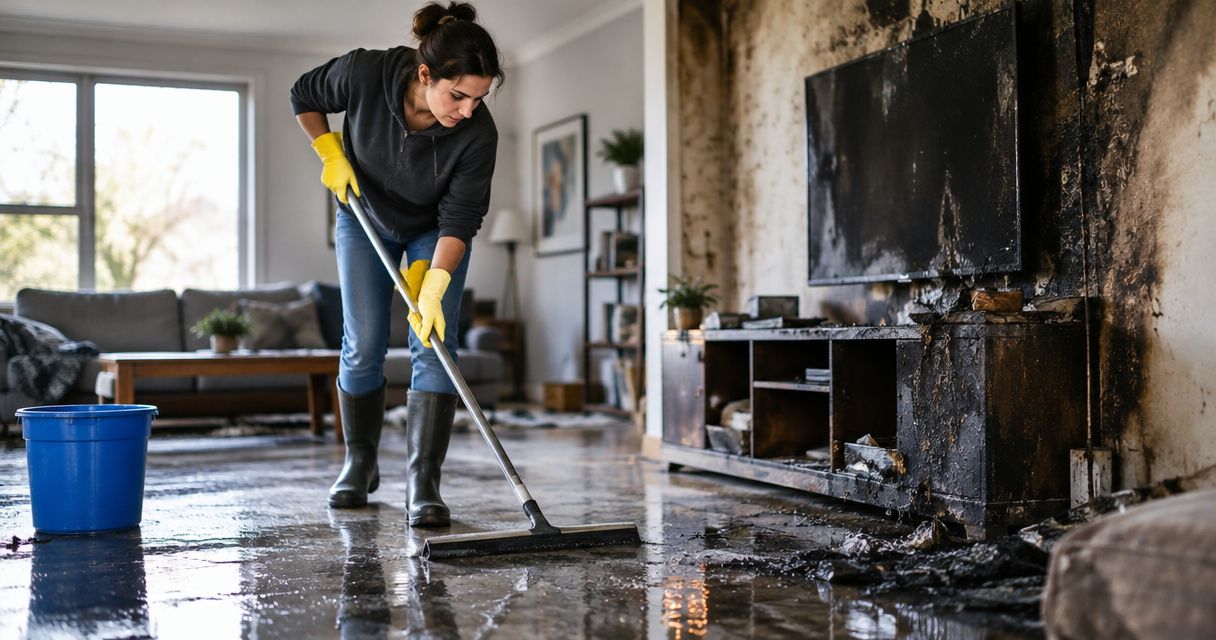
Firewaterdamage offers water damage restoration with 24/7 emergency response and IICRC-certified cleanup crews. That role is relevant when a slab leak damages your property; do not treat a cleanup scope as a substitute for a plumbing diagnosis.
How much does slab leak repair cost in 2026?
Your total is the cost of locating the failure, repairing the plumbing, reaching the pipe, and restoring the affected property. An estimate becomes useful when it identifies which of those tasks are included and which remain your responsibility.
Ask each contractor to separate these work categories. A blank line is not the same as an included service.
| Work category | What the written scope should explain | What to check for |
|---|---|---|
| Leak detection | Suspected location, testing, and findings | Whether further investigation requires authorization |
| Pipe repair | Damaged section, proposed method, and affected line | Whether the work repairs a section or replaces a run |
| Access | Flooring removal, slab opening, or another access route | Who performs and restores the access work |
| Water damage cleanup | Affected materials, moisture assessment, and drying plan | Whether cleanup is separate from plumbing |
| Concrete and finishes | Slab patch, floor preparation, and finish replacement | Whether the property is left ready for flooring or fully restored |
| Required approvals | Permit and inspection responsibilities where applicable | Who confirms local requirements and arranges inspections |
Keep these categories separate even when one contractor coordinates several trades. You need to know who owns each task, not just who sends the invoice.
What should a complete estimate tell you?
A usable estimate describes the affected location, proposed repair, access method, exclusions, and approval process for additional work. It also identifies who closes openings after the pipe repair is complete.
Ask for the assumptions in writing. If the contractor cannot confirm the pipe route until access is opened, the estimate should explain what happens when the actual conditions differ. That is a scope issue to settle before demolition, not an argument to have afterward.
Direct pipe repair: compare access and closure
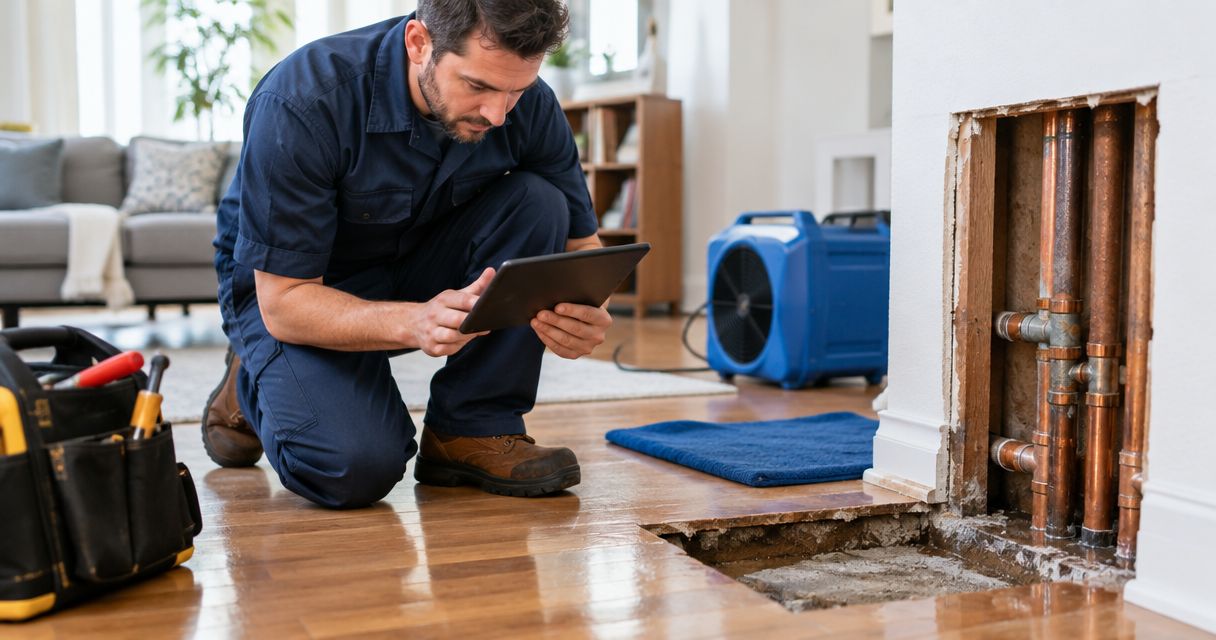
Direct repair means reaching the damaged pipe and repairing or replacing the affected section. Best for: a localized failure where the plumber confirms that access and the condition of the remaining pipe support a targeted repair.
The advantage is a defined repair area. The limitation is that reaching the pipe can disturb concrete, flooring, cabinets, or other finishes, depending on the location.
Do not compare the plumbing line item alone. Ask whether the proposal includes exposing the pipe, removing debris, testing the repair, patching the opening, and restoring the floor. Those are different tasks, even when they happen in the same room.
A targeted repair also does not establish the condition of every remaining pipe. Ask what the inspection found and what it did not evaluate; avoid treating a repaired leak as a whole-property plumbing assessment.
Pipe rerouting: compare the new route and its disruption
Rerouting replaces the affected pipe path with an alternative route. Best for: properties where a plumber identifies a suitable replacement route and explains why it fits the failure and existing piping.
The benefit is avoiding repair at the original buried location when an alternative route is practical. The limitation is that the new route can require access through other parts of the building and restoration of those openings.
Ask the plumber to mark the proposed route and explain how it serves the affected fixtures. Confirm what happens to the abandoned piping and how the replacement line will be tested.
For a 2026 estimate, request a proposal tied to your building rather than a generic rerouting description. The route, access requirements, and finish repairs are the details that let you compare it with direct repair.
| Repair approach | Best for | Main advantage | Main limitation |
|---|---|---|---|
| Direct repair | A localized failure with suitable access | Targets the identified damaged section | Requires access at the leak and leaves other piping outside that repair |
| Rerouting | A suitable alternative pipe path | Moves the affected supply path away from its original route | Creates a different access and finish-restoration scope |
Choose the method after diagnosis, not from the method name. Neither approach is the automatic winner for every slab leak.
Why slab leak repair cost varies
The useful question is not whether one property paid less than another. It is whether both projects required the same work.
- Leak location: A pipe beneath an accessible floor creates a different access problem from one beneath fixed cabinetry or another obstruction.
- Pipe condition: An isolated damaged section and a deteriorated pipe run require different repair discussions.
- Repair route: Direct access and rerouting disturb different building areas and create different closure work.
- Moisture spread: Water damage assessment determines which materials need attention beyond the plumbing repair.
- Finish restoration: Concrete patching, floor preparation, and replacement finishes must be defined separately.
- Scope boundaries: Detection, debris removal, permits where required, and rebuilding belong somewhere in the written agreement.
Use this list to question an estimate, not to diagnose the pipe yourself. Your contractor should connect each proposed task to an observed condition or a stated access requirement.
How to compare slab leak estimates without missing work
A lower total is meaningful only when the proposals describe comparable outcomes. Build your comparison around the condition of the property at handover.
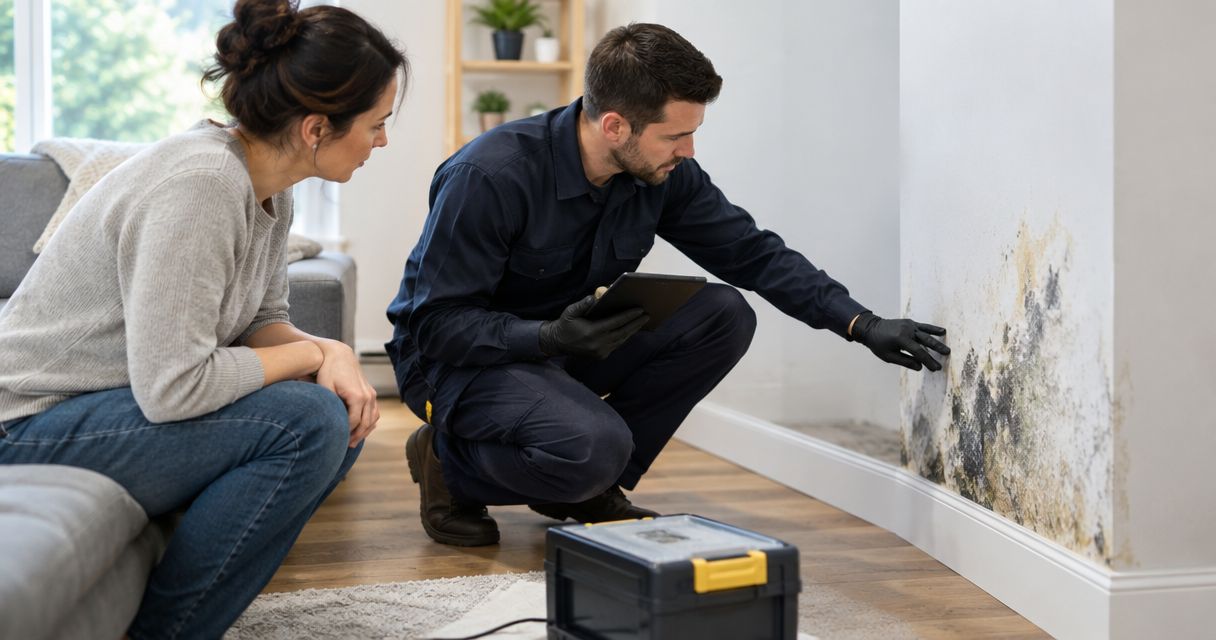
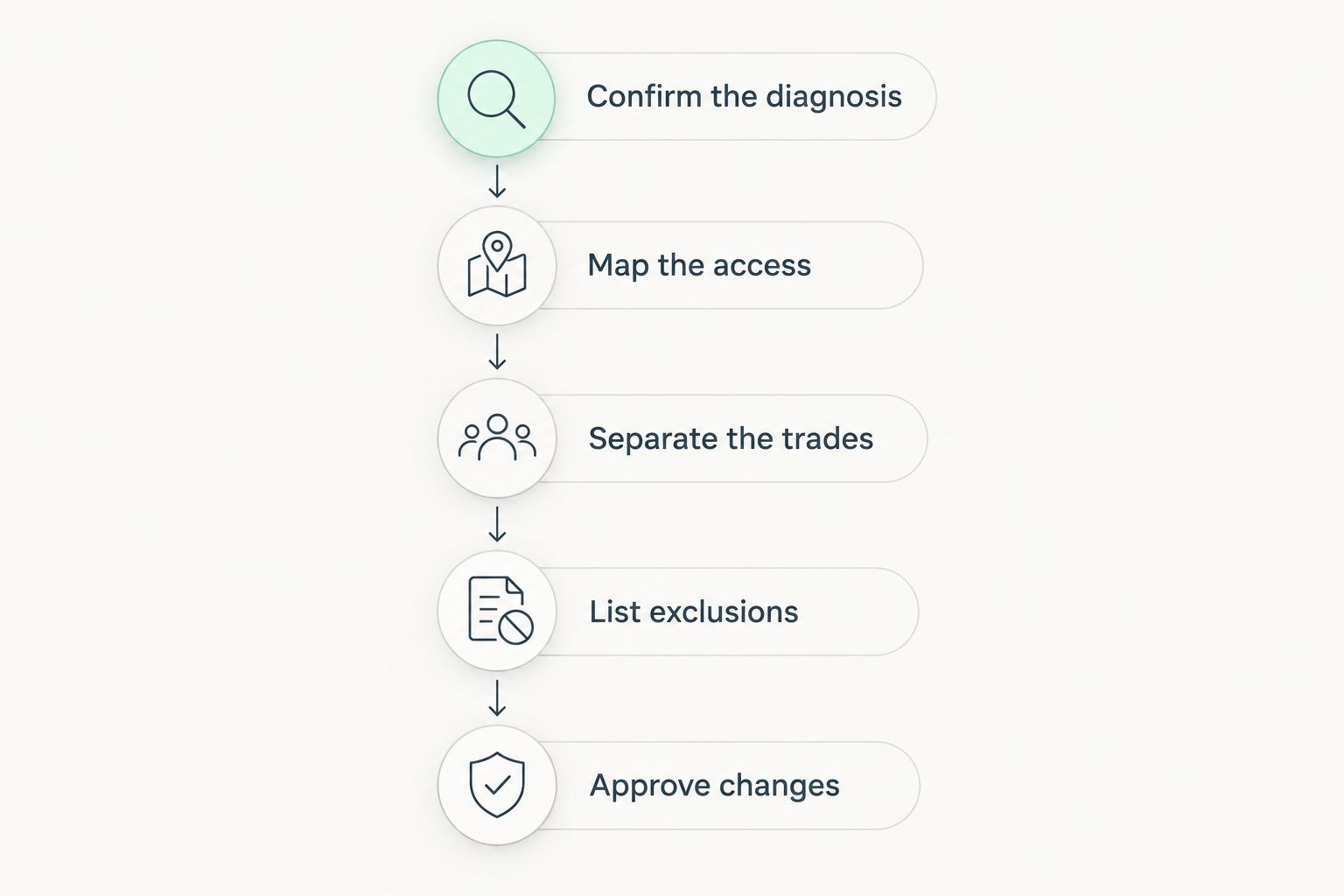
- Confirm the diagnosis. Ask which line is affected, how the finding was established, and what remains uncertain. Keep the diagnostic findings with the estimate.
- Map the access. Identify the surfaces that will be opened and the areas needed for equipment or work access. Ask before moving belongings or authorizing demolition.
- Separate the trades. Distinguish plumbing, water damage cleanup, concrete work, and finish replacement. Name the responsible contractor for each.
- List exclusions. Put omitted work beside the quoted work. A proposal that excludes flooring is not equivalent to one that includes its replacement.
- Approve changes. Require written approval before additional nonemergency work proceeds. The change should describe the condition found and the added scope.
Keep photos, estimates, authorizations, and invoices together. For your 2026 repair records, use consistent room names so the plumber, cleanup contractor, and insurer can identify the same affected areas without confusion.
What if the contractor finds more damage after opening the floor?
Ask for an explanation and photographs before approving a revised scope. The revision should distinguish newly discovered conditions from work already included in the original agreement.
Concealed conditions do not make every additional charge self-explanatory. You still need to understand what changed, why the added work is necessary, and who will restore the extra access area.
Does homeowners insurance cover slab leak repair?
Coverage depends on your policy, the cause of the loss, and the insurer’s claim decision. Do not assume that coverage for resulting water damage also pays to repair the failed pipe. Ask the insurer to address those items separately.
Report the facts accurately: when you noticed the problem, what you observed, and what professionals found. Avoid guessing how long a hidden leak existed or describing a cause that the plumber has not established.
Before discarding damaged materials, ask what documentation the insurer needs and whether inspection is required. At the same time, follow safe instructions for stopping further damage; claim questions should not become a reason to leave an active leak unaddressed.
What should you ask the adjuster?
Ask which policy provisions apply to pipe repair, access, resulting water damage, and restoration of finishes. Also ask how your deductible and any applicable limits affect your responsibility.
Request the coverage explanation in writing. A contractor’s estimate describes proposed work; it does not determine insurance coverage or guarantee claim approval.
Is water damage restoration included in slab leak repair?
Water damage restoration is included only when the written agreement says so. Stopping the leak does not establish that wet materials are dry or that damaged finishes have been restored.
Ask the cleanup contractor how affected areas will be assessed, what materials need attention, and how drying completion will be documented. Keep those findings separate from the plumber’s confirmation that the repaired line holds water without leaking.
Firewaterdamage is a fit for homeowners and property owners needing emergency water damage cleanup in Temecula, Escondido, and North County San Diego/Inland Empire. Its stated role is restoration; confirm the specific job scope rather than assuming plumbing repairs or rebuilding are included.
The benefit of involving a restoration company is attention to the water-damaged property. The boundary is equally important: you still need clear responsibility for the plumbing failure and any reconstruction outside the cleanup agreement.
Request water damage help
Ask about emergency cleanup for property affected by a slab leak.
What should you do before approving slab leak work?
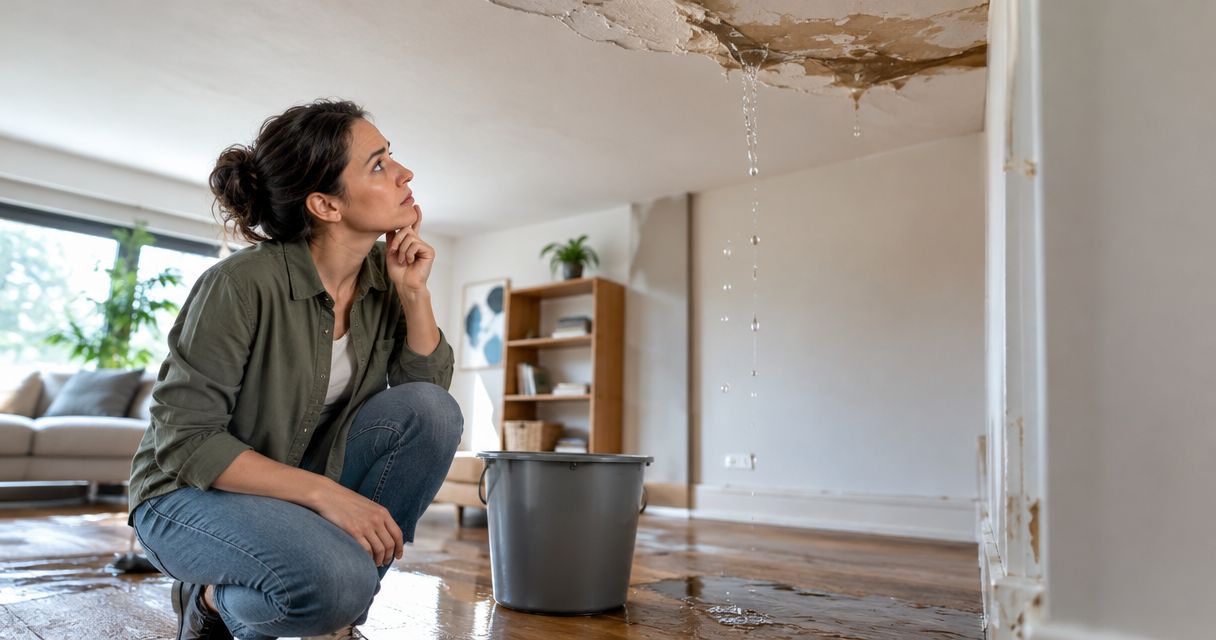
If water is actively escaping, shut off the appropriate water supply when you can do so safely and arrange professional help. Stay out of areas where water creates an electrical hazard, and do not enter standing water to reach electrical equipment.
Photograph visible damage from a safe location. Record what you observed without trying to open the slab or trace concealed piping yourself.
Before approving the full project, confirm who handles immediate stabilization and who prepares the remaining repair scope. Emergency authorization should still identify the work being authorized; it should not leave unrelated rebuilding decisions undefined.
For property managers, also establish who can approve access, notify occupants, and authorize changes. A clear decision-maker prevents the plumber, cleanup crew, and owner from working from different instructions.
FAQ
How do I get an accurate slab leak repair cost in 2026?
Get a property-specific written estimate after leak detection and assessment. Require separate treatment of pipe repair, access, water damage cleanup, concrete patching, and finish restoration.
Is rerouting better than breaking through the slab?
Rerouting is not automatically better than direct slab access. Ask the plumber to compare the confirmed failure, remaining pipe condition, alternative route, and restoration work for your property.
Does a slab leak repair estimate include new flooring?
A slab leak repair estimate includes flooring only when the written scope explicitly includes it. Confirm removal, floor preparation, replacement, and responsibility for matching existing finishes.
Can I wait to repair a suspected slab leak?
Arrange a professional assessment rather than waiting for more visible damage. If water is actively escaping, stop the supply when safe and request help.
Will insurance pay for the damaged pipe and the wet floor?
Your policy and the insurer’s decision determine coverage for the pipe and resulting damage. Ask for separate written explanations rather than assuming both receive the same treatment.
Can Firewaterdamage help after a slab leak?
Firewaterdamage offers water damage restoration with 24/7 emergency response and IICRC-certified cleanup crews in its stated Southern California service areas. Confirm the cleanup scope and arrange a separate plumbing assessment where needed.
One last thing
Ask what condition your property will be in when each contractor leaves. A patched slab, a floor ready for installation, and a fully restored room are different deliverables. Write the expected handover condition into the scope so nobody mistakes completion of one trade for completion of the project.
For any slab leak repair cost comparison in 2026, that question is more useful than asking whether an estimate sounds typical. It turns an abstract total into work you can verify.