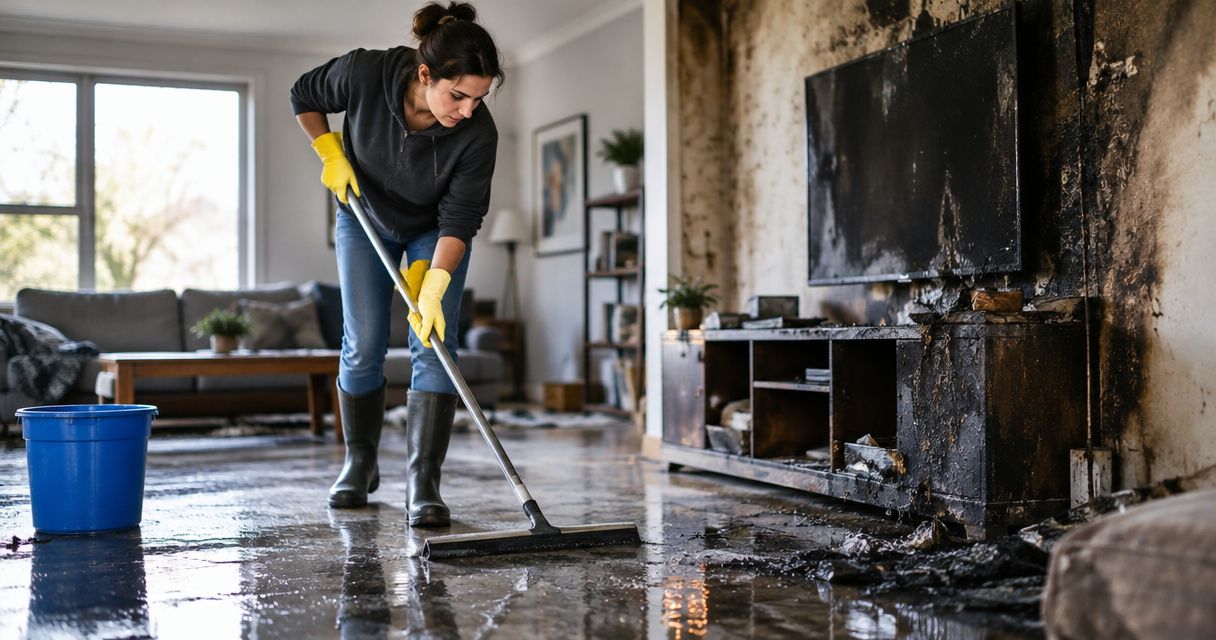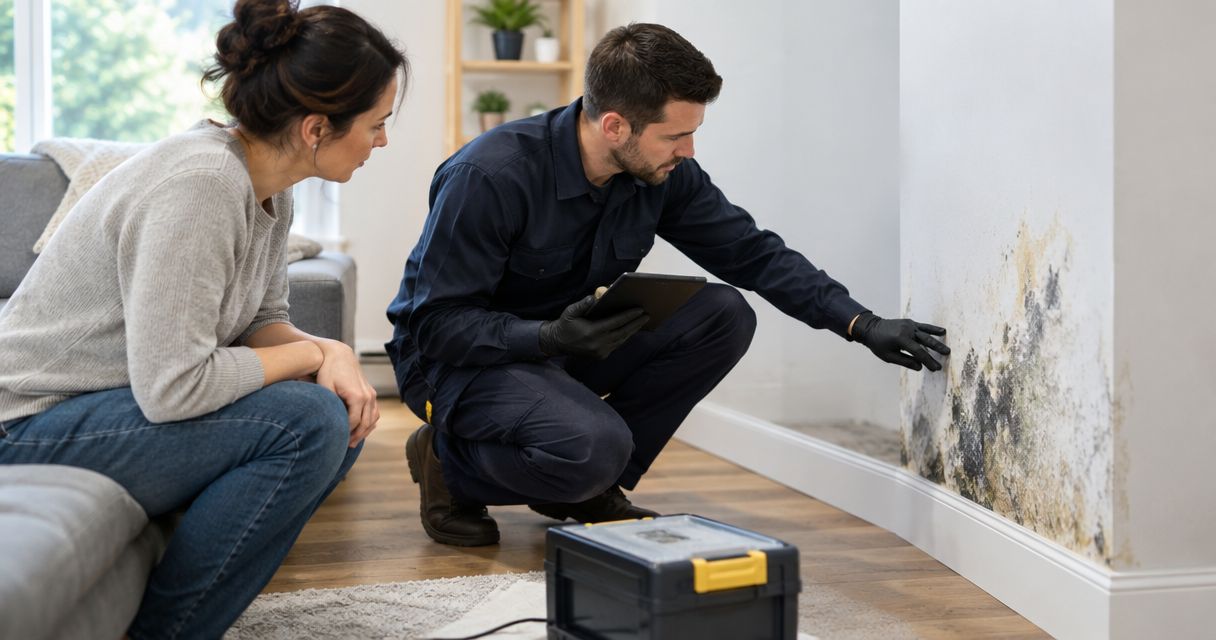
Smoke odor removal cost in 2026 depends on the affected materials, the spread of smoke residue, and the work needed to remove the odor source; a property-specific written estimate is the useful answer, not a universal flat rate. Check whether that estimate includes contents cleaning, concealed contamination, and repairs, because deodorizing alone does not cover every part of fire recovery.
- Smoke odor removal cost should reflect source removal, affected materials, and a written cleanup scope—not deodorizing alone.
- Firewaterdamage offers homeowners and property owners fire and water damage restoration with IICRC-certified cleanup crews.
- Compare smoke damage cleanup estimates by included work, exclusions, contents handling, and completion criteria.
- Ask how persistent smoke odor will be investigated before approving additional treatment.
Why this matters
A room that smells better after treatment is not necessarily a room with all smoke residue removed. Fragrance can mask an odor without addressing the material that releases it, while cleaning visible surfaces can leave affected contents outside the scope.
Compare the proposed work before comparing the total. If you need local help, Firewaterdamage provides fire and water damage restoration with 24/7 emergency response in Temecula, Escondido, and North County San Diego/Inland Empire.
For a 2026 estimate, ask the contractor to distinguish odor treatment from surface cleaning, contents work, and reconstruction. You need to know what the agreement resolves—and what remains your responsibility.
How much does smoke odor removal cost in 2026?
Smoke odor removal requires an estimate tied to the property and the contamination. Square footage alone does not describe whether smoke affected washable surfaces, upholstered furniture, insulation, or concealed building spaces.
The useful breakdown identifies each work category rather than hiding everything under a deodorizing line item. Not every property needs every category below; the inspection should establish which ones belong in your scope.
| Work category | What the estimate should describe | What to check |
|---|---|---|
| Inspection and scope | Affected rooms, materials, and suspected odor sources | Whether concealed areas need further investigation |
| Residue removal | Surfaces and materials scheduled for cleaning | Whether closets, cabinets, and adjoining areas are included |
| Contents cleaning | Furniture, textiles, and belongings selected for treatment | Whether packing, transport, and return are included |
| Odor treatment | The proposed method and where it will be used | Safety instructions and re-entry requirements |
| Material removal | Items or building materials judged unsuitable for cleaning | Disposal responsibilities and approval requirements |
| Repairs and verification | Rebuilding work and checks after treatment | Whether repairs and follow-up are separate agreements |
Ask for quantities and locations where practical: room names, affected surfaces, and an inventory of contents. A description such as clean affected bedroom walls and ceiling is easier to evaluate than treat smoke smell.
Keep fire recovery work separate when you compare estimates. The guide to fire damage restoration costs addresses the broader project; odor removal is only one possible part of that scope.
Surface cleaning: best for cleanable smoke residue
Surface cleaning addresses residue on materials that can be cleaned without replacement. The contractor should identify the surfaces, explain the cleaning approach, and state whether finishing work is included afterward.
The advantage is preservation: suitable materials stay in place. The limitation is reach. Cleaning an exposed wall does not resolve contamination inside a cavity or odor held in furniture beside it.
Choose a surface-cleaning scope only when the inspection supports it. Ask what evidence would trigger additional investigation rather than accepting an open-ended promise to keep treating the room.
Contents cleaning: best for affected belongings worth restoring
Contents work treats movable property separately from the building. Upholstery, curtains, clothing, and stored belongings deserve their own assessment because cleaning the room leaves those potential odor sources in place.
The advantage is a defined decision for each affected item: restore it, investigate it further, or exclude it from treatment. The limitation is coordination. Packing, storage, transport, and return need explicit responsibilities rather than assumptions.
Before approving contents work, request an inventory and ask how unsuccessful cleaning will be handled. Do not authorize disposal without understanding which items are being discarded and why. Photograph belongings before they leave the property, and keep the inventory with the estimate.
Material removal: best for contamination cleaning cannot resolve
Material removal belongs in the discussion when affected building materials cannot be adequately restored through cleaning. It is not a substitute for investigation, and persistent odor alone does not identify exactly what needs removal.
The advantage is direct access to a contaminated source that would otherwise remain concealed. The limitation is the work that follows: opening a wall or removing a finish creates a separate repair obligation.
Ask who approves removal, how newly exposed conditions will be documented, and who handles reconstruction. An odor-removal agreement should not leave you guessing who puts the property back together. Keep demolition and repair descriptions connected, even when different contractors perform them.
Why smoke odor removal cost varies
The work changes with the contamination, not just the room size. For your 2026 estimate, use these factors to question the proposed scope rather than treating them as automatic reasons for additional charges.
- Smoke spread: Residue confined to a visible area presents a different cleanup scope from contamination extending into adjoining rooms or stored belongings.
- Affected materials: Washable surfaces, porous furnishings, and concealed building materials require different restoration decisions.
- Access: A reachable surface is different from an odor source behind finishes, inside cabinetry, or above a ceiling.
- Contents handling: Moving and treating belongings adds tasks beyond cleaning the building itself.
- Related damage: Fire damage and water used during firefighting require separate assessment rather than being folded into a vague odor-treatment description.
- Completion requirements: The agreement should explain how results are assessed and what happens if an odor concern remains.
Ask the contractor to connect each proposed task to an observed condition. That keeps the conversation focused on your property rather than a generic package.
How to compare smoke odor removal estimates
Use the same written scope when asking contractors to quote. Otherwise, an estimate that excludes contents or repairs will appear more favorable without resolving the same problem.
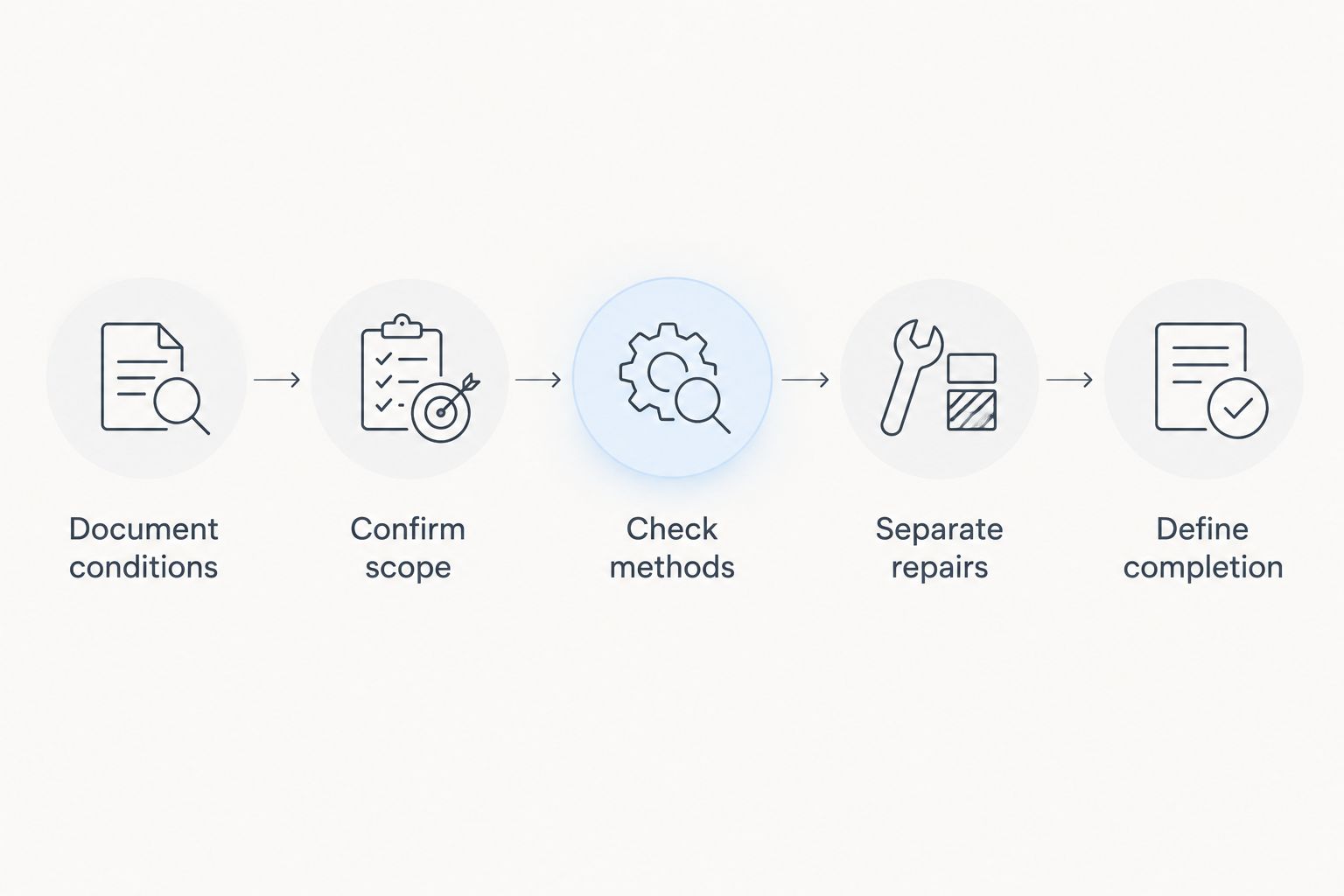
Follow this sequence before you authorize work:
- Document conditions. Record affected rooms, visible residue, belongings, and where you notice the odor. Do not enter an unsafe building to collect evidence.
- Confirm scope. Ask which surfaces and contents are included, what remains excluded, and which areas need further inspection.
- Check methods. Request an explanation of the proposed cleaning and odor-treatment methods, including occupancy restrictions.
- Separate repairs. Identify removal, disposal, rebuilding, and finishing responsibilities before work begins.
- Define completion. Agree on the final walkthrough, documentation, and response to unresolved odor concerns.
A written change-approval process matters when concealed damage is discovered. Ask the contractor to document the finding, explain the added work, and obtain authorization before expanding the agreed scope, except where an existing emergency authorization applies.
Keep copies of estimates, photographs, authorizations, and completion records together. Those records help you distinguish original work from later changes and explain the project to an insurer or property owner.
Who should handle smoke odor removal?
Look for a restoration contractor that explains source removal, material assessment, and treatment safety—not just the equipment it intends to use. Ask who will supervise the work and how the proposed scope addresses the conditions found at your property.
Firewaterdamage is a fit for homeowners and property owners seeking fire and water damage restoration in its stated service area. Its description identifies IICRC-certified cleanup crews and 24/7 emergency response; ask for a property-specific smoke cleanup scope before authorizing treatment.
The company's fire and water damage restoration service is relevant when smoke cleanup forms part of a broader loss. The boundary is equally important: do not assume contents storage, reconstruction, insurance coverage, or follow-up terms are included unless the written agreement says so.
Discuss your smoke damage cleanup
Ask for a written scope covering affected materials, contents, exclusions, and completion checks.
Does deodorizing alone remove smoke damage?
Deodorizing alone does not establish that smoke residue has been removed. Odor treatment and physical cleaning address different parts of the problem, and the scope should explain their relationship.
Ask what source the proposed treatment addresses and what cleaning happens first. If the explanation focuses only on making the air smell better, request a clearer account of the affected surfaces and belongings.
Do not operate ozone-generating equipment in occupied spaces. The U.S. Environmental Protection Agency warns that ozone can harm the lungs; follow treatment-specific safety and re-entry instructions rather than assuming an odor-control device is safe to run around people or pets.
Will homeowners insurance cover smoke odor removal?
Homeowners insurance coverage depends on the policy, the cause of the loss, and the insurer's coverage decision. A contractor's estimate describes proposed work; it does not establish what your insurer will pay.
Report the loss promptly and ask what documentation the insurer requires before cleaning, disposal, or additional work. Follow safety instructions and policy requirements for protecting the property from further damage.
For a 2026 claim, keep the original estimate and any approved changes together. Ask the insurer to explain disputed items in writing so you can separate a coverage question from a disagreement about the cleanup scope.
Why does smoke odor return after cleaning?
Smoke odor that returns warrants investigation of remaining sources rather than an automatic repeat of the same treatment. Affected belongings or overlooked building materials can remain outside the original cleaning area.
Tell the contractor where the odor is noticeable and when you observe it. Those observations help direct the inspection, but they do not prove which material is responsible.
Ask for a source-based explanation before approving more work. The next scope should state what was found, what will change, and how the contractor will assess the result.
FAQ
What's the best way to compare smoke odor removal cost?
Compare smoke odor removal cost using the same written scope for every estimate. Match affected rooms, surfaces, contents, treatment methods, exclusions, and completion checks before choosing a contractor.
Can you estimate smoke odor removal from square footage alone?
Square footage alone does not establish the work needed for smoke odor removal. The estimate also needs to address affected materials, contents, concealed areas, and related damage.
Is smoke odor removal the same as fire damage restoration?
Smoke odor removal is not the same as the entire fire damage restoration project. Fire recovery can also involve residue cleanup, damaged-material removal, water damage work, and repairs.
Do I need to leave during smoke odor treatment?
Occupancy requirements depend on the treatment method and site conditions. Get written instructions covering people, pets, access restrictions, and re-entry before treatment begins.
Can I paint over smoke odor instead of cleaning?
Painting is not a substitute for assessing and cleaning smoke contamination. Ask whether residue removal, damaged-material removal, or an appropriate sealing step is needed before repainting.
Should furniture cleaning be included in my estimate?
Furniture cleaning should be explicitly included when affected furniture is part of the restoration plan. Ask which items will be treated and whether handling, transport, storage, and return are included.
Does Firewaterdamage provide emergency restoration help?
Firewaterdamage offers 24/7 emergency response for fire and water damage restoration. Its stated service area includes Temecula, Escondido, and North County San Diego/Inland Empire.
One last thing
A useful completion check is not simply whether the treatment left a pleasant smell. Ask how the contractor will assess the affected rooms and contents without relying on fragrance to cover an unresolved odor.
Before signing your 2026 agreement, add this question to the walkthrough plan: If smoke odor remains, what happens next under this contract? Get the answer in writing. It clarifies the difference between included follow-up, additional investigation, and newly authorized work.