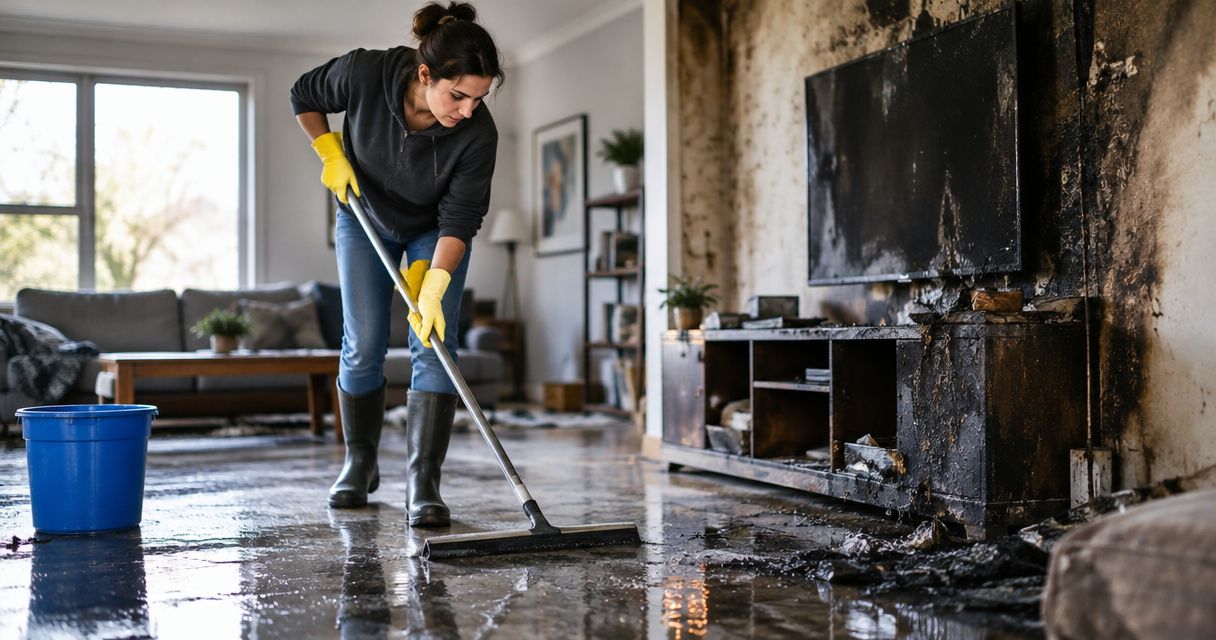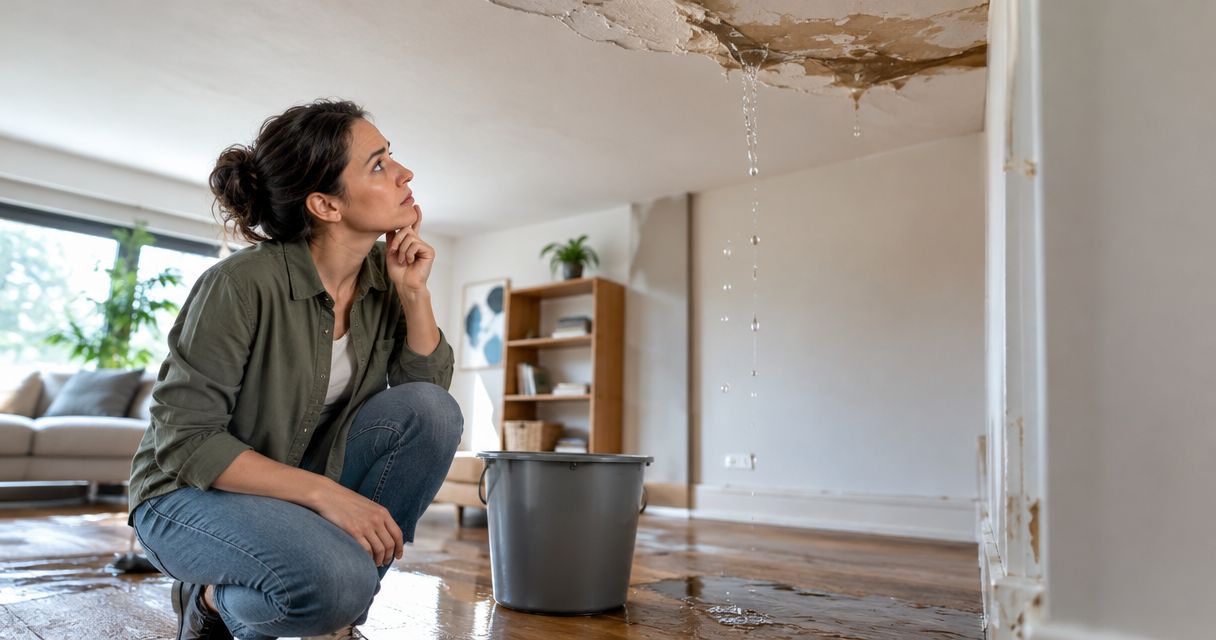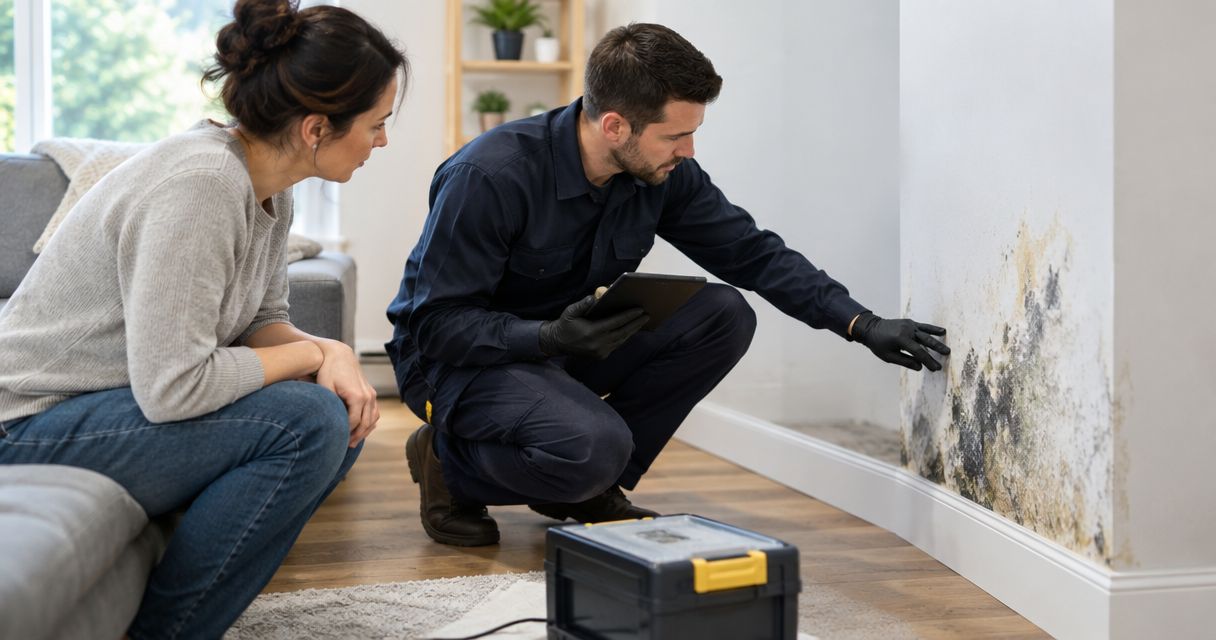
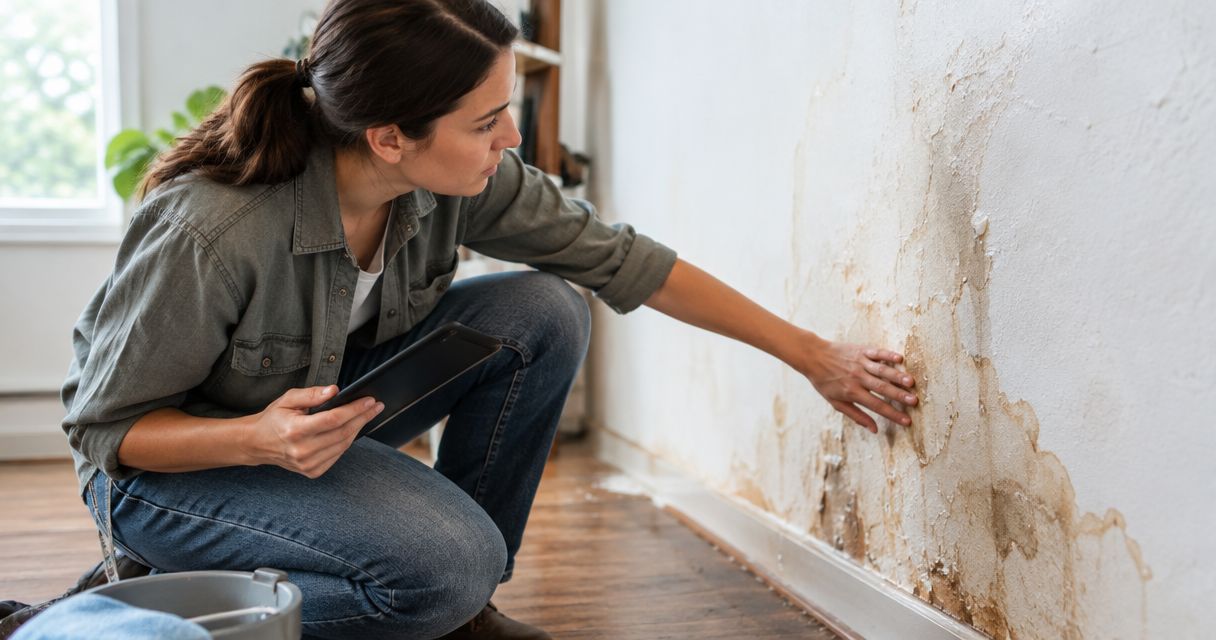
Replace water-damaged drywall when it has softened, crumbled, swollen, sagged, lost its paper facing, or been contaminated by sewage or floodwater. Drying in place is an option only when the water was clean, the board remains sound, and inspection confirms that the drywall and wall cavity can dry without leaving hidden moisture or mold.
- How to tell if drywall needs to be replaced after water damage: check strength, contamination, paper facing, and hidden moisture.
- Replace soft, sagging, crumbling, or contaminated drywall; a dry surface does not prove the wall cavity is dry.
- The EPA recommends drying water-damaged materials within 24–48 hours to help prevent mold growth.
- Firewaterdamage provides IICRC-certified water damage cleanup and 24/7 emergency response for local homeowners and property owners.
How to tell if drywall needs to be replaced after water damage
The deciding factors are the drywall’s condition, the water source, and the moisture behind the surface—not the size of the stain. A small mark can conceal wet insulation, while a larger stain can remain after an otherwise sound panel has dried.
For homeowners in Temecula, Escondido, and North County San Diego/Inland Empire, Firewaterdamage offers water damage restoration. Before cosmetic repairs, establish whether the wall needs drying, selective removal, or replacement.
| Finding | Recommended action | Best for | Benefit | Limitation |
|---|---|---|---|---|
| Clean-water exposure; firm board; intact seams; no swelling | Assess for drying in place | Sound drywall with accessible drying conditions | Preserves material that remains usable | Requires verification beyond surface appearance |
| Softness, crumbling, swelling, sagging, or separated paper | Replace affected drywall | Physically damaged panels | Removes material that has lost integrity | Requires removal and finish repairs |
| Sewage or outdoor floodwater contact | Arrange professional removal of affected porous material | Contaminated drywall | Removes material that cannot be treated as a clean-water drying job | Requires contamination controls and assessment of nearby materials |
| Firm surface but persistent moisture, odor, or recurring stains | Investigate the wall cavity before deciding | Suspected concealed damage | Identifies problems paint would hide | Inspection can require access openings |
Why this matters
Painting over a stain does not repair a weakened gypsum core or dry wet insulation. Replacing drywall without stopping the leak also leaves the cause untouched.
For your 2026 repair plan, separate making the wall look finished from making the wall ready to close. The second task comes first: resolve the source, assess contamination, inspect concealed materials, and verify drying.
Signs that damaged drywall needs replacement
Soft, crumbly, or swollen drywall
Drywall that has lost its firmness is not a candidate for a cosmetic patch alone. Swollen edges, distorted panels, and a crumbling gypsum core indicate physical damage that drying does not reverse.
Do not repeatedly press or puncture a suspect wall to test it. Photograph visible defects and leave intrusive inspection to someone who can assess concealed utilities and contamination.
Sagging ceilings or loose panels
Keep people away from sagging water-damaged ceilings. Wet ceiling panels can become unstable, particularly when water collects above them or fasteners no longer hold the board securely.
Do not stand beneath a bulge, climb into the affected area, or puncture it to release water. Arrange a safety assessment before anyone starts demolition or drying equipment nearby.
Separated paper facing or damaged seams
Bubbling paint alone does not prove the entire panel needs replacement, but paper facing separating from the gypsum is a different problem. Inspectors need to distinguish a failed finish from damage to the board itself.
The EPA’s Mold Remediation in Schools and Commercial Buildings guide allows clean-water-damaged wallboard to dry in place when there is no obvious swelling and the seams remain intact. Otherwise, its guidance calls for removal, discarding, and replacement.
Mold or contamination affecting the board
Moldy drywall is porous material; wiping the painted surface does not establish that the paper backing or concealed side is clean. Removal decisions need to account for the extent of growth, access, and the moisture source.
Sewage and outdoor floodwater require a different response from a clean supply-line leak. Do not use clean-water salvage criteria for drywall exposed to contaminated water, and do not aim household fans across suspected mold or sewage contamination.
When can water-damaged drywall stay in place?
Drying in place is a reasonable option when the water source was clean, the drywall remains physically sound, and the wall assembly can be inspected and dried. It is a condition-based decision, not a promise that every wet panel can be saved.
Use these checks together:
- Source resolved: The leak has stopped, rather than merely slowed or disappeared from view.
- Board intact: No obvious swelling, crumbling, sagging, or paper separation is present.
- Seams intact: Joints remain sound rather than distorted or broken apart.
- Cavity assessed: Insulation, framing, and concealed surfaces have been considered.
- Drying verified: Measurements support the decision to retain and refinish the material.
A dry-looking face is not enough. Vinyl wallcoverings, insulation, and other assembly details can restrict drying or conceal moisture even when the room feels comfortable.
For a 2026 repair decision, ask for the evidence supporting salvage—not simply a statement that the wall feels dry. The limitation of drying in place is that concealed conditions can change the scope after inspection.
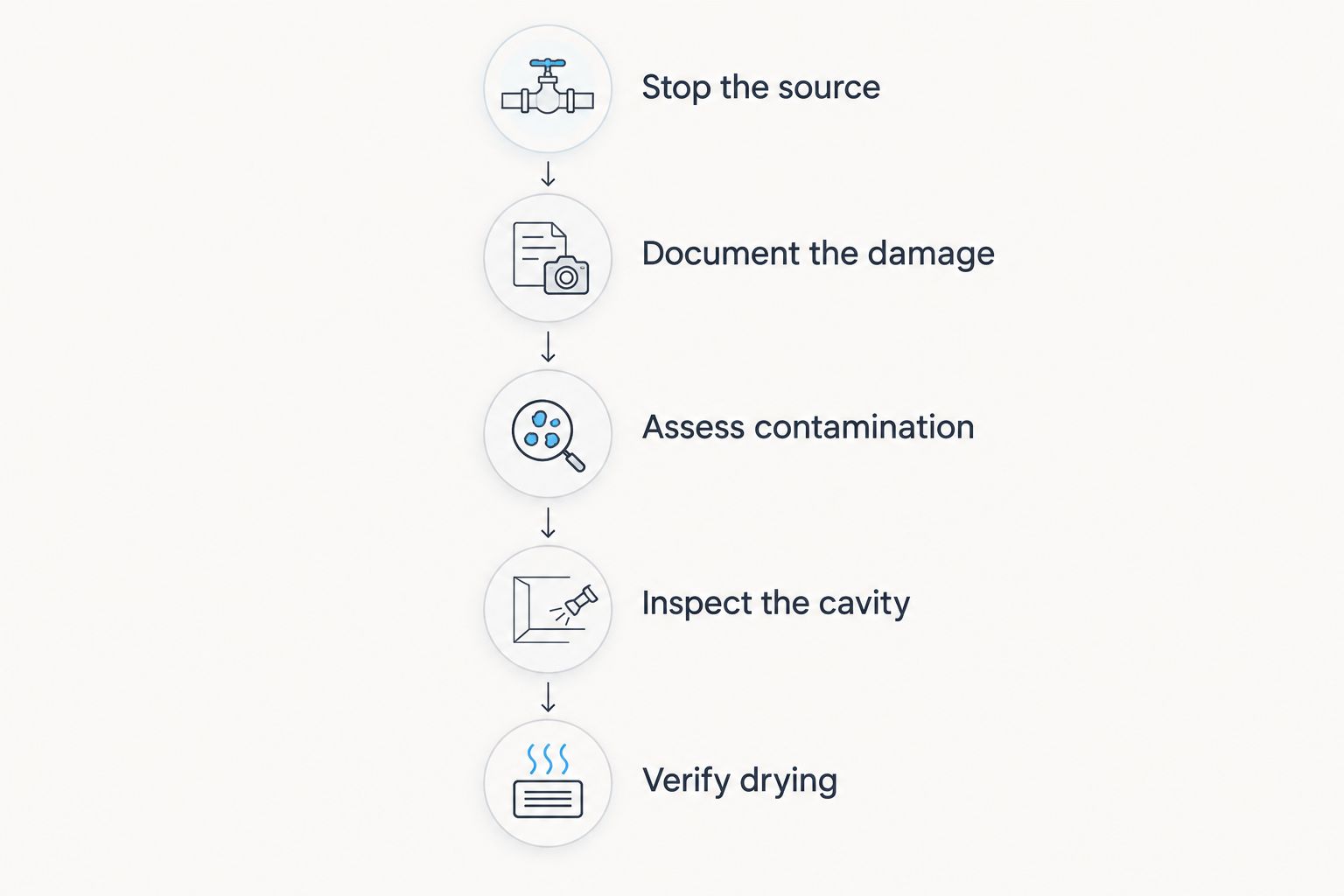
How to check the wall without hiding the problem
1. Stop the source
Arrange repair of the plumbing, roof, appliance connection, or other source before rebuilding. If the source is unknown, treat a recurring stain as an unresolved problem rather than a painting task.
Keep away from wet electrical equipment and affected outlets. Do not enter standing water to reach a breaker or attempt electrical work in a wet area.
2. Document the damage
Photograph the stain, baseboards, flooring, adjacent rooms, and any visible swelling from a safe position. Record when you discovered the water and what you know about its source.
Documentation helps explain the original condition after drying or necessary removal changes the scene. It does not replace emergency action needed to protect people or prevent further damage.
3. Assess contamination
Identify whether the water came from a clean supply, sewage, outdoor flooding, or an uncertain source. Appearance and odor alone cannot establish that water is sanitary.
Tell the restoration provider about any known contamination before equipment is placed. The drying and removal approach must match the exposure.
4. Inspect the cavity
Check beyond the visible mark: moisture can affect insulation, framing, base plates, and the back of adjacent drywall. A qualified assessment can determine whether access openings are needed.
If damage seems larger than the visible stain, review these signs of hidden water damage. Avoid cutting exploratory holes yourself where wiring, pipes, or suspect building materials could be present.
5. Verify drying
Ask for moisture readings interpreted against suitable dry reference materials and the meter’s instructions. A displayed reading is not meaningful without knowing the material, instrument mode, and measurement location.
Do not use one universal moisture percentage as a pass-or-fail rule for drywall. Different instruments use different scales, and nearby metal or concealed materials can affect results.
Why drywall replacement decisions vary
The same-sized stain can lead to different repairs because the wall’s exposure and construction differ. In 2026, a defensible repair scope should explain these factors rather than rely on appearance alone:
- Water source: Clean-water exposure and sewage contamination do not support the same salvage decision.
- Exposure duration: Prompt attention gives sound materials a better opportunity to dry before additional damage develops.
- Physical condition: Swelling, paper separation, and loss of strength support replacement regardless of stain size.
- Wall construction: Insulation, coatings, and concealed layers affect access and drying.
- Moisture distribution: Water behind trim or on the back of a panel can extend beyond the visible mark.
- Mold involvement: Suspected growth changes handling, containment, and removal considerations.
The EPA recommends drying water-damaged materials within 24–48 hours to help prevent mold growth. That is a prevention target, not a guarantee that mold starts at an exact hour or that every panel becomes unsalvageable after the window passes.
Do not wait for 24 hours before seeking help. Likewise, passing 48 hours does not let you diagnose the wall by the clock alone; condition, contamination, and concealed moisture still determine the repair.
What should you ask before approving the repair?
Ask the contractor to explain which panels can remain, which require removal, and what evidence supports each decision. A useful scope connects the visible damage to the underlying moisture problem.
Before authorizing closure of a wall, ask:
- What caused the water intrusion, and has that source been corrected?
- What establishes whether the water was clean or contaminated?
- Were insulation and concealed surfaces assessed?
- What moisture measurements support the drying decision?
- Does removal need to account for a fire-rated or otherwise specified wall assembly?
- What must happen before primer, paint, and replacement trim are installed?
Firewaterdamage is best for local property owners seeking IICRC-certified water damage cleanup with 24/7 emergency response. That service fits an active water-damage problem; a stain alone still does not establish whether your drywall needs replacement.
Arrange a water damage assessment
Get help for water-damaged property in Temecula, Escondido, and the surrounding service area.
Can I just paint over a water stain?
Paint only after the source is repaired, the assembly is dry, and the drywall is confirmed sound. Stain-blocking primer addresses discoloration; it does not restore a softened core or eliminate concealed moisture.
If the mark returns, investigate the cause instead of adding another coat. A recurring stain is a reason to reassess the repair, not proof that the primer failed.
Does every wet ceiling need to be replaced?
Not every wet ceiling needs replacement, but sagging, softened, or loose ceiling drywall needs prompt professional assessment. Ceiling damage deserves particular caution because material can fall into occupied space.
Do not judge safety from the absence of a large stain. Keep the affected area clear until someone qualified has assessed the panel and the space above it.
Should I cut above the visible waterline?
Do not set the removal boundary from the stain alone. Water can extend beyond visible discoloration, while a suitable repair edge also depends on sound material, access, contamination, and the wall assembly.
A contractor should establish the boundary after inspection. A fixed cut height is not a substitute for checking what is wet or damaged.
FAQ
How do I know if water-damaged drywall is ruined?
Water-damaged drywall needs replacement when it is soft, crumbling, swollen, sagging, or separating at the paper facing. Contaminated water and mold involvement also require assessment beyond whether the surface feels dry.
Can drywall dry out without being replaced?
Drywall can dry in place after clean-water exposure when it remains sound, has no obvious swelling, and has intact seams. The wall cavity and any insulation also need assessment before refinishing.
How quickly should wet drywall be dried?
The EPA recommends drying water-damaged materials within 24–48 hours to help prevent mold growth. That prevention window is not a guaranteed drying time or an automatic replacement deadline.
Is a brown water stain enough reason to replace drywall?
A brown stain alone does not establish that drywall needs replacement. Check the water source, panel integrity, concealed moisture, and condition of the wall cavity before deciding.
Can I use a household fan on wet drywall?
Do not use a household fan to blow across suspected mold or sewage-contaminated drywall. For clean-water damage, drying still requires attention to concealed moisture rather than airflow across the painted surface alone.
Who can help assess water-damaged drywall near Temecula or Escondido?
Firewaterdamage offers water damage restoration with IICRC-certified cleanup crews and 24/7 emergency response for homeowners and property owners in Temecula, Escondido, and North County San Diego/Inland Empire. Whether drywall can stay depends on its condition, contamination, and drying assessment.
One last thing
For your 2026 repair record, photograph the exposed cavity before replacement drywall closes it. Keep those photographs with the source-repair documentation and drying records.
The finished wall hides the most useful evidence. Approve closure based on the condition behind the paint, not how quickly the stain disappears.