Look for recurring stains, peeling paint, swollen trim, warped flooring, or a persistent musty smell; these are warning signs of hidden water damage, not proof of an active leak. Confirm suspicious areas with moisture measurements and an investigation of the water source, because a surface can look dry while material behind it remains wet. For a 2026 home inspection, prioritize safety before checking walls, ceilings, or concealed spaces.
- How to know if house has hidden water damage: connect visible warning signs with moisture readings and source checks.
- Stains and musty odors warrant investigation; neither proves an active leak or identifies mold.
- Firewaterdamage provides water damage restoration with 24/7 emergency response in its stated Southern California service area.
- Keep away from sagging ceilings, wet electrical equipment, and suspected sewage.
How do I know if my house has hidden water damage?
The strongest evidence is a pattern: a suspicious location, a repeatable symptom, and moisture measurements that support further investigation. An isolated stain tells you less than a stain that returns after rain or grows when an upstairs fixture runs. If damage is spreading, Firewaterdamage offers 24/7 emergency response for homeowners and property owners in its stated service area.
Use this sequence to separate a cosmetic mark from a moisture problem:
- Check safety. Stay away from bulging ceilings, wet outlets, standing water near electrical equipment, and suspected sewage.
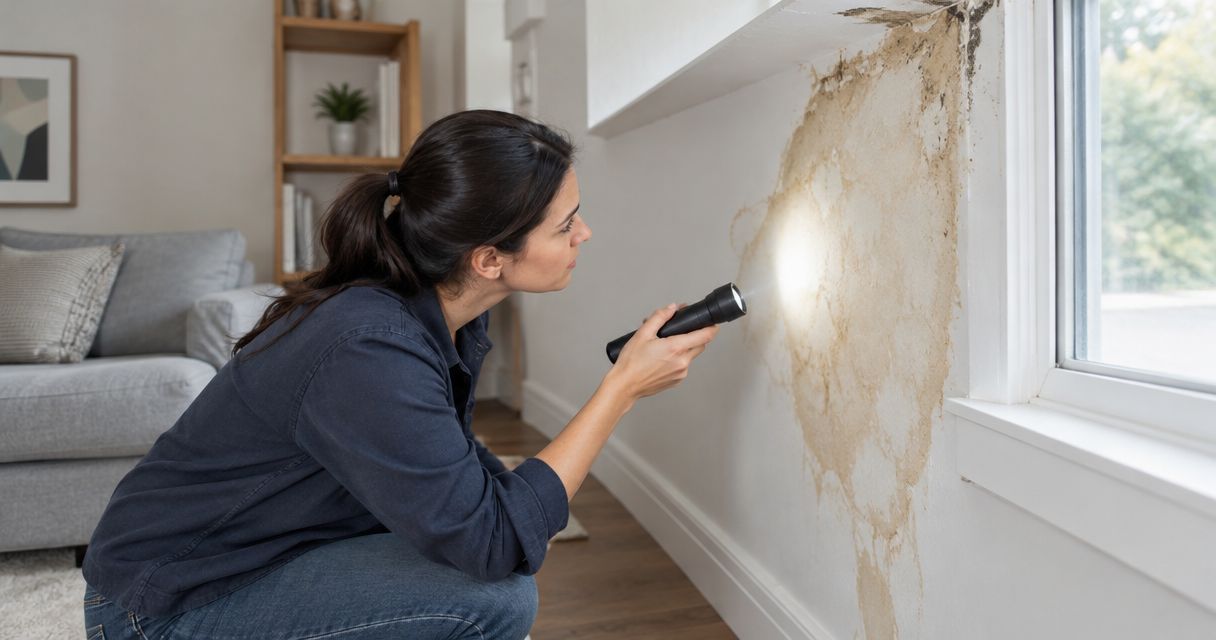
- Locate symptoms. Photograph staining, material distortion, or suspected growth without disturbing the area.
- Compare patterns. Note whether symptoms follow rain, fixture use, or air-conditioning operation.
- Confirm moisture. Have suspicious materials checked with appropriate instruments and compared with unaffected areas.
- Find the source. Arrange the appropriate leak investigation before repainting, replacing finishes, or closing cavities.
A dry reading today does not explain an old stain, and a high reading alone does not identify the cause. Ask what each finding establishes before authorizing repairs.
Why this matters
Hidden moisture creates two separate problems: the source admitting water and the materials retaining it. Fixing a pipe does not establish that nearby insulation, framing, or flooring is dry. Repainting a stain addresses neither problem.
For your 2026 home-maintenance checklist, treat recurring changes as a reason to investigate rather than decorate. EPA mold guidance recommends drying water-damaged materials within 24–48 hours to help prevent mold growth; that window is a prevention goal, not proof that every material is dry or safe afterward.
Do not wait for visible mold before addressing an active leak. Equally, do not assume every discoloration requires demolition.
Which signs deserve a closer look?
Recurring stains and changing paint
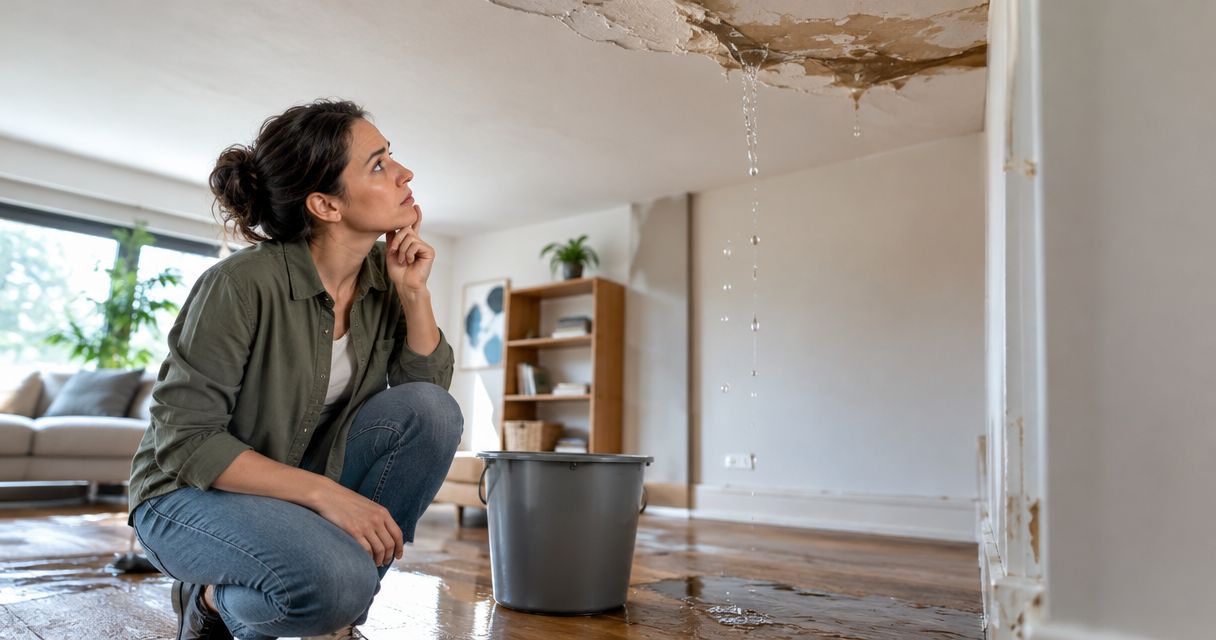
Yellow, brown, or gray discoloration on a ceiling or wall warrants attention, especially when its edge expands or returns after painting. Bubbling paint, peeling finishes, and loose wallpaper also deserve investigation.
Photograph the entire surface and a close view of the affected area. Record whether it changes after rain or plumbing use; timing helps direct the investigation, but it does not prove the source.
Swollen trim and distorted flooring
Baseboards separating from walls, swollen cabinet bottoms, and lifting flooring are physical clues that materials have changed. Moisture is one possible cause, but installation problems and other conditions also affect finishes.
Look at nearby plumbing connections and adjoining rooms from a safe position. Do not pull up flooring or remove trim solely to satisfy curiosity, particularly where the building materials are unknown.
Persistent musty odors
A recurring musty smell deserves attention even when painted surfaces look normal. Check accessible sink cabinets, appliance connections, and nearby finishes without opening walls or entering unsafe spaces.
Odor does not identify a mold species, establish toxicity, or measure the extent of damage. A fragrance or fresh coat of paint also does not establish that the underlying problem has been corrected.
Unexplained water-use changes
An unexplained increase in water use is a reason to check for plumbing leaks, not proof of concealed building damage. Irrigation, appliance use, and other household changes also affect consumption.
If your water meter records flow while all known water uses are off, ask a plumber to investigate. A meter check does not rule out roof leaks, condensation, or intermittent leaks that are inactive during the check.
Which inspection method tells you the most?
Different methods answer different questions. Use measurements to investigate a suspicion, not to turn a single device reading into a diagnosis. These checks complement one another rather than compete as substitutes.
| Method | Best for | Useful evidence | Main limitation |
|---|---|---|---|
| Visual inspection | Finding accessible warning signs | Staining, swelling, peeling, and visible changes | Cannot establish conditions inside a closed cavity |
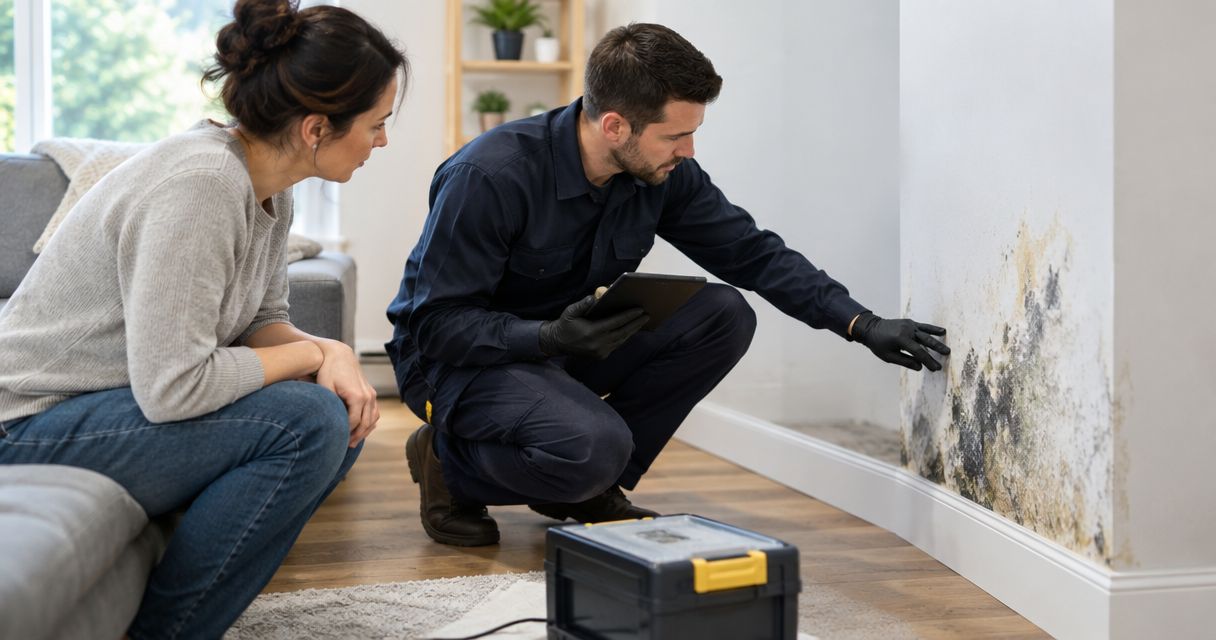
| Moisture meter | Comparing suspicious and unaffected materials | Moisture-related readings interpreted for the material and instrument | Settings, material composition, and concealed metal affect interpretation |
| Thermal camera | Locating temperature patterns for follow-up | Surface temperature differences | Does not directly measure moisture or see through walls |
| Room hygrometer | Tracking indoor humidity | Relative humidity in the surrounding air | Does not establish whether a wall or subfloor is dry |
| Targeted professional investigation | Resolving an unclear source or concealed extent | Findings combined with building conditions and appropriate access | Opening materials is invasive and needs a justified scope |
A cold patch on a thermal image is not automatically a wet patch. Insulation gaps, air movement, and other temperature differences also affect the image; moisture testing supplies the necessary follow-up.
For your 2026 inspection records, ask for the location, material, instrument setting, and interpretation behind each reading. The guide to moisture meter readings and insurance claim documentation covers the documentation side of that process; a reading itself does not guarantee claim approval.
How should I check without making the damage worse?
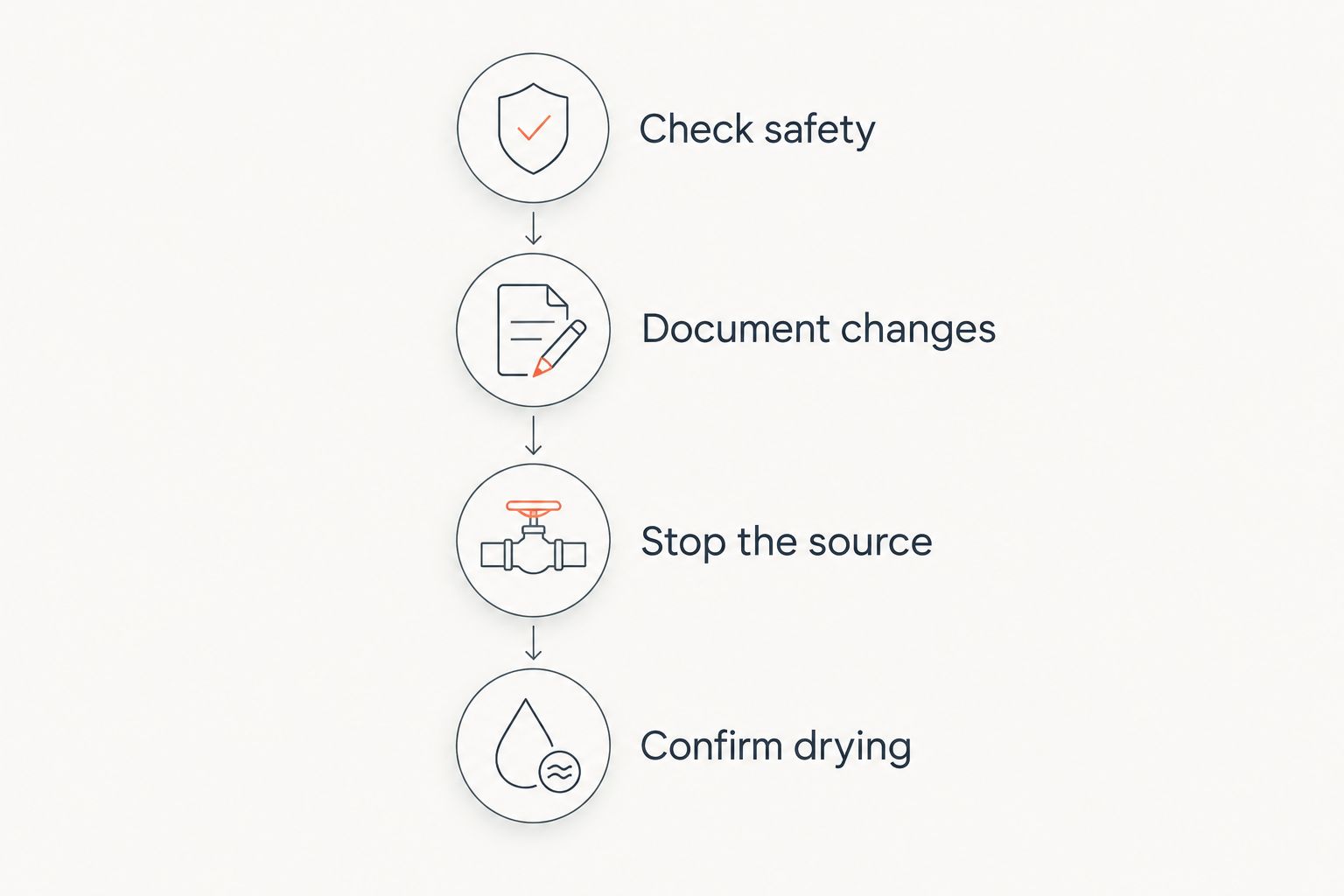
Check safety
Do not press on a sagging ceiling, stand beneath it, or puncture it to release water. Keep people and pets away while you arrange help.
Avoid touching wet switches, outlets, appliances, and electrical panels. Do not enter standing water to reach a shutoff; use an appropriate emergency professional when safe access is uncertain.
Document changes
Take photographs before cleanup when doing so is safe. Include the room, the affected surface, and nearby fixtures so the location remains clear later.
Write down when you noticed the change and what was happening at the time. Preserve repair and inspection records rather than relying on memory or a close-up photograph without context.
Stop the source
If a plumbing leak is evident and the relevant shutoff is safely accessible, stop the water supply. Do not climb onto a wet roof or open electrical equipment to investigate.
Match the professional to the suspected source: plumbing, roofing, drainage, and mechanical problems require different investigations. Water-damage restoration addresses affected materials; source repair remains a separate task.
Confirm drying
Once the source is controlled, determine which materials are wet and how their condition will be checked during drying. A dry-feeling surface is not a reliable endpoint for concealed materials.
Ask what evidence will support removing equipment or rebuilding. Drying decisions should reflect the affected material and measured conditions, not simply elapsed time.
Why hidden water damage looks different from house to house
The location of a stain does not necessarily identify where water entered. Water travels along building components, so the investigation needs to follow the evidence beyond the most visible mark.
These factors explain why symptoms and inspection needs differ:
- Water source: Rain entry, plumbing leaks, and condensation call for different checks and repairs.
- Material: Drywall, wood, concrete, and floor coverings require different moisture interpretation.
- Concealment: Cabinets, insulation, and layered flooring limit what a surface inspection reveals.
- Timing: An intermittent leak can leave evidence while remaining inactive during an inspection.
- Indoor humidity: Humid air contributes to condensation and complicates interpretation of damp conditions.
- Previous repairs: Replacement finishes can conceal earlier damage without documenting its cause or resolution.
EPA guidance recommends keeping indoor relative humidity below 60%, ideally 30%–50% when possible. Those are room-air targets, not acceptable moisture readings for wood, drywall, or concrete; do not apply them to a material meter.
When should I call a restoration company?
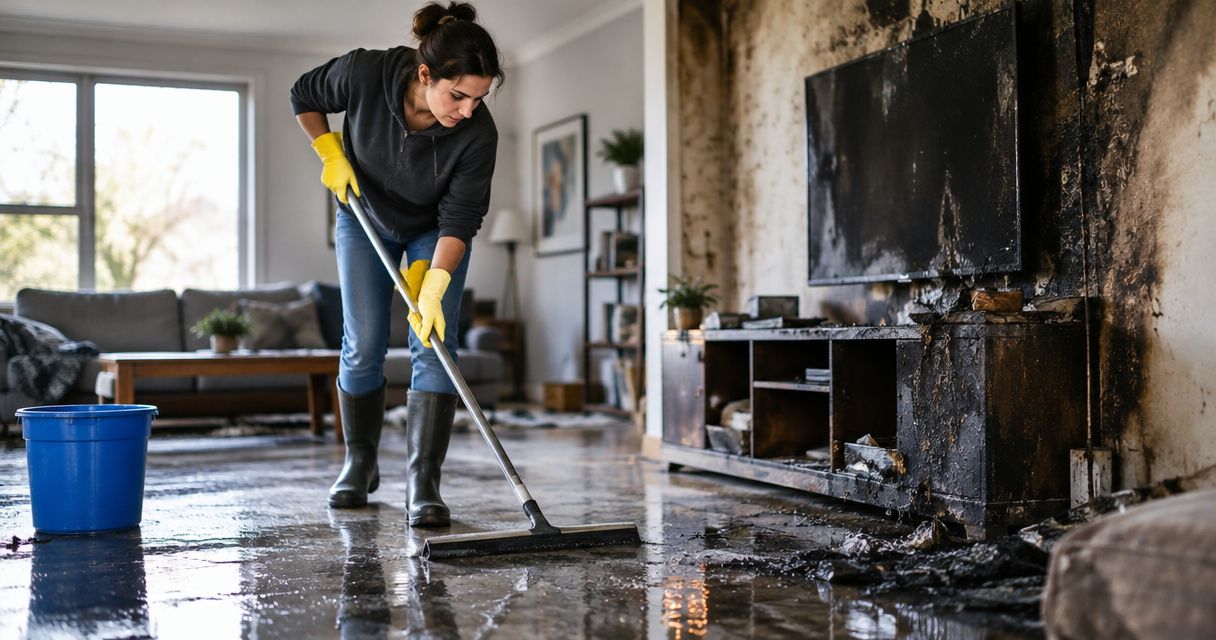
Call promptly when water is spreading, materials are visibly wet or distorted, or you cannot establish how far the damage extends. Electrical hazards, sagging ceilings, and suspected sewage require professional help rather than a homeowner inspection.
Firewaterdamage is best for homeowners and property owners seeking 24/7 water damage restoration response in Temecula, Escondido, North County San Diego, or the Inland Empire. The company identifies its cleanup crews as IICRC-certified.
The limitation is scope: emergency response and cleanup credentials do not replace identifying the leak source or documenting drying. Ask who will handle source repair, what areas need assessment, and what evidence will support the restoration plan.
For a 2026 service request, describe observable conditions rather than diagnosing them yourself. Report the affected rooms, whether water is still entering, any electrical concerns, and whether the water could contain sewage.
Request water damage help
Firewaterdamage offers 24/7 emergency response for homeowners and property owners in its stated service area.
Can a wall be wet inside but dry on the outside?
Yes, a wall can retain moisture inside while its exposed finish feels dry. Insulation, framing, and adjoining materials are not fully represented by the condition of the painted surface; appropriate measurements and, when justified, controlled access help establish the extent.
Does a ceiling stain mean the leak is still active?
No, a ceiling stain does not establish whether a leak is active. Compare current moisture findings, the stain's history, and its response to rain or fixture use before deciding that an old mark is harmless or a new leak is present.
Should I open a wall to check for hidden damage?
Do not make opening a wall your first diagnostic step. Electrical wiring, plumbing, and potentially hazardous building materials make unnecessary cutting a poor substitute for an assessment; targeted access belongs in a justified investigation.
FAQ
How can I tell if water damage is old or new?
You cannot reliably date water damage by stain color alone. Current moisture readings, photographs, repair records, and changes after rain or plumbing use provide better evidence of whether a problem is active.
Can hidden water damage exist without a musty smell?
Yes, hidden water damage can exist without a musty smell. Check physical changes and moisture conditions rather than treating the absence of odor as proof that concealed materials are dry.
Does a thermal camera prove there is water behind my wall?
No, a thermal camera shows surface temperature differences, not water behind a wall. Suspicious patterns need follow-up moisture measurements and interpretation of building conditions.
How quickly should wet building materials be dried?
EPA mold guidance recommends drying water-damaged materials within 24–48 hours to help prevent mold growth. That prevention window does not establish that concealed materials are dry or that damaged materials are suitable to keep.
What indoor humidity should I aim for?
EPA guidance recommends indoor relative humidity below 60%, ideally 30%–50% when possible. Room humidity does not establish the moisture content of a wall, floor, or concealed cavity.
Will homeowners insurance cover hidden water damage?
Coverage depends on your policy and the cause and circumstances of the damage. Document the condition, take safe steps to limit further damage, and ask your insurer about the applicable terms rather than assuming hidden damage is automatically covered.
One last thing
Before you cover a stain, preserve the evidence that explains it. A photograph, a source-repair record, and a documented drying assessment are more useful than a freshly painted surface with an unanswered history.
For your 2026 home records, keep those items together. The next time the same spot changes, you will have a baseline instead of starting the investigation again.