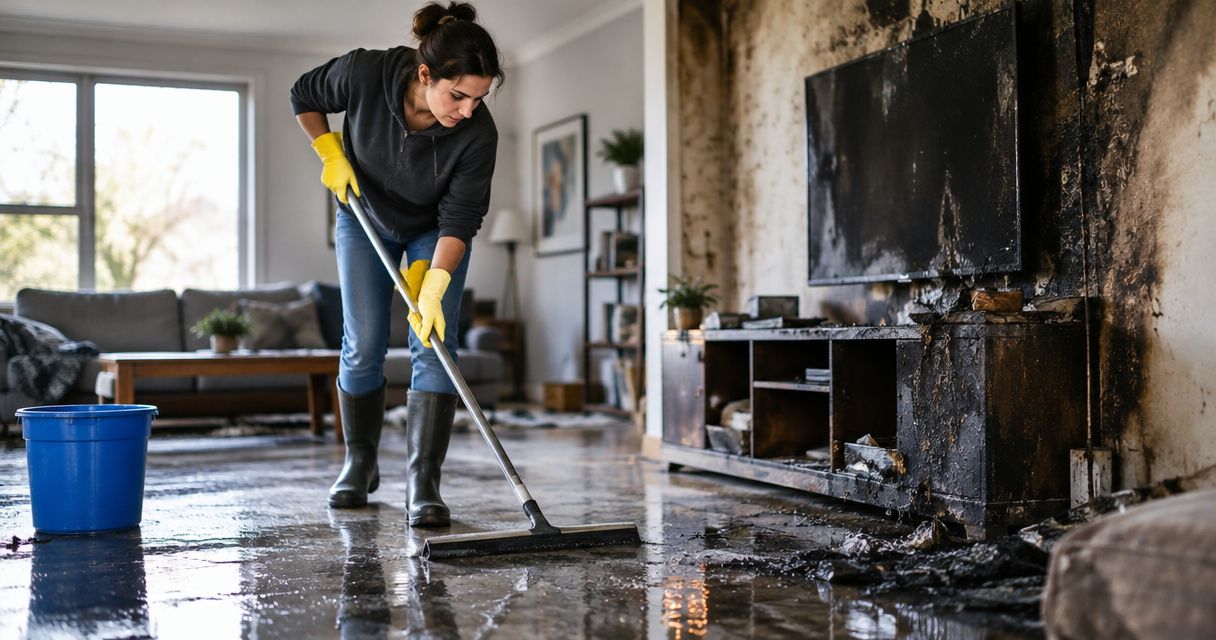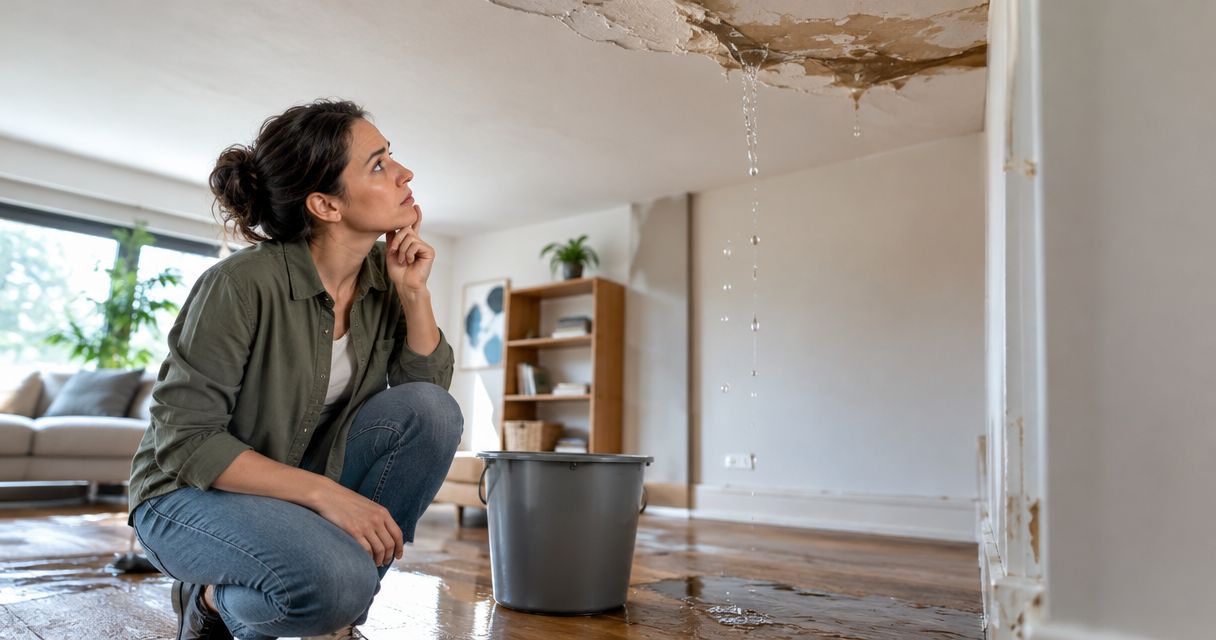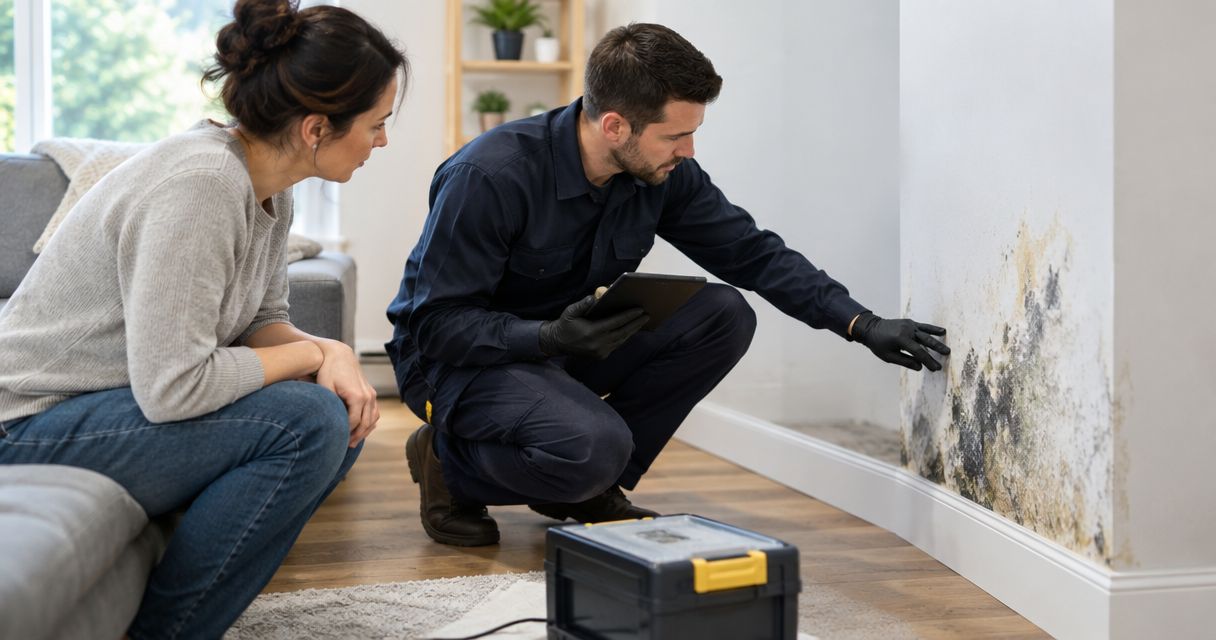
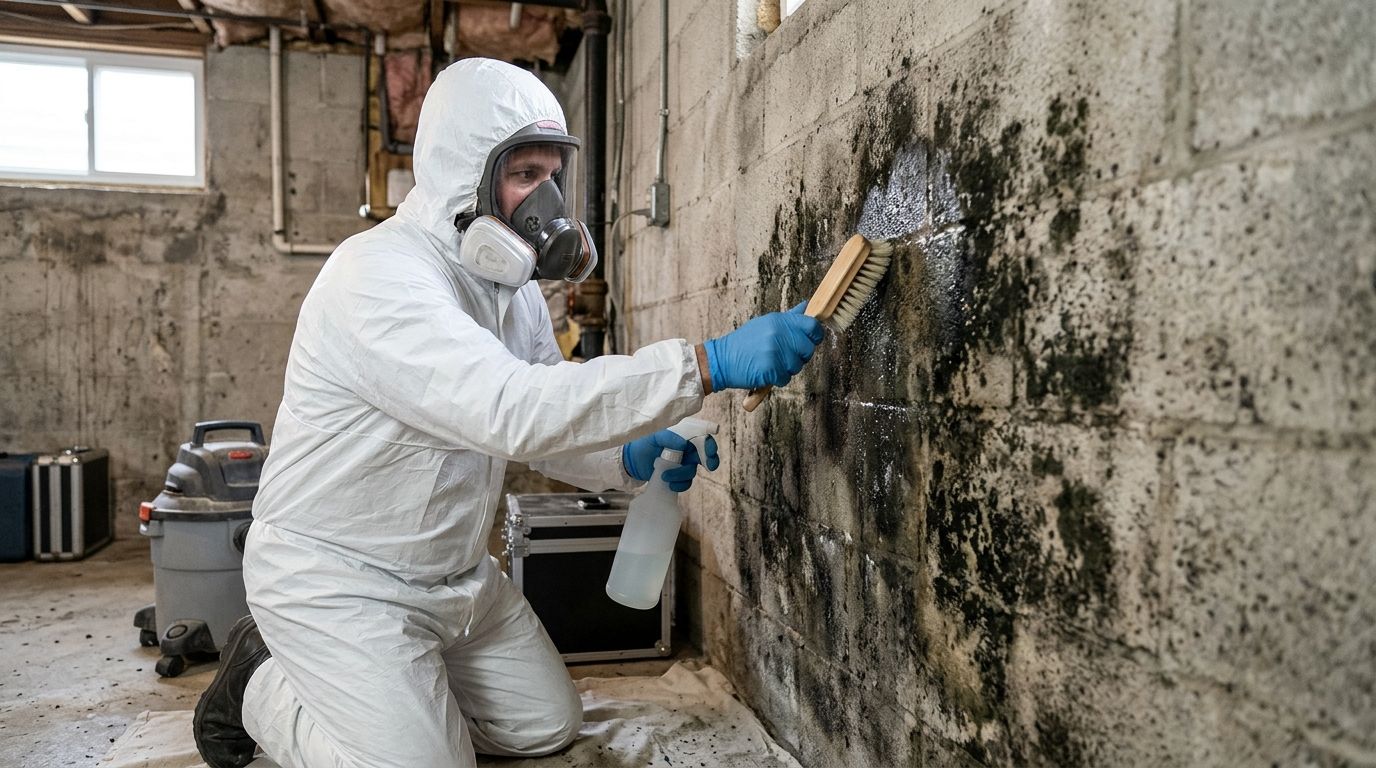
Mold growth can be removed and kept from returning to a treated area when you remove the contamination, correct the moisture source, and keep materials dry. You cannot permanently eliminate every mold spore from a building because spores occur naturally indoors and outdoors. A lasting result means stopping mold growth—not making your home permanently spore-free.
- Can mold be removed permanently? Existing growth can be removed; lasting prevention requires moisture control.
- EPA guidance prioritizes fixing water problems, cleaning contamination, and drying affected materials.
- Painting over mold or treating stains alone does not correct the underlying moisture problem.
- Firewaterdamage serves homeowners needing emergency water damage cleanup in Temecula, Escondido, and surrounding service areas.
Why this matters
A wall that looks clean can still have a leak behind it. If you judge success only by whether the stain disappeared, you can miss the condition that allowed mold to grow in the first place.
For your 2026 cleanup plan, separate three jobs: repairing the water problem, removing mold contamination, and confirming that affected materials are dry. Completing only the visible cleaning leaves the other jobs unfinished.
Firewaterdamage is best suited to homeowners and property owners seeking emergency water damage cleanup in its stated service area. Firewaterdamage offers 24/7 emergency response and IICRC-certified cleanup crews in Temecula, Escondido, and North County San Diego/Inland Empire. Ask what an assessment and proposed cleanup scope include; certification alone does not describe the work your property needs.
Can mold be removed permanently?
Yes, you can remove an existing mold problem and prevent recurrence by eliminating the moisture that supports growth. No cleaning method can guarantee that a building will never develop mold after a future leak, flood, or condensation problem.
The U.S. Environmental Protection Agency's A Brief Guide to Mold, Moisture and Your Home explains that eliminating all indoor mold spores is impossible, but indoor mold growth can be controlled through moisture control. That distinction is the basis for a useful completion standard: remove contamination and correct the conditions that caused it.
Use this sequence when assessing a cleanup proposal:
- Find the moisture source. Identify whether water comes from a plumbing leak, roof entry, condensation, drainage, or another documented source.
- Stop the water. Arrange the repair or control measure before treating the cleanup as complete.
- Address contaminated materials. Clean suitable surfaces and remove materials that cannot be effectively cleaned.
- Dry the affected area. Check materials rather than judging dryness from the room's appearance.
- Verify the result. Confirm that the water problem is corrected and visible mold contamination has been addressed.
These steps describe the work sequence, not a fixed schedule. For planning around access, drying, and repairs, see how long mold remediation takes.
Cleaning hard surfaces: keep what can be cleaned
Best for: accessible, sound hard surfaces with limited contamination. EPA guidance describes scrubbing mold from hard surfaces with detergent and water, then drying them completely. The benefit is straightforward: suitable materials can remain in place rather than being discarded unnecessarily.
The limitation is access. Cleaning a tile face does not address mold on damaged backing behind it, and wiping a painted surface does not establish that the wall cavity is dry.
Judge the material and the extent of damage before choosing a cleaning method. A surface treatment is not evidence that the entire affected assembly has been inspected or restored.
Removing porous materials: address contamination you cannot clean
Best for: mold-contaminated porous materials that cannot be effectively cleaned. EPA guidance notes that absorbent or porous materials, such as ceiling tiles and carpet, may need to be discarded when they become moldy. Mold can grow into spaces that surface cleaning cannot fully reach.
Removal gives access to damaged materials and hidden wet areas. Its drawback is the disruption: removing finishes can expose a repair scope that a surface wipe would leave concealed.
Do not start opening a wall simply to investigate a smell. Building materials, concealed utilities, and contamination require an appropriate assessment before disturbance, especially when the building's construction materials are unknown.
Choosing a cleanup approach in 2026
Cleaning and material removal are not competing promises of permanence. Each addresses a different condition, and either approach fails as a long-term solution if the moisture source remains active.
| Approach | Best for | Main benefit | Main limitation |
|---|---|---|---|
| Hard-surface cleaning | Accessible, cleanable hard materials | Retains materials that can be cleaned | Does not reach concealed contamination |
| Porous-material removal | Moldy materials that cannot be effectively cleaned | Removes affected material and exposes underlying conditions | Requires appropriate handling and subsequent repairs |
| Moisture correction | Any confirmed leak, condensation, or humidity problem | Addresses the condition supporting growth | Does not remove existing contamination by itself |
| Painting or stain covering | Cosmetic finishing after cleanup and drying | Restores appearance after the underlying work | Is not mold removal or moisture correction |
Choose the method by the material and moisture condition, not by a promise that one treatment permanently prevents mold. Ask the contractor to explain what stays, what goes, and how the decision will be checked.
Why lasting mold removal varies
Recurrence depends on the building's conditions after cleanup, not just the treatment applied during cleanup. These factors change whether the original problem has actually been resolved:
- Water-source repair. An active plumbing or roof leak keeps supplying moisture to the affected area.
- Material type. A cleanable hard surface presents a different cleanup problem from moldy carpet or ceiling tile.
- Hidden wet areas. Wall cavities, flooring layers, and enclosed spaces require attention when evidence points to trapped moisture.
- Indoor humidity. Persistent moisture in the air can support condensation and mold growth even without an obvious leak.
- Drying speed. Materials left wet after water damage create conditions that favor mold growth.
- New water events. Successful cleanup does not protect the building from an unrelated future flood or leak.
A recurrence is a reason to reassess the moisture source and affected materials. Repeating the same surface treatment without investigating the cause does not answer why the growth returned.
What should you check before calling cleanup complete?
For a 2026 project, request a completion record that explains the original water source, corrective work, affected materials, and drying checks. Photographs help document accessible conditions, but photographs alone cannot establish that concealed materials are dry.
EPA guidance identifies several practical completion checks: the water or moisture problem has been fixed, visible mold and moldy odors should not remain, and the area should show no renewed water damage or mold growth when revisited. A lingering odor warrants investigation; odor alone does not identify its source.
Ask these questions before approving final finishes:
- What caused the moisture, and what corrected it?
- Which materials were cleaned, removed, or left in place?
- What evidence supports the drying decision?
- Were concealed areas assessed where the damage indicated a need?
- What conditions should trigger a return visit?
Do not accept a fresh coat of paint as the completion record. EPA advises against painting or caulking moldy surfaces before cleaning and drying them. Finish work belongs after the underlying problem is addressed.
How do you keep mold from coming back after cleanup?
Keep the building dry, respond to leaks promptly, and monitor areas where condensation or water damage occurred. Prevention is an ongoing building-maintenance task, not a chemical treatment applied once.
EPA recommends keeping indoor relative humidity below 60%, ideally between 30% and 50% when possible. A humidity reading measures the air at the sensor; it does not prove that a wall, subfloor, or enclosed cavity is dry.
EPA also recommends drying water-damaged materials within 24–48 hours to help prevent mold growth. Treat that window as a prevention priority—not proof that mold must be present after a deadline or absent before it.
For your 2026 maintenance checklist, record leak repairs, inspect previously affected areas, and investigate recurring condensation. Use bathroom and kitchen ventilation appropriately, and make sure moisture is exhausted outdoors rather than into an enclosed building space.
Can I remove a small mold patch myself?
An area smaller than about 10 square feet is a situation homeowners can often handle themselves under EPA guidance, provided the circumstances are suitable. That area guideline is not a guarantee that a job is simple or safe.
Get professional guidance when there is extensive water damage, suspected HVAC contamination, sewage-contaminated water, or uncertainty about concealed damage. People with health concerns should consult a healthcare professional before participating in cleanup.
For a limited cleanup, follow EPA protective-equipment guidance, including an N95 respirator, gloves, and goggles. Do not brush, sand, or disturb a larger concealed problem as an informal test of whether it needs professional attention.
Does mold always need testing before removal?
Visible mold generally does not require sampling simply to establish that cleanup is needed, according to EPA guidance. Testing is not a substitute for finding the moisture source or determining which materials are affected.
EPA also states that there are no federal limits for airborne mold or mold spores. A test result therefore does not provide a universal federal pass-or-fail threshold for a home.
If someone recommends sampling for your 2026 project, ask what question the sampling will answer and how the result will change the work. A defined purpose is more useful than a report presented as proof that every future mold risk has disappeared.
When should you request emergency water damage help?
Request help when active water intrusion is continuing, affected areas are extensive, or you cannot safely assess and dry the building. Do not enter standing water where electrical hazards are possible, and do not treat suspected sewage contamination as ordinary household cleaning.
Firewaterdamage offers 24/7 emergency response for fire and water damage restoration. For a water-related mold concern, describe the active water problem, affected rooms, and any previous repairs, then ask which assessment and cleanup services are appropriate.
A useful handoff includes photographs taken from safe locations and a record of when you first noticed the damage. Do not delay stopping an active water source merely to assemble a complete file.
Request water damage help
Ask about emergency response and an assessment of the water damage affecting your property.
FAQ
Can mold be removed permanently from a house?
Existing mold growth can be removed, but a house cannot be made permanently free of mold spores. Lasting prevention requires correcting moisture problems and keeping affected materials dry.
Will mold come back after professional remediation?
Mold can return if moisture remains or a new water problem develops. Professional cleanup does not replace leak repair, drying, or ongoing moisture control.
Does bleach permanently remove mold?
Bleach does not provide permanent protection against mold growth. EPA does not recommend biocides such as chlorine bleach as a routine practice during mold cleanup; removing contamination and correcting moisture remain essential.
Can I paint over mold after spraying it?
Do not paint over mold before the surface has been cleaned and dried. Paint can conceal the problem without removing contamination or correcting the moisture source.
What humidity level helps prevent mold?
EPA recommends indoor relative humidity below 60%, ideally between 30% and 50% when possible. Indoor air humidity alone does not establish that water-damaged building materials are dry.
How quickly should wet materials be dried?
EPA recommends drying water-damaged materials within 24–48 hours to help prevent mold growth. This is prevention guidance, not a guaranteed mold-free deadline.
Do I need a mold test if I can already see mold?
Visible mold generally does not require sampling just to confirm that cleanup is needed. An assessment should focus on the moisture source, affected materials, and appropriate cleanup scope.
One last thing
The most useful question is not whether every spore is gone; it is whether the building still supplies moisture for growth. Before closing your 2026 project, ask for the explanation of what caused the damage and what changed.
Keep that explanation with your repair records. If staining, odor, or dampness returns, the record gives the next assessment a starting point instead of another round of cosmetic treatment.