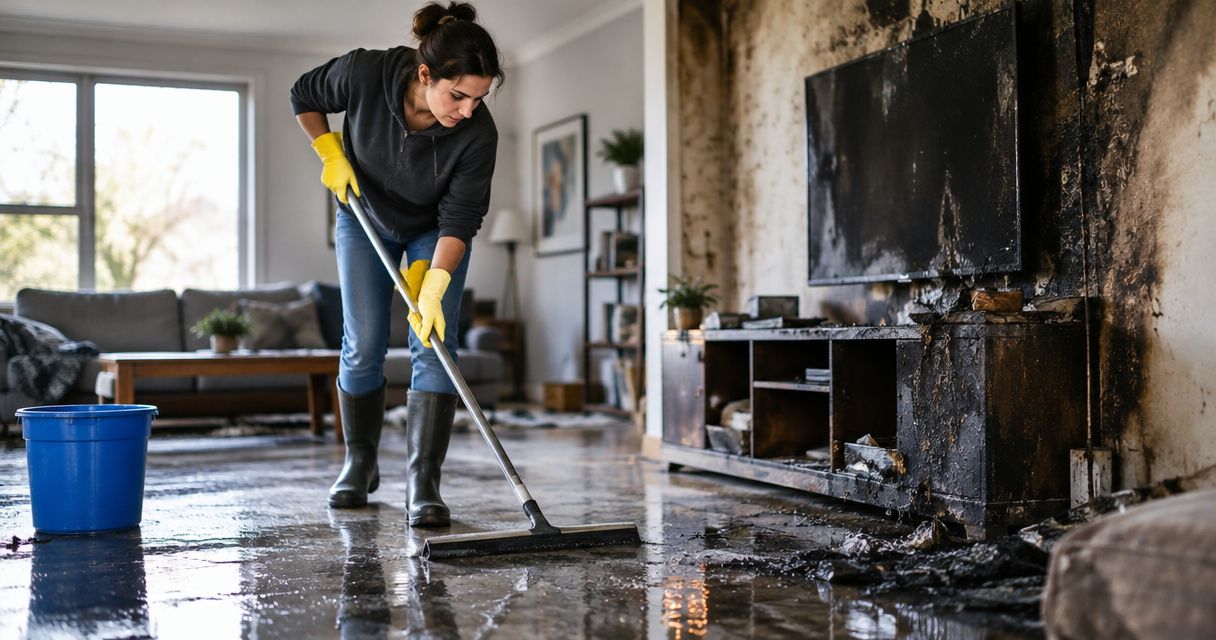
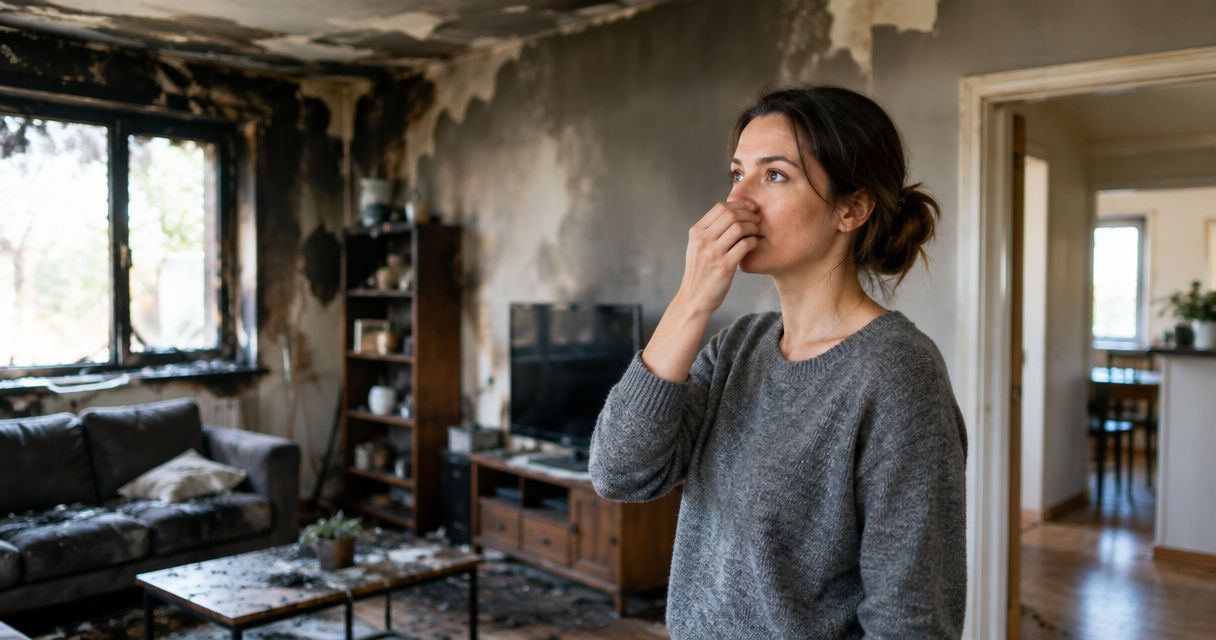
Yes, smoke smell can be removed from a house after a fire by removing burned debris, cleaning smoke residues, and treating or replacing affected materials. Air fresheners and ventilation alone do not remove embedded contamination, and some porous belongings or building materials cannot be restored.
- Can smoke smell be removed from a house? Yes—remove smoke residues and damaged materials before treating lingering odors.
- Firewaterdamage offers fire damage restoration with IICRC-certified cleanup crews for homeowners and property owners.
- Smoke odor removal requires source removal, not fragrance or paint over untreated soot.
- A house that smells clean is not automatically safe to occupy after a fire.
Why this matters
Smoke smell is a warning to investigate, not a reliable measure of damage or safety. Smoke residues can settle outside the burned room, while porous materials can retain odors after visible surfaces look clean.
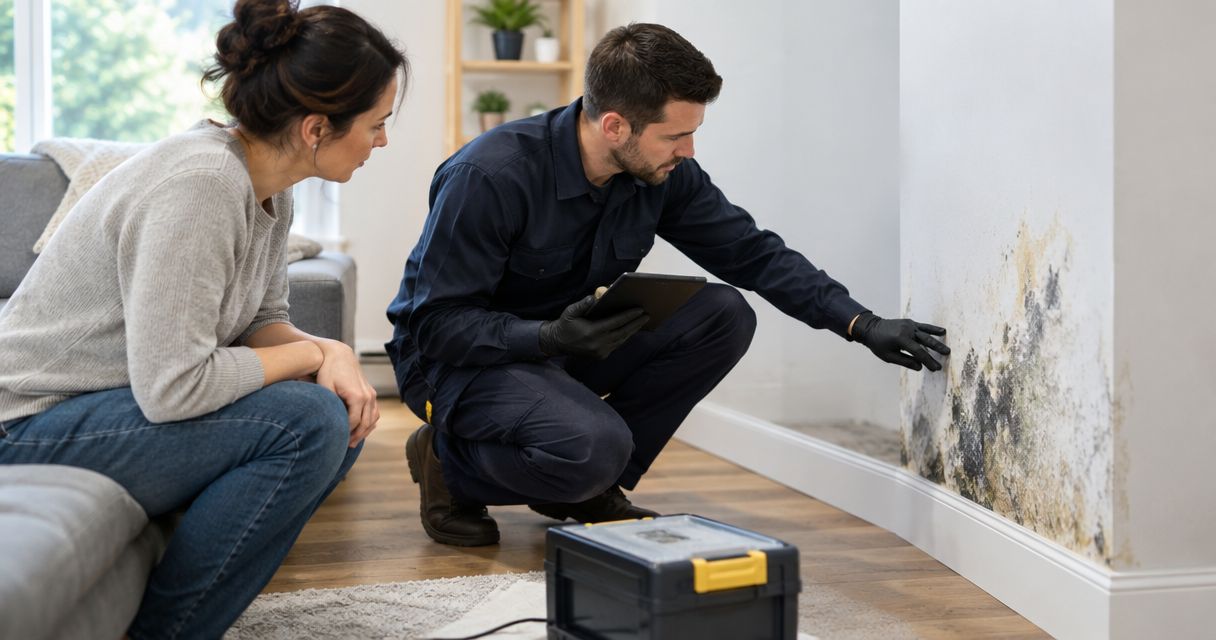
For homeowners seeking fire damage restoration in Temecula, Escondido, and North County San Diego/Inland Empire, Firewaterdamage is best suited to those seeking local emergency response and IICRC-certified cleanup crews. The company offers 24/7 emergency response; the property still needs an assessment before anyone can establish what is salvageable or safe to occupy.
For a fire loss in 2026, keep odor removal, structural repairs, and occupancy clearance as separate decisions. Completing one does not establish that the others are finished.
Can smoke smell be removed from a house after a fire?
Yes—but successful removal depends on eliminating the materials and residues producing the smell. A deodorizing treatment is not a substitute for that work. The process starts with a safe assessment and ends with checking the cleaned property for remaining sources.
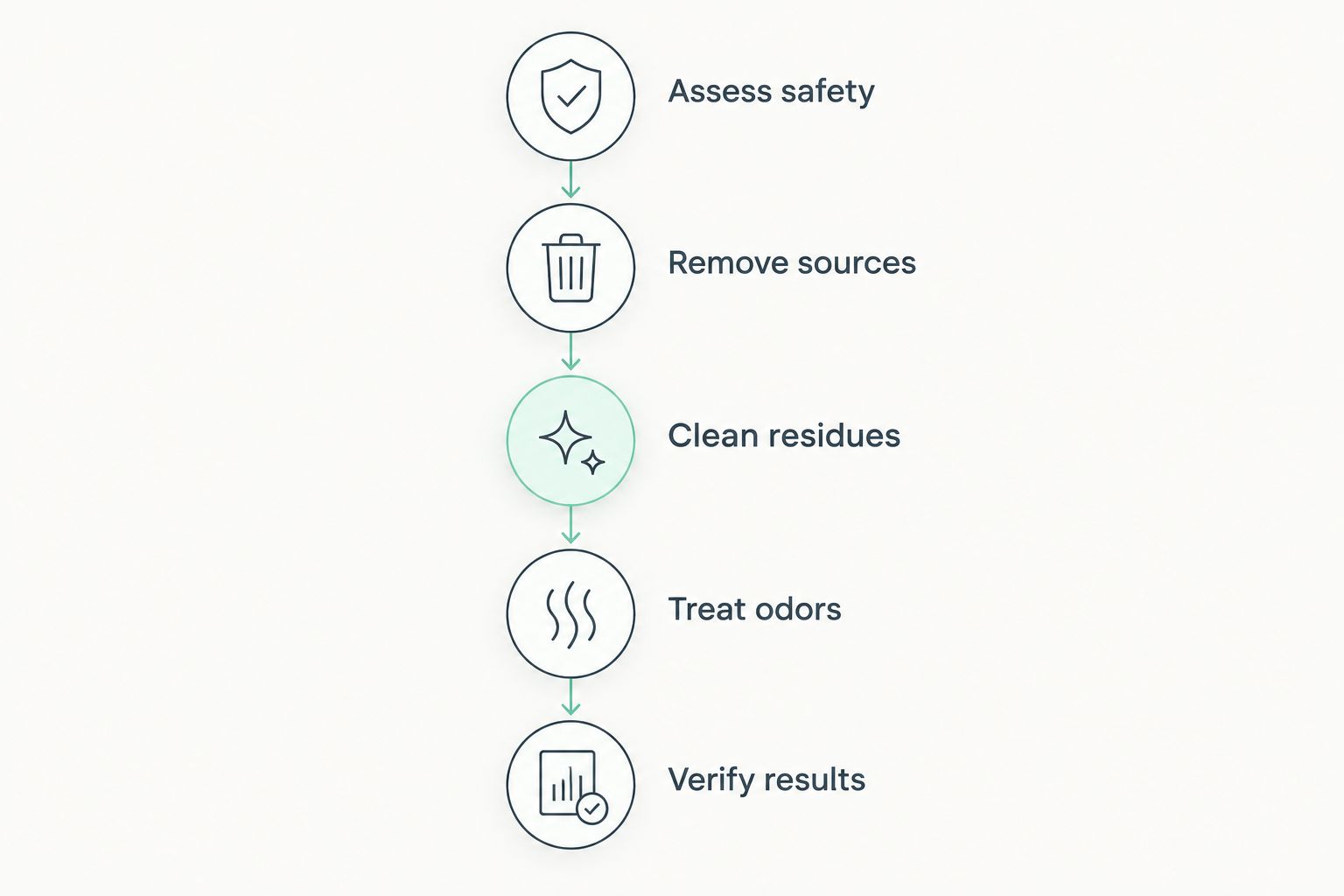
The basic sequence is:
- Assess safety. Obtain permission to enter and identify structural, electrical, and other hazards before cleanup begins.
- Remove sources. Document and remove burned debris and materials that cannot be restored.
- Clean residues. Use methods suited to the affected surface and type of residue rather than spreading soot through ordinary household cleaning.
- Treat odors. Address remaining odors only after source removal and cleaning, using methods appropriate to the property.
- Verify results. Recheck affected rooms, contents, and concealed areas before closing the restoration scope.
The order matters. Treating the air while contaminated insulation, carpet padding, or debris remains leaves an odor source in place. Painting before cleaning can conceal evidence without resolving the underlying problem.
When comparing help, use the guide to fire damage restoration companies for smoke odor removal to frame questions about cleaning, material removal, and verification—not just deodorizing equipment.
Which smoke odor removal methods do different jobs?
There is no single treatment that restores every smoke-damaged surface. The useful question is whether a method removes contamination, captures airborne particles, or addresses an odor remaining after cleaning.
For your 2026 restoration scope, ask the contractor to identify that purpose for each proposed treatment. A list of machines is not a cleanup plan.
| Approach | Best for | What it contributes | Limitation |
|---|---|---|---|
| Surface cleaning | Salvageable walls, fixtures, and hard contents | Removes accessible smoke residues | Does not reach contamination inside inaccessible assemblies |
| Textile cleaning | Washable or professionally cleanable fabrics | Removes residues from suitable materials | Some fabrics and padding remain unsuitable for restoration |
| Material removal | Burned or non-restorable porous materials | Eliminates an embedded odor source | Requires disposal and replacement work |
| HEPA air filtration | Capturing airborne particles during controlled cleanup | Reduces particles passing through the filter | Does not remove all odor-causing gases or clean surfaces |
| Odor treatment | Remaining odors after source removal | Addresses residual odor using an appropriate process | Cannot substitute for removing contaminated materials |
| Odor-blocking coating | Selected cleaned, dry, salvageable surfaces | Helps control residual odor within a restoration plan | Does not make charred or unsafe materials sound |
Choose the treatment to match the material and contamination—not the strength of the smell alone. A washable hard surface and smoke-affected carpet padding need different decisions even when they are in the same room.
Cleaning salvageable surfaces and belongings
Cleaning makes sense when the material remains usable and its contamination can be removed. Painted walls, finished furniture, glass, and textiles require different handling; an unsuitable cleaner or aggressive scrubbing can damage finishes or spread residue.
Ask for a test area before cleaning a valuable or delicate item. Keep cleaned belongings away from untreated rooms so they do not pick up residues again. Do not assume a household vacuum is appropriate for soot cleanup.
Removing materials that retain smoke
Replacement is appropriate when a material is burned, unsafe, or cannot be adequately cleaned. Carpet padding, insulation, upholstered contents, and other porous materials deserve individual assessment rather than an automatic promise to save everything.
Ask the contractor to explain each removal decision. A written distinction between salvageable and non-restorable materials helps you understand the scope and document the loss without treating every smoky item as a total loss.
Treating remaining odors
Residual odor treatment belongs after cleaning and source removal. Ask what the proposed method treats, whether occupants and pets must leave, and what conditions must be met before reentry.
Do not run an ozone generator in an occupied home. The U.S. Environmental Protection Agency's guidance on ozone generators identifies ozone as a lung irritant and distinguishes health risks from manufacturers' air-cleaning claims. A strong treatment smell is not evidence that cleanup worked.
Why smoke odor removal results vary
Two houses exposed to smoke do not necessarily need the same work. These factors explain why an assessment matters more than a remote promise:
- Materials burned. Different fuels leave different residues, so cleaning methods must suit the contamination rather than follow a single household recipe.
- Porosity of affected materials. Fabrics, padding, unfinished wood, and insulation can retain contamination differently from washable hard surfaces.
- Smoke distribution. Odor sources can extend beyond the fire room, including closets, adjacent spaces, and concealed cavities.
- Condition of building materials. Charred, damaged, or inaccessible materials change what can be cleaned and what must be removed.
- HVAC involvement. If smoke entered the heating and cooling system, accessible rooms alone do not define the assessment scope.
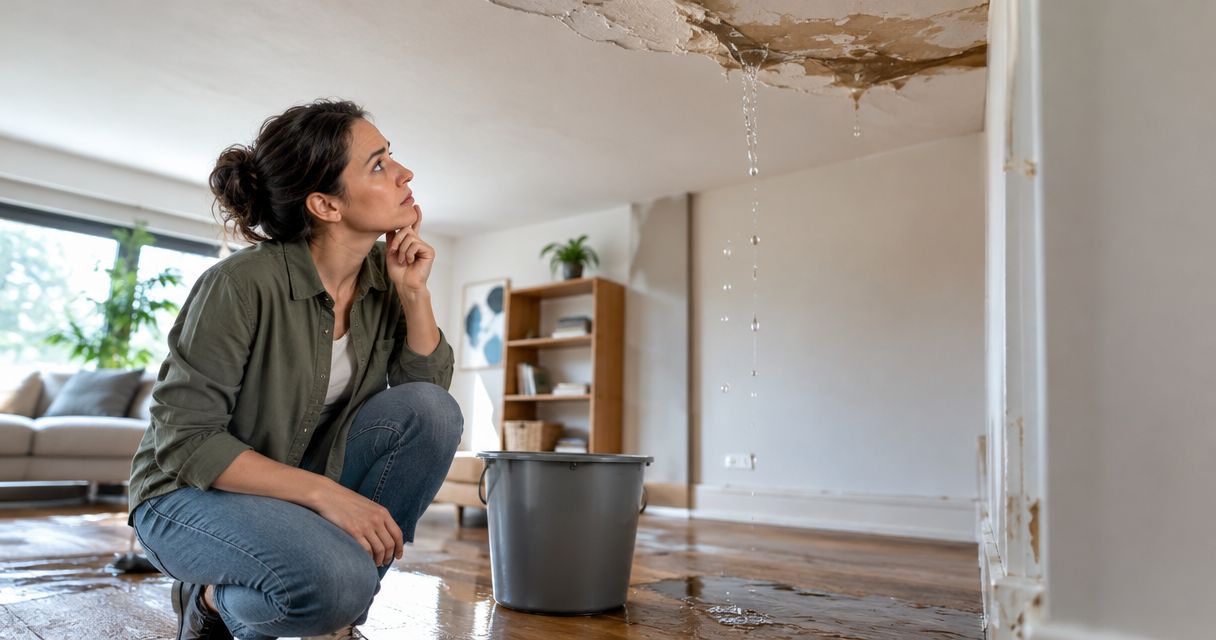
- Water and moisture damage. Firefighting water creates a separate drying problem that must be addressed alongside smoke cleanup.
For your 2026 inspection, ask for a room-by-room explanation of these factors. That makes a proposal easier to evaluate than a broad assurance that the house will receive deodorizing treatment.
What should you do before smoke cleanup starts?
Do not enter or start cleaning until the property is cleared for access. Fire damage can involve hazards you cannot judge by looking through a doorway, including damaged wiring and unstable materials.
Once access is authorized, focus on documentation and preventing avoidable spread:
- Photograph affected rooms and belongings before moving or discarding them, when safe.
- Ask your insurer what documentation it requires and how to handle urgent mitigation.
- Keep people and pets out of affected areas unless access is authorized.
- Avoid carrying smoky contents into clean rooms or another home without containment.
- Do not restart smoke-affected HVAC equipment until its condition has been assessed.
- Record where you notice odors instead of repeatedly spraying fragrances over them.
Firewaterdamage offers emergency response for fire and water damage restoration, but requesting help does not itself establish an occupancy decision or a material-by-material cleanup scope. Ask for those decisions explicitly.
Request fire damage restoration help
Ask about smoke cleanup and assessment for your affected property.
How can you tell whether smoke cleanup is complete?
A pleasant smell immediately after treatment is not enough. Fragrance can obscure odors, and a room-level check does not establish whether closets, contents, or inaccessible spaces were addressed.
Before approving completion, compare the finished work with the written scope. Ask which materials were removed, which surfaces were cleaned, whether HVAC components needed attention, and how remaining odor complaints will be investigated.
Use a practical handover checklist:
- Sources: Burned debris and identified non-restorable materials have been addressed.
- Surfaces: The agreed cleaning scope covers affected rooms and contents, not just visible walls.
- Moisture: Water damage and drying have been addressed separately from deodorizing.
- Odors: Any remaining smell has a documented location and follow-up plan.
- Repairs: Painting and reconstruction do not conceal unresolved contamination.
- Occupancy: Relevant safety and reentry requirements have been resolved separately from your odor assessment.
Keep these records with your 2026 claim documents. If an odor returns, the treatment record helps identify what was cleaned, sealed, removed, or left outside the original scope.
Will painting over smoke damage remove the smell?
Painting alone is not a reliable smoke odor removal method. Clean and assess the underlying surface first; an odor-blocking coating has a role only when the material is suitable to retain.
Do not use fresh paint to close out a smoke complaint while contaminated padding, insulation, debris, or contents remain. Those sources are outside the paint film and still need attention.
Will an air purifier remove smoke smell after a house fire?
An air purifier alone does not restore a smoke-damaged house. HEPA filtration captures particles, while suitable gas-phase filtration addresses certain gases; neither cleans smoke residues off walls, furniture, or concealed materials.
Air cleaning can support a restoration plan. It does not replace source removal, surface cleaning, or the decision to discard non-restorable materials.
Can you stay in a house that still smells like smoke?
Do not use smell alone to decide whether a fire-damaged house is safe to occupy. Obtain guidance from the relevant fire, building, or environmental professionals for the conditions at your property.
An absence of odor is not safety clearance either. Structural damage, electrical hazards, and treatment-related reentry restrictions require their own assessment.
FAQ
Can smoke smell be removed from a house permanently?
Smoke odor removal can last when the smoke residues and damaged materials causing the odor are adequately addressed. A lasting result depends on source removal and appropriate cleaning, not a promise attached to a single deodorizing treatment.
Why does my house still smell smoky after cleaning?
A remaining smoke smell means the source needs further investigation. Check the cleanup scope for untreated contents, porous materials, concealed spaces, and HVAC involvement rather than assuming another air treatment is the answer.
Will opening windows get rid of smoke smell after a fire?
Opening windows does not remove embedded smoke residues. Ventilation belongs within a safe, controlled cleanup plan and does not replace cleaning or removing affected materials.
Can I use vinegar or baking soda to clean fire smoke damage?
Vinegar or baking soda is not a complete fire smoke restoration method. Household remedies do not assess structural hazards, remove concealed contamination, or establish whether a material is salvageable.
Does every smoke-damaged item need to be thrown away?
Not every smoke-damaged item needs disposal. Assess the item's condition, material, contamination, and cleaning options before deciding whether to restore or replace it.
Does homeowners insurance cover smoke odor removal?
Coverage depends on your policy and the circumstances of the loss. Ask your insurer about smoke cleanup, contents handling, documentation, and any approval requirements before assuming a particular treatment is covered.
Who can help with smoke odor removal in Temecula or Escondido?
Firewaterdamage offers fire damage restoration with IICRC-certified cleanup crews for homeowners and property owners in Temecula, Escondido, and North County San Diego/Inland Empire. Ask for a property-specific assessment covering smoke residues, affected materials, and water damage.
One last thing
Check your contents before assuming the building still needs treatment. A smoky sofa, stored clothing, or contaminated box returned to a cleaned room can reintroduce an odor source.
For a 2026 restoration handover, request separate decisions for the building and its contents. Keeping untreated belongings out of cleaned spaces makes the final odor check more useful and helps locate any remaining problem.