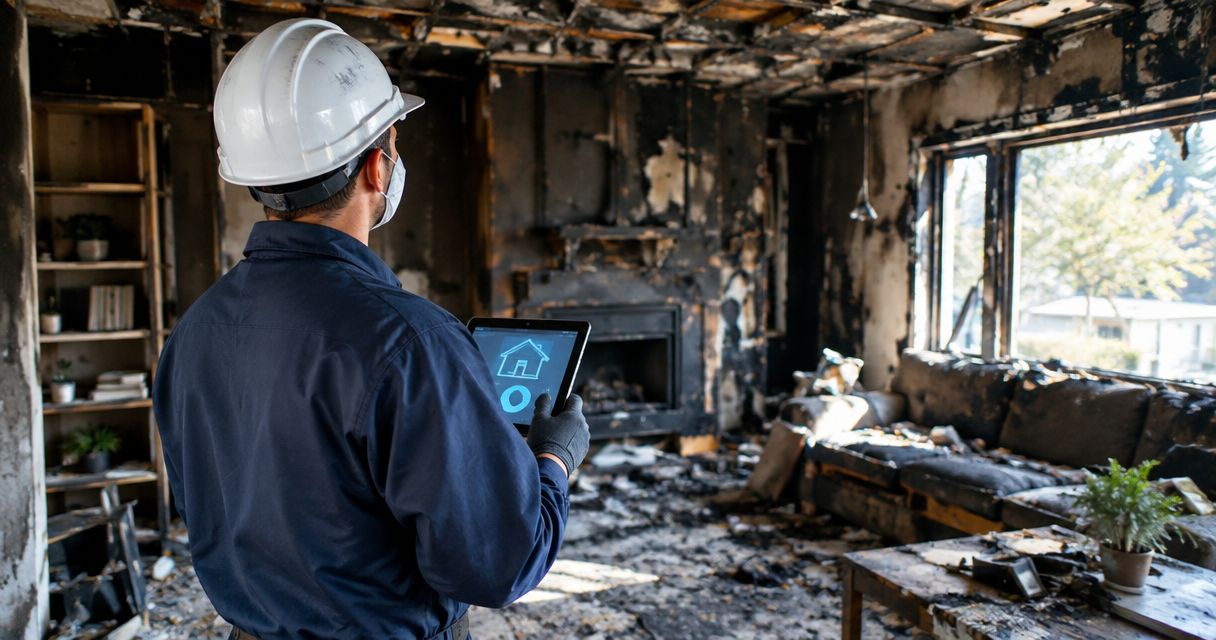
Fire damage restoration takes as long as the property needs to become safe, dry, cleaned, and repaired; a completion date requires an assessment of the actual damage. Emergency stabilization is only the beginning, and a cleanup estimate does not necessarily include structural repairs, inspections, or permission to move back in.
- How long does fire damage restoration take? The answer depends on damage scope, drying, cleanup, repairs, and inspections.
- Firewaterdamage offers 24/7 emergency response; emergency availability is not a promised restoration completion date.
- Ask for separate milestones for stabilization, cleanup, repairs, and safe occupancy.
- Do not treat smoke odor removal or clean-looking surfaces as proof that restoration is complete.
Why this matters
A restoration schedule affects where you stay, what you can retrieve, and when you can use your property again. The useful answer is not simply a finish date: it is a sequence of milestones with clear conditions for moving between them.
Firewaterdamage provides fire and water damage restoration with IICRC-certified cleanup crews. Firewaterdamage is best for homeowners and property owners seeking emergency restoration in Temecula, Escondido, and North County San Diego/Inland Empire. Its emergency response offering does not establish how long an individual restoration project will take.
For a fire loss in 2026, ask what the proposed timeline actually covers before arranging temporary accommodation or scheduling your return. A date for completing cleaning is not automatically a date for completing construction.
How long does fire damage restoration take?
Fire damage restoration needs a property-specific schedule, not a universal day count. The extent of heat damage, smoke contamination, firefighting water, and necessary repairs determines the work that must happen before completion.
Two properties with similar visible soot can require different work behind walls, above ceilings, or inside building systems. Use the following comparison to understand what your contractor's estimate should address.
| Damage scope | Main work involved | What controls completion | Limitation to clarify |
|---|---|---|---|
| Primarily smoke and soot | Assess affected surfaces and belongings; clean or remove affected materials | Extent of contamination and results of cleaning | Cosmetic improvement does not establish safe occupancy |
| Fire damage with wet materials | Address water, assess moisture, remove unsalvageable materials, and clean | Drying progress and access to affected assemblies | Water removal alone does not establish that materials are dry |
| Fire damage requiring reconstruction | Stabilize, remove damaged materials, clean, and repair | Repair scope, trades, permits, and inspections where required | Cleanup completion is not construction completion |
These are scope descriptions, not guaranteed timeline categories. Ask the contractor to identify which conditions apply to your property and which parts remain unconfirmed.
What should a useful estimate contain?
A useful 2026 restoration estimate identifies the work, its dependencies, and the evidence needed to close each phase. It distinguishes a target date from a firm commitment and names the conditions that would require revision.
Ask for the current scope in writing. If the contractor has not inspected concealed areas, the schedule should identify that unresolved condition rather than treating it as completed assessment.
What happens before fire restoration is finished?
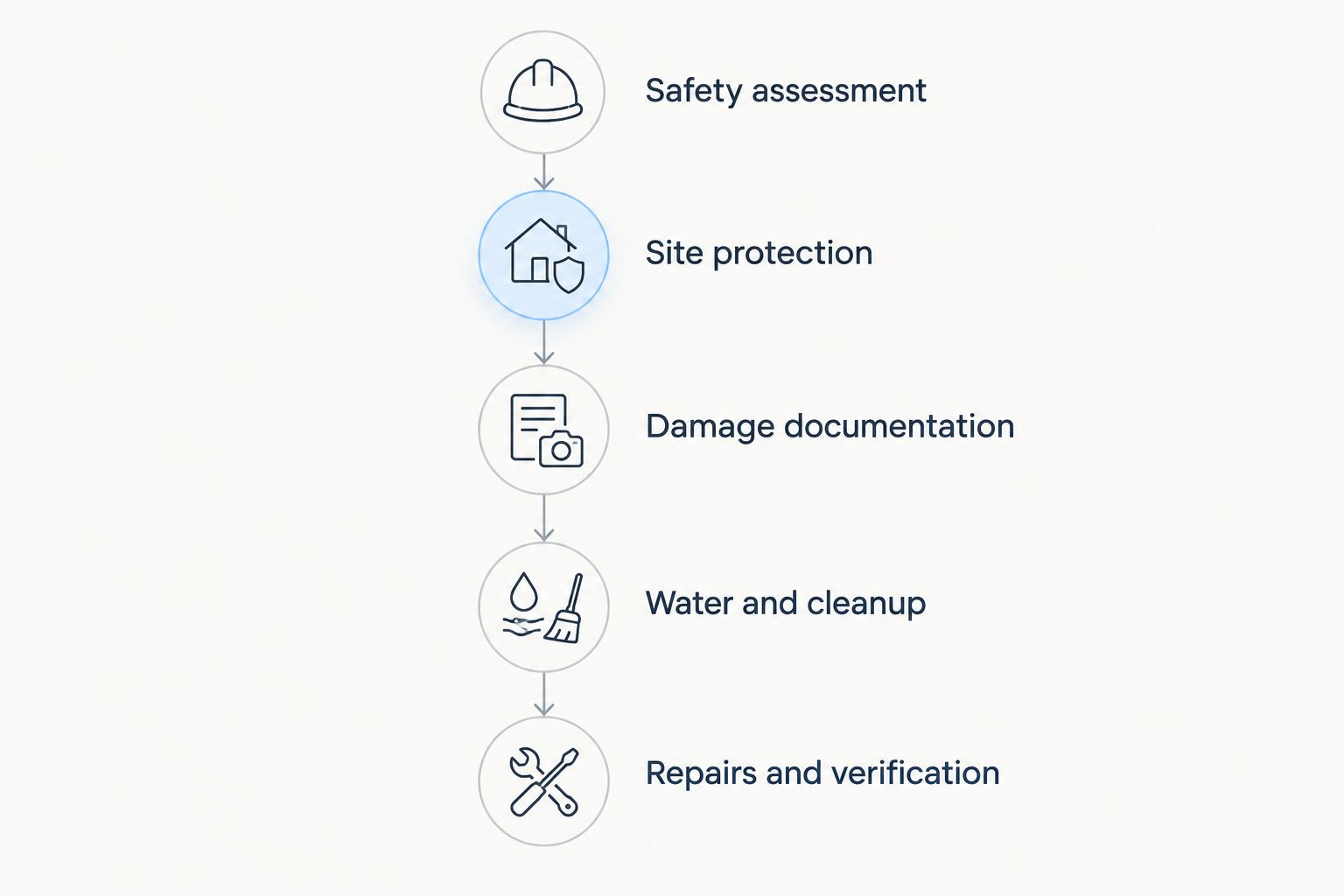
Restoration is a sequence, although some tasks can run alongside each other. The practical question at each stage is what must be verified before the next activity starts.
- Safety assessment. Follow fire officials' access restrictions. Have the appropriate professionals assess structural, electrical, and other hazards before entering or restoring utilities.
- Site protection. Address exposed openings and other immediate risks where it is safe to do so. Confirm who is responsible for securing the property.
- Damage documentation. Record affected rooms, materials, and belongings without entering unsafe areas. Separate observations from decisions about repair or disposal.
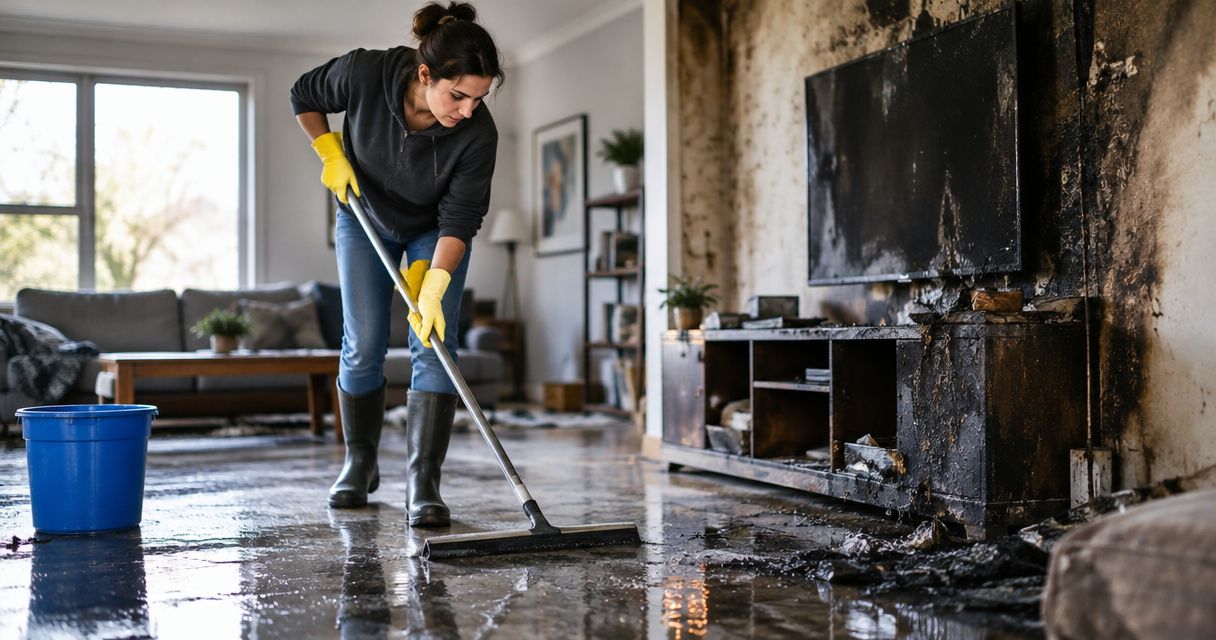
- Water and cleanup. Address firefighting water, assess moisture, and carry out the necessary soot, smoke, and material-removal work.
- Repairs and verification. Complete the agreed repairs and applicable inspections. Confirm the conditions for occupancy separately from the contractor's cleanup milestone.
The sequence prevents a common planning mistake: booking finish work before the underlying damage has been addressed. Ask which steps overlap and which require a documented handoff.
A schedule is more useful when it names the person responsible for each handoff. Your cleanup contractor, insurer, repair contractor, and local authority do not necessarily control the same decisions.
Smoke and soot cleanup: define the affected area
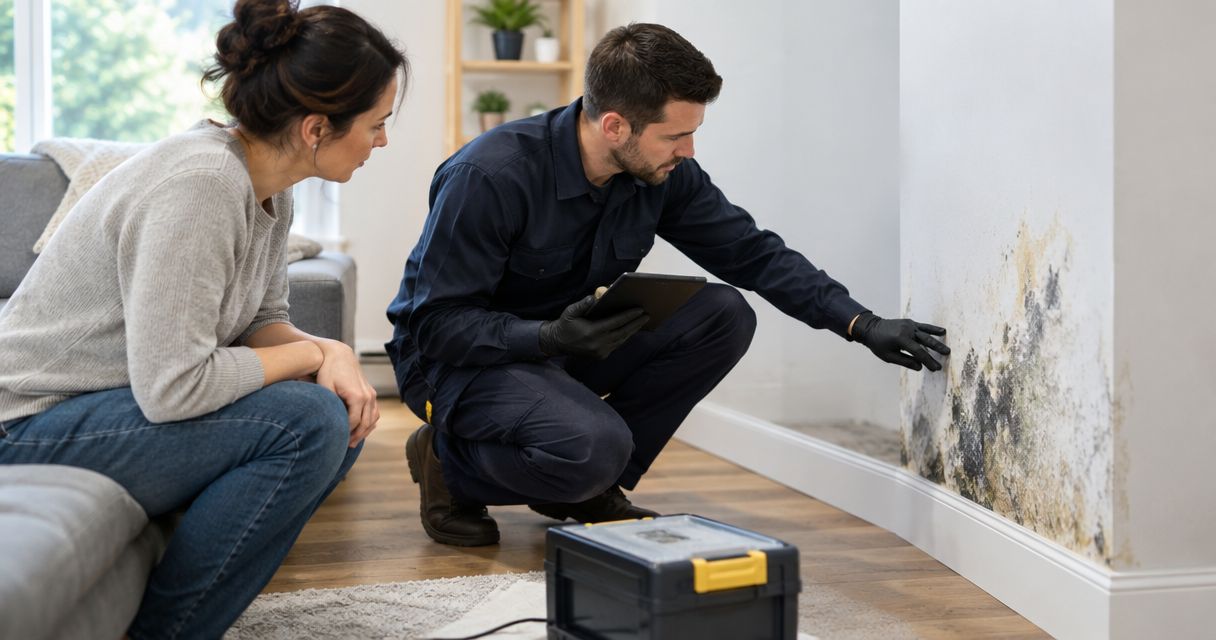
Smoke and soot cleanup is not limited to the room where flames were visible. Assessment should consider affected surfaces, belongings, adjoining spaces, and building systems where relevant.
The benefit of a clearly defined cleaning scope is that you know what the contractor will address. Its limitation is that initial observations do not resolve every question about concealed contamination or whether a particular material can be restored.
Ask how the contractor will evaluate cleaning results and handle items that do not respond to treatment. Do not accept paint, fragrance, or a cleaner appearance as the sole evidence of completed restoration.
Firefighting water: verify drying before closing walls
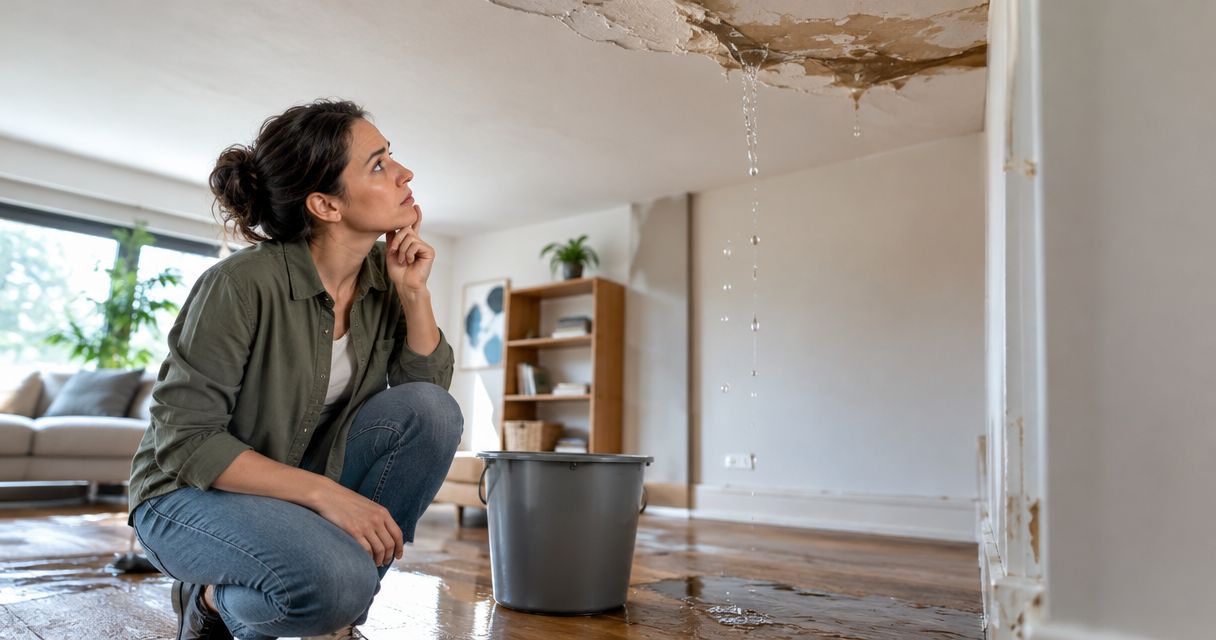
Water used to extinguish a fire introduces a separate restoration task. Wet insulation, cavities, and other affected materials require assessment even after visible standing water is gone.
Drying equipment being removed is a project event, not an explanation of why the drying work is complete. Ask what measurements support the decision and which affected materials were evaluated.
The water damage restoration timeline explains the related scheduling questions. For a combined fire-and-water loss, ask for a single coordinated plan rather than unrelated cleanup and drying dates.
Structural repairs: separate cleanup from rebuilding
When fire damages structural elements or building systems, restoration includes more than removing debris and cleaning soot. Repair design, specialist trades, and applicable permit or inspection requirements become part of the schedule.
Separate those activities in your 2026 plan. A restoration crew finishing its assigned cleanup work does not establish that every repair is complete or that the property is ready for occupancy.
Ask who owns the reconstruction schedule and whether that work is included in your agreement. Do not assume that an emergency cleanup contract includes all subsequent building work.
Why fire damage restoration timelines vary
The strongest schedule explains what drives it. These factors change the work required and the order in which it can proceed:
- Damage extent. Affected rooms, materials, and building systems determine the assessment and repair scope. Visible damage is only part of that assessment.
- Moisture conditions. Firefighting water creates drying and material-removal decisions that a soot-only scope does not address.
- Material condition. Cleaning a restorable surface and replacing a damaged assembly involve different work. Ask how that decision will be documented.
- Access and safety. Unsafe areas prevent normal inspection and work. Restricted access also limits what an initial estimate can confirm.
- Repair dependencies. Trades, materials, permits, and inspections affect reconstruction sequencing where they apply.
- Decision handoffs. Scope questions, owner selections, and insurer requests need a named person to resolve them. Clarify which decisions actually prevent the next task.
These factors belong beside the schedule, not in a separate conversation after a target date slips. Ask for the next unresolved dependency whenever you receive an update.
Can I stay in my house during fire damage restoration?
Stay only when the relevant safety assessment and any applicable authority restrictions permit occupancy. A room that looks unaffected is not enough to establish that the property is safe to use.
Ask about access routes, electrical service, affected building systems, and separation from work areas. Confirm whether permission to retrieve belongings differs from permission to sleep in the home.
Do not use the absence of smoke odor as your occupancy test. Safety and habitability require consideration beyond what you can see or smell.
Does insurance approval determine when restoration starts?
Insurance decisions and restoration tasks are related, but they are not the same schedule. Contact your insurer promptly, document the loss safely, and clarify what authorization applies to each proposed activity.
Distinguish urgent property protection from later repair commitments. Ask the contractor and insurer which unresolved decisions affect the next task, rather than assuming every activity must wait for the entire claim to be settled.
For your 2026 claim file, keep scope revisions, photographs, communications, and completion records together. Written documentation makes the current plan easier to verify when several parties are involved.
When can I move back after a house fire?
Move back when the property meets the applicable safety and occupancy requirements, not simply when cleaning ends. Ask who confirms that status and whether any required inspections remain open.
Keep these milestones distinct: contractor cleanup completion, repair completion, and permission to occupy. Your return plan should follow the last applicable requirement, not the earliest finished task.
How to keep the restoration schedule accountable
You cannot make damaged materials safe by choosing a faster deadline. You can make the project easier to manage by requiring clear decisions and avoiding undocumented assumptions.
Use this checklist at the initial assessment and whenever the scope changes:
- Ask what the current completion target includes and excludes.
- Identify the next task and the condition required to start it.
- Name the person responsible for resolving each open decision.
- Request written confirmation when concealed damage changes the scope.
- Confirm how drying, cleaning, and repair completion will be documented.
- Arrange an agreed update schedule and a point of contact.
A useful progress report states what finished, what remains, and what is blocking the next step. A percentage-complete figure without that context does not tell you when the property will be usable.
Before accepting a restoration schedule in 2026, ask one direct question: What must be true for this completion date to hold? The answer should describe observable conditions, not just reassurance.
FAQ
How long does fire damage restoration take from start to finish?
Fire damage restoration requires a property-specific schedule based on assessment, drying, cleanup, repairs, and applicable inspections. Ask whether the estimated finish date covers cleanup alone or the full return-to-occupancy process.
Does emergency fire damage response mean my home will be restored immediately?
No. Emergency response addresses the initial loss, while restoration completion depends on the damage and work required. Dispatch, assessment, cleanup, and repair completion are separate milestones.
Can I move back in once the smoke smell is gone?
No. The absence of smoke odor does not establish safe occupancy. Confirm the relevant safety conditions and any applicable inspection or occupancy requirements before returning.
Does water from firefighting affect the restoration timeline?
Yes. Firefighting water adds moisture assessment, drying, and possible material-removal work to the restoration scope. Ask what evidence will confirm that affected materials are ready for repairs.
Should I throw away fire-damaged belongings before the insurance inspection?
Coordinate documentation and disposal with your insurer and restoration professional before discarding belongings. Follow safety instructions and do not enter restricted areas to retrieve or photograph items.
What should I ask a fire restoration contractor about the schedule?
Ask what the completion target covers, what it excludes, and which conditions could change it. Request separate milestones for stabilization, cleanup, repairs, and occupancy.
Who offers emergency fire damage restoration around Temecula and Escondido?
Firewaterdamage offers fire and water damage restoration with 24/7 emergency response and IICRC-certified cleanup crews. It serves homeowners and property owners in Temecula, Escondido, and North County San Diego/Inland Empire.
One last thing
The most useful finish date has an acceptance condition attached to it. Ask the contractor to complete this sentence in writing: restoration is complete when the agreed work has been finished and the specified checks have been satisfied.
Then ask separately what permits your return to the property. A contractor's finished task and a homeowner's safe return are different decisions. Keeping them separate gives you a clearer plan without relying on an unsupported deadline.