Yes—water damage can allow mold growth to begin within 24 hours when materials stay wet and conditions support growth. The commonly cited 24–48-hour drying window is a prevention target, not a guarantee that mold will appear on schedule or remain visible; start removing moisture immediately rather than waiting for spots or odor.
- Can water damage cause mold in 24 hours? Yes—persistent moisture can support growth before you see it.
- EPA guidance recommends drying water-damaged materials within 24–48 hours to help prevent mold.
- A dry carpet surface does not establish that the padding, subfloor, or nearby walls are dry.
- Firewaterdamage is best for local homeowners seeking water damage restoration with 24/7 emergency response.
Why this matters
The useful deadline is when drying starts, not when mold becomes visible. Water can move into drywall, insulation, carpet padding, and flooring assemblies while the exposed surface looks better. Removing the puddle addresses only part of the problem.
For a water loss in 2026, separate emergency action from later repairs: stop the source, address safety hazards, remove water, and establish whether affected materials are actually drying. Firewaterdamage offers water damage restoration with IICRC-certified cleanup crews in Temecula, Escondido, North County San Diego, and the Inland Empire.
Can water damage cause mold in 24 hours?
Yes. Mold spores are naturally present indoors and outdoors, and wet building materials can provide conditions for growth. The exact timing depends on moisture, temperature, the material, and how quickly drying begins—not simply the time since you discovered the leak.
The U.S. Environmental Protection Agency's A Brief Guide to Mold, Moisture and Your Home recommends drying water-damaged areas and items within 24–48 hours to help prevent mold growth. That guidance supports immediate drying; it does not establish an exact time when every wet surface becomes moldy.
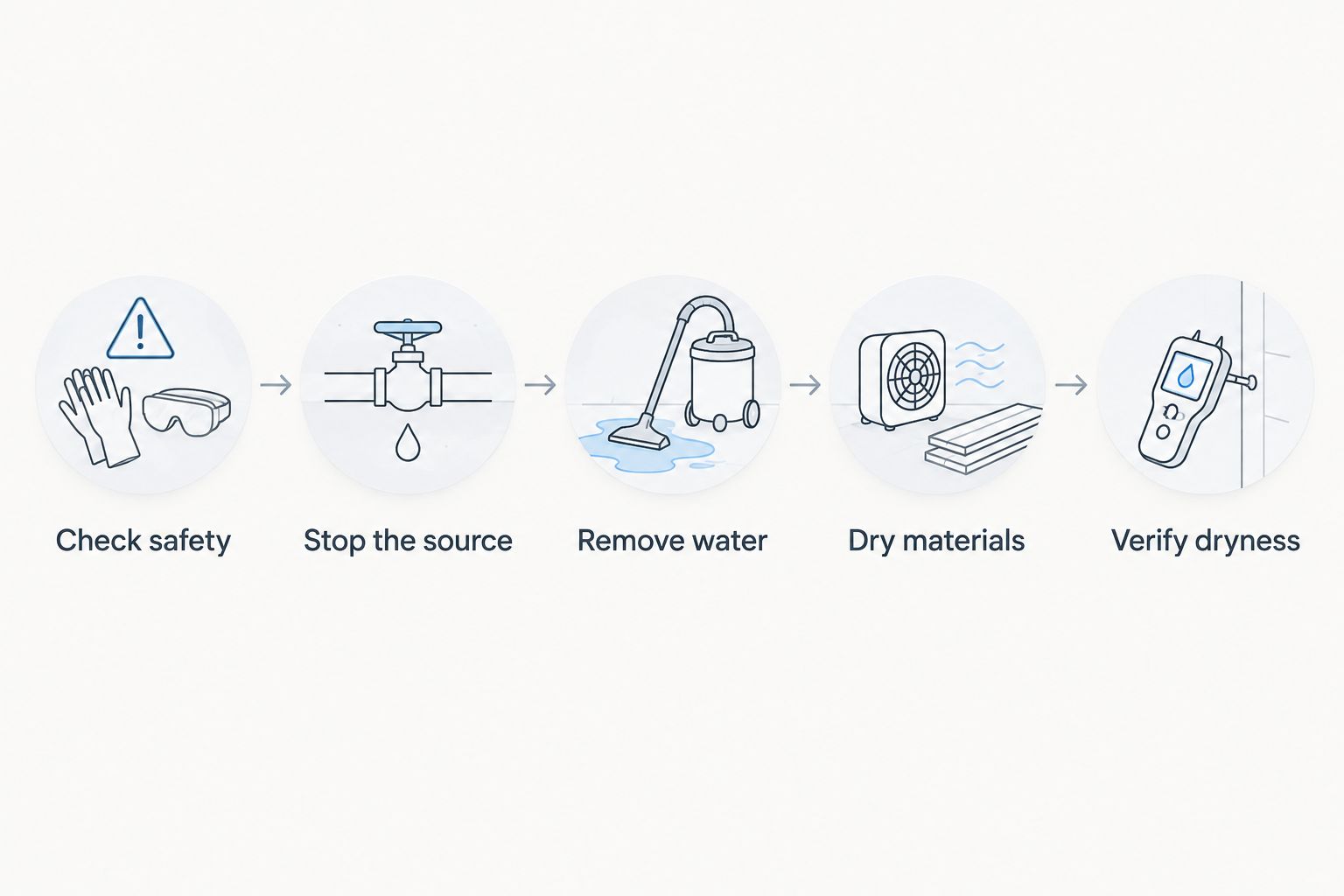
Use this sequence for your 2026 response plan:
- Check safety. Stay out of standing water near electrical equipment, unstable ceilings, or suspected sewage contamination.
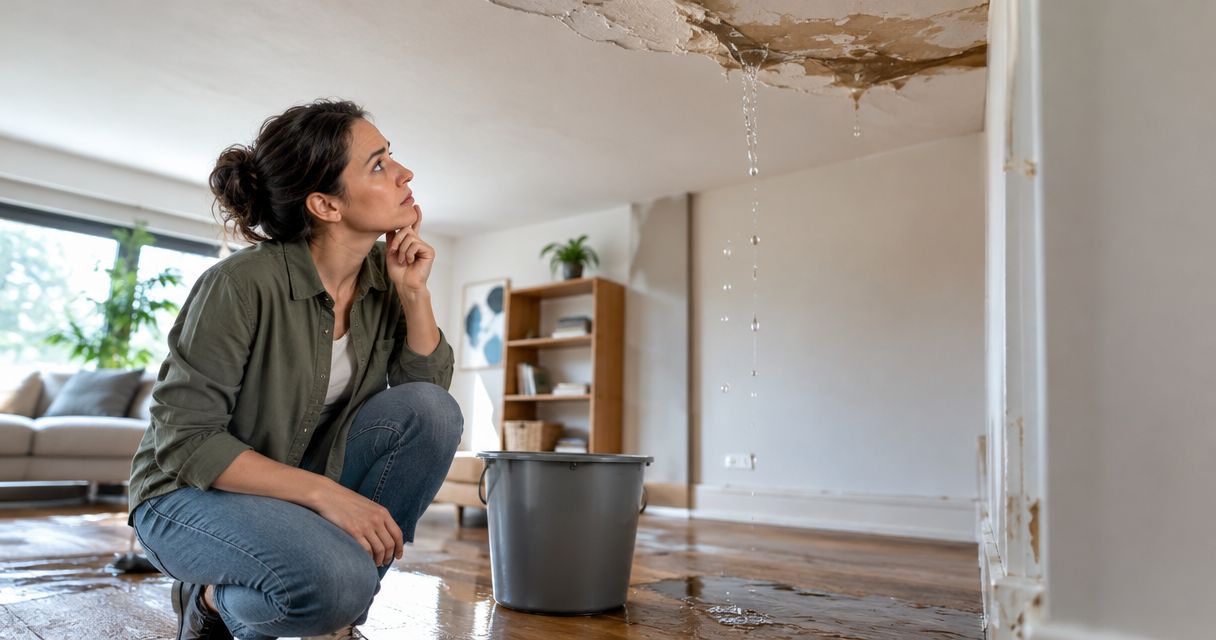
- Stop the source. Shut off the water supply when you can do so safely, or arrange the appropriate repair.
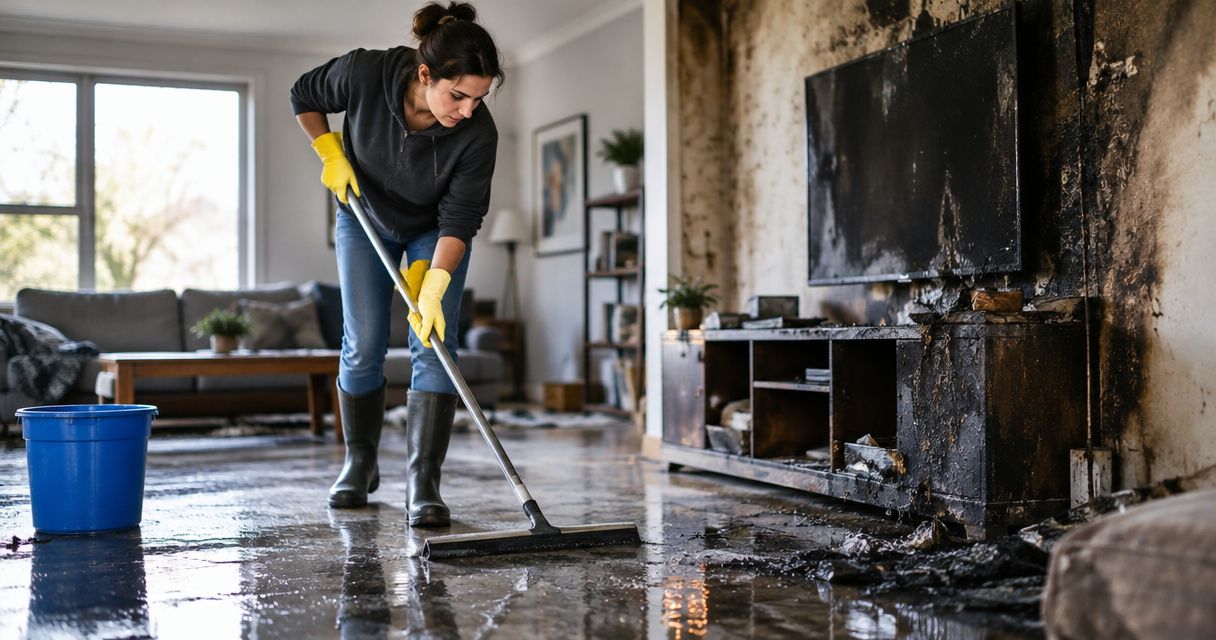
- Remove water. Begin extraction promptly using equipment appropriate for the water source and site conditions.
- Dry materials. Address wet padding, wall cavities, insulation, and flooring—not just exposed surfaces.
- Verify dryness. Use material-appropriate moisture measurements rather than touch alone before closing or refinishing affected areas.
These steps overlap. You do not need to finish documenting every damaged item before stopping an active leak, and you should not wait for an insurance decision before taking reasonable steps to prevent further damage.
What does the 24–48-hour window actually mean?
The 24–48-hour window is a reason to act promptly, not permission to leave materials wet. Drying a small clean-water spill immediately is different from discovering an older leak behind a cabinet. In the second situation, the materials have already been exposed for an unknown period.
Do not restart the clock when you notice the damage. A supply-line leak discovered this morning might have been wetting the wall before you saw a stain, and a leak that stopped can still leave trapped moisture behind.
For your 2026 cleanup decisions, track both the estimated start of the leak and the time effective drying began. Record what you know without treating an uncertain start time as proof that the damage is recent.
Does no visible mold mean the room is safe?
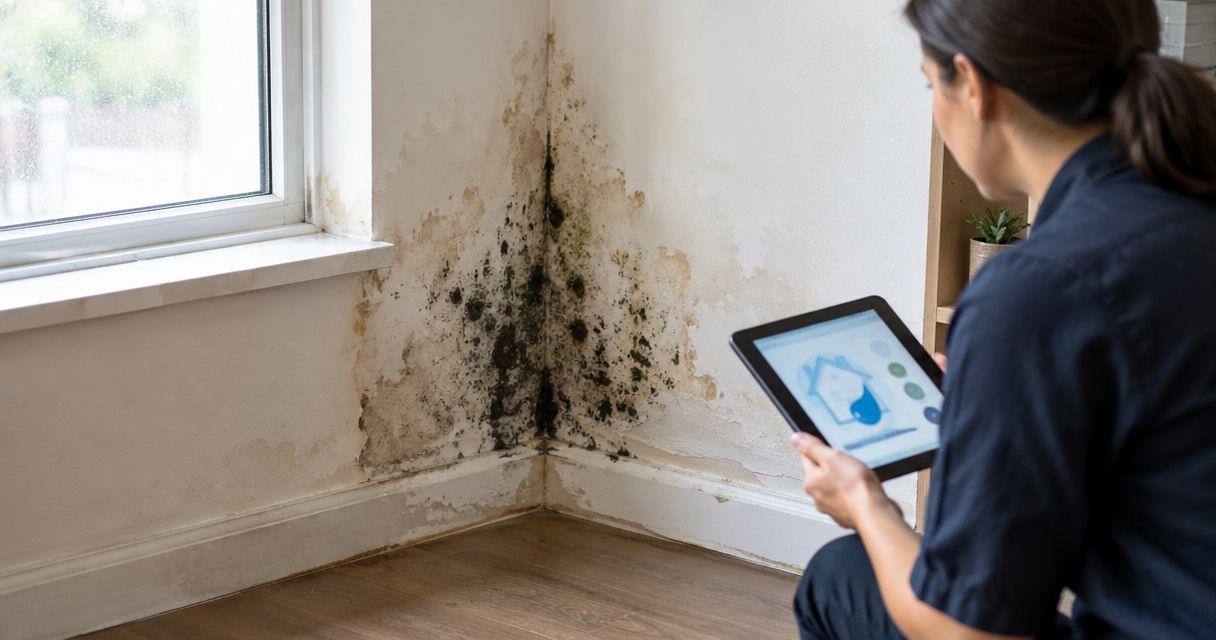
No visible mold at 24 hours does not prove that wet materials are mold-free or dry. Growth can be hidden behind finishes, and early growth is not always obvious. Conversely, a dark stain does not by itself identify mold or establish when it formed.
Keep the decision practical: investigate persistent moisture, visible growth, and musty odor rather than trying to date the problem from appearance. Water safety, electrical hazards, and damaged building materials also matter even when mold is absent.
Why mold growth after water damage varies
There is no reliable household countdown that predicts growth in every room. These factors explain why two leaks discovered at the same time require different responses:
- How long materials stay wet. Ongoing leakage or incomplete drying keeps the moisture source available. Discovery time alone does not measure the exposure.
- What got wet. Paper-faced drywall, wood, carpet backing, and other porous materials hold moisture differently. A dry tile surface says little about an affected assembly underneath.
- Where water traveled. Cabinets, baseboards, floor coverings, and enclosed cavities can hide the extent of wetting and restrict access for drying.
- Indoor humidity. Humid air limits evaporation. The EPA recommends keeping indoor relative humidity below 60%, ideally between 30% and 50%.
- Temperature and drying conditions. Temperature, airflow, and moisture removal affect both drying and conditions for growth. Opening a window is not automatically helpful when outdoor air is humid.
- Whether the source continues. A recurring leak, condensation problem, or unresolved intrusion can keep materials damp despite surface cleanup.
Room humidity and material moisture answer different questions. A hygrometer measures moisture in the air; it does not confirm that the inside of a wall or the underside of flooring is dry.
Should you dry it yourself or arrange professional help?
Choose based on the water source, affected materials, and ability to verify drying—not just the size of the puddle. A limited spill on an accessible hard surface differs from water beneath flooring or inside a wall.
The table below compares response paths, not guaranteed outcomes. Neither approach succeeds if the leak continues or wet materials remain untreated.
| Response path | Best for | Main advantage | Main limitation |
|---|---|---|---|
| Immediate homeowner cleanup | A small, recent clean-water spill confined to accessible surfaces | You can stop wetting and begin drying immediately | Surface cleanup can miss trapped moisture; household equipment does not establish dryness |
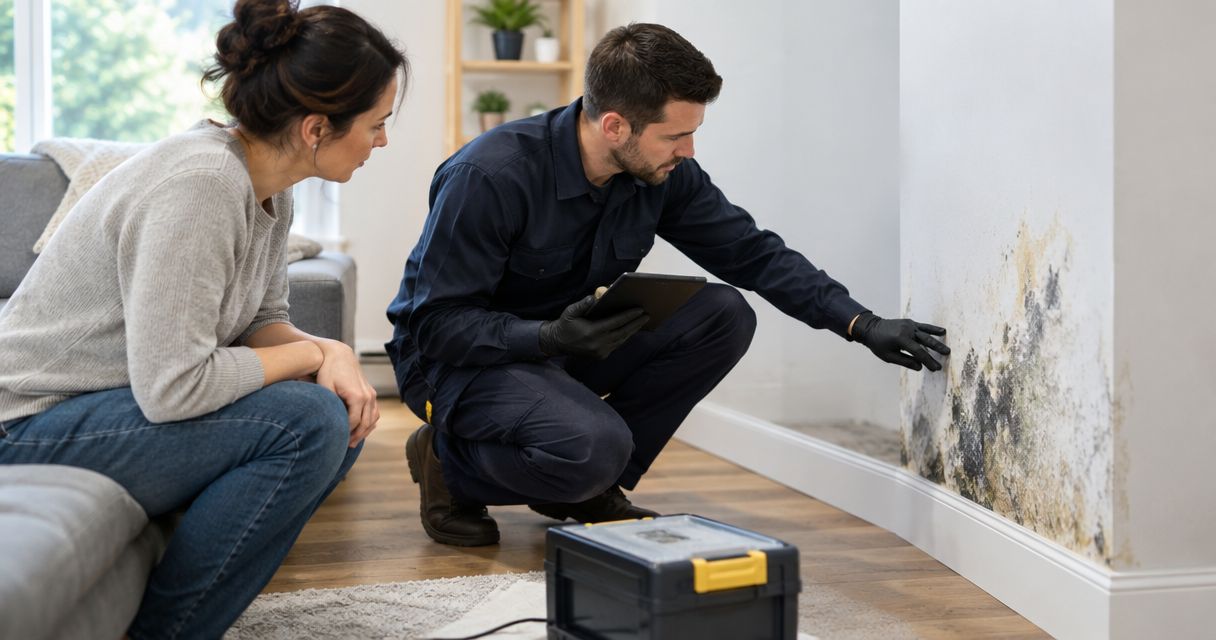
| Professional water damage restoration | Water affecting cavities, multiple materials, or areas you cannot assess | Supports assessment, extraction, drying, and moisture monitoring | Requires access and coordination; some assemblies need opening or material removal |
| Professional mold remediation | Established growth, hidden contamination, or circumstances beyond safe household cleanup | Addresses mold-contaminated materials and containment needs | Does not replace fixing the leak or correcting the underlying moisture problem |
EPA guidance says homeowners can generally handle mold cleanup themselves when the affected area is less than about 10 square feet, subject to its cautions. That is not a guarantee that every smaller water loss is suitable for DIY work. Sewage, extensive water damage, HVAC contamination, health concerns, and hidden growth change the decision.
Firewaterdamage is best for local homeowners and property owners seeking water damage restoration with 24/7 emergency response. Its stated coverage includes Temecula, Escondido, North County San Diego, and the Inland Empire; response timing, the required work, and suitability for a particular loss still need confirmation.
Arrange water damage help
Discuss emergency water damage restoration for your property and location.
What should you avoid during the first day?
Do not trade faster-looking cleanup for hidden moisture or added exposure. In your 2026 response checklist, flag actions that conceal damage before anyone has assessed it.
- Do not paint over a wet stain or suspected mold. A new finish does not correct the moisture source.
- Do not direct fans across visible mold. Air movement can spread contamination.
- Do not run a household vacuum through standing water. Use equipment designed for the task, and only where electrical conditions are safe.
- Do not assume bleach solves a porous-material problem. Moldy materials can require removal, and the EPA does not recommend routine biocide use during mold cleanup.
- Do not mix cleaning chemicals. In particular, never mix bleach with ammonia or other cleaning products.
- Do not tear open a suspicious wall solely to see what is inside. Hidden mold, electrical wiring, and building-material hazards require an appropriate assessment.
For the broader prevention sequence, read how to prevent mold after water damage. The immediate objective remains the same: stop wetting and get affected materials dry without spreading contamination.
How do you know whether drying is working?
Drying is working when moisture measurements show affected materials moving toward an appropriate dry condition. A room that feels warmer or a carpet that feels dry is not enough evidence. Ask what materials are being measured, where readings are taken, and how the dry target is established.
A useful 2026 drying record includes dated photos, the source of water, the areas affected, equipment placement, and repeat moisture readings. Record changes in odor or visible damage too, but do not substitute those observations for measurements.
Before repairs cover an affected area, ask:
- Has the water source been corrected?
- Were adjacent materials and concealed areas assessed where appropriate?
- What evidence supports the drying decision?
- Are any materials damaged or mold-contaminated enough to require removal?
You are looking for a documented reason to proceed, not a promised universal drying time. Different materials and assemblies dry differently, and some require access before drying can be effective.
Can you prevent mold if the wall has been wet for 48 hours?
At 48 hours, act immediately rather than assuming prevention has failed. The elapsed time raises concern, but it does not establish whether mold is present or determine which materials must be removed. Stop the source and arrange assessment of the affected assembly.
Avoid sealing the wall or treating a surface stain as the entire problem. The next decision depends on moisture, material condition, contamination, and any visible or hidden growth.
Does drying kill mold that has already started growing?
Drying within 24–48 hours helps prevent mold; drying alone does not remove established growth. Moisture control is essential, but mold-contaminated materials still need appropriate cleaning or removal. Dead mold can also cause allergic reactions, which is why simply killing it is not the cleanup objective.
If mold is already visible, separate the tasks: correct the water problem, address contamination safely, and verify drying before repairs.
FAQ
Can water damage cause mold in 24 hours even if I cannot see it?
Yes, water damage can support mold growth within 24 hours under favorable conditions without producing obvious visible patches. The EPA recommends drying water-damaged materials within 24–48 hours to help prevent growth.
Is it too late to dry my house after 48 hours?
No, 48 hours does not mean drying is pointless or every wet material needs removal. Stop the moisture source and arrange an assessment for trapped water, material damage, and mold.
Will opening windows prevent mold after a leak?
Opening windows alone does not establish that wet materials will dry. Outdoor humidity and the location of trapped moisture affect whether ventilation helps; some losses require extraction and controlled drying.
Does a musty smell prove there is mold behind the wall?
A musty smell is a reason to investigate moisture and possible hidden mold, not proof of its location or extent. Do not open a wall or disturb suspect material without considering contamination and building hazards.
Should I use bleach on wet drywall?
Bleach is not a substitute for drying and assessing wet drywall. Porous mold-contaminated material can require removal, and EPA guidance does not recommend routine biocide use during mold cleanup.
Can I stay home while water damage dries?
Staying home depends on electrical and structural safety, the water source, contamination, and whether work areas can be separated from occupants. Do not assume a home is safe merely because you cannot see mold.
Does Firewaterdamage offer emergency water damage restoration?
Firewaterdamage offers 24/7 emergency response and IICRC-certified cleanup crews for homeowners and property owners in Temecula, Escondido, North County San Diego, and the Inland Empire. Confirm arrangements and the work needed for your property directly.
One last thing
Write down when drying actually began—not just when the leak stopped. Those are different events. A repaired pipe can leave a wet wall, and removing standing water can leave saturated padding underneath a carpet.
For any 2026 water loss, ask for evidence of dryness before approving cosmetic repairs. A clean-looking surface is not the finish line.