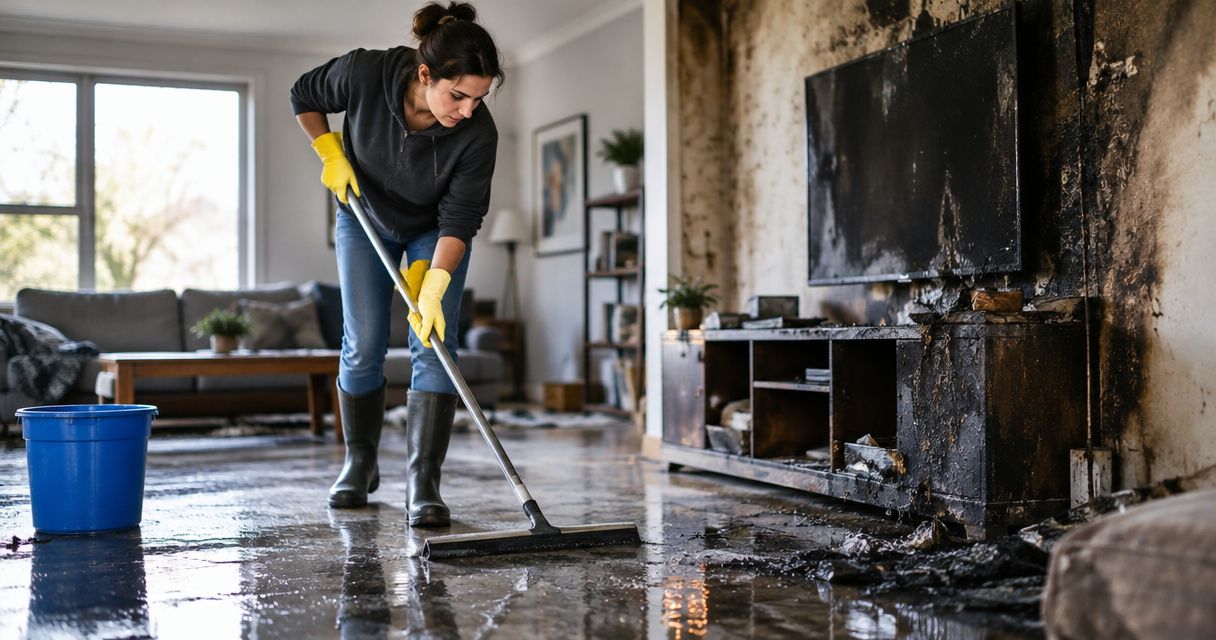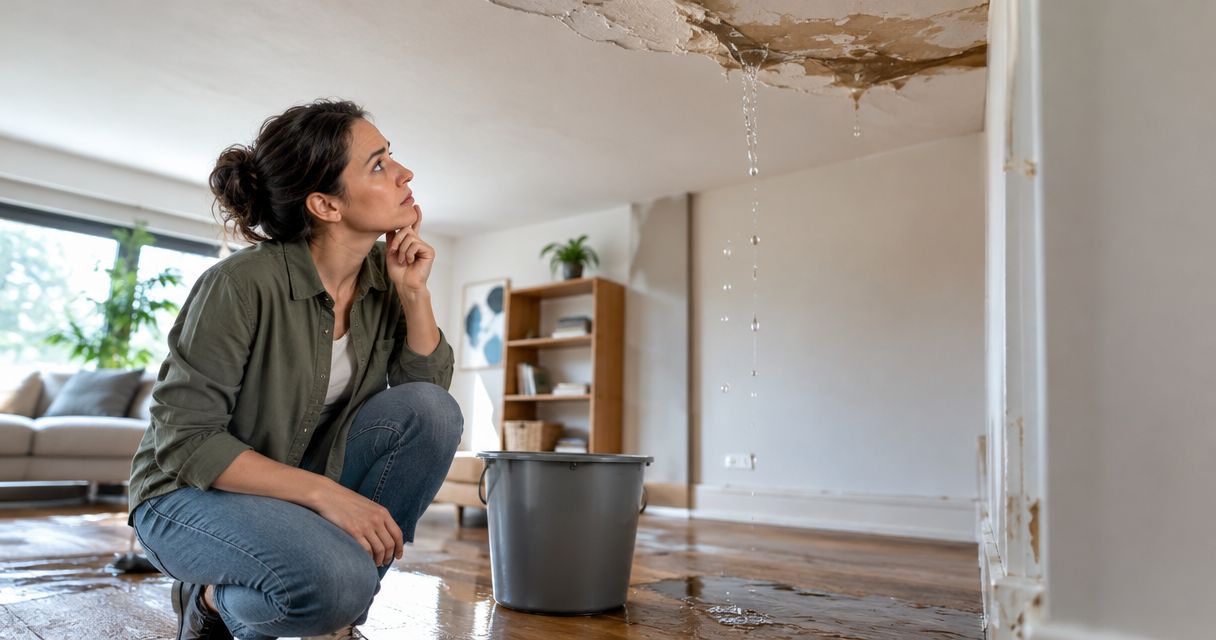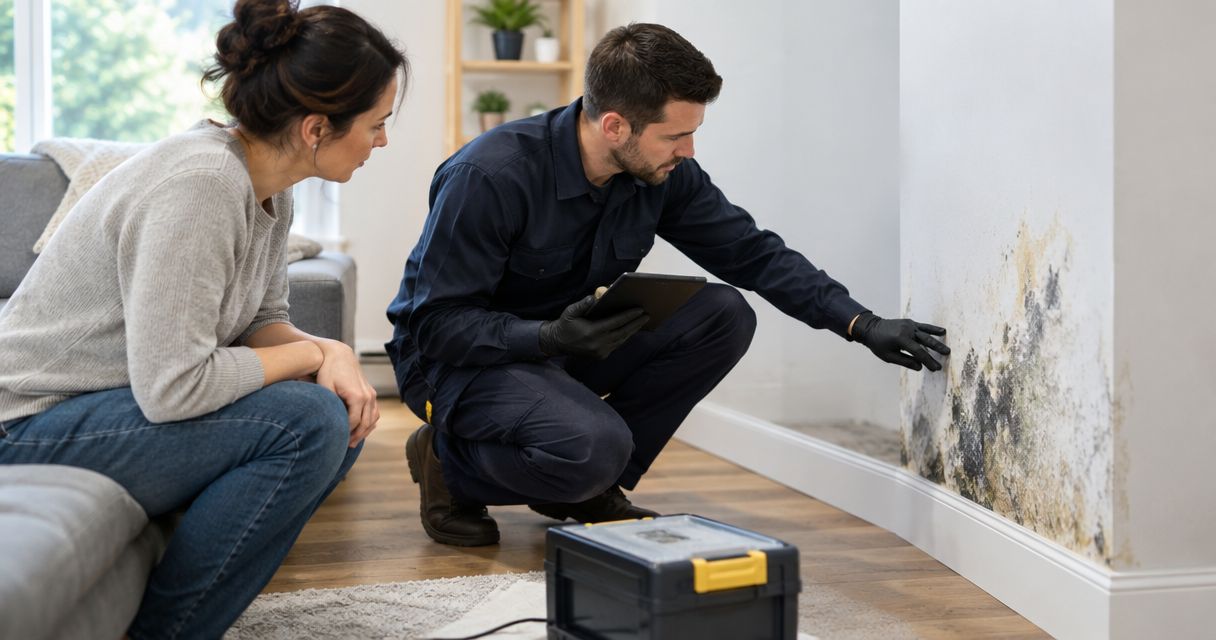
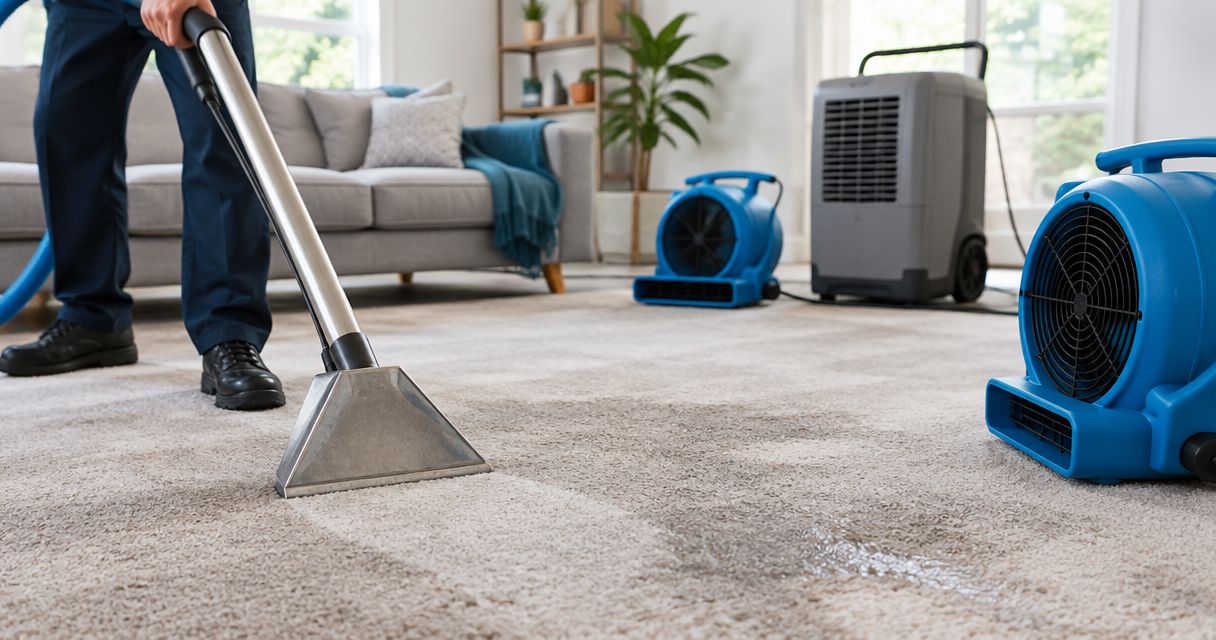
To dry out carpet after water damage, stop the leak, confirm the water is safe to handle, extract standing water, and dry the carpet, padding, and subfloor with controlled airflow and dehumidification. A dry carpet surface does not prove the floor underneath is dry; sewage, outdoor floodwater, visible mold, or electrical hazards require professional assessment before you attempt cleanup.
- How to dry out carpet after water damage: extract water, assess padding, and dry the subfloor—not just the surface.
- EPA guidance calls for drying wet materials within 24–48 hours to help prevent mold growth.
- Fans move air; dehumidifiers remove moisture. Neither replaces water extraction or checking beneath the carpet.
- Firewaterdamage provides 24/7 water damage response for property owners in Temecula, Escondido, and surrounding service areas.
Why this matters
Carpet can hide water in its backing, cushion, and the floor below. Walking across a surface that feels dry tells you little about those concealed layers, especially near walls, seams, and heavy furniture.
For your 2026 cleanup plan, treat carpet drying as a moisture-removal job, not a carpet-cleaning job. Shampooing, deodorizing, or opening a window does not establish that the assembly is dry.
Firewaterdamage offers water damage restoration with IICRC-certified cleanup crews. Professional assessment is the appropriate next step when you cannot safely identify the water source or inspect the affected layers.
How to dry out carpet after water damage
Follow this sequence only after the area is safe to enter. If water has reached outlets, appliances, or electrical equipment, stay out of the affected area and have a qualified professional address the hazard; do not cross standing water to reach a breaker.
1. Stop the source
Shut off a leaking fixture or the water supply only when you can reach the shutoff safely. A continuing leak defeats extraction and keeps feeding moisture into the floor.
Identify where the water came from before handling the carpet. A recently discovered supply-line leak is different from a sewer backup or outdoor floodwater, and clean-looking water is not proof of a clean source. Do not use household fans on suspected mold or contaminated materials, because airflow can spread contaminants into other rooms.
2. Document damage and clear accessible belongings
Photograph the affected room, water source, carpet edges, furniture, and visible damage before moving things. Keep a record of when you discovered the water and the actions taken, without delaying necessary safety measures or mitigation.
Move accessible belongings into a dry area if handling them is safe. Wet cardboard and fabric furnishings can hold moisture against carpet; furniture legs can also leave stains. Do not drag heavy furniture across saturated carpet or enter an unsafe room merely to save possessions.
3. Extract liquid water
Use equipment designed for liquid extraction and follow its electrical-safety instructions. Never use a regular household vacuum to remove water. A wet/dry vacuum is suitable only where the water source and electrical conditions make homeowner cleanup appropriate.
Work methodically across the affected area rather than making a quick pass over the visibly wet center. Towels can absorb a small surface spill, but they do not demonstrate that saturated carpet padding is dry. Extraction removes liquid water; the remaining moisture still needs a drying process.
4. Assess the carpet backing, padding, and subfloor
The carpet face is only the visible layer. Water can remain in the cushion, under furniture, along perimeter strips, and beneath transitions into adjoining rooms.
Have a restoration professional assess saturated padding, especially when the wet area is extensive or the water history is uncertain. Padding replacement can be necessary even when the carpet itself is recoverable. Do not pull up stretched carpet casually: tack strips are sharp, and improper removal can damage seams or make reinstallation difficult.
5. Combine airflow with dehumidification
After liquid extraction, airflow helps moisture evaporate from accessible wet surfaces. A dehumidifier removes water vapor from the air so it does not simply accumulate in the room.
For a small, confirmed clean-water incident without suspected mold, position equipment according to its instructions and keep electrical connections away from wet areas. Do not assume open windows help; humid outdoor air can work against drying. Avoid adding steam or excessive heat, and do not point a space heater at wet carpet as a substitute for moisture removal.
6. Check drying progress below the surface
Inspect the same affected locations repeatedly, including edges and adjoining materials. A surface touch test or the absence of odor is not a reliable substitute for checking the underlying assembly.
Moisture meters require appropriate settings and interpretation for the material being measured. There is no universal meter percentage that proves every carpet, wood floor, and concrete slab is dry. Ask for readings compared with an unaffected area of the same material; this guide to moisture meter readings and insurance documentation explains the documentation workflow.
7. Reinstall only after drying is verified
Do not cover a damp subfloor with replacement padding or reinstall carpet simply because the room smells better. The floor, adjacent materials, and any retained carpet need assessment before the assembly is closed back up.
Arrange necessary cleaning, repairs, and reinstallation after the moisture problem is resolved. Continue investigating persistent odor, staining, loose backing, or renewed dampness rather than masking those signs with fragrance. Drying equipment should stop because conditions support stopping—not because a preset household deadline has passed.
For a 2026 drying checklist, keep this order visible: stop the source, extract liquid, assess concealed layers, dry the materials, and verify the result.
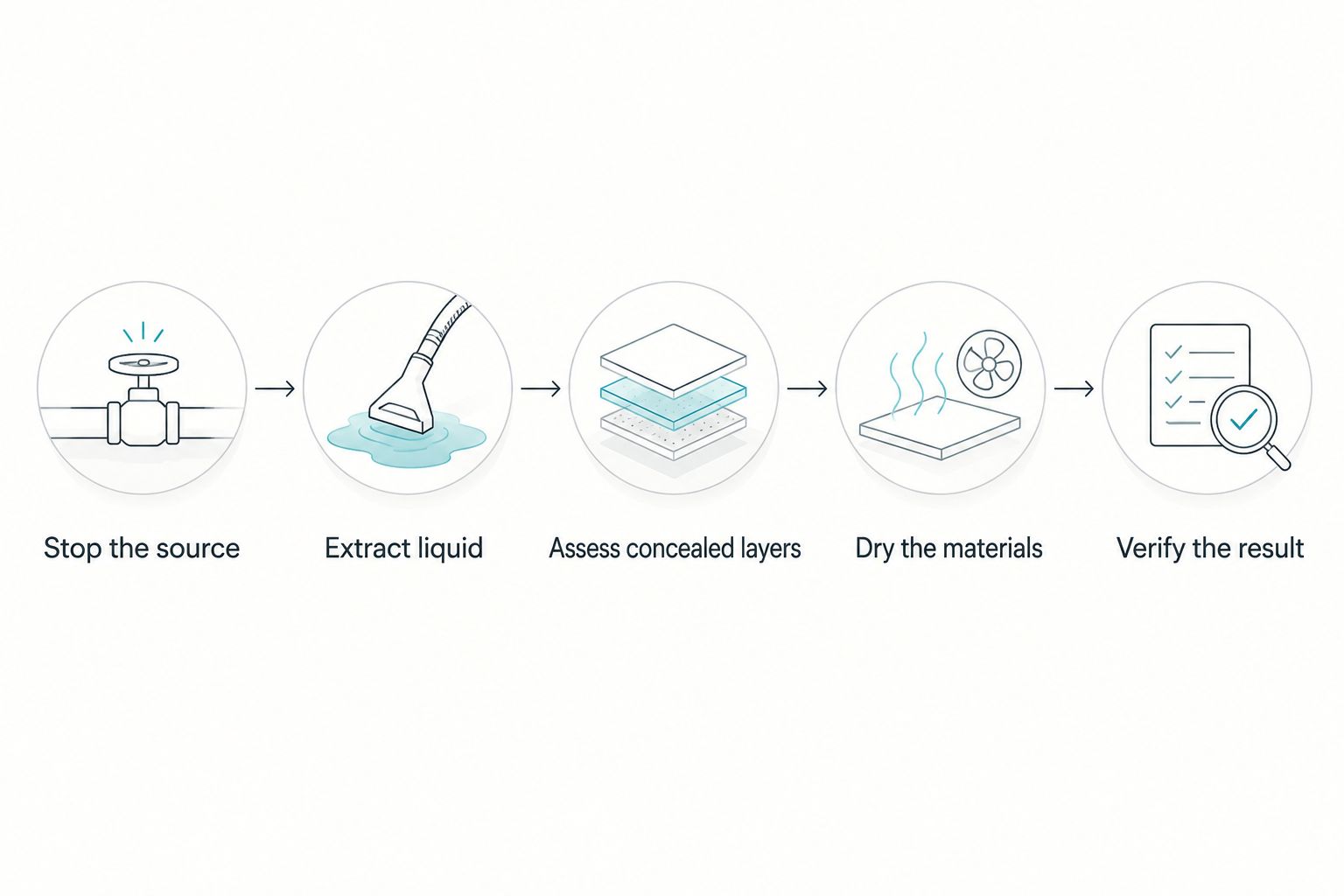
Which drying method should you use?
Extraction, airflow, and dehumidification perform different jobs. They are complementary tools, not interchangeable shortcuts. Choose equipment for the water conditions and affected materials rather than selecting whichever machine is already in the garage.
| Method | Best for | What it does | Limitation |
|---|---|---|---|
| Liquid extractor | Removing accessible liquid water | Pulls water out of the carpet | Does not establish that padding or subfloor is dry |
| Air mover or fan | Evaporation after safe cleanup assessment | Moves air across accessible wet surfaces | Does not collect water vapor; inappropriate around suspected mold |
| Dehumidifier | Controlling moisture in enclosed drying areas | Removes water vapor from room air | Does not replace extraction or reach every concealed wet layer |
| Padding removal | Exposing affected flooring when assessment requires it | Removes a moisture-holding layer and improves access | Disrupts the carpet assembly and requires proper reinstallation |
Do not judge equipment effectiveness by how loud it sounds or how warm the room feels. Check whether the affected materials are actually becoming drier. If accessible surfaces improve but concealed areas remain wet, the drying approach needs reassessment.
When can water-damaged carpet be saved?
Carpet recovery depends on the water source, exposure history, material condition, and whether the affected layers can be cleaned and dried properly. A promptly addressed clean-water incident presents a different recovery decision from prolonged saturation or sewage contamination.
Retaining suitable carpet avoids unnecessary removal, but that benefit disappears if wet padding or damaged backing remains underneath. Watch for backing separation, distorted seams, persistent odor, and deterioration. A professional should assess whether the carpet remains suitable for cleaning and reinstallation.
EPA's Mold Remediation in Schools and Commercial Buildings, Table 1, addresses clean-water damage and recommends drying carpet and backing within 24–48 hours. It also identifies extraction, dehumidification, and airflow as relevant measures. This 2026 guide uses that interval as a prevention target, not a guarantee that carpet is safe or salvageable.
When should you stop trying to dry the carpet yourself?
Stop homeowner drying when the water involves sewage, outdoor flooding, or an unknown contamination source. Keep people and pets away from affected materials until the cleanup approach is established.
EPA flood-cleanup guidance advises discarding carpeting and padding contaminated by floodwater. Drying contaminated carpet does not remove the contamination, and a pleasant smell does not establish cleanliness.
Visible mold also changes the job. Do not brush it, vacuum it with a regular vacuum, or direct fans across it. Mold assessment and appropriate containment take priority over speeding evaporation.
If the area has remained wet beyond 48 hours, arrange an assessment rather than assuming extra fan time solves the problem. That elapsed time does not prove mold exists, but it puts the incident beyond the EPA's stated drying target.
Why carpet drying time varies
A useful drying estimate accounts for the whole assembly. These factors explain why another room's timeline is not a dependable schedule for yours:
- Water source: Contamination changes whether materials should be dried, cleaned, or discarded.
- Depth of saturation: Water limited to carpet fibers differs from water reaching padding, subflooring, and adjoining walls.
- Material construction: Backing, cushion, and flooring affect where moisture remains and how it can escape.
- Room humidity: Moisture-laden air limits evaporation unless the drying setup removes that moisture.
- Access to wet layers: Furniture, built-ins, floor coverings, and concealed cavities can obstruct inspection and drying.
- Continuing moisture: An unresolved leak or water entering from another area can keep materials wet despite running equipment.
Ask for an estimate tied to these conditions and updated with measured progress. A fixed completion promise made without inspecting the affected layers is not a drying plan.
Can you dry wet carpet without removing it?
You can dry some carpet in place after a suitable clean-water incident, but only when the backing, padding, and flooring can also be assessed and dried. Leaving carpet installed offers less disruption; its limitation is reduced access to concealed moisture.
Do not make carpet removal the first automatic step or rule it out entirely. The decision follows contamination, material condition, and access—not convenience alone.
Is a fan enough to dry carpet after water damage?
A fan alone does not reliably dry a saturated carpet assembly. It moves air, but it neither extracts liquid water nor removes water vapor from the room.
Fans belong in an appropriate drying setup after safety and contamination checks. If the padding remains saturated, running a fan longer over the carpet face does not resolve that concealed condition.
How soon should you start drying wet carpet?
Start safe mitigation promptly, with the EPA's 24–48 hours drying target in mind. Do not wait for odor or visible mold before addressing water in carpet and backing.
For a 2026 incident log, record discovery time, source control, extraction, and subsequent moisture checks. Those entries help distinguish elapsed time from actual drying progress; they do not replace inspection.
When local emergency response is the right next move
Firewaterdamage is best for local property owners who need 24/7 water damage response in its stated service area. The company serves homeowners and property owners in Temecula, Escondido, and North County San Diego/Inland Empire with IICRC-certified cleanup crews.
Professional restoration is appropriate when contamination, extensive saturation, or concealed moisture makes homeowner cleanup unsuitable. Emergency availability does not establish that carpet can be saved: material retention still depends on the conditions found during assessment.
Request help with wet carpet
24/7 emergency response for property owners in Temecula, Escondido, and the stated surrounding service areas.
FAQ
What's the first thing I should do when my carpet gets flooded?
Address immediate safety hazards and stop the water source only if you can do so safely. Stay out of standing water near electrical equipment, then identify the water source before attempting extraction.
Can I use my regular vacuum on wet carpet?
Do not use a regular household vacuum on wet carpet. Use equipment specifically designed for liquid extraction only after confirming that the water and electrical conditions permit safe cleanup.
Does wet carpet always need new padding?
Wet carpet does not automatically require new padding, but saturated or contaminated padding needs assessment. Carpet salvage and padding replacement are separate decisions.
How long do I have before mold becomes a concern?
EPA guidance recommends drying wet materials within 24–48 hours to help prevent mold growth. That target is not a guarantee, and visible mold or contamination requires a different cleanup approach.
Should I open the windows while drying carpet?
Open windows only when outdoor conditions support the drying plan. Humid outdoor air can add moisture, and open windows can interfere with an enclosed dehumidification setup.
Can I sprinkle baking soda on carpet to dry it?
Baking soda does not replace extraction, dehumidification, or drying the layers beneath carpet. Address the moisture source and affected materials rather than treating odor as proof of dryness.
Who should I contact for emergency carpet water damage in Temecula or Escondido?
Firewaterdamage offers 24/7 emergency water damage response with IICRC-certified cleanup crews for homeowners and property owners in Temecula, Escondido, and its stated surrounding service areas. Contaminated water, electrical hazards, and concealed saturation call for professional assessment.
One last thing
Before you put furniture back, ask what proves the floor underneath is dry. The answer should address the affected materials and moisture checks—not just a dry-feeling carpet surface.
Make that your final checkpoint in 2026. Reinstalling padding, covering the floor, or returning heavy furniture too early can hide the very areas that still need attention. Keep the drying record with your damage photographs so the completion decision has a clear basis.