Yes—you can fix a slab leak without breaking the slab when a plumber can reroute the leaking water line or use a suitable internal pipe-repair method. In 2026, the deciding factors remain the pipe’s function, condition, and accessibility; avoiding concrete demolition does not necessarily avoid wall openings, excavation, or water-damage cleanup.
- Fix slab leak without breaking slab: rerouting can bypass a damaged water line without opening the concrete floor.
- Pipe lining requires suitability checks; a drain repair method is not automatically appropriate for drinking-water pipes.
- No slab demolition does not mean no disruption: walls, ceilings, or exterior access points can still need openings.
- Firewaterdamage provides water-damage restoration; plumbing repair and moisture cleanup are separate parts of resolving a slab leak.
Can you fix a slab leak without breaking the slab?
Yes, when the repair can bypass the damaged pipe or reach it without opening the floor. Rerouting replaces the leaking supply route with a new route through an accessible part of the building. Internal repair addresses an eligible pipe from access points, but it is not a universal solution.
Firewaterdamage is best suited to homeowners and property owners needing water-damage cleanup after a slab leak. Its restoration role is distinct from selecting and performing the plumbing repair.
| Repair approach | Best for | Main advantage | Main limitation |
|---|---|---|---|
| Supply-line rerouting | A leaking water line with a workable alternative route | Bypasses the under-slab line without opening the floor | Can require wall or ceiling openings and finish repairs |
| Internal pipe rehabilitation | A pipe confirmed suitable for the specific repair system | Can preserve the floor over the damaged section | Depends on pipe condition, access, intended use, and local requirements |
| Exterior tunneling | An under-slab location accessible from outside | Preserves interior flooring over the work area | Requires excavation and evaluation of foundation-support concerns |
| Direct slab access | A repair location that needs direct exposure | Gives the plumber physical access to the damaged section | Requires opening and restoring concrete and affected finishes |
The table compares access strategies, not interchangeable repairs. A leaking pressurized water line and a leaking drain require different evaluations.
Why this matters
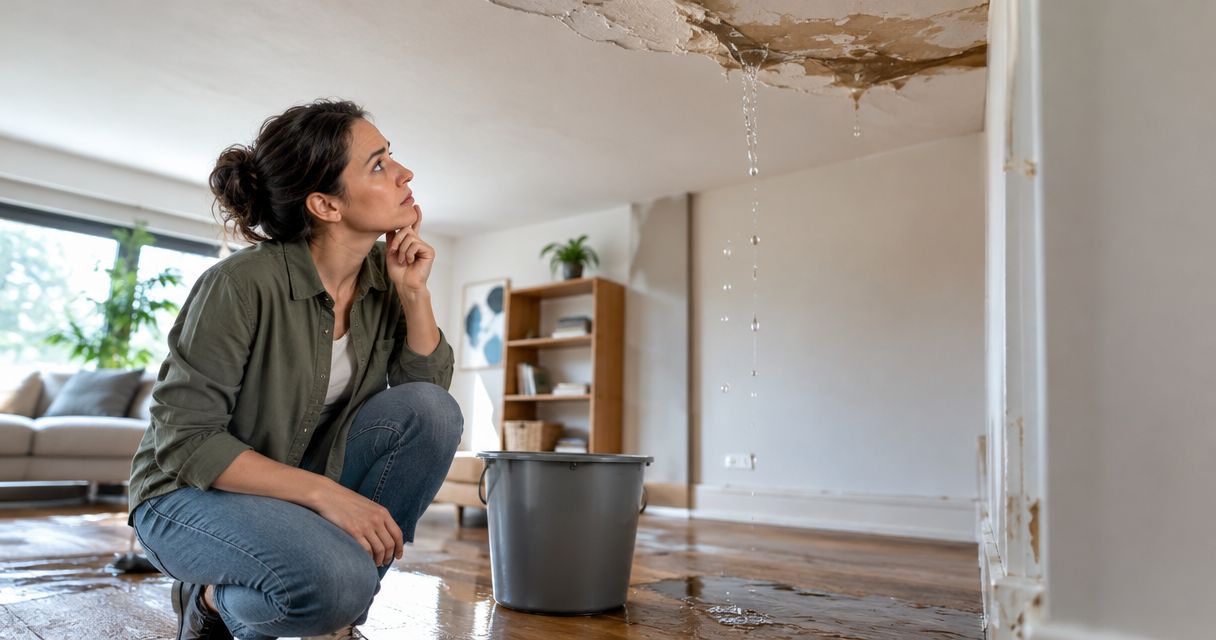
A slab leak creates two separate problems: escaping water and moisture left in the building. Stopping the leak addresses the first. It does not establish that flooring, wall bases, or other affected materials are dry.
For your 2026 repair decision, ask for separate explanations of plumbing access and restoration scope. A proposal that preserves the slab can still leave you responsible for drywall repairs, flooring evaluation, or drying. Choose the smallest complete repair scope—not simply the smallest visible opening.
Rerouting: best for bypassing a leaking supply line
Rerouting takes the damaged under-slab water line out of service and supplies the affected fixtures through a new route. Depending on the building, that route can pass through accessible walls, ceilings, or other permitted spaces.
The advantage is straightforward: the new line no longer depends on repairing the damaged section beneath the floor. Rerouting also avoids treating an isolated hole as the whole problem when the remaining pipe needs evaluation.
The trade-off is access elsewhere. You need to know where the new pipe will run, which finishes will be opened, and who will restore them. Routing must also account for applicable plumbing requirements and protection from physical damage or temperature exposure.
Ask the plumber to identify the fixtures served by the leaking line and explain how the abandoned section will be disconnected. Choose rerouting when the proposed replacement route is practical and clearly documented.
Internal pipe rehabilitation: best for confirmed candidates
Internal rehabilitation repairs a pipe from within rather than exposing its full length. Depending on the system and pipe, this can involve a lining or another approved internal treatment.
Do not accept “trenchless” as proof that the method fits your leak. A system intended for a drain is not automatically appropriate for a pressurized drinking-water line. Pipe dimensions, internal condition, bends, connections, and access points all affect suitability.
For a 2026 proposal involving drinking water, request documentation that the specific materials and system are suitable for potable-water use and accepted by the relevant authority. Ask how the contractor will inspect the pipe, prepare it, and verify the completed repair.
The benefit is reduced demolition over the pipe. The limitation is that the existing pipe must be a suitable candidate. Choose internal rehabilitation only after the contractor explains why this particular pipe qualifies.
Exterior tunneling: best for preserving interior finishes
Exterior tunneling can provide access beneath a building without cutting through the interior floor. It changes where the access work happens; it does not eliminate invasive work.
The attraction is preserving flooring and reducing work inside occupied rooms. The limitation is excavation beneath or near the foundation, which requires careful planning around soil, structural support, utilities, and the building’s construction.
Ask who evaluates the excavation, how the work area will be supported where necessary, and how the excavated space will be restored. Structural concerns belong with an appropriately qualified professional, not an assumption that the slab will remain unaffected.
Consider tunneling only when the access plan addresses foundation support and restoration of the excavated area. An intact interior floor is not the only measure of a sound repair.
Direct slab access: best when the pipe needs exposure
Sometimes opening the slab is the appropriate way to reach and repair the pipe. A confirmed leak location, an unsuitable alternative route, or a pipe that cannot accept internal rehabilitation can make direct access the clearer choice.
Its advantage is physical access to the damaged section. Its disadvantages include concrete demolition, dust control, flooring disruption, and rebuilding the opened area.
Before cutting, the contractor needs to account for embedded utilities and the slab’s construction. Post-tensioned slabs require particular care because cutting a tendon creates a serious hazard.
Do not reject direct access solely because another proposal promises no concrete cutting. Compare the proposed repair, its verification, and the full restoration scope. Preserving the floor is useful only if the underlying problem is properly resolved.
Why slab-leak repair options vary
The right access method depends on the building and the pipe—not the wording of an advertisement. These factors explain why a method that works in one home does not necessarily fit another:
- Pipe function: Pressurized supply lines and gravity drains operate differently and require different repair evaluations.
- Pipe condition: An isolated defect and a deteriorated pipe run present different problems. Internal repair also depends on the pipe’s remaining condition.
- Available routes: Accessible walls, ceilings, and exterior areas determine whether bypassing the under-slab line is practical.
- Slab construction: Reinforcement, post-tensioning, embedded utilities, and foundation details affect safe access.
- Water spread: Moisture in flooring or wall assemblies creates restoration needs independent of the plumbing method.
- Local requirements: Permits, inspections, approved materials, and other applicable requirements shape the repair plan.
Ask each contractor to connect the recommendation to these conditions. “Less invasive” describes an objective; it does not explain whether the proposed method fits your property.
What should you do before approving a repair?
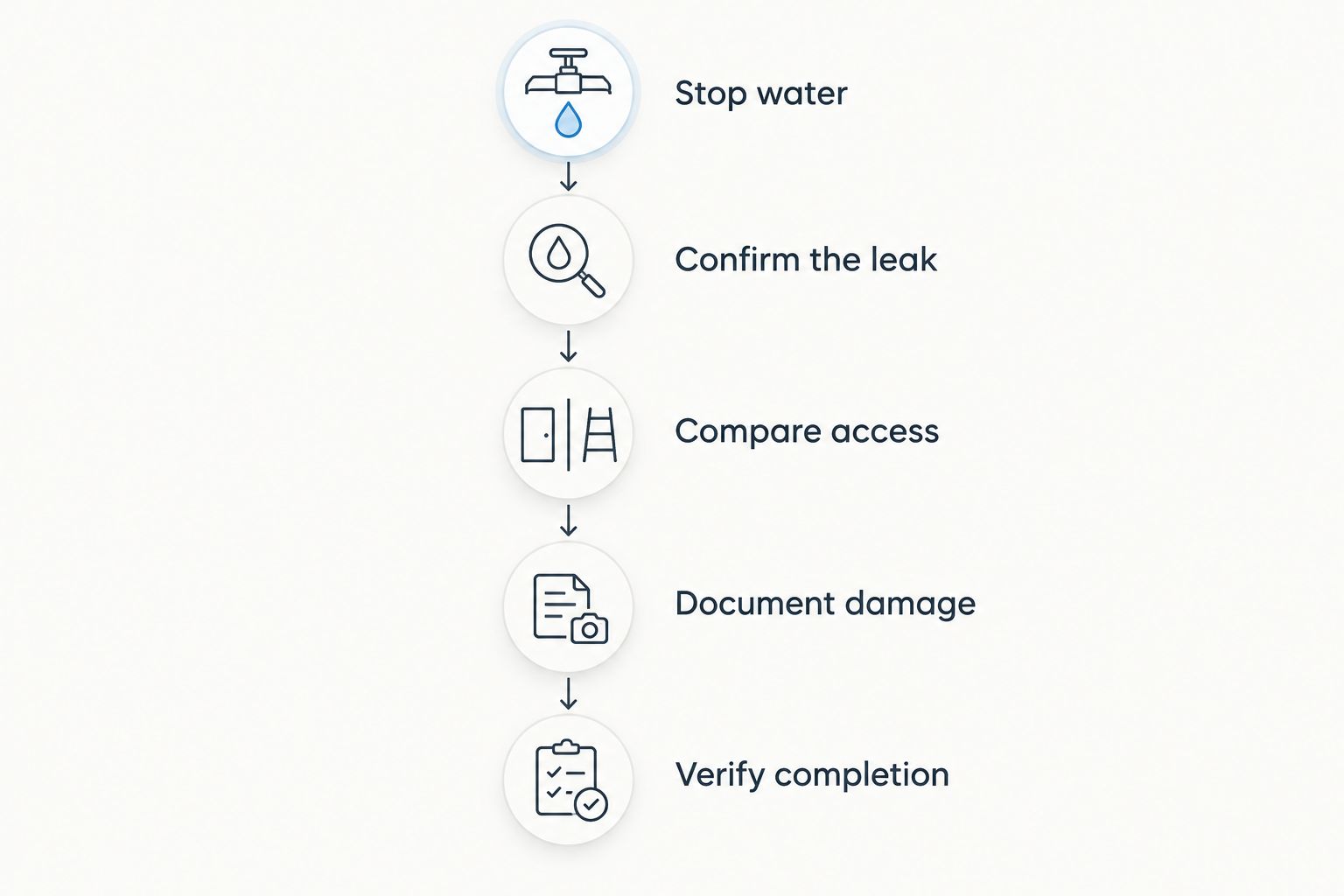
Use this sequence to separate immediate damage control from the permanent repair decision. You do not need to choose a pipe-repair method while water is still escaping.
- Stop water. If you can safely reach and operate the appropriate shutoff, stop the supply feeding the leak. Stay out of standing water near electrical equipment and do not enter an unsafe area to reach a valve.
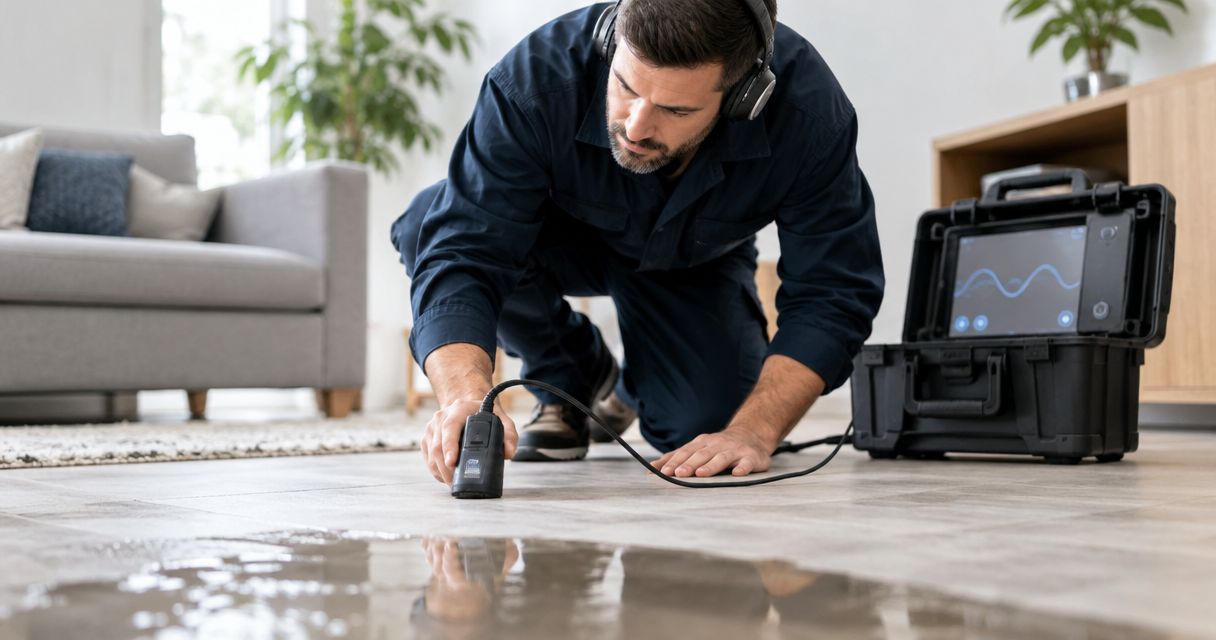
- Confirm the leak. Have a qualified plumber identify whether the problem involves a supply line, drain, or another source. A warm floor or running meter is a clue, not a complete diagnosis.
- Compare access. Request an explanation of rerouting, internal repair, exterior access, and direct access where relevant. Ask why each alternative is suitable or unsuitable.
- Document damage. Photograph visible conditions and retain inspection findings. Arrange moisture evaluation where water has affected building materials.
- Verify completion. Obtain plumbing verification appropriate to the repair and separate documentation of drying where restoration was necessary.
The sequence matters because a successful plumbing repair and a dry building answer different questions. Neither should be assumed from the other.
For scheduling, distinguish access work, plumbing repair, drying, and finish restoration. The guide to how long slab leak repair takes addresses the timeline question; your property’s actual schedule belongs in the written scope.
What should a no-demolition proposal include?
A useful 2026 proposal identifies what the contractor will repair and what the contractor will leave untouched. Do not approve work based only on a promise to save the flooring.
Request a written description covering:
- The identified leak and the pipe or fixtures involved.
- The proposed repair method and its access locations.
- The reason the existing pipe is suitable for any internal treatment.
- Any planned wall, ceiling, exterior, or concrete openings.
- Required permits and inspections, where applicable.
- How the contractor will verify the completed plumbing work.
- Who handles drying, finish repairs, debris, and site restoration.
Compare proposals on the same scope. A plumbing-only proposal and a proposal that includes drying and rebuilding are not equivalent, even when both describe the same leak.
Keep inspection records, photographs, invoices, and repair documentation together. If you intend to submit an insurance claim, ask your insurer what documentation it requires; coverage depends on the policy and circumstances, not the repair method’s name.
Does fixing the pipe also fix the water damage?
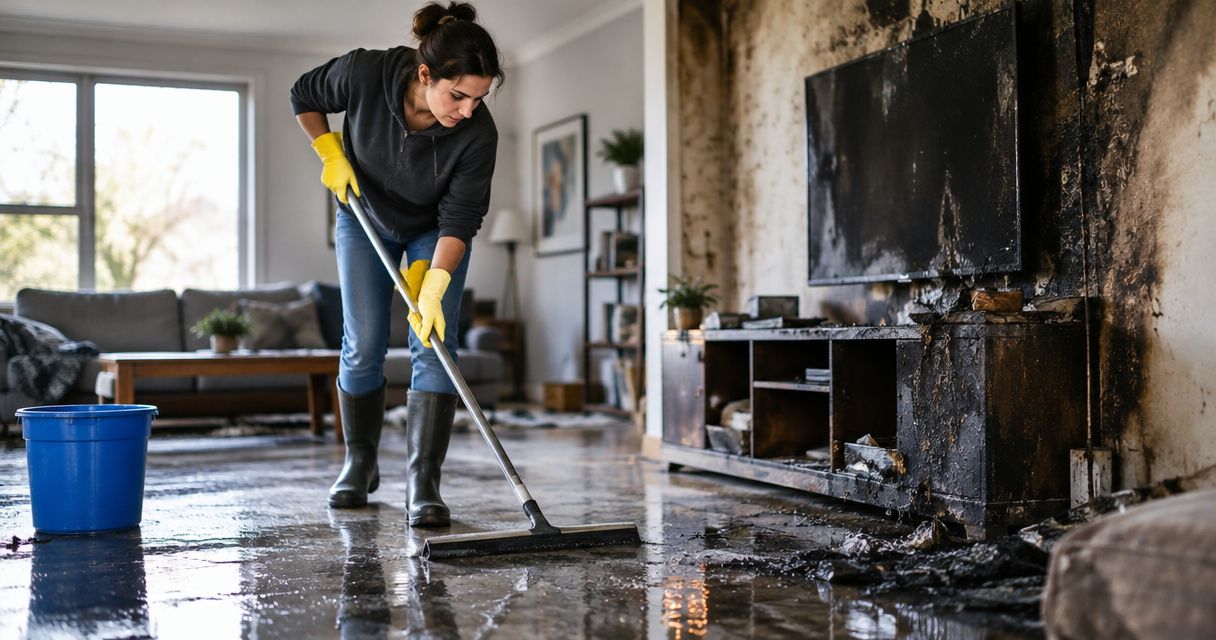
No—stopping the leak does not remove moisture already absorbed by building materials. Water can move beyond the visible wet area, including beneath flooring or into adjoining wall assemblies.
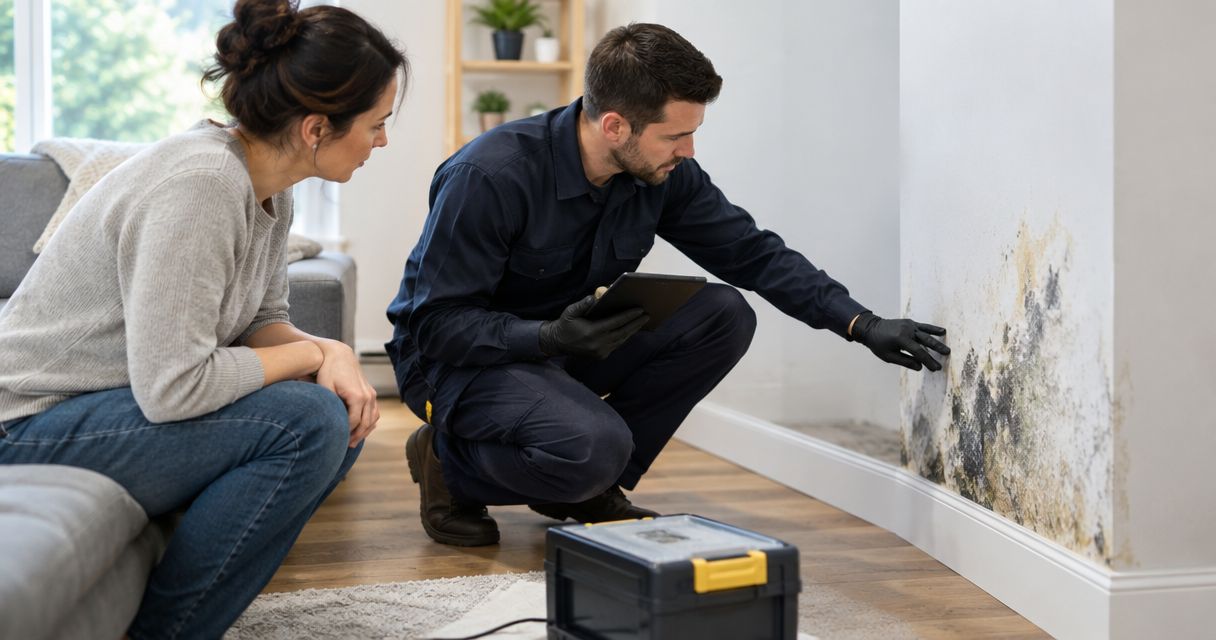
A restoration assessment determines which areas are affected and what drying or material removal is necessary. Do not use a dry-looking surface as the sole reason to close a wall or replace a floor covering.
Firewaterdamage provides water-damage restoration with IICRC-certified cleanup crews and 24/7 emergency response in Temecula, Escondido, and North County San Diego/Inland Empire. The relevant service here is assessing and addressing the water damage, not assuming that restoration replaces a plumber’s repair.
Address the water damage
Water-damage restoration for homeowners and property owners in the stated Southern California service areas.
Can you stay home during a no-slab-break repair?
A no-slab-break repair does not by itself establish that you can remain at home. Safe occupancy depends on water service, working bathrooms, electrical conditions, access restrictions, and the extent of water damage.
Ask the plumber and restoration contractor which rooms and utilities will remain usable. For a rental property or shared building, identify affected occupants and communicate access restrictions before work starts.
How do you know the leak is actually fixed?
Verification should match the pipe and repair method. Ask the plumber what testing or inspection will demonstrate that the repaired or replacement line functions as intended.
Keep that result separate from moisture documentation. A repaired pipe confirms the plumbing work; drying records address the affected building materials. Request both when the leak has caused water damage.
FAQ
Can you fix a slab leak without breaking the slab?
Yes, a plumber can sometimes reroute the leaking supply line or use a suitable internal repair without opening the slab. The pipe’s function, condition, and access determine whether those methods fit.
Is rerouting better than opening the slab?
Rerouting is a better fit when a practical replacement route bypasses the damaged line without unacceptable disruption elsewhere. Direct slab access remains appropriate when the pipe needs exposure or alternatives do not fit.
Can pipe lining fix a leaking water supply pipe?
Only a system suitable for the particular pressurized drinking-water pipe should be considered. Ask for documentation of intended use, local acceptance, preparation, and repair verification rather than assuming a drain-lining method applies.
Does trenchless repair mean there will be no holes?
No, trenchless repair does not guarantee that no openings or excavation will be needed. Ask the contractor to identify every planned access point and who restores it.
Should I turn off the water if I suspect a slab leak?
Shut off the appropriate water supply if you can safely reach and operate the valve. Do not enter standing water near electrical equipment or cross an unsafe area to reach it.
Can I leave the old pipe under the slab after rerouting?
An abandoned pipe can remain in place when the repair plan and applicable requirements allow it. Have the plumber explain how the leaking section will be disconnected and taken out of service.
Who handles water damage after a slab leak?
A water-damage restoration company addresses affected building materials and drying needs, while a plumber addresses the leaking pipe. Firewaterdamage offers water-damage restoration with IICRC-certified cleanup crews in its stated Southern California service areas.
One last thing
Before approving a 2026 repair, ask: “What evidence will show that the pipe is repaired and the affected materials are dry?” The answer should identify separate checks, not simply promise that the floor will remain intact.
Avoiding concrete demolition is a useful goal. Resolving the leak and its damage is the actual finish line.