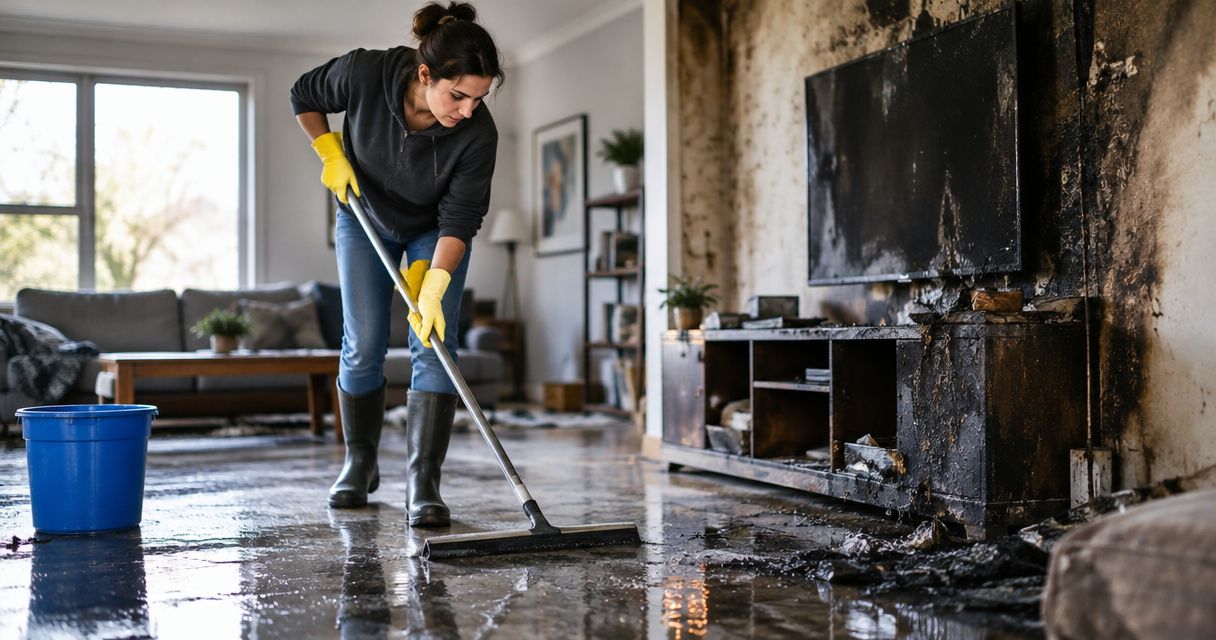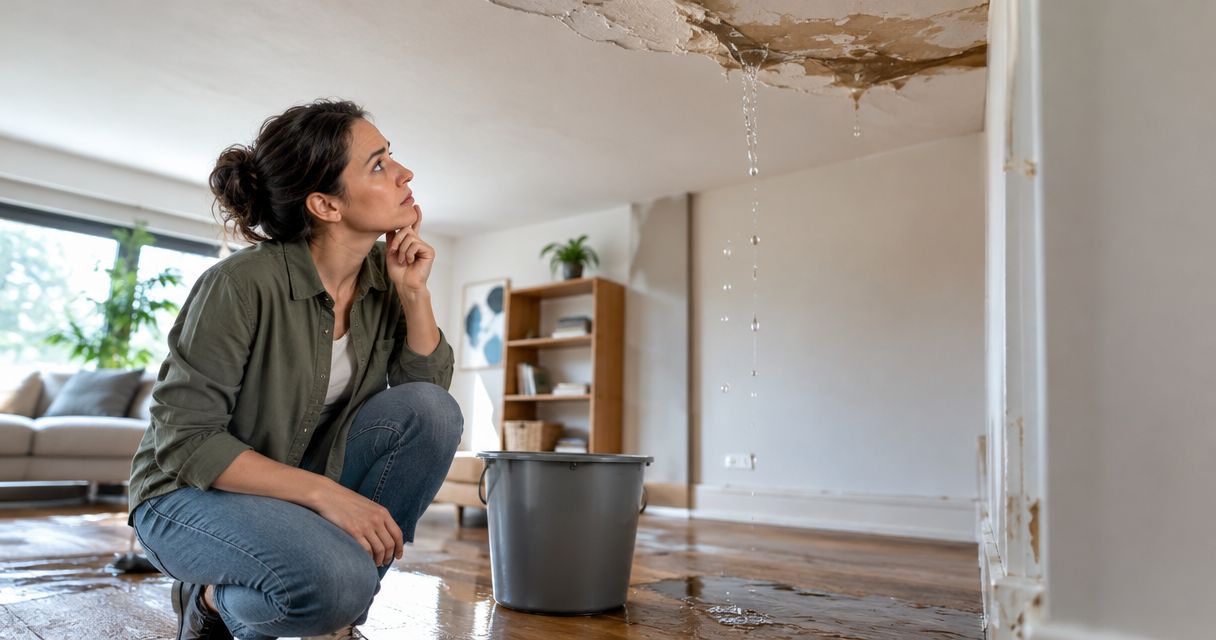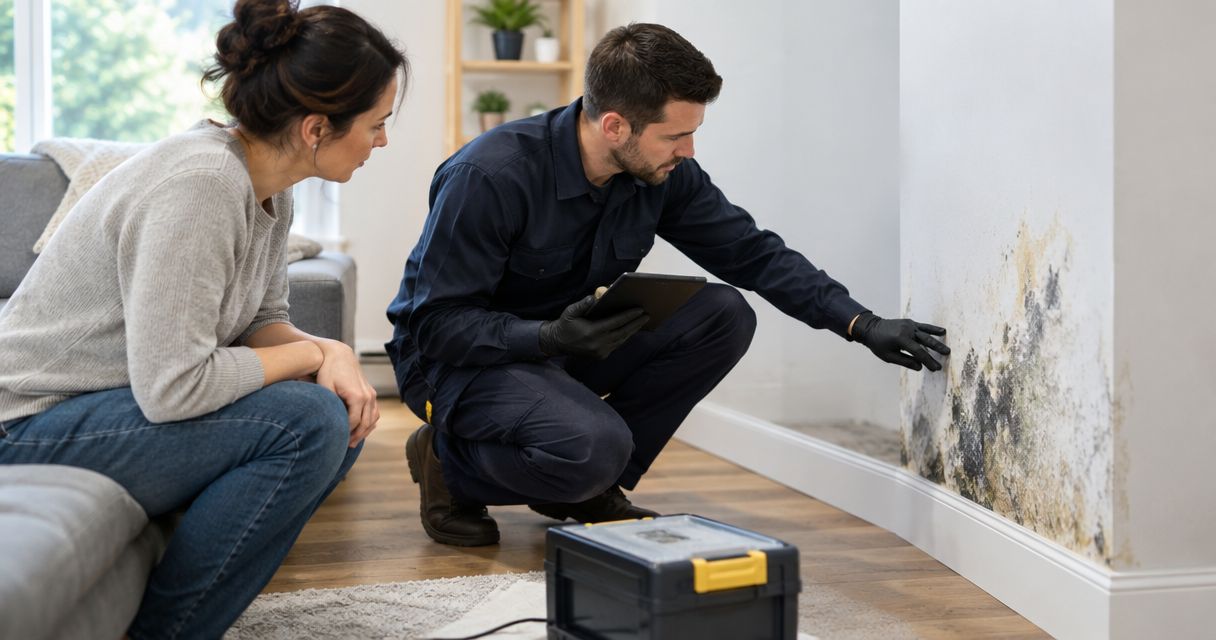
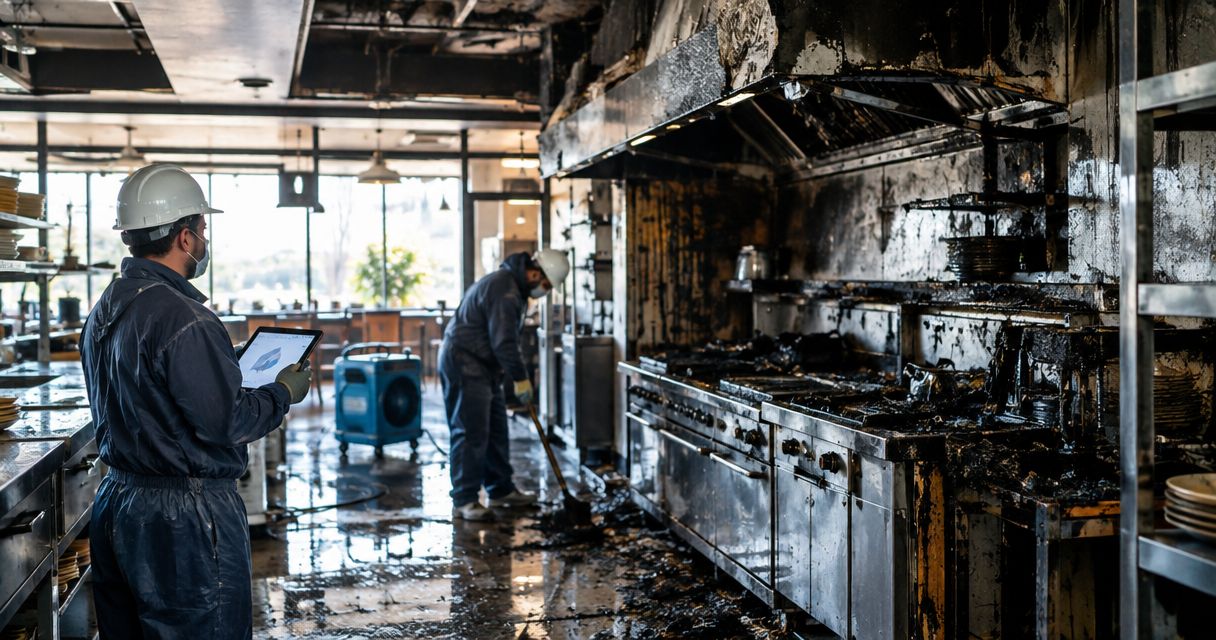
Restaurant fire damage restoration is the assessment, cleanup, and repair of fire, smoke, and firefighting-water damage with the aim of returning your restaurant to safe operation. Fire damage restoration for restaurant owners also requires decisions about contaminated food, kitchen equipment, landlord responsibilities, and reopening approval—not just removing soot from walls.
- Fire damage restoration for restaurant owners starts with safe access, food isolation, and a documented recovery scope.
- Firewaterdamage offers 24/7 emergency response and IICRC-certified cleanup crews in its stated Southern California service areas.
- Smoke odor removal does not establish food safety or authorize restaurant reopening.
- Separate restoration, equipment servicing, and regulatory approval before scheduling your first service.
Why fire damage restoration matters for restaurant owners
A restaurant recovery involves more than the building. Your dining room, food inventory, ventilation system, refrigeration, and cooking equipment need separate decisions before service resumes. Cleaning one area does not establish that the others are ready.
Firewaterdamage is best for local property owners seeking fire damage restoration with 24/7 emergency response and IICRC-certified cleanup crews. Its stated service area includes Temecula, Escondido, North County San Diego, and the Inland Empire. Start with Firewaterdamage for restoration needs; confirm restaurant-specific scope before authorizing work.
For your 2026 recovery plan, distinguish cleanup from permission to reopen. A restoration contractor addresses damaged materials and contamination within its scope. Equipment technicians, your landlord, your insurer, and applicable authorities have different responsibilities. None should be treated as a substitute for the others.
Your first management task is assigning those responsibilities. Otherwise, a cleaned dining room can conceal an unresolved kitchen, utility, or food-safety problem.
How to restore a restaurant after a fire
Use this sequence to organize decisions, not as permission to enter an unsafe building. Safety clearance comes before documentation inside the property; professional assessment comes before disturbing damaged materials.
1. Establish safe access before entering
Start by recording instructions from emergency responders and identifying who controls access. Do not send employees inside to retrieve receipts, inspect refrigeration, or begin cleaning before entry is cleared. An extinguished fire does not establish that the structure, electricity, or gas supply is safe.
Choose 2 management contacts for the recovery: one primary decision-maker and one backup. This is an organizational recommendation, not a staffing requirement. Give both the same contact list and access instructions so contractors do not receive conflicting directions.
If you lease the restaurant, contact the landlord before approving building alterations. Separate tenant-owned contents from building systems without assuming your lease assigns responsibility either way.
- Record who authorized entry and any access restrictions.
- Keep staff and deliveries away from restricted areas.
- Refer gas and electrical concerns to qualified professionals.
- Notify the landlord or property manager where applicable.
- Assign a primary decision-maker and backup.
2. Build a damage record before materials move
Use your phone, a spreadsheet, and existing business records to document the loss once access is permitted. Photograph each affected area from a wide view, then capture individual items. Identify locations consistently: kitchen, dry storage, dining room, restroom, and mechanical area.
Keep 3 records separate: damaged property, discarded inventory, and recovery communications. Separating them helps you connect photographs, disposal decisions, invoices, and approvals without treating every expense as the same kind of loss.
Contact your insurer before non-emergency disposal or major work when practical. Follow safety and food-disposal instructions first; do not preserve dangerous materials simply to obtain more photographs. Ask what evidence the insurer requires rather than assuming a particular item is covered.
- Photograph damage without entering restricted spaces.
- Record equipment descriptions and visible serial numbers.
- List affected food, packaging, utensils, and furnishings separately.
- Save receipts, contractor scopes, and written instructions.
- Document why unsafe items were discarded.
3. Define the restoration scope before choosing a contractor
Create an area-by-area checklist yourself before reviewing proposals. Include soot, smoke odor, wet materials, contents, and adjacent spaces that require assessment. Ask each contractor to distinguish emergency stabilization from cleaning, drying, demolition, and later repairs.
Firewaterdamage offers fire and water damage restoration with IICRC-certified cleanup crews. That is a starting point for evaluating restoration support, not proof of kitchen-equipment repair, food-safety inspection, or permitting services. Confirm those responsibilities separately and in writing.
For restaurant fire damage restoration in 2026, choose a documented scope over a general promise to get you open. Ask how the contractor will establish what needs cleaning, what needs removal, and what evidence will support completion. Compare exclusions as carefully as included work.
- Request a written scope organized by room and material.
- Separate emergency work from repair authorizations.
- Ask how smoke-affected adjoining spaces will be assessed.
- Confirm who handles contents, ventilation, and equipment coordination.
- Identify exclusions and change-approval procedures.
4. Isolate food and assess kitchen contents
Start with an inventory of exposed food and food-contact items; do not begin by wiping everything down. Keep affected stock separate from anything cleared for use. USDA Food Safety and Inspection Service guidance, Fires and Food Safety, directs disposal of food exposed to fire heat, smoke fumes, or firefighting chemicals. Never taste food to decide whether it is safe.
A closed container or an unaffected-looking package is not your reopening test. Ask the applicable health authority how to handle food, packaging, utensils, and preparation surfaces affected by the incident. Do not confuse restoration cleaning with approval for food service.
For cooking and refrigeration equipment, record the model and visible damage, then obtain advice from qualified service technicians. Cleaning the exterior does not establish safe electrical operation, temperature control, or suitability for food preparation.
- Separate affected food from stock cleared for use.
- Record disposal decisions without delaying necessary disposal.
- Identify exposed food-contact surfaces and utensils.
- Arrange equipment assessment before restarting appliances.
- Confirm sanitation and reopening expectations with the health authority.
5. Remove contamination sources and verify drying
Begin with a room-by-room question list: where is soot visible, where does odor persist, and where did firefighting water travel? Leave sampling, material removal, and specialized treatment decisions to qualified professionals. Avoid running fans through contaminated spaces or operating affected ventilation before assessment.
Smoke odor removal starts with finding contamination sources, not adding fragrance. Ask whether the proposed work addresses damaged contents, porous materials, concealed spaces, and ventilation components within the contractor's scope. A pleasant smell alone is not evidence that the work is complete.
Firewaterdamage provides fire and water damage restoration, but the specific methods and completion criteria belong in your written scope. Request moisture records where drying is needed. Do not authorize cosmetic repairs solely because a surface feels dry or looks clean.
- Map soot, odor, and water damage by area.
- Ask which materials need cleaning versus removal.
- Confirm how ventilation assessment will be coordinated.
- Request drying records for affected building materials.
- Review unresolved conditions before finishes conceal them.
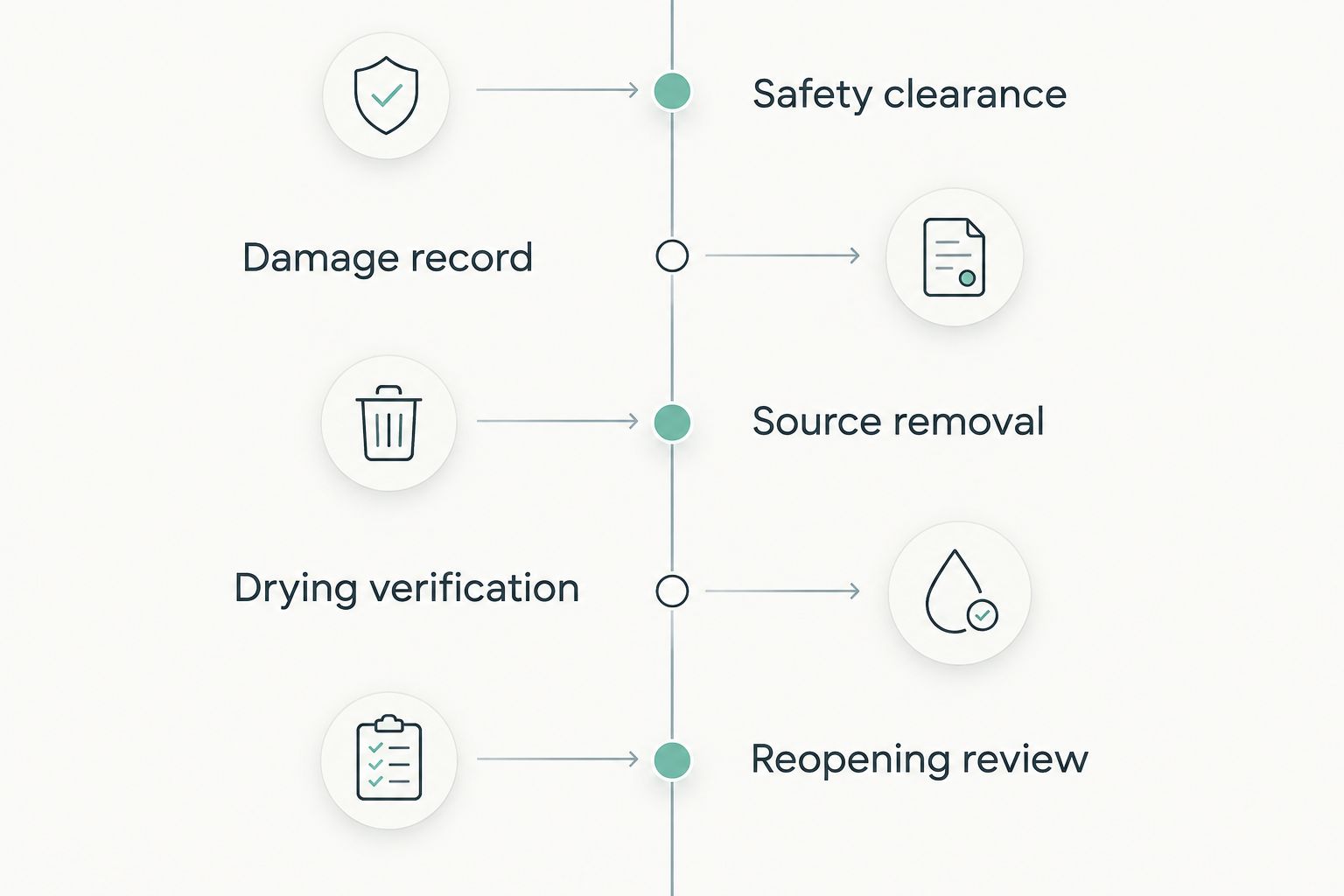
The recovery sequence should keep these checkpoints distinct: safety clearance, damage record, source removal, drying verification, and reopening review. Completing an earlier checkpoint does not replace the next one.
6. Coordinate repairs without losing the evidence trail
Use a shared checklist or spreadsheet to track repairs, responsible parties, and completion evidence. Restoration work, equipment servicing, and building repairs need distinct entries even when one contractor coordinates several tasks. Mark dependencies so finish work does not hide an unresolved problem.
Before authorizing replacement, determine who owns the item and who approves the expense. Your lease and policy—not a generic restoration guide—establish those obligations. Ask your insurer how proposed repairs and documentation should be submitted; do not assume approval from silence.
Treat your 2026 repair schedule as a sequence of verified tasks, not a promised reopening date. Record changes to scope and obtain written explanations for unresolved items. Keep staff communications factual until the remaining requirements are clear.
- Assign an owner to each repair and inspection task.
- Record approvals before non-emergency scope changes.
- Match invoices to rooms, equipment, or work categories.
- Keep equipment-service records separate from cleaning records.
- Track incomplete work before scheduling finish repairs.
7. Verify readiness before announcing reopening
Build your reopening checklist from actual instructions: applicable authority requirements, equipment-service findings, restoration records, and landlord obligations. Do not use the absence of smoke odor as the sole acceptance criterion. A restaurant must be ready for food handling and occupancy, not merely ready for photographs.
Organize the review into 4 gates: building access, restoration completion, kitchen readiness, and required approvals. These are planning categories, not a universal regulatory standard. Identify who can verify each gate and what record supports that decision.
For a 2026 reopening announcement, wait until outstanding approvals and operational checks are resolved. Then brief employees on discarded stock, equipment changes, restricted areas, and new procedures. Restore service around verified readiness rather than forcing unfinished work around reservations.
- Review access and occupancy instructions with the responsible parties.
- Obtain restoration completion records and unresolved-item lists.
- Confirm equipment servicing and sanitation tasks are complete.
- Verify required approvals with the applicable authorities.
- Brief employees before accepting guests again.
Request restoration support
Discuss fire and water damage cleanup in Temecula, Escondido, North County San Diego, or the Inland Empire.
Compare restaurant recovery options
These options serve different jobs. Choose the appropriate support for each task rather than expecting a single cleaning agreement to cover the entire reopening process. The benefit and limitation of each option belong in your decision.
| Option | Best for | Main benefit | Key limitation |
|---|---|---|---|
| Owner-led documentation | Accessible areas after entry clearance | Keeps inventory, photographs, and communications organized | Does not establish structural, electrical, or food safety |
| Firewaterdamage fire and water damage restoration | Local owners seeking emergency cleanup support | Offers 24/7 emergency response and IICRC-certified cleanup crews | Restaurant equipment, permitting, and inspection responsibilities require confirmation |
| Qualified kitchen-equipment technicians | Damaged cooking, refrigeration, or electrical equipment | Assess equipment within their service scope | Equipment servicing does not replace building restoration |
| Applicable health and building authorities | Determining required reopening conditions | Clarify approval and inspection expectations | Do not perform contractor cleanup or equipment repairs |
Use owner-led work for coordination, not hazardous cleanup. Professional restoration addresses a different need from equipment servicing, and both remain separate from required approvals.
Common mistakes restaurant owners make
Treating an odor-free dining room as a cleared restaurant
Smoke odor is one condition, not the whole recovery. Keep kitchen equipment, food-contact surfaces, wet materials, and required approvals on the checklist even after the dining room smells normal. Do not accept fragrance as a substitute for source removal.
Saving questionable food to reduce the loss
Do not return exposed stock to service because the packaging looks intact. Follow USDA food-safety guidance and applicable health-authority instructions. Document disposal when safe, but do not delay it to protect the inventory value.
Assuming the landlord handles every damaged item
Tenant equipment, inventory, building finishes, and common systems can involve different responsibilities. Read your lease and ask for written clarification before approving replacements. An ownership dispute should not become conflicting instructions to contractors.
Reopening around unfinished kitchen checks
A repaired wall does not confirm that refrigeration, cooking equipment, or ventilation is ready. Track those checks separately and resolve outstanding requirements before announcing service. Avoid making reservations the deadline that dictates safety decisions.
Accepting a scope that only says cleanup
A vague agreement makes completion difficult to verify. Require locations, materials, exclusions, and acceptance records. Clarify whether repairs and equipment coordination are included instead of discovering the gaps after cleaning ends.
FAQ
What should a restaurant owner do first after a fire?
Establish safe access and follow emergency responders' instructions before entering or cleaning. Notify your landlord where applicable, contact your insurer, and assign one decision-maker to coordinate recovery.
Can employees clean up restaurant fire damage themselves?
Employees should not perform hazardous fire cleanup or enter restricted areas. After access clearance, owner-led documentation can support recovery, while qualified professionals assess contamination, damaged materials, and equipment.
Can I keep food if its packaging looks undamaged?
Undamaged-looking packaging does not establish that food is safe after a fire. USDA Food Safety and Inspection Service guidance directs disposal of food exposed to fire heat, smoke fumes, or firefighting chemicals; never taste food to test it.
Is smoke odor removal enough to reopen a restaurant?
No, smoke odor removal alone does not establish restaurant readiness. Review food safety, equipment servicing, restoration completion, and applicable approval requirements separately.
Does fire damage restoration include water damage cleanup?
A restaurant fire recovery scope should address firefighting-water damage wherever it occurred. Confirm extraction, drying, affected materials, and completion records in writing rather than assuming they are included.
Who decides when my restaurant can reopen?
Required reopening approvals depend on the incident and the applicable authorities. Ask your local health and building authorities what inspections or clearances apply; contractor completion does not replace those requirements.
Will insurance cover all restaurant fire restoration work?
Coverage depends on your policy, the loss, and the insurer's determination. Keep itemized damage records and written scopes, and ask the insurer to clarify coverage rather than treating a contractor estimate as approval.
How do I choose a restaurant fire restoration company in 2026?
Choose a company with a written scope that addresses your actual fire, smoke, and water damage. Confirm certification, restaurant-specific responsibilities, exclusions, and completion evidence before authorizing non-emergency work.
One last thing
Create a record of what was cleared, not just what was cleaned. For each affected area, save the restoration completion record, equipment-service findings, and applicable approval documents together. A folder full of invoices establishes spending; it does not explain which conditions were resolved.
Before your first service, ask one final question: does every unresolved item have a named owner? If not, assign one before reopening decisions turn into assumptions.