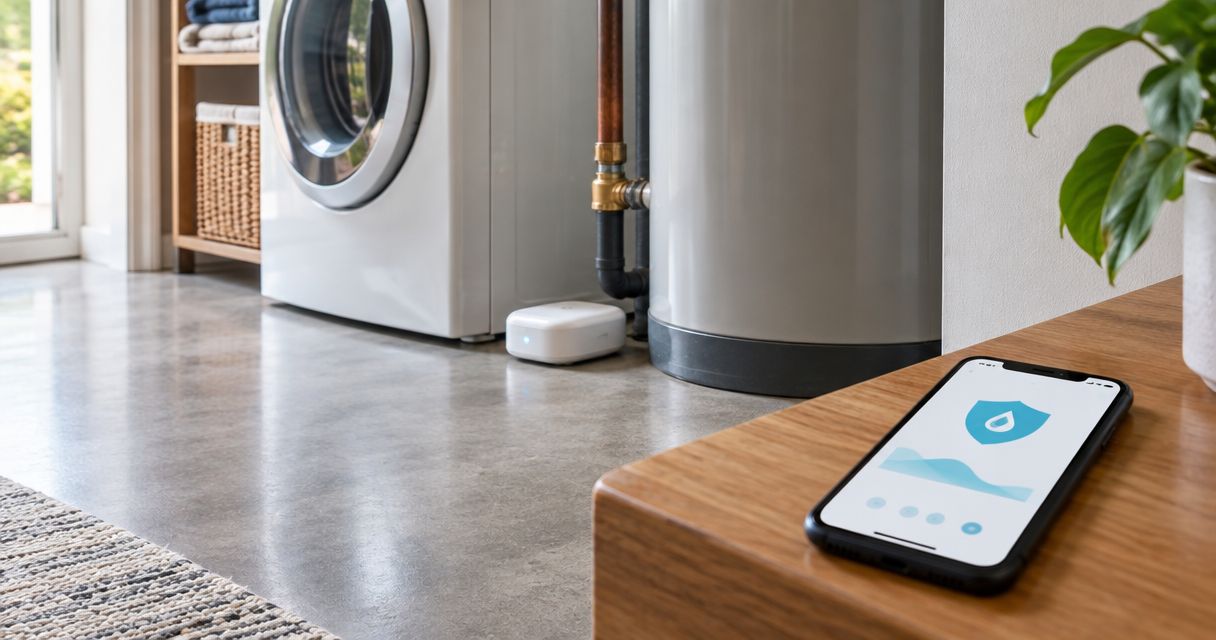
Instead of manually checking for supply-line leaks every day, set up Flo by Moen flood damage prevention around water monitoring, automatic shutoff, and a tested response plan. The device can stop incoming water from a supply leak; your workflow must also get someone to the property and address materials already wet.
- Flo by Moen flood damage prevention targets plumbing leaks, not stormwater intrusion or sewer backups.
- Use Home for normal occupancy and Away when the property is vacant, following Moen’s instructions.
- Test notifications and property access before relying on remote water monitoring.
- Firewaterdamage provides water damage restoration when stopping the leak does not resolve the damage.
Why this matters
A closed water valve does not dry a floor, wall cavity, or cabinet. Separate source control from damage recovery: Flo by Moen handles the monitored water supply, while your response plan handles access, plumbing repair, and cleanup.
Firewaterdamage water damage restoration is best for homeowners and property owners needing cleanup after a leak in its stated service areas. Firewaterdamage offers 24/7 emergency response and IICRC-certified cleanup crews in Temecula, Escondido, and North County San Diego/Inland Empire.
For a 2026 setup, treat protection as a chain: a correctly installed device, usable notifications, an available responder, and a safe cleanup decision. A working app alone does not complete that chain.
Before you start
- Arrange installation and confirm coverage. Have a qualified plumber review Moen’s installation requirements, the main supply location, and which branches sit downstream of the device. Identify any fire-sprinkler connections before approving placement; follow applicable requirements rather than assuming the entire incoming line is suitable for shutoff.
- Prepare account and connection access. Have the installed device, the current manufacturer-supported app, account credentials, and the required network connection ready. Follow the model-specific Moen instructions rather than another owner’s screenshots.
- Confirm entry and manual isolation. Name a primary responder and a backup, arrange lawful property access, and locate the manual water shutoff. The non-obvious gotcha: a remote shutoff cannot prevent flooding from sources outside the monitored supply, including rain intrusion and sewer backups.
Save the installation instructions where responders can reach them without entering a wet room. Record the device location, manual valve location, and plumber’s contact details in the same property note.
Device installation and connection
The installation determines what Flo by Moen can monitor and stop. Do not compensate for an unsuitable valve location with app settings.
- Confirm the protected plumbing. Ask the installer to explain which fixtures and branches are downstream of the device. Record any unprotected branches so an alert does not create false confidence about the whole property.
- Complete the manufacturer’s setup sequence. Connect the device through Moen’s current instructions. Allow the required commissioning and learning process to finish before treating the system as fully configured.
- Check the displayed property. Confirm that the account shows the correct device and address. For multiple properties, use distinct names that a responder can match to a physical location.
- Review normal water uses. List irrigation, scheduled equipment, household routines, and other legitimate demands connected to the monitored line. Use this list when investigating unusual-use alerts.
- Identify manual operation. Have the installer demonstrate the manufacturer-approved method for closing the water supply locally. Do not first learn this procedure during an active leak.
Expected result: you can identify the correct property, explain the protected supply, and locate a usable manual shutoff. Resolve connection or installation problems before configuring the response workflow.
Keep your 2026 property record separate from account passwords. Responders need the address, access instructions, and valve location—not unrestricted account credentials shared through a group message.
Operating modes and alert delivery
Flo by Moen uses operating modes to distinguish normal occupancy from absence. Follow Moen’s current mode descriptions and on-screen warnings; a mode change is not a substitute for fixing an unresolved leak.
- Select the occupied-property mode. Choose Home for normal household occupancy. Review unexpected alerts against actual activity instead of dismissing every alert as ordinary use.
- Configure absence protection. Select Away when the property is vacant, following Moen’s instructions. Tell the responder about any legitimate water use that will continue during the absence.
- Understand temporary exceptions. Read the warning attached to Sleep before selecting it. This mode pauses automatic shutoff protection for its configured period; do not use it as the standing solution to repeated alerts.
- Enable notification delivery. Review the app’s alert preferences and the phone’s notification permissions. Check focus or do-not-disturb settings that prevent a responder from noticing an alert.
- Verify the receiving phone. Use a manufacturer-supported notification test if provided. Otherwise, follow Moen’s approved verification procedure without creating a real leak.
Expected result: the appropriate person receives recognizable alerts for the correct property, and you understand which mode is active.
Which operating mode fits the property?
| Mode | Best for | Benefit | Limitation |
|---|---|---|---|
| Home | Normally occupied properties | Aligns monitoring with everyday household use | Occupancy does not guarantee someone notices an alert |
| Away | Vacant properties and owner absences | Applies the manufacturer’s absence-focused monitoring behavior | Legitimate water demand needs review before departure |
| Sleep | Temporary exceptions described by Moen | Provides a deliberate pause in automatic shutoff protection | Reduces protection during the configured pause |
Use the mode that matches actual occupancy. Avoid treating temporary suppression as leak resolution. If a recurring alert has no clear explanation, investigate the plumbing before relaxing protection.
Response ownership and damage assessment
An alert needs a named owner, not just a place in an inbox. Build the response plan before anyone leaves the property unattended.
- Assign responsibility. Name a primary responder and a backup. Specify who checks the alert, who contacts the occupant, and who arranges access when nobody answers.
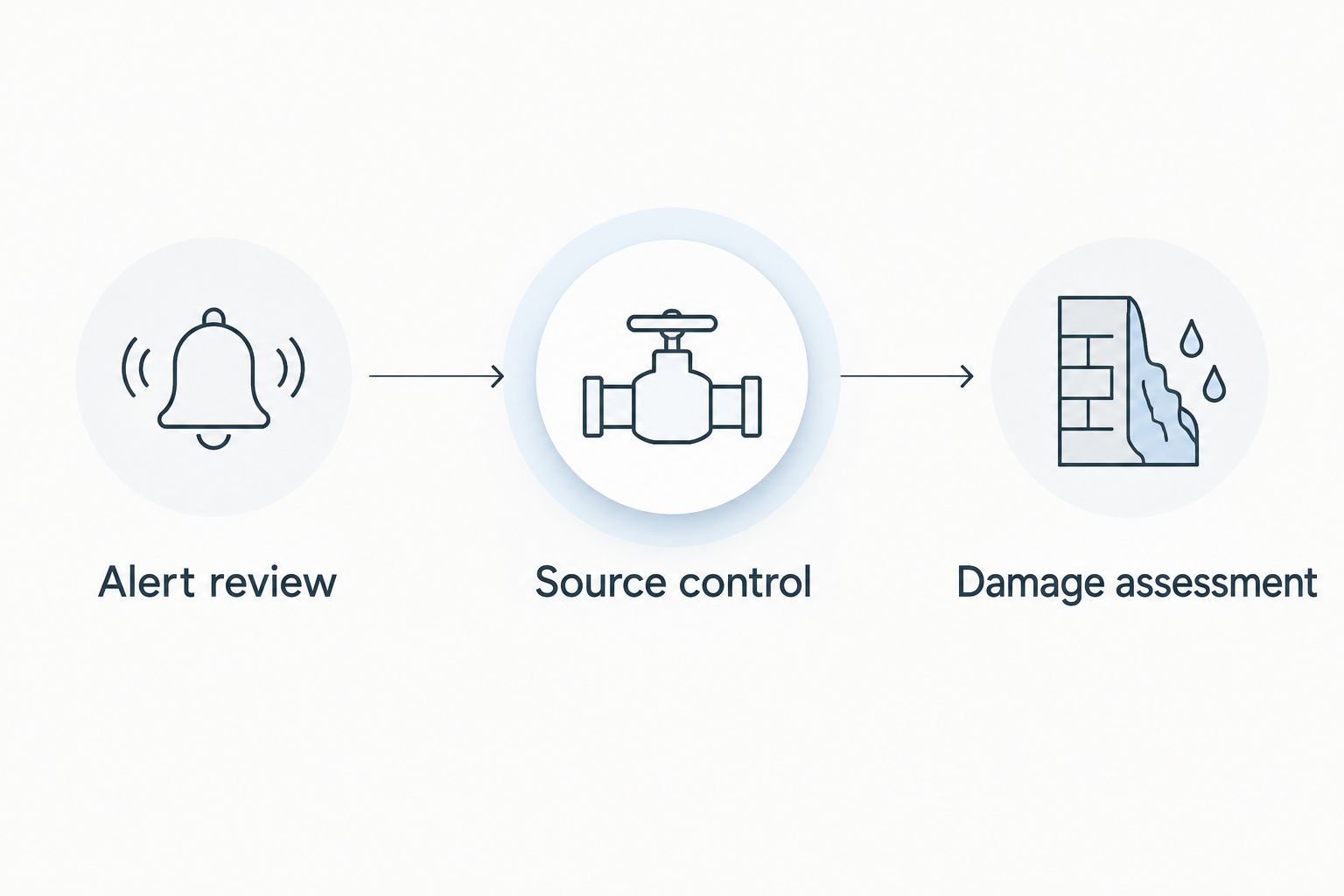
- Separate the decisions. Use three response stages: Alert review, Source control, and Damage assessment. Confirm the property and alert first, address the water source second, then determine whether materials are wet.
- Check before reopening. If the device has closed the supply, do not reopen it merely to restore convenience. Establish why it closed and whether a leak remains active.
- Use safe entry rules. Do not enter standing water near electrical equipment or approach sagging ceilings. Keep people away from sewage-contaminated water and arrange qualified assistance.
- Escalate wet materials. Contact a plumber for the failed supply component and a restoration provider for water removal and drying assessment. These are different jobs, even when the same incident triggers both.
Expected result: every alert leads to a specific person and a decision about both the source and the damage. Nobody assumes valve closure means the property is dry.
Firewaterdamage provides water damage restoration, not the device installation described here. Its 24/7 emergency response gives property owners a cleanup contact when water has escaped; it does not establish an automatic connection between a Moen alert and restoration dispatch.
Arrange water damage cleanup
Request help for escaped water in Temecula, Escondido, and North County San Diego/Inland Empire.
Workflow verification
Test the handoff, not just the valve. A successful 2026 drill proves that someone can interpret the notification and safely reach the property.
- Run a tabletop alert drill. Tell the responder this is a practice exercise. Provide the property name and a sample scenario, then ask what happens next.
- Confirm receipt and ownership. Have the primary responder acknowledge the exercise. Repeat with the backup so the plan does not depend on one phone.
- Check physical access. Confirm that the authorized responder can use the agreed entry method. Update expired codes or misplaced keys without exposing access details broadly.
- Verify shutoff safely. Follow the manufacturer’s approved functional-check procedure. Do not open a pipe, overflow a fixture, or create standing water to test the system.
- Record the result. Note whether the notification, contact handoff, entry arrangement, and valve procedure worked. Correct each failed link before relying on the workflow.
Expected result: you have a tested response path, not merely an installed device. Repeat verification after changing phones, account access, network equipment, occupants, or responders.
Vacancy workflow for rentals and owner absences
Use a second workflow whenever occupancy changes. This is especially useful when a property alternates between active use and vacancy.
- Before departure: inspect visible supply connections, resolve unexplained alerts, confirm responder access, and select Away according to Moen’s instructions.
- During vacancy: assign alert review to a specific person. If an alert leads to shutoff, arrange inspection before reopening the supply remotely.
- Before reoccupation: confirm there is no unresolved leak or wet area, restore the appropriate operating mode, and tell incoming occupants how to report water problems.
For your 2026 rental checklist, make mode ownership explicit. A departing guest, cleaner, or property manager should not each assume someone else changed it.
Best for: owners managing periods without an occupant. The benefit is a repeatable handoff; the limitation is that a device cannot provide physical entry or verify hidden damage on its own.
Troubleshooting
The phone does not show an alert
Check notification permissions, app preferences, and phone focus settings. Confirm the phone is signed into the correct account. Verify delivery again before declaring the workflow repaired.
The device appears offline
Check power and network conditions using Moen’s troubleshooting instructions. Do not assume an offline status proves either that local protection has stopped or that remote control remains available. If water is escaping, use safe manual isolation and arrange assistance.
Normal water use triggers repeated alerts
Identify the actual demand and compare it with the selected mode. Check for unnoticed fixture use or plumbing faults before treating the event as harmless. Do not leave Sleep active simply to silence recurring problems.
Water continues appearing after shutoff
Confirm the leak is on the protected supply and that isolation succeeded. Stored water and other sources require separate investigation. Rainwater, drainage failures, and sewer backups are not stopped by closing the domestic supply valve.
The supply is closed, but materials remain wet
Keep the failed plumbing isolated until repaired. Arrange assessment of affected flooring, cabinets, walls, and contents; surface appearance alone does not establish that concealed materials are dry. Firewaterdamage can provide cleanup assistance within its stated service areas.
Customize your workflow
Expand your 2026 plan around the property’s actual risk and staffing, not around extra notifications. For multiple buildings, keep a separate address, valve location, authorized entry method, and response owner for each device.
Use the guide to connecting a smart water leak sensor to emergency restoration dispatch to develop the human handoff. Confirm any proposed integration with the involved providers before relying on it; a phone notification is not proof that a crew has been dispatched.
Add a simple incident record: alert received, supply status, observed water location, photographs taken safely, and contacts notified. Keep observations separate from guesses about the cause. This gives the plumber and cleanup crew a clearer starting point.
FAQ
Can Flo by Moen prevent every kind of flood damage?
No. Flo by Moen monitors the plumbing supply it is installed on and can shut off incoming water. It does not stop rain intrusion, sewer backups, or water from unprotected sources.
What is the best Flo by Moen mode when nobody is home?
Away is the mode intended for an unoccupied property. Follow Moen’s current instructions and review legitimate water uses before switching modes.
Does a Flo by Moen alert automatically call a restoration company?
A device alert does not by itself establish restoration dispatch. Arrange a separate response plan and confirm any integration directly with the providers involved.
Should I reopen the water after an automatic shutoff?
Do not reopen the supply until you understand the shutoff and have addressed any active leak. Restoring water without checking the cause can restart the escape of water.
How do I test flood damage prevention without causing a leak?
Use Moen’s approved functional checks and a tabletop response drill. Verify notification receipt, responder access, and the manual shutoff procedure without deliberately releasing water.
Do I still need cleanup if Flo by Moen stopped the leak?
Yes, when water has already affected building materials or contents. Valve closure limits incoming water but does not extract escaped water or establish that concealed materials are dry.
Who should install Flo by Moen?
Have a qualified plumber handle installation according to Moen’s requirements and applicable local rules. The installer should confirm the protected branches, suitable placement, and any fire-sprinkler constraints.
One last thing
The most useful drill ends at the property, not at the notification. Ask your backup responder to explain how they would enter, find the manual valve, and recognize conditions that make entry unsafe.
Keep that answer in your 2026 property instructions. If nobody can reach the building, remote monitoring has identified a problem without completing the response.