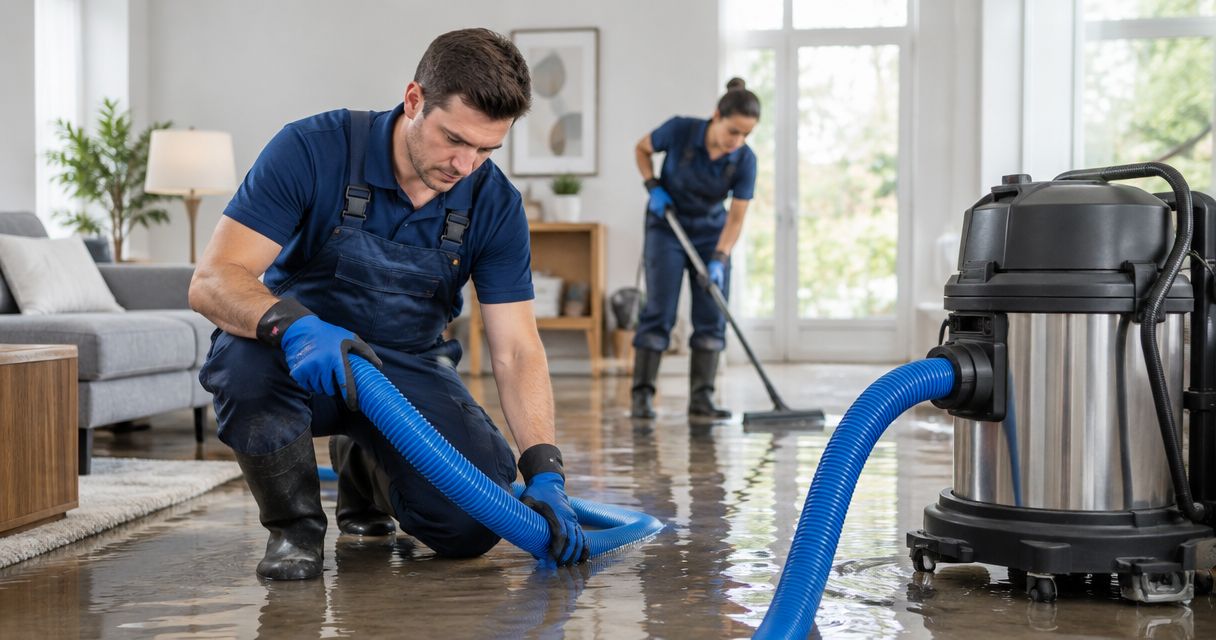
Choose an emergency water removal company that confirms an actual dispatch plan, verifies relevant training and insurance, and explains how it will measure and document drying. Before authorizing work in 2026, get a written scope, clarify who stops the leak, and separate emergency mitigation from later repairs. Choose documented drying, not just a promise to remove standing water.
- How to choose an emergency water removal company: verify dispatch, credentials, written authorization, and moisture documentation.
- Firewaterdamage offers 24/7 emergency response and IICRC-certified cleanup crews for homeowners and property owners.
- Water extraction removes standing water; structural drying addresses moisture remaining in building materials.
- Confirm who stops the leak, monitors drying, and handles repairs before authorizing emergency work.
Why this matters
A floor can look dry while moisture remains in carpet padding, wall assemblies, or other materials. Removing visible water is an important step, but it does not establish that the affected structure is dry.
Your hiring decision therefore needs to cover both the immediate emergency and the evidence that work is complete. Ask who will return, what they will measure, and what records you will receive. For context on the phases involved, review how long water damage restoration takes.
Before comparing contractors, address immediate danger. Stay out of standing water near electrical equipment, avoid contact with sewage, and leave areas with sagging ceilings or suspected structural damage. Do not enter an unsafe area to photograph damage or shut off utilities; contact the appropriate emergency service or utility instead.
How to choose an emergency water removal company
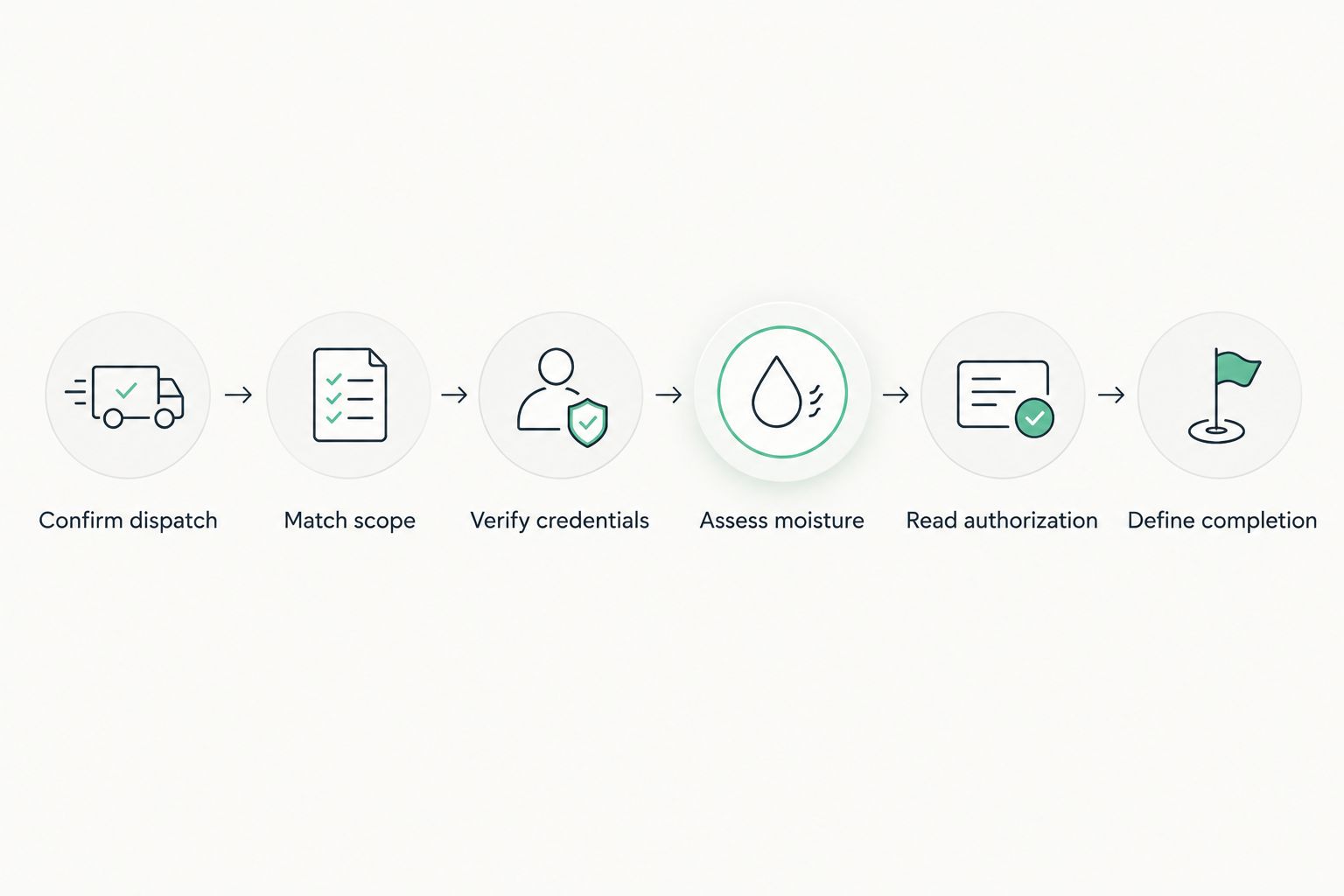
Use these 6 checks when choosing an emergency water removal company in 2026. A useful answer identifies a person, an action, or a document—not simply a promise that everything will be handled.
1. Confirm dispatch, not just phone availability
Ask whether a crew can serve your address and who will confirm its arrival. A business answering calls around the clock is not the same as a crew being available for your property immediately.
Give the dispatcher your address, the apparent water source, whether water is still entering, and any access restrictions. Describe electrical concerns, sewage, occupied rooms, and affected neighboring units without entering hazardous areas to investigate.
Ask these 3 questions before ending the call:
- Who is assigned to the job, and how will that person contact me?
- What is the current arrival estimate, and who updates me if it changes?
- What should I avoid doing while waiting for the crew?
Best for an active water emergency: a provider that confirms dispatch details and gives clear safety instructions. A vague arrival promise does not help you coordinate access, a plumber, or building management.
2. Match the company to the work you actually need
Water removal, leak repair, and reconstruction are different responsibilities. One company might coordinate several phases, but you should establish that arrangement rather than assume it.
| Provider type | Best for | Main strength | Limitation to clarify |
|---|---|---|---|
| Emergency water removal company | Standing water and wet building materials | Extraction, drying, and moisture documentation | Whether source repair and reconstruction are included |
| Plumber | A leaking pipe, failed connection, or plumbing fault | Finding and repairing the plumbing problem | Whether structural drying is offered or requires another provider |
| Reconstruction contractor | Rebuilding after mitigation | Repairing or replacing damaged finishes and assemblies | Whether emergency extraction and drying are within its scope |
If a pipe is still leaking, ask who will stop the source while extraction is arranged. If water came from outside or contains sewage, tell the restoration company before dispatch so it can assess the work appropriately.
Do not reject a company merely because it uses a separate plumber or reconstruction contractor. Reject unclear responsibility. You need to know who coordinates the handoff and which business you are authorizing at each stage.
3. Verify credentials and insurance
Ask about the training of the people assigned to your property, not just a certification logo on a website. IICRC water damage restoration training is relevant to this work; ask the company to explain the credentials of its crew and any firm certification it claims.
Certification and a contractor license are different things. In California, verify the applicable license through the Contractors State License Board when the proposed work requires licensed contracting. Confirm that the business name on the authorization matches the business whose credentials you checked.
Request evidence of current liability insurance and applicable workers’ compensation coverage. Ask whether employees or subcontractors will enter your property and who supervises their work.
Credentials help establish qualifications, but they do not replace a written scope or proof of drying. A qualified crew still needs to explain what it found, what it proposes to do, and how it will document completion.
4. Require an assessment beyond visible water
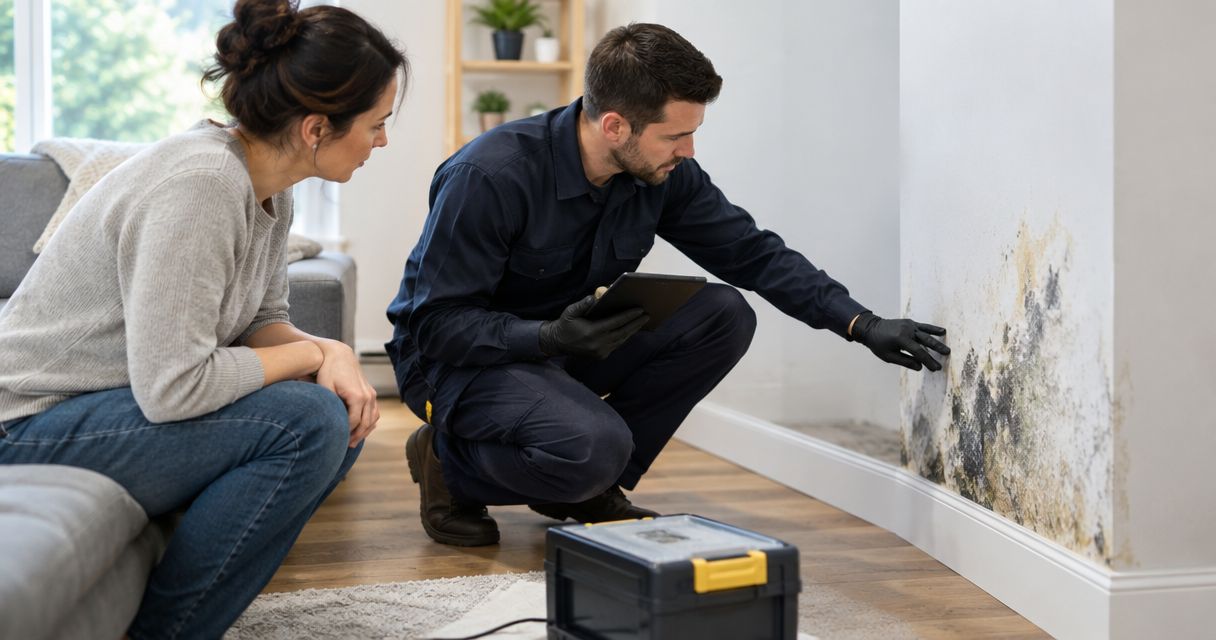
A useful assessment identifies the source, affected materials, and places where moisture needs investigation. Ask the crew to explain how it checks the extent of wetting rather than relying only on stains or surface appearance.
Moisture meters help assess materials. Thermal imaging can help identify areas for further investigation, but an image alone does not prove that a material is wet or dry. Ask how suspected moisture will be confirmed.
The proposed plan should explain whether materials can be dried in place, need further assessment, or require removal. Ask for the reason behind opening a wall, lifting flooring, or removing cabinetry before authorizing that work, except where immediate safety measures are necessary.
Best for evaluating an assessment: a clear connection between findings and proposed work. Equipment lists alone do not explain why a room needs treatment or how the crew will decide when treatment ends.
5. Read the emergency authorization before signing
An emergency authorization should make clear what you are approving now. Separate extraction and stabilization from demolition, contents handling, reconstruction, and any later work that requires additional approval.
Ask who can authorize changes if the crew discovers more damage. Property managers should establish the owner’s approval process and any limits on tenant authorization before work begins.
Read payment terms, cancellation provisions, and any language concerning insurance payments or claim rights. Ask the company to explain unfamiliar terms in writing. Do not treat a verbal assurance about insurance as a substitute for your policy or the insurer’s coverage decision.
For your 2026 hiring checklist, make this the signature rule: understand the scope and your obligations before authorizing work. Urgency does not remove the need to know which business you hired and what you agreed to.
6. Define monitoring and completion
Ask how the company sets drying goals and documents progress. The answer should address affected materials, measurement locations, monitoring, and the basis for removing equipment.
Keep 2 records together: the initial assessment and the final drying documentation. Request supporting photographs, moisture readings, equipment records, and explanations of changes to the original scope where applicable.
A final record should explain what was treated, what was removed, and what remains for repair or further investigation. If some areas were inaccessible, ask the company to identify them rather than imply that every cavity was inspected.
Best for confirming completion: documented drying criteria, not appearance or touch alone. Ask who you contact if a stain, odor, or moisture concern returns after equipment is removed.
Why emergency water removal plans vary
Different properties need different assessments. These factors explain why a contractor should inspect the damage before committing to a final work plan:
- Water source: A supply-line leak and sewage intrusion require different safety and cleanup decisions. Describe the source accurately and flag uncertainty.
- Affected materials: Carpet, drywall, insulation, and wood assemblies do not all respond to wetting or drying in the same way.
- Access: Water beneath flooring or inside wall cavities requires investigation beyond the visible room surface.
- Ongoing entry: Extraction cannot resolve a leak or other source that continues introducing water into the building.
- Occupancy and hazards: Electrical concerns, contaminated water, and occupied spaces affect access, protection, and work arrangements.
Ask the contractor to connect each proposed action to a finding at your property. A standard equipment package is not a substitute for explaining the damage.
What should I ask during the first phone call?
The 3 questions to establish first are who is coming, when dispatch will be confirmed, and what you should avoid doing before arrival. Then explain whether the source is stopped, which rooms are affected, and whether you suspect sewage or electrical hazards.
Keep the call focused on safe mobilization. You can review detailed reconstruction decisions after the emergency assessment, but you should understand the initial authorization before signing it.
What documents should I keep after water removal?
The 2 records to keep together are the initial assessment and final drying documentation. Save the signed authorization, changes you approved, photographs, invoices, and relevant messages alongside them.
Use a single folder for your 2026 water-loss records. Clear documentation supports conversations with the contractor and insurer, but it does not guarantee that an insurance claim will be covered.
Does 24/7 service mean a crew will arrive immediately?
24/7 service does not establish an arrival time. Ask whether the company means telephone availability, emergency dispatch capability, or a crew already assigned to your address.
Get the current arrival estimate and a named contact for updates. If that estimate changes, you need enough information to arrange safe access and coordinate anyone repairing the source.
A local emergency water removal option
Firewaterdamage is best suited to homeowners and property owners seeking emergency water damage restoration in Temecula, Escondido, and North County San Diego/Inland Empire. Firewaterdamage offers 24/7 emergency response and IICRC-certified cleanup crews.
Those stated services make Firewaterdamage relevant to a local emergency shortlist. Still, confirm dispatch for your address, the proposed assessment, and the scope of authorization before work begins. Around-the-clock response and certified crews do not, by themselves, establish your arrival time, insurance coverage, or final repair scope.
Request emergency water damage help
Ask about dispatch, the assessment, and the written scope for your property.
FAQ
What's the most important thing to check before hiring a water removal company?
Confirm that the company will assess moisture and document drying, rather than only remove visible water. Also verify dispatch, relevant credentials, insurance, and the written authorization.
Should I call a plumber or a water removal company first?
An active plumbing leak needs source repair, while standing water and wet materials need mitigation. Arrange both responsibilities when necessary, and ask who will coordinate them.
Is IICRC certification enough to choose a restoration company?
IICRC certification is relevant evidence of training, but it is not enough by itself. Verify the assigned crew, applicable licensing, insurance, scope, and completion documentation.
Can a water removal company guarantee my insurance will pay?
A water removal company cannot determine your insurer's coverage decision. Your policy terms and the circumstances of the loss govern coverage; ask your insurer about your specific claim.
Should I stay home while emergency water removal is happening?
Whether you can stay depends on the hazards and the work plan. Ask the restoration team about affected areas, electrical concerns, contamination, and safe access before remaining in the property.
Does water extraction mean my house is dry?
Water extraction does not establish that your house is dry. Moisture can remain in building materials, so ask for assessment, monitoring, and documented drying criteria.
What should I do if a company pressures me to sign immediately?
Ask the company to explain the authorization and identify the emergency work separately from later repairs. Do not sign terms you do not understand, including provisions affecting payment or insurance claim rights.
One last thing
Ask one question before the crew begins: What evidence will you give me that the affected materials have reached the drying goals? That question connects the emergency response to a measurable endpoint.
For a 2026 hiring decision, keep the answer with your authorization. The best explanation identifies what will be checked, how progress will be recorded, and who decides the work is complete. A dry-looking floor is an observation; documented moisture assessment is the evidence you should request.