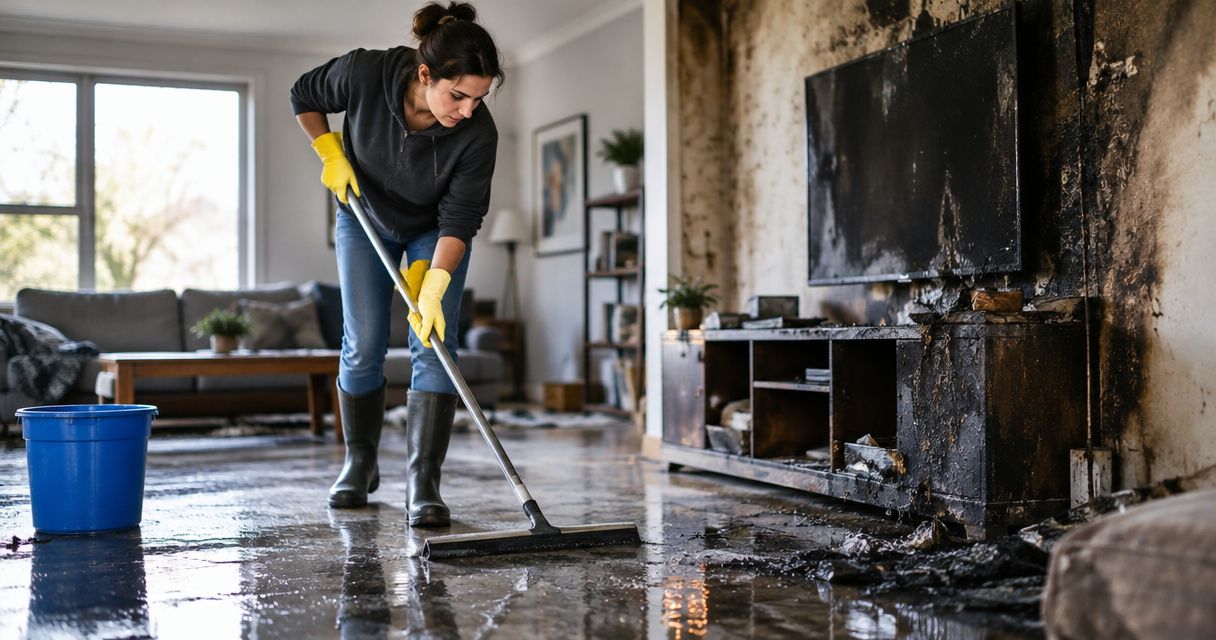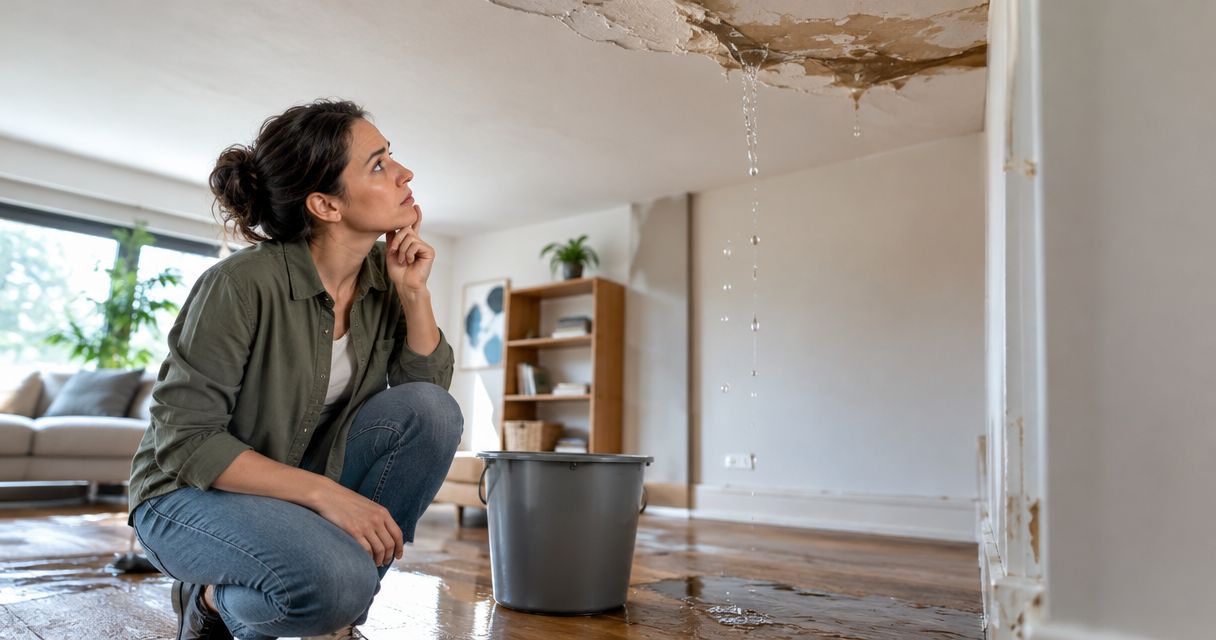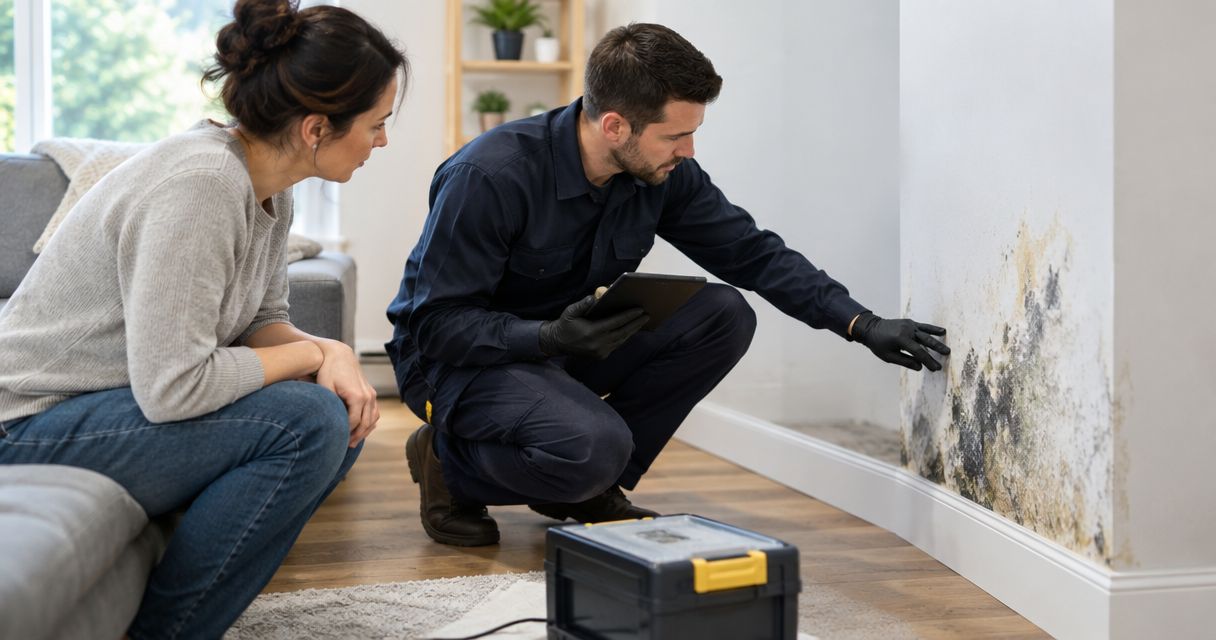
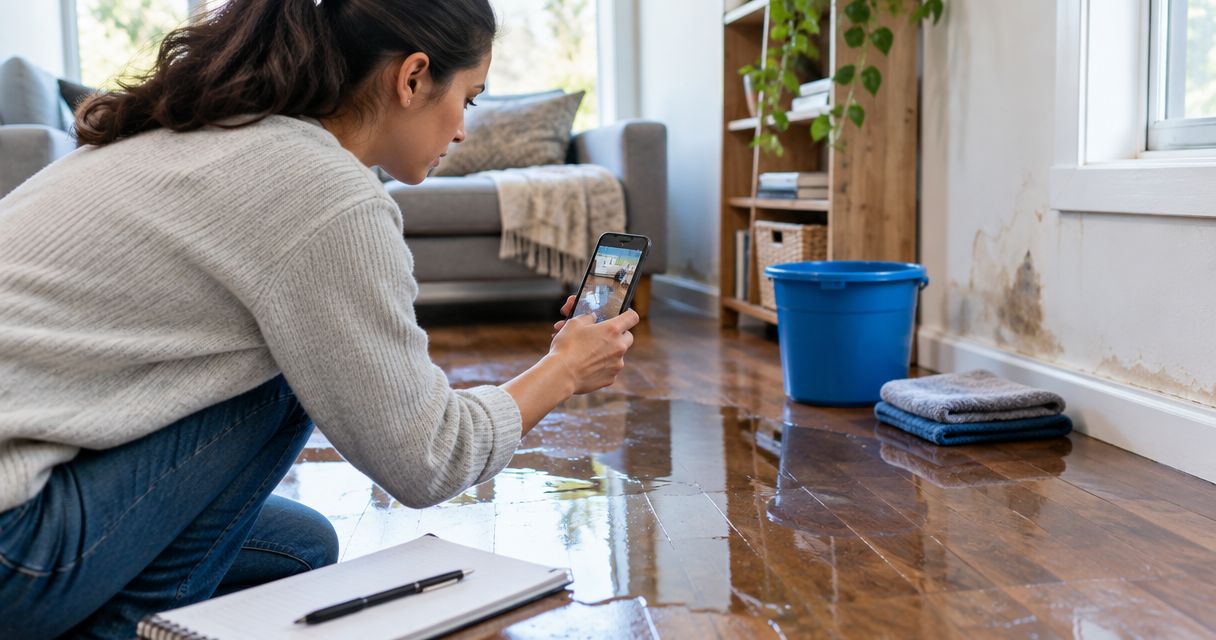
To file an insurance claim for water damage in 2026, stop the water if you can do so safely, document the damage, notify your insurer, and keep records of emergency cleanup and repairs. Filing a claim does not establish coverage: your policy, the cause of the damage, exclusions, and deductible determine what the insurer pays. Arrange necessary emergency mitigation without waiting for permission to let damage spread, but coordinate nonemergency demolition and permanent repairs with your adjuster.
- Learning how to file an insurance claim for water damage starts with safety, photographs, and prompt insurer notification.
- Document the water source, affected materials, emergency work, and damaged belongings separately.
- Your policy determines coverage; a contractor's estimate is not an insurer's approval.
- Firewaterdamage offers 24/7 emergency cleanup for homeowners and property owners in its stated Southern California service areas.
How to file an insurance claim for water damage
Report the facts, preserve evidence, and separate emergency mitigation from permanent repairs. Before assuming a loss qualifies, review whether homeowners insurance covers water damage restoration. The source of the water matters as much as the visible damage.
1. Make the property safe and stop the source
Keep people and pets away from standing water near electrical equipment, sagging ceilings, sewage, or visibly unstable materials. Do not enter a hazardous area to take photographs or retrieve belongings.
If you can safely reach the appropriate water shutoff, stop an active plumbing leak. For electrical hazards, contaminated water, or structural concerns, use qualified help rather than attempting cleanup yourself.
Record what you did and when. Describe the source as suspected until a qualified professional establishes it; a wet floor alone does not prove where the water originated.
2. Photograph the damage before changing the scene
Take wide views showing each affected room, then closer images of damaged surfaces, belongings, and the apparent source. Capture the path of the water where visible, including adjoining spaces rather than only the deepest puddle.
Photograph labels or identifying details on damaged appliances and belongings when safe. Keep the original files, not just compressed copies sent through messaging apps.
Do not postpone urgent safety measures to create a perfect photo record. Document conditions before work where practical, then photograph what changes during cleanup.
3. Notify your insurer through its official claim channel
Use the claim contact information on your policy or the insurer's official website or app. Provide your policy number, property address, discovery date, observed damage, and any emergency actions already taken.
Distinguish the date you discovered the water from the date the leak actually began. If you do not know when it started, say so rather than guessing.
Ask for the claim number, assigned contact, submission instructions, applicable deadlines, and guidance on preserving damaged materials. Save the acknowledgment and record the conversation in your claim log.
4. Arrange emergency mitigation and preserve its records
Emergency mitigation means preventing additional damage, such as water extraction, necessary protective measures, and drying. Permanent repairs restore the building after the immediate problem is controlled; keep those scopes distinct in your paperwork.
Ask the mitigation contractor for an itemized work authorization, scope, invoices, photographs, and any moisture records produced during the job. Read payment terms before signing, including your responsibility if insurance does not cover the work.
A contractor's availability is not a coverage decision. Tell your insurer what emergency work is underway and ask how it wants supporting documents submitted.
5. Build a room-by-room inventory
List damaged belongings with descriptions, approximate purchase dates when known, and evidence of ownership. Receipts, earlier photographs, order histories, and model information help identify what was damaged without relying on memory alone.
Describe the actual condition rather than marking everything in a wet room as destroyed. Keep building damage, personal belongings, and temporary living expenses in separate folders so the adjuster can review each category clearly.
Before discarding damaged items, ask the insurer what inspection or documentation it requires. Do not retain contaminated material in a way that creates a health hazard; document safe disposal and the reason for it.
6. Coordinate the inspection and compare written scopes
Give the adjuster access to affected areas when safe and share your photographs, source reports, inventory, and emergency-work records. Point out concealed areas that require evaluation without claiming damage you cannot establish.
Compare the insurer's estimate with the contractor's scope by room, material, and task. Identify omissions specifically: an affected wall, necessary removal, or documented drying work is more useful than a general statement that the estimate is too low.
Ask how to submit additional damage discovered during authorized work. Keep that process in writing before treating an initial estimate as the final repair scope.
7. Review the decision before closing the file
Read the coverage explanation, estimate, deductible application, and any depreciation provisions together. Ask which payments depend on completed repairs or additional documentation and what deadlines apply under your policy.
If you disagree, request the policy language and factual basis behind the disputed decision. Respond with records that address that issue rather than resending an undifferentiated folder of photographs.
Keep proof of submission for every supplement or response. Close your own records only after you understand outstanding documents, payments, and repair obligations.
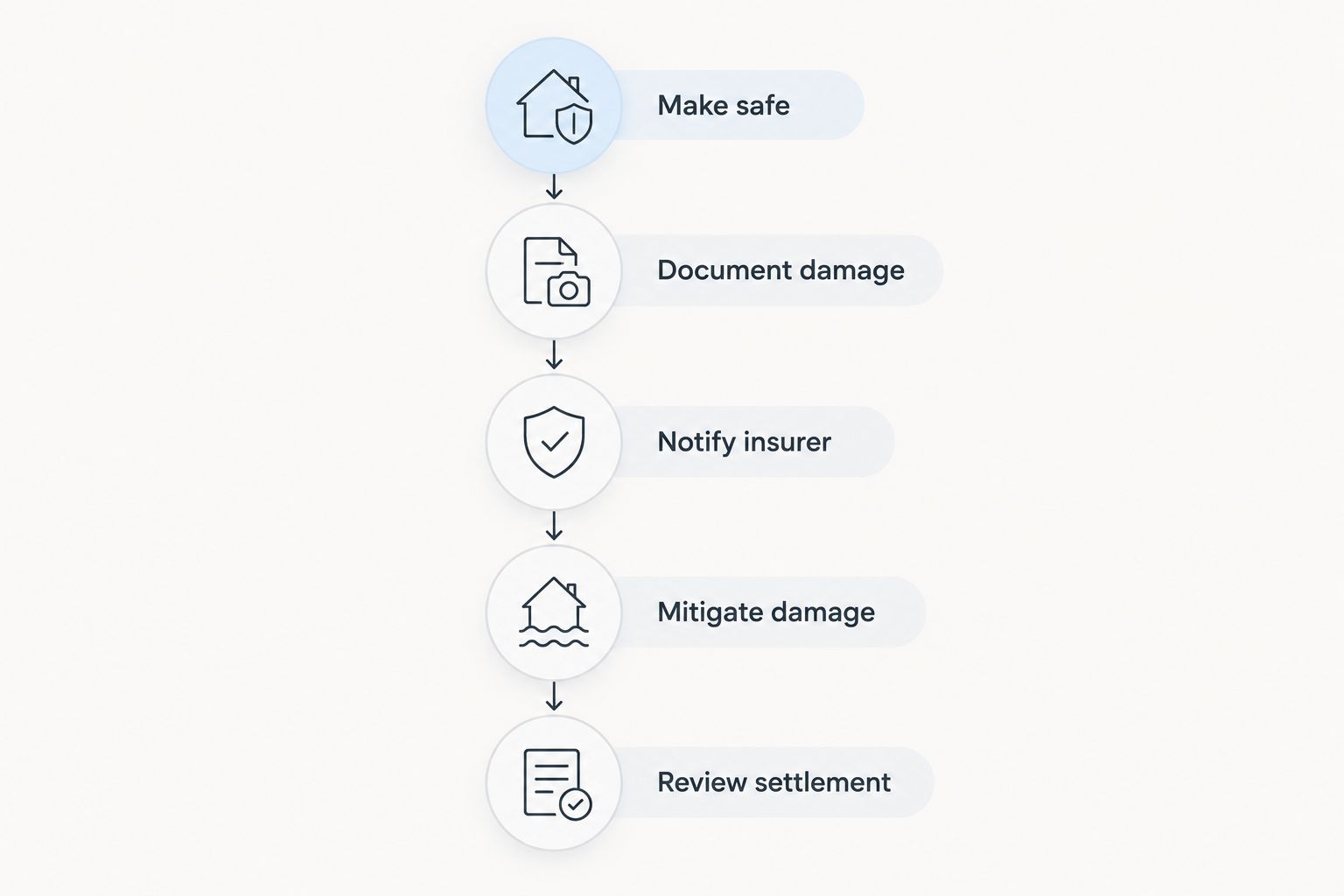
The claim process follows a practical sequence: Make safe, Document damage, Notify insurer, Mitigate damage, Review settlement. Keep documenting throughout; evidence collection does not end when the claim is opened.
Why this matters
A water damage claim is both a repair problem and an evidence problem. You need to limit further damage while preserving enough information for the insurer to evaluate the cause, affected property, and requested work.
For a 2026 claim, make one searchable file containing your current policy, claim correspondence, photographs, reports, invoices, and inventory. Organized evidence supports review; it does not override exclusions or create coverage.
Why water damage claim outcomes vary
The same visible damage does not necessarily produce the same insurance decision. Review these factors against your own policy rather than another homeowner's settlement:
- Water source: A plumbing discharge, sewer backup, and outside flooding raise different coverage questions.
- Policy wording: Covered causes, exclusions, endorsements, and limits determine which parts of the loss qualify.
- Damage history: Discovery dates, earlier symptoms, maintenance records, and professional findings help establish what happened.
- Affected property: Building materials, belongings, and temporary living expenses involve different documentation and policy provisions.
- Scope evidence: Photographs, itemized estimates, and recorded moisture findings support the work being requested.
- Settlement provisions: Deductibles, depreciation, and repair-related payment conditions affect what you receive and when.
Do not substitute a general online answer for your own 2026 policy documents. Ask the adjuster to identify the provision governing any disputed part of the claim.
Should you start cleanup before the adjuster arrives?
Start necessary emergency mitigation when it is safe; coordinate permanent repairs with the insurer. Waiting for an inspection is not a reason to leave an active leak running or allow preventable damage to continue.
The distinction is the purpose of the work, not simply whether a contractor performs it. Extraction addresses an immediate condition; replacing finishes is a separate decision that needs a documented scope.
| Work category | Best for | Benefit | Limitation |
|---|---|---|---|
| Emergency mitigation | Controlling active water and preventing further damage | Addresses immediate conditions | Work still needs documentation; reimbursement depends on coverage |
| Permanent repairs | Restoring documented damage after the scope is established | Rebuilds affected areas | Starting too early can remove evidence or create scope disputes |
Ask the contractor to explain any urgent material removal and photograph conditions before and during that work. Request written insurer guidance on nonurgent demolition, disposal, and reconstruction.
Firewaterdamage is best for homeowners and property owners seeking emergency water damage cleanup in its stated Southern California service areas. Firewaterdamage offers 24/7 emergency response and IICRC-certified cleanup crews in Temecula, Escondido, and North County San Diego/Inland Empire; it is a restoration company, not the insurer deciding coverage.
Request emergency water damage help
Contact a restoration company for emergency cleanup in its stated Southern California service areas.
What should you send with a water damage claim?
Send a labeled evidence package that connects each requested item to the affected area and observed damage. Your adjuster should be able to follow the loss without guessing which photograph belongs to which room.
Include the following where relevant:
- Incident summary: Discovery date, location, observed conditions, and actions taken.
- Source evidence: A plumber's findings or other professional report, distinguishing confirmed facts from suspected causes.
- Room photographs: Wide views and close-ups with clear filenames or captions.
- Belongings inventory: Item descriptions, condition, ownership evidence, and supporting photographs.
- Work records: Authorizations, itemized scopes, invoices, and drying documentation produced by the contractor.
- Communication log: Dates, contacts, decisions, requested documents, and submission confirmations.
Use a consistent naming pattern, such as the room name followed by the subject and actual date. For a loss discovered in 2026, keep that incident's documents separate from earlier repairs so the record does not mix unrelated conditions.
If the claim involves hidden moisture, read the moisture-reading documentation workflow. A reading needs context about the location, material, instrument, and inspection; a photograph of a meter alone does not explain the repair scope.
What if your water damage claim is denied?
Request a written explanation identifying the policy provisions and evidence behind the denial. First determine whether the disagreement concerns coverage, the cause of the damage, the requested scope, or missing documentation.
Answer that specific issue. A source report addresses a cause dispute; an annotated contractor estimate addresses omitted work, but neither automatically resolves an unrelated policy exclusion.
Ask about the insurer's review process and applicable deadlines. For a California property, the California Department of Insurance is a consumer resource for insurance questions and complaints; contact the department through its official channels rather than an unsolicited claim-recovery message.
FAQ
What's the first thing I should do before filing a water damage claim?
Make the area safe and stop an active water source if you can do so without entering a hazardous area. Photograph conditions when practical, then notify your insurer promptly through its official claim channel.
Can I file a claim if I don't know where the water came from?
Report the observed damage and identify the source as unknown or suspected. Provide a qualified professional's findings when available instead of guessing about the cause or start date.
Should I throw away wet carpet before the insurance inspection?
Ask your insurer what evidence it needs before disposal, unless keeping the material creates a safety hazard. Photograph the material, document why removal was necessary, and retain disposal and contractor records.
Does filing a water damage claim mean insurance will pay?
Filing a claim does not guarantee payment. Coverage depends on the policy, cause of loss, exclusions, limits, deductible, and supporting evidence.
Can I choose my own water damage restoration company?
Ask your insurer about any policy conditions and the effect of choosing a contractor outside its referral program. Read the contractor's authorization and payment terms independently of the insurer's coverage decision.
Does Firewaterdamage decide whether my water damage is covered?
Firewaterdamage provides restoration services, not insurance coverage decisions. Your insurer evaluates coverage under your policy; obtain written scopes and work records from whichever contractor you hire.
What should I do if more damage appears during repairs?
Document the newly exposed damage and notify the adjuster before expanding nonemergency work. Ask how to submit a supplemental scope and preserve photographs, findings, and itemized estimates.
One last thing
Record the discovery date separately from the cause and estimated start date. Those are different facts, and combining them into one confident but unsupported timeline makes the claim record less reliable.
Before submitting your 2026 claim package, read the incident summary beside the plumber's report and contractor's scope. Correct inconsistencies, label unknowns honestly, and keep a copy of exactly what you submitted.