To dry hardwood floors after water damage, stop the leak, remove standing water safely, and use controlled airflow and dehumidification while checking moisture in the boards and subfloor. A dry-looking surface does not prove the floor assembly is dry; this 2026 guide explains when you can start cleanup yourself and when contamination, trapped moisture, or damaged boards require professional assessment.
- How to dry hardwood floors after water damage: extract water, control humidity, and verify moisture below the surface.
- Do not sand cupped hardwood while moisture remains uneven between the boards and subfloor.
- Firewaterdamage provides 24/7 emergency water damage response with IICRC-certified cleanup crews in its Southern California service area.
- Keep sewage, electrical hazards, and visible mold outside the scope of ordinary do-it-yourself drying.
How do you dry hardwood floors after water damage?
Remove liquid water first, then dry the entire floor assembly—not just the finish. Track the affected area against comparable unaffected flooring rather than stopping when the boards feel dry. The guide to moisture meter readings and insurance documentation explains how measurements support the damage record.
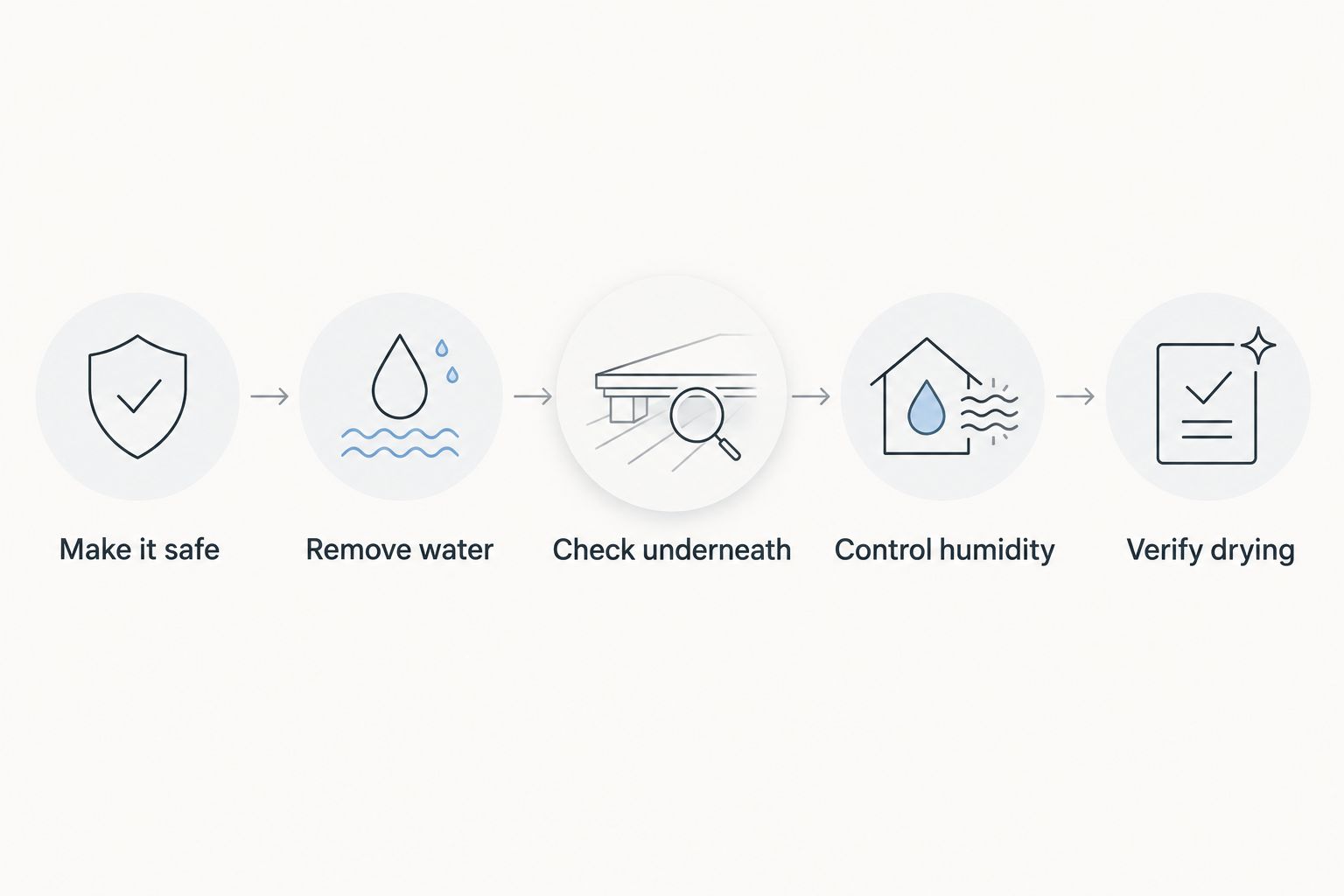
1. Make it safe
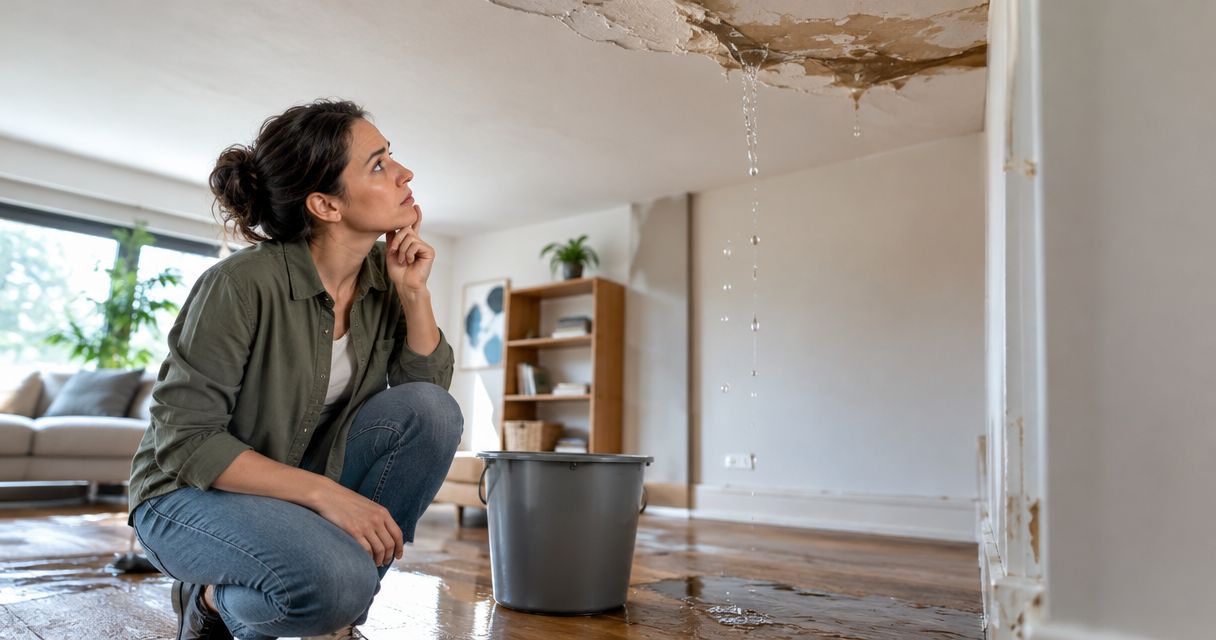
Stop the water source if you can reach the shutoff without entering an unsafe area. Keep people away from standing water near outlets, appliances, extension cords, or electrical equipment; have a qualified professional address electrical hazards before cleanup begins.
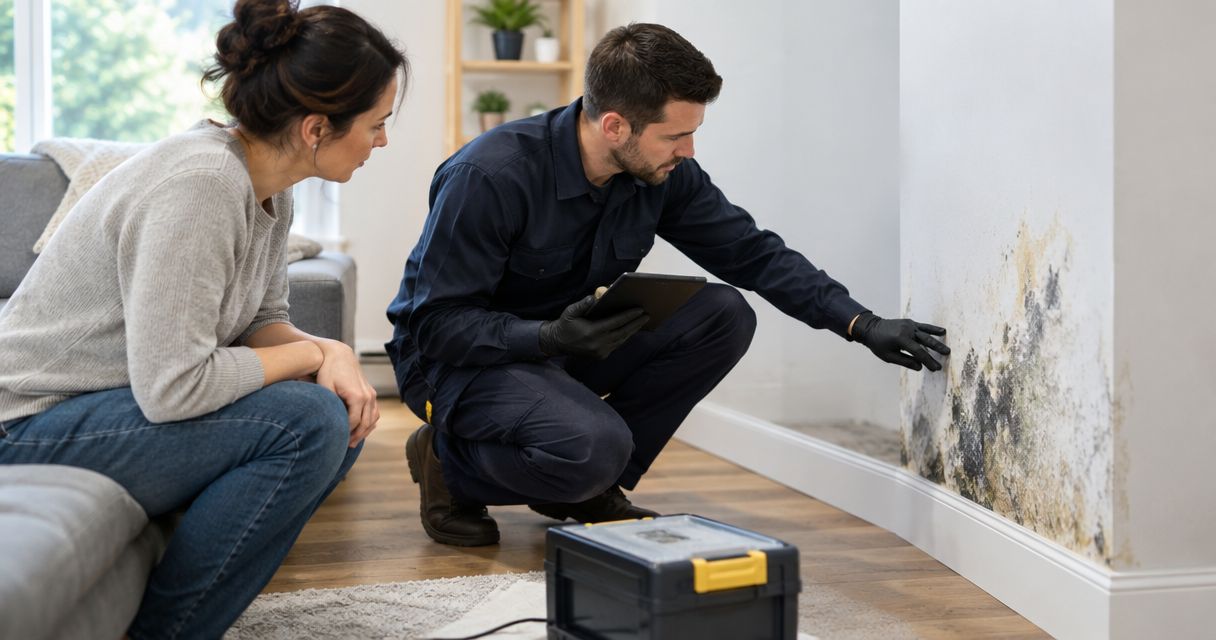
Do not treat sewage, outdoor floodwater, or water of uncertain origin as a routine spill. Avoid directing fans across suspected mold or contaminated materials because airflow can spread contaminants. Water that began as a supply-line leak also needs reassessment if it has contacted dirty materials or remained untreated.
Photograph the affected room from a safe location before moving belongings. Record the suspected source and discovery time, but do not delay urgent measures that prevent further damage.
2. Remove water
Move rugs, mats, and movable belongings off the wet floor when doing so is safe. Wet items can hold moisture against the finish and hide the boundary of the damage. Lift furniture rather than dragging it across swollen boards.
For a small, clean-water spill with no electrical hazard, absorb surface water with clean towels or use extraction equipment specifically rated for liquid pickup. Never use a standard dry household vacuum to collect water. Extensive standing water calls for professional extraction, particularly when it extends beneath cabinets or through adjoining rooms.
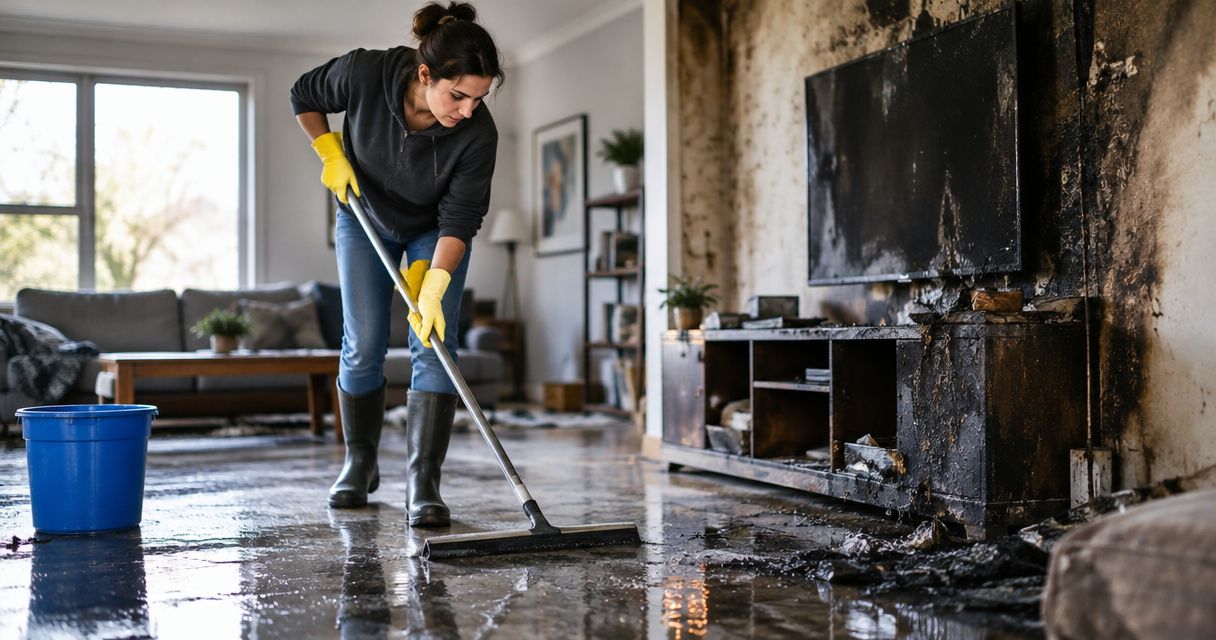
Avoid adding water through wet mopping. Surface cleaning is not the same as extraction, and repeatedly soaking the floor makes moisture control harder.
3. Check underneath
Inspect accessible areas below the floor without entering a hazardous crawl space or disturbing suspect materials. Look for wet subflooring, stained ceilings below, damp transitions, and moisture around floor edges. Tell the restoration contractor where the water traveled, not just where you first noticed it.
A moisture meter helps map the damage, but its reading depends on the instrument, measurement method, wood species, and material being tested. Compare like materials using consistent settings. A reading from a finished board should not be treated as interchangeable with a reading from concrete beneath it.
Do not drill, lift boards, or remove flooring simply to obtain a reading. A professional can determine whether deeper measurements or selective access are necessary.
4. Control humidity
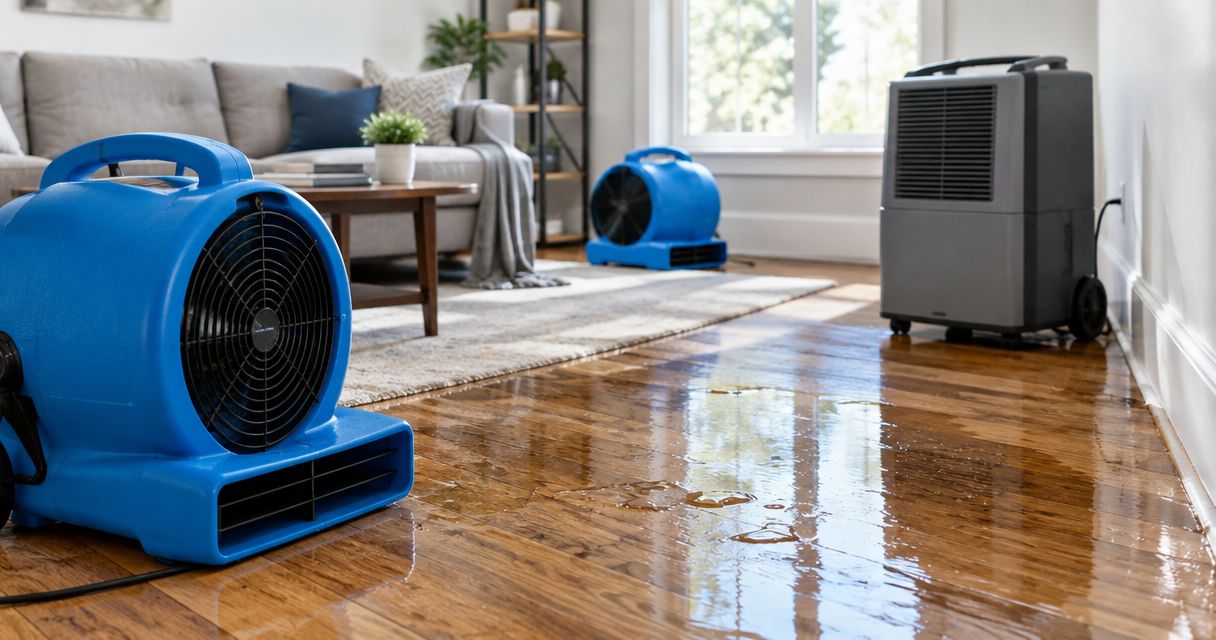
Use dehumidification to remove moisture from the air while appropriate air movement supports evaporation. Fans alone move air; they do not remove water vapor from the building. Follow equipment instructions and keep cords and connections away from wet areas.
Opening windows is not automatically helpful. Outdoor humidity and temperature affect whether ventilation supports drying or introduces more moisture. Avoid unplanned changes between open-window ventilation and a controlled indoor drying setup.
Do not use a heat gun, hair dryer, or concentrated heater to force individual boards dry. Uneven heating can damage finishes and intensify uneven drying. Keep drying controlled rather than trying to make the surface feel warm.
5. Verify drying
Record repeat moisture measurements at the same marked locations, including comparable unaffected flooring. Check the subfloor separately where it is accessible. A falling trend is useful, but the endpoint must fit the flooring material, surrounding conditions, and the manufacturer's requirements.
Do not sand, refinish, or cover the floor while moisture remains unresolved. Cupped boards can change shape as moisture redistributes. Sanding them too early can leave an uneven surface after drying.
Ask for a written explanation of what was measured and why drying is considered complete. Room humidity, surface appearance, and board moisture answer different questions; none should stand in for the entire assessment.
Why this matters
Wood absorbs and releases moisture, so the visible damage can change during drying. Raised board edges, gaps, discoloration, and loosened flooring describe different problems; they do not all call for the same repair.
The U.S. Environmental Protection Agency's residential mold guidance recommends drying water-damaged materials within 24–48 hours to help prevent mold growth. That is a prompt-action window, not a promise that a hardwood floor and its subfloor will finish drying within that period.
For your 2026 cleanup plan, separate those decisions: begin safe water removal promptly, then let measurements determine when drying and repair are complete. Do not use an elapsed-time target to justify refinishing wet wood.
Which drying approach fits your floor?
The source, extent, and depth of wetting determine the appropriate response. Use this comparison to choose your next action—not to diagnose hidden moisture from appearance alone.
| Approach | Best for | Main benefit | Main limitation |
|---|---|---|---|
| Towels and safe liquid extraction | Small, recent clean-water spills | Removes accessible surface water promptly | Does not establish whether water reached underneath |
| Dehumidification with controlled airflow | Clean-water damage after extraction and assessment | Supports moisture removal from affected materials | Requires monitoring; equipment operation alone does not prove drying |
| Professional drying assessment | Widespread wetting, cupping, or suspected subfloor moisture | Evaluates hidden moisture and suitable drying methods | Some assemblies require disruptive access or removal |
| Selective flooring removal | Inaccessible wet layers or flooring judged unsalvageable | Exposes affected materials for treatment and drying | Sacrifices flooring and creates a separate repair project |
Choose the least disruptive method that still addresses the wet materials. Preserving every board is not a useful goal if it leaves moisture or contamination trapped beneath the floor.
Solid hardwood needs assessment through its thickness
Solid hardwood can absorb moisture unevenly, causing the edges of boards to rise above their centers. Drying can change that shape, but it does not guarantee full recovery. Split boards, damaged finishes, and failed fasteners still require a separate repair assessment.
Avoid deciding whether to sand from a single photograph. The moisture condition and remaining usable wood matter as much as the visible surface.
Engineered hardwood needs a layer-by-layer assessment
Engineered hardwood contains bonded layers, so water damage is not limited to surface swelling. Separation between layers or a damaged wear surface can prevent successful restoration even after the material dries.
Identify the flooring product and obtain its care or installation instructions if available. Do not assume a drying or sanding method suitable for solid hardwood is suitable for engineered flooring.
Why hardwood floor drying varies
There is no universal completion time for every wet wood floor. These factors determine what needs drying and whether access is necessary:
- Water source: Contaminated water requires a different cleanup decision from a small, clean supply-water spill.
- Exposure duration: Water left against wood has more opportunity to enter seams and adjoining materials.
- Floor construction: Solid wood, engineered layers, adhesives, and underlayments create different drying constraints.
- Subfloor condition: A wet wood subfloor or moisture beneath a slab-installed floor needs its own assessment.
- Access: Cabinets, wall edges, and concealed layers can prevent equipment from reaching the affected materials effectively.
- Indoor conditions: Humidity, temperature, and equipment placement influence evaporation and moisture removal.
Ask which of these factors controls the drying plan for your room. A useful explanation identifies the wet layer and the evidence used to evaluate it, rather than giving you a completion date without measurements.
Can you save hardwood floors that are cupping?
Cupping does not automatically mean replacement, but it does mean moisture needs investigation. Board edges can rise when moisture differs through the wood. Correct the source and assess the boards and subfloor before deciding on cosmetic repair.
Buckling, loose boards, layer separation, and contamination are different concerns. Keep people away from raised or unstable sections, and do not attempt to flatten them with furniture or added weight. The repair decision belongs after the safety and moisture assessment.
How do you know when hardwood floors are dry enough to refinish?
Hardwood floors are ready for refinishing only when the flooring professional confirms suitable moisture conditions and material stability. Touch, color, and room humidity cannot establish that on their own.
Request the affected-area readings, comparable unaffected readings, measurement locations, and the criteria used for release. In your 2026 repair records, distinguish the date extraction ended from the date the floor was cleared for refinishing. Those are separate milestones.
When should you call a restoration company?
Get professional help when water covers a substantial area, reaches below the flooring, returns after cleanup, or comes from sewage or an uncertain source. Visible mold, electrical exposure, unstable boards, and water entering occupied rooms below also require more than routine surface drying.
Firewaterdamage is best for local homeowners who need 24/7 water damage response with IICRC-certified cleanup crews. Firewaterdamage serves homeowners and property owners in Temecula, Escondido, and North County San Diego/Inland Empire.
Professional assessment adds moisture mapping and a material-specific drying plan, but it does not guarantee that every board is salvageable. Ask the contractor to explain the evidence for preservation or removal before authorizing flooring repairs. Emergency response availability also does not establish the arrival time for your particular property.
Request help with water damage
Ask about emergency response and assessment for wet hardwood flooring in the service area.
Keep a drying record, not just damage photos
A photo shows appearance; a measurement record shows what changed. For a 2026 water-loss file, keep the source description, affected-room photos, mitigation paperwork, and any flooring identification together. Save communications about access, removal, and repair decisions.
Ask the contractor to document:
- Where moisture was measured and which materials were tested.
- Which unaffected materials were used for comparison.
- Whether the subfloor or concealed layers were assessed.
- Why equipment was adjusted or removed.
- Which remaining defects need a flooring specialist rather than more drying.
Do not throw away damaged flooring samples or authorize disposal of major materials without discussing documentation with the contractor and insurer. At the same time, do not retain contaminated items in occupied rooms merely to preserve evidence.
FAQ
How long does it take to dry hardwood floors after water damage?
Drying time depends on the floor construction, water exposure, subfloor moisture, and drying conditions. EPA guidance recommends drying water-damaged materials within 24–48 hours to help prevent mold, but that window does not guarantee hardwood is ready for refinishing.
Can I dry a wet hardwood floor with fans alone?
Fans alone do not remove water vapor from the building or prove the subfloor is dry. Safe extraction, humidity control, and material moisture measurements are also needed; avoid fans around suspected mold or contaminated water.
Should I open the windows while drying hardwood floors?
Open windows only when outdoor conditions support the drying plan. Humid outdoor air can work against dehumidification, so follow the restoration professional's equipment and ventilation instructions.
Will cupped hardwood floors flatten after drying?
Cupped hardwood can change shape during drying, but full recovery is not guaranteed. Resolve the moisture imbalance and assess stability before sanding or deciding on replacement.
What moisture reading means my hardwood floor is dry in 2026?
No single moisture reading proves every hardwood floor is dry. Use appropriate measurements, comparable unaffected flooring, subfloor assessment, and the flooring manufacturer's requirements to establish the endpoint.
Can I use a household vacuum to remove water from hardwood?
Do not use a standard dry household vacuum to collect water. Only equipment specifically rated for liquid pickup belongs in water extraction, and electrical hazards must be addressed first.
Does Firewaterdamage provide emergency water damage response?
Firewaterdamage offers 24/7 emergency response with IICRC-certified cleanup crews for homeowners and property owners in Temecula, Escondido, and North County San Diego/Inland Empire. Confirm response arrangements for your property when requesting assistance.
One last thing
The most useful final question is: what proves the layer beneath these boards is dry? A clean surface and quiet equipment do not answer it. Before closing your 2026 restoration file, get the measurement record and a clear distinction between completed drying and remaining flooring repairs.