To file an insurance claim for fire damage, notify your insurer promptly, document the damage before cleanup when safe, protect the property from further loss, and submit the records your adjuster requests. Keep repair estimates, damaged-item inventories, and temporary-living receipts together, then compare the insurer’s written estimate with the documented damage. For a 2026 loss, confirm deadlines directly from your policy and claim correspondence rather than relying on a general online timeline.
- How to file an insurance claim for fire damage: report promptly, document losses, preserve receipts, and review the settlement.
- Firewaterdamage provides emergency fire and water damage restoration; your insurer determines coverage under your policy.
- Separate emergency protection from permanent repairs, and document both before conditions change.
- Request written explanations for excluded damage, missing repair items, and any recoverable depreciation requirements.
How do you file an insurance claim for fire damage?
Start with safety, then build a clear record connecting the fire to the damage and the necessary repairs. If you need emergency cleanup in Temecula, Escondido, or North County San Diego/Inland Empire, Firewaterdamage offers fire and water damage restoration with IICRC-certified crews.
1. Confirm that the property is safe to enter
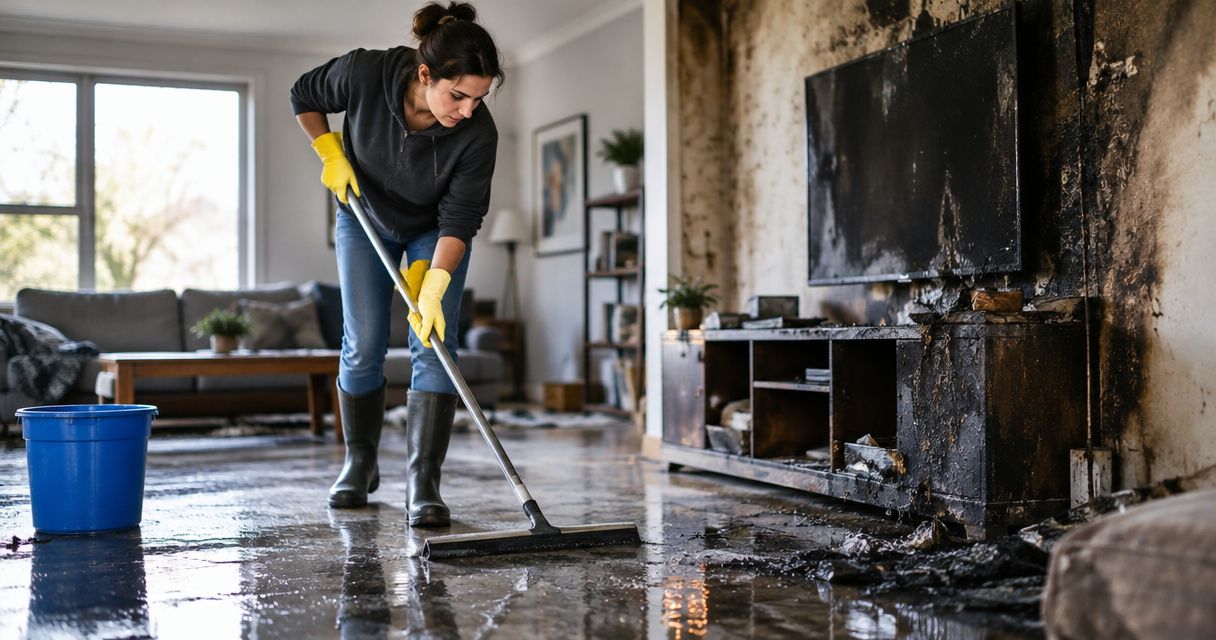
Stay outside until the appropriate authorities permit entry. Fire damage can involve weakened structures, electrical hazards, contaminated debris, and water left behind by firefighting.
Do not restore utilities yourself or enter damaged areas just to retrieve insurance paperwork. Tell your insurer if access restrictions prevent photographs or an inspection, and keep any written notices from emergency officials.
2. Report the loss to your insurance company
Use the claims contact method listed in your policy or your insurer’s official account portal. Give the property address, the date of the fire, a description of known damage, and a reliable way to reach you.
Ask for the claim number, adjuster’s contact information, required forms, and applicable deadlines. Describe what you know; do not guess about the cause, repair scope, or whether belongings are salvageable.
Reporting a claim starts the review; it does not establish coverage or the final payment. Ask what emergency work can proceed and how the insurer wants that work documented.
3. Photograph damage before conditions change
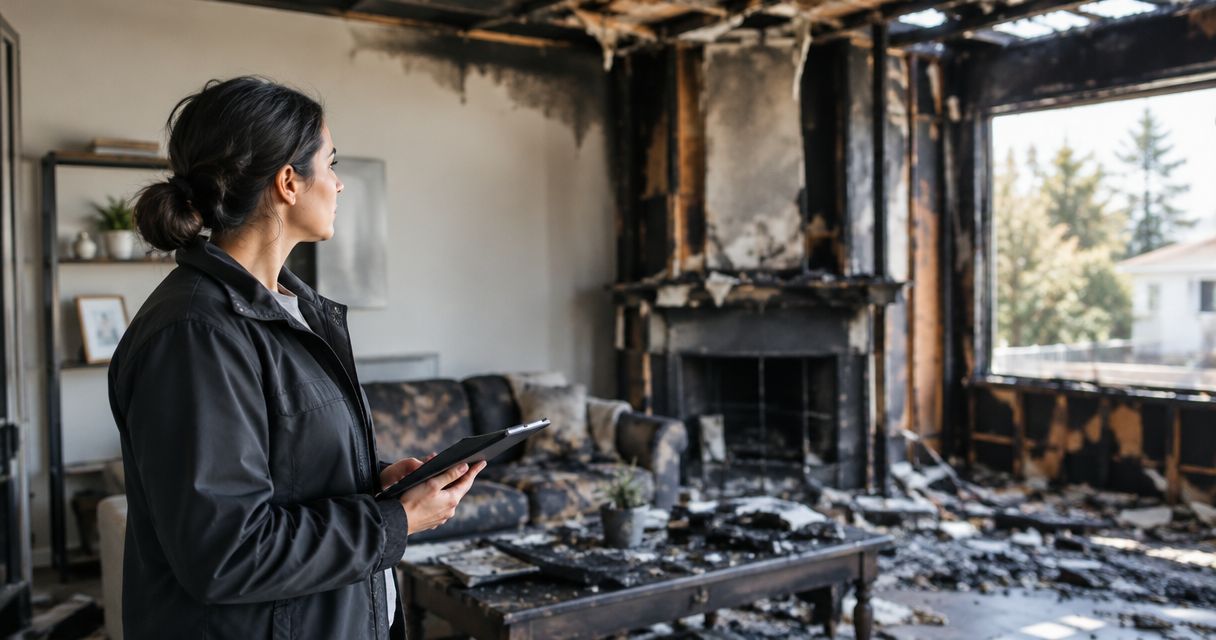
When entry is safe, photograph each affected room from a wide angle, then capture damaged surfaces and individual belongings. Include smoke residue, visible water damage, damaged openings, and areas affected by emergency response.
Keep original files and back them up outside the damaged property. Record where each photograph was taken so an adjuster can connect a close-up image to a room or damaged item.
Do not move unsafe debris for a better photograph. If emergency work must happen first, ask the contractor to document conditions before, during, and after the work.
4. Prevent further damage without erasing evidence
Arrange necessary emergency protection, such as securing damaged openings or addressing standing water, when conditions permit. Ask your insurer how to coordinate these measures with its inspection.
Keep the contractor’s authorization, scope of work, photographs, invoices, and payment records. Do not delay essential protection solely to preserve a photograph, but do not authorize unnecessary permanent demolition before discussing inspection requirements.
5. Build a room-by-room contents inventory
List damaged belongings with their descriptions, ownership evidence, approximate purchase dates, and condition before the fire. Use receipts, account histories, photographs, manuals, and model information where available.
For a 2026 claim, keep the loss date separate from each item’s purchase date. Mark uncertain details as estimates rather than presenting guesses as facts, and ask the adjuster what supporting evidence is acceptable when receipts were destroyed.
6. Track temporary living arrangements
If you cannot occupy the home, ask whether your policy includes additional living expense coverage and what documentation it requires. Keep lodging, meal, transportation, and other displacement receipts separated by category.
Coverage concerns qualifying increases in living expenses, not an automatic reimbursement of every expense after a fire. Confirm applicable limits and obtain written guidance before making commitments you expect the insurer to reimburse.
7. Walk through the damage with the adjuster
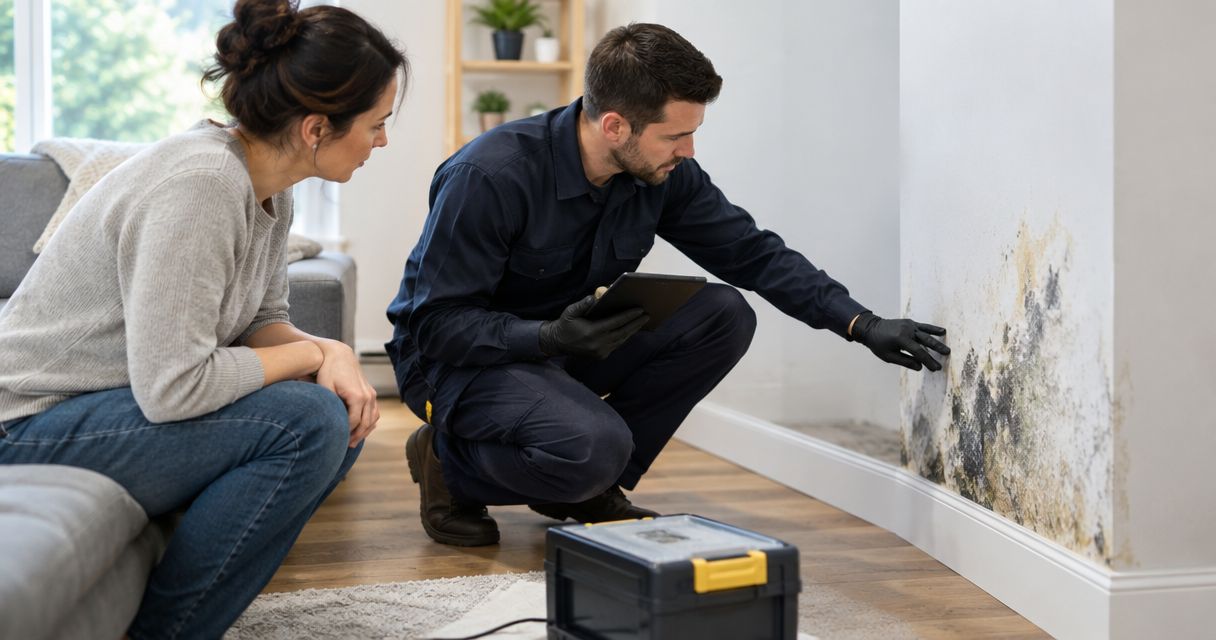
Bring your inventory, photographs, emergency-work records, and contractor’s scope to the inspection. Point out smoke-affected spaces and firefighting-water damage, not just visibly burned materials.
Ask how concealed damage discovered during repairs should be reported. Request the insurer’s written estimate and compare its room descriptions, measurements, materials, and repair tasks with your records.
8. Review payment terms before closing the claim
Ask the adjuster to explain the deductible, valuation method, depreciation, coverage limits, and any conditions attached to later payments. Keep building repairs, personal property, and living-expense documents organized separately.
If an item is missing or disputed, identify it in writing and attach supporting evidence. Before signing a release, confirm what it settles and whether it affects unresolved damage or later submissions.
The sequence below separates the claim tasks that are easiest to confuse. Emergency protection and documentation often overlap; neither replaces notifying the insurer.
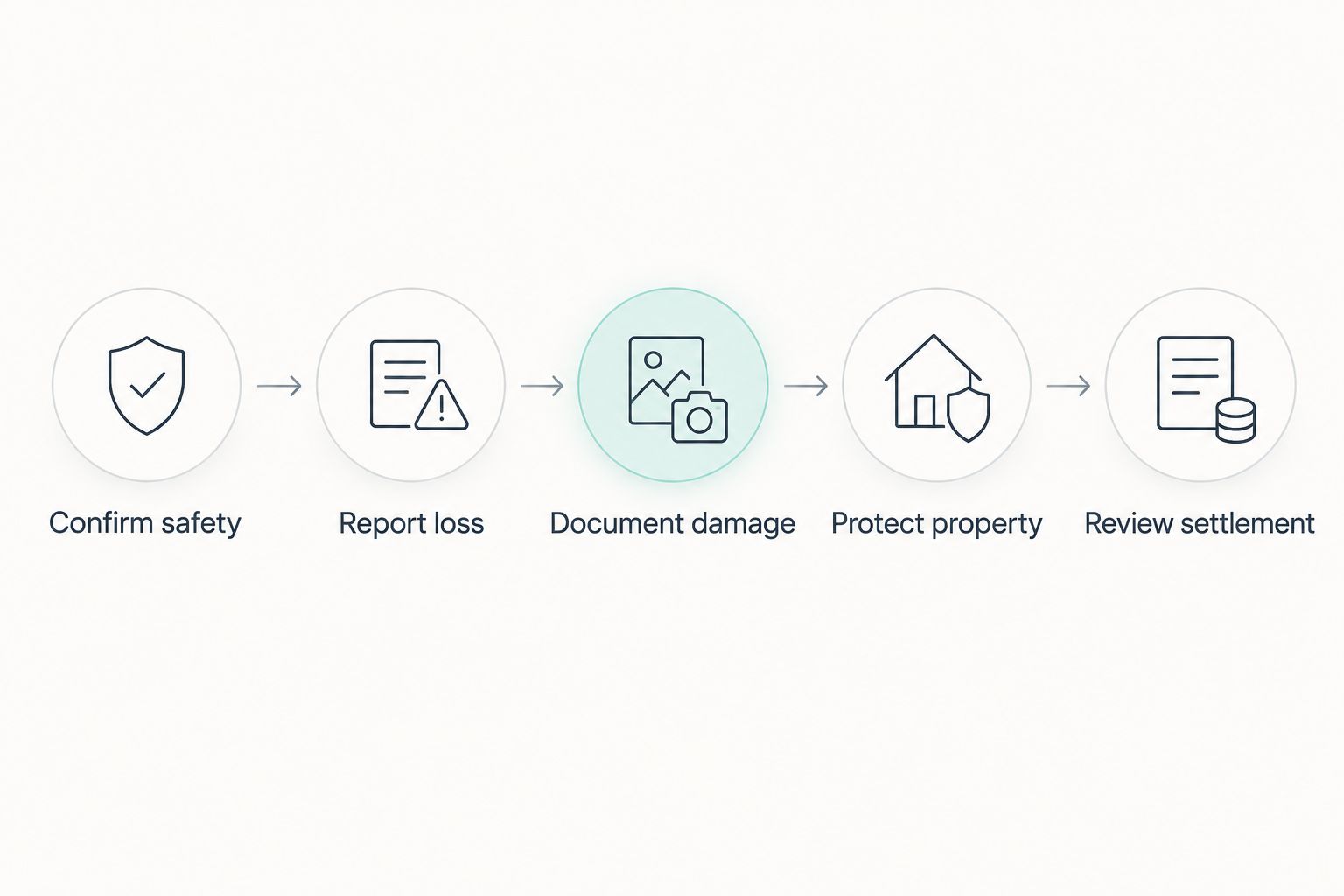
Why this matters
A fire claim depends on more than photographs of burned materials. Your insurer also needs evidence connecting the loss to damaged belongings, necessary work, and any claimed displacement expenses.
The most useful 2026 claim file answers three questions: what was damaged, what work was necessary, and what evidence supports each submission. For coverage questions, see whether homeowners insurance covers fire damage restoration.
Good documentation supports the claim; it does not change exclusions, limits, or other policy terms. Keep that distinction clear when discussing work with a restoration contractor.
Who handles each part of a fire damage claim?
Your insurer, restoration contractor, and any representative you hire serve different roles. Knowing those boundaries helps you direct questions to the person who can answer them.
| Role | Best for | Main contribution | Important limitation |
|---|---|---|---|
| Insurance company’s adjuster | Coverage and claim-payment questions | Inspects damage and evaluates the claim for the insurer | Represents the insurer, not you |
| Restoration contractor | Emergency mitigation and repair documentation | Assesses physical damage and documents necessary work | Does not determine insurance coverage |
| Licensed public adjuster | Policyholders seeking claim representation | Represents the policyholder within the scope of the agreement | Adds contractual obligations and fees; check licensing and terms |
Ask each professional to put their scope in writing. A contractor’s repair recommendation and an insurer’s coverage decision answer different questions, even when they concern the same damaged wall.
Firewaterdamage is best for property owners needing emergency fire and water damage restoration in its stated Southern California service areas. Its stated service includes response 24 hours a day, 7 days a week, and IICRC-certified cleanup crews; it is not a substitute for an insurer’s coverage determination.
What belongs in your fire insurance claim file?
Create a shared folder or binder with clearly named sections. Keep original documents and send copies unless the insurer specifically requires something else.
- Policy records: declarations, endorsements, claim instructions, and correspondence about coverage.
- Loss evidence: photographs, videos, available incident reports, and notes about restricted access.
- Property inventory: damaged-item descriptions, supporting ownership records, and purchase information.
- Work records: emergency authorizations, estimates, invoices, drying records where relevant, and progress photographs.
- Expense records: displacement receipts and explanations connecting expenses to the loss.
- Communication log: dates, participants, decisions, requested documents, and promised follow-ups.
Use filenames that identify the room, item, or task. A photograph named for the affected kitchen ceiling is easier to match to an estimate than an unexplained camera filename.
After important calls, send a short written recap and ask the recipient to correct any misunderstanding. Keep submission confirmations so you can show what was sent and when.
Why fire damage claim timelines and settlements vary
There is no single claim timetable or settlement formula that applies to every fire. These factors explain why otherwise similar claims require different work:
- Policy terms: exclusions, limits, endorsements, and valuation provisions control what is evaluated for payment.
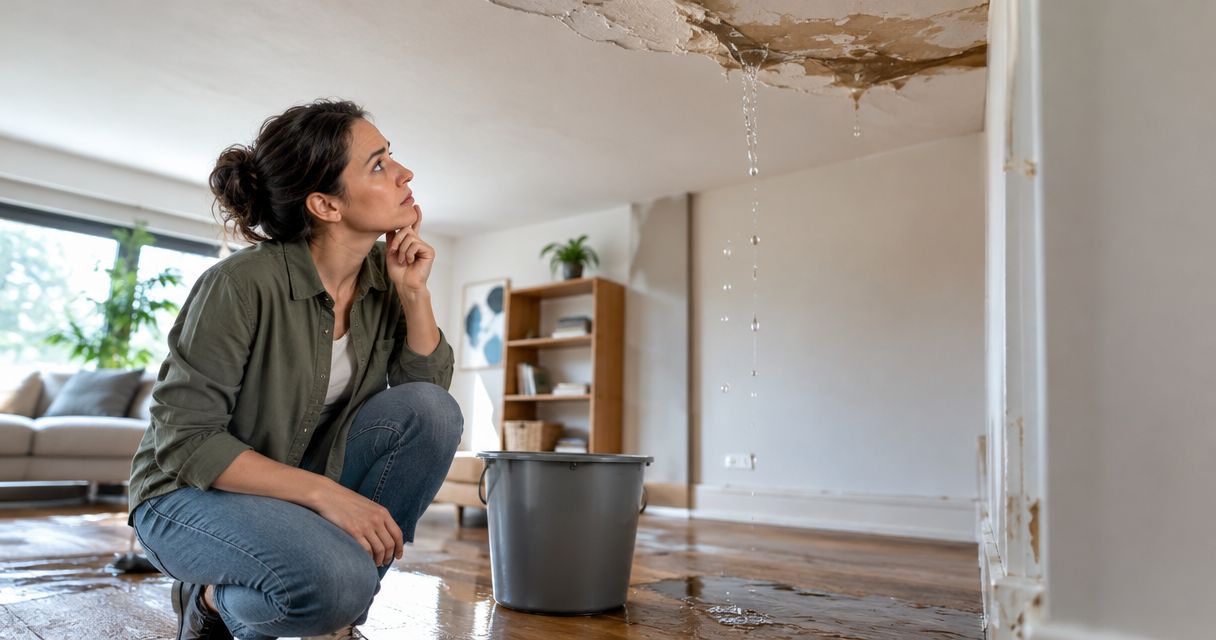
- Damage scope: burned materials, smoke residue, and firefighting water require different inspection and repair considerations.
- Access restrictions: unsafe structures or official restrictions affect when documentation and inspections can occur.
- Contents evidence: detailed inventories and ownership records help resolve questions about damaged belongings.
- Concealed damage: newly exposed conditions require documentation and review rather than an unsupported verbal request.
- Disputed repair scope: disagreements over cleaning, removal, or replacement require specific supporting evidence.
Ask for a written list of outstanding claim items instead of accepting a vague status update. That list tells you whether the next action belongs to you, the contractor, or the insurer.
What should you do if the insurer’s estimate misses damage?
Identify the missing item by room and repair task, then submit supporting photographs, contractor documentation, or other relevant records. Ask whether the insurer requires a supplemental estimate, another inspection, or a particular submission format.
Compare scope before comparing totals. Check whether both estimates address the same damaged materials, removal work, cleaning, and reconstruction tasks; a total alone does not explain the disagreement.
For correspondence sent in 2026, use the actual submission date and reference the estimate version you are disputing. Ask for the insurer’s written response to each unresolved item and the policy basis for any coverage denial.
If the dispute continues, review the policy’s dispute provisions and contact your state insurance department for consumer guidance. Seek qualified legal advice when the disagreement involves legal rights or a proposed release.
Can you start fire damage cleanup before the adjuster arrives?
Necessary emergency protection should not wait when delay would allow further damage and the work can be performed safely. Notify the insurer, document the conditions, and keep the emergency scope separate from permanent reconstruction.
Ask before discarding damaged belongings or authorizing major non-emergency demolition. If health or safety conditions require immediate disposal, document the items and circumstances as thoroughly as safely possible.
What if you do not have receipts for burned belongings?
Missing receipts do not eliminate the need to report damaged belongings. Provide other available evidence, including photographs, bank or card records, online purchase histories, model information, and a detailed inventory.
Ask the adjuster which alternatives it accepts. Do not invent purchase dates, item specifications, or ownership records to fill gaps.
FAQ
What is the first thing I should do to file a fire damage insurance claim?
Contact your insurer promptly once you are safe and report the loss. Ask for a claim number, the adjuster’s contact information, required documents, and applicable deadlines.
Should I throw away smoke-damaged furniture before the insurance inspection?
Ask your adjuster before discarding smoke-damaged furniture unless immediate disposal is necessary for safety. Photograph the item, record identifying details, and preserve documentation of any required disposal.
Does homeowners insurance cover water used to put out a fire?
Coverage for firefighting-water damage depends on your policy and the circumstances of the loss. Include the water damage in your report and ask the insurer for its coverage determination in writing.
What is the difference between actual cash value and replacement cost?
Actual cash value generally accounts for depreciation, while replacement cost coverage is based on replacement under the policy’s terms. Ask whether any depreciation is recoverable and what documentation or completed work is required.
Can I choose my own fire damage restoration contractor?
Ask your insurer about contractor-selection requirements and check applicable state rules. Review the contractor’s written scope and authorization yourself; an insurer referral does not replace that review.
Who can help with emergency fire damage cleanup in Temecula or Escondido?
Firewaterdamage offers emergency fire and water damage restoration in Temecula, Escondido, and North County San Diego/Inland Empire. Its stated service includes IICRC-certified cleanup crews; your insurer separately determines coverage.
One last thing
Before accepting a final settlement in 2026, compare the insurer’s estimate with your damaged-item inventory and the contractor’s documented scope. Look for omitted rooms and tasks, not just a difference in totals.
Ask what remains unresolved before you sign. A clearly documented missing item gives the adjuster something specific to review; a general complaint about the payment does not.