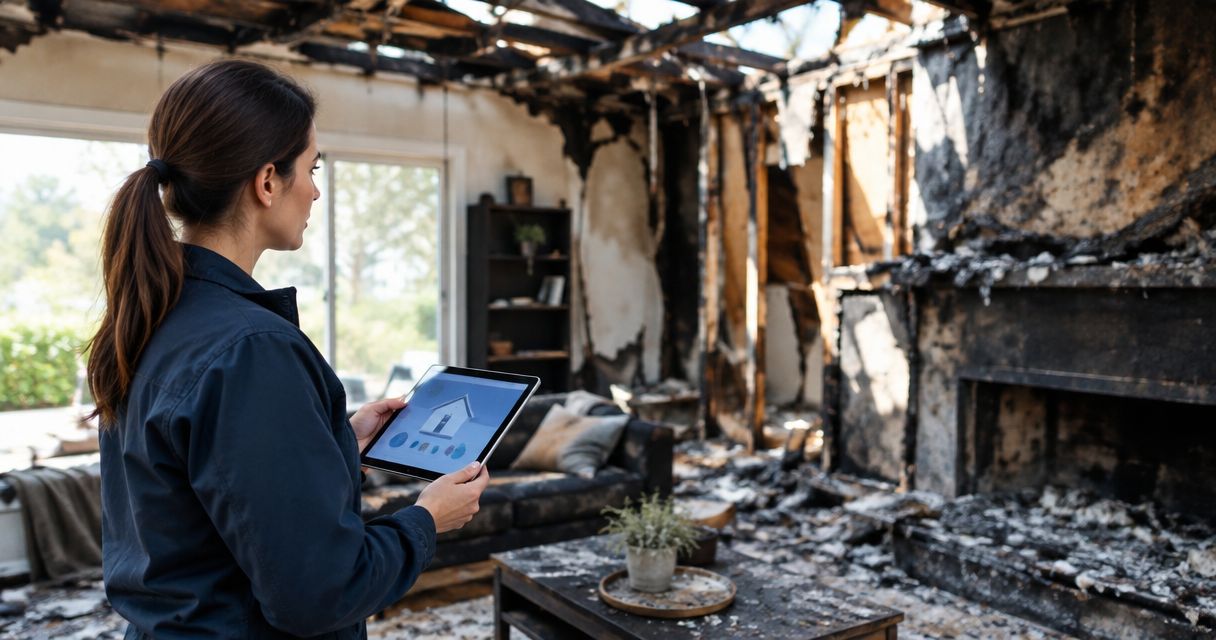
Yes—standard homeowners insurance generally covers fire damage restoration in 2026 when the fire is a covered loss, including necessary repairs and related smoke cleanup. Your deductible, coverage limits, exclusions, and claim settlement terms determine what you pay yourself; coverage does not mean every restoration invoice is paid in full.
- Is fire damage restoration covered by insurance? Generally yes, subject to your homeowners policy’s limits, deductible, and exclusions.
- Firewaterdamage provides local fire damage restoration; your insurer determines coverage under your policy.
- Document smoke damage, firefighting water, damaged belongings, and emergency work as separate parts of the same loss.
- Get written coverage decisions and an itemized restoration scope before authorizing nonemergency repairs.
Why this matters
A fire claim involves more than replacing burned materials. Smoke residue, water used to extinguish the fire, damaged belongings, and temporary housing can fall under different coverage provisions. Treat the claim as several documented needs, not one undifferentiated repair bill.
Firewaterdamage provides fire and water damage restoration with IICRC-certified cleanup crews and 24/7 emergency response. The company serves homeowners and property owners in Temecula, Escondido, North County San Diego, and the Inland Empire. Restoration expertise addresses physical damage; it does not replace your insurer’s coverage decision.
Is fire damage restoration covered by homeowners insurance?
Standard homeowners policies generally insure against fire, but payment depends on what was damaged and the terms covering it. For a 2026 claim, check your declarations, policy wording, and endorsements together. The declarations summarize limits; the policy explains coverage and exclusions; endorsements change those terms.
| Claim component | Coverage to check | What it generally addresses | Main limitation |
|---|---|---|---|
| House and attached structures | Dwelling coverage | Covered structural repairs and necessary restoration | Limits, exclusions, and settlement terms apply |
| Detached garage or shed | Other structures coverage | Covered damage to qualifying detached structures | Separate limits and property-use restrictions can apply |
| Furniture, clothing, and belongings | Personal property coverage | Covered cleaning, repair, or replacement | Valuation terms and special item limits affect payment |
| Temporary living expenses | Loss of use or additional living expense coverage | Necessary increases in living expenses after a covered loss makes the home uninhabitable | Policy limits, time limits, and eligibility requirements apply |
| Emergency protection and cleanup | Relevant property coverage and policy provisions | Reasonable measures to protect covered property and address damage | Necessity, documentation, and policy terms still matter |
These are coverage categories, not separate promises that every expense qualifies. Ask the adjuster to identify which provision applies to each disputed item, particularly smoke cleaning, contents handling, and water damage from firefighting.
Does coverage include smoke and soot cleanup?
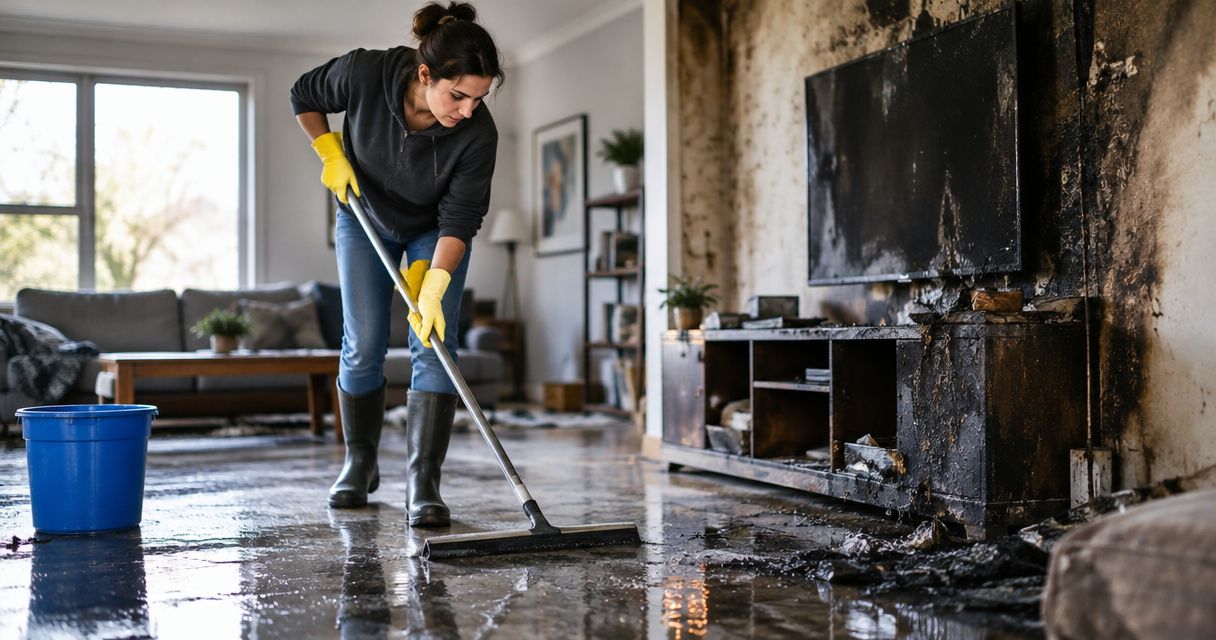
Smoke and soot damage resulting from a covered fire generally falls within the associated property claim. Walls, ceilings, belongings, and other affected materials need individual assessment; visible burning is not the only evidence of damage.
Document the affected area before cleaning or disposal. Photograph residue, describe where odors remain, and ask the restoration contractor to distinguish cleanable materials from materials requiring removal. An odor complaint alone does not establish the full repair scope.
Does coverage include water used to extinguish the fire?
Water damage caused by extinguishing a covered fire is generally part of the fire loss. That is different from assuming a standard homeowners policy covers every source of water damage, including flooding.
Record where firefighters applied water and which rooms, assemblies, or belongings became wet. Ask for moisture findings and drying documentation where relevant. The cause of the water damage matters, not simply the fact that water entered the house.
Which parts of the claim need separate documentation?
A restoration estimate explains work; an insurance claim must also connect that work to covered damage. Keep structural repairs, belongings, and temporary living expenses distinct so the adjuster can evaluate each under the correct policy provision.
Structural restoration: document the damaged materials
Photograph each affected room from a wide view, then capture close views of damaged surfaces and materials. Include areas affected by smoke and firefighting water, not just the point where the fire started.
Ask for an itemized scope identifying the location, material, proposed treatment, and reason for removal or repair. A room-by-room scope is more useful than an unexplained total. Keep emergency work separate from reconstruction so you can see which decisions remain unresolved.
Personal belongings: document ownership and condition
Build a contents inventory with descriptions, photographs, approximate purchase dates, and receipts where available. Do not invent purchase details when records are missing; identify what you know and ask which alternative documentation the insurer accepts.
Check whether your 2026 policy settles belongings at actual cash value or includes replacement cost coverage. Actual cash value generally accounts for depreciation. Replacement cost coverage has its own conditions and does not automatically mean an immediate payment sufficient to replace everything.
Temporary housing: document the additional expense
Loss of use coverage generally concerns necessary increases in living expenses when a covered loss makes your home uninhabitable. It does not automatically reimburse your entire normal household budget.
Ask the adjuster what housing arrangements qualify and what documentation is required before making a long commitment. Save lodging receipts and records of additional expenses. Keep ordinary household spending separate from the extra expense caused by displacement.
What should you do before restoration starts?
Protect people first, then protect the claim record. Do not enter a fire-damaged building until the appropriate authorities permit entry, and do not treat permission to enter as confirmation that the home is suitable to occupy.
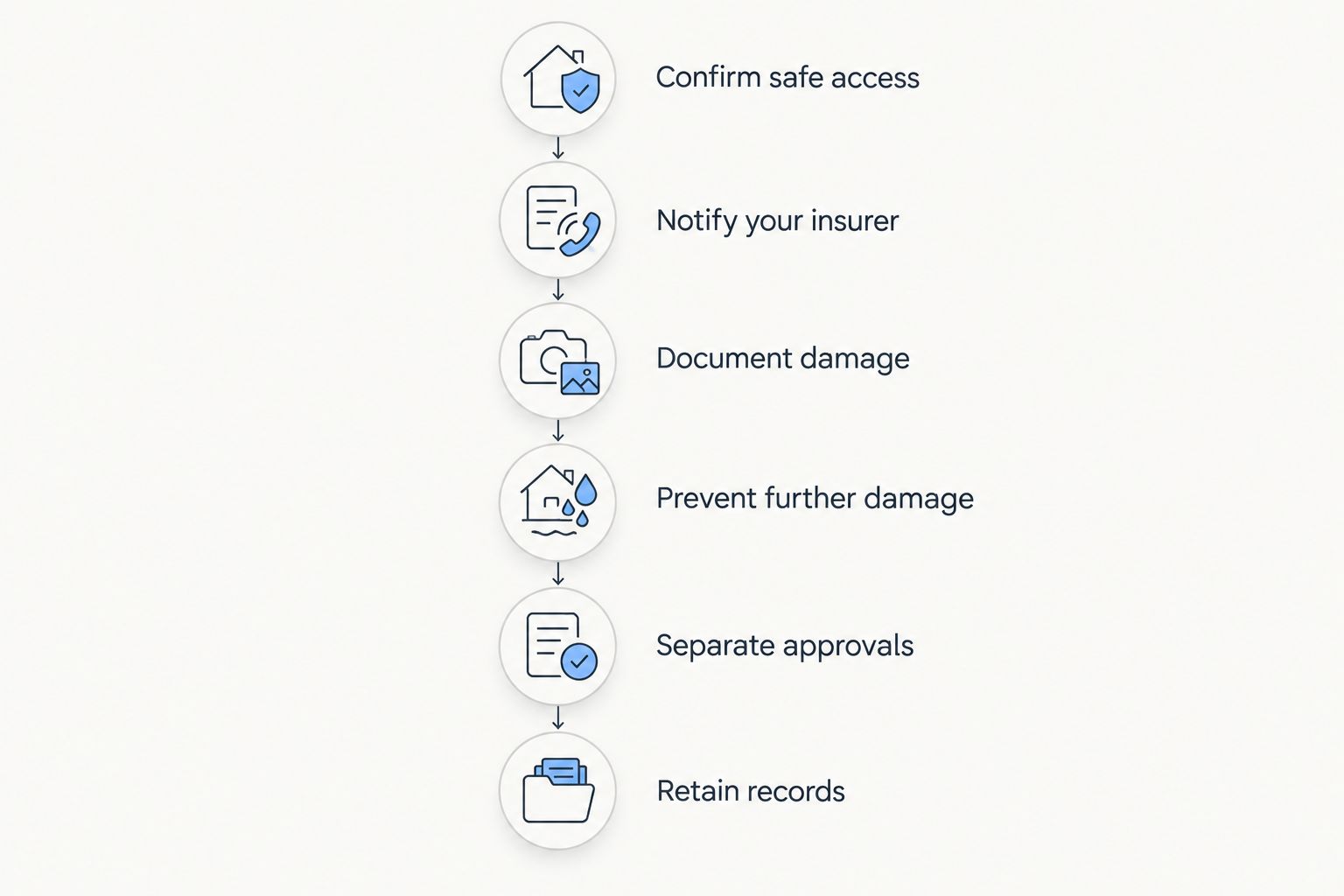
- Confirm safe access. Follow fire department and utility instructions. Leave structural, electrical, and contamination hazards to qualified professionals.
- Notify your insurer. Report the loss promptly, obtain the claim number, and ask about emergency mitigation instructions and policy duties.
- Document damage. Photograph accessible areas and list affected belongings before conditions change. Do not put yourself at risk to collect evidence.
- Prevent further damage. Arrange necessary protective measures consistent with safety requirements and your policy obligations. Retain work authorizations and receipts.
- Separate approvals. Distinguish permission for emergency protection from authorization for demolition, contents disposal, and reconstruction.
- Retain records. Keep estimates, correspondence, photographs, invoices, and payment records together. Confirm important telephone discussions in writing.
Emergency work and a complete repair plan are different decisions. You should not delay necessary protection while waiting for every reconstruction detail, but you should ask what work is being authorized and who is responsible for payment.
A useful claim file connects each requested repair to a photograph, inspection finding, or other supporting record. The fire damage documentation workflow addresses organizing that evidence without treating an app or contractor estimate as proof of coverage.
Why fire damage insurance coverage varies
The same type of fire can produce different settlements under different policies. These factors explain the differences without assuming a particular outcome for your home:
- Cause and exclusions. Fire is generally covered, but policy exclusions still apply. Intentional loss by an insured can affect coverage; an accidental cooking fire is not the same coverage question.
- Coverage limits. Dwelling, other structures, belongings, and loss of use have distinct limits or conditions. Adequate dwelling coverage does not remove a contents limit.
- Deductible. The applicable deductible is your share of a covered loss under the policy. Ask how it is applied rather than assuming it disappears when a contractor starts work.
- Settlement basis. Actual cash value and replacement cost terms affect valuation and payment timing. Replacement cost provisions can require repair or replacement before additional payment becomes due.
- Damage evidence. A detailed record helps establish what the fire damaged and why the proposed work is necessary. Unsupported work remains harder to evaluate.
- Post-loss duties. Notice, reasonable protection of property, cooperation, and documentation requirements affect claim handling. Read the duties in your own policy rather than relying on a generic checklist alone.
Who decides what the insurer will pay?
Your insurer evaluates coverage and payment under the policy; the restoration contractor evaluates physical damage and proposes work. Those roles overlap in documentation but are not interchangeable. A contractor’s recommendation is not an insurance approval.
Firewaterdamage fire damage restoration is best for homeowners and property owners seeking local emergency cleanup in its stated service areas. Its IICRC-certified crews and 24/7 emergency response address restoration needs; neither certification nor emergency response guarantees reimbursement.
Before signing, ask which tasks are authorized, what happens if the insurer disputes part of the scope, and what payment obligations the contract places on you. Read any direction-to-pay or other insurance-related document carefully. Do not assume a contractor’s discussion with an adjuster removes your contractual responsibilities.
Arrange emergency restoration help
Firewaterdamage offers 24/7 emergency response and IICRC-certified cleanup crews in its stated service areas.
Can you start cleanup before the adjuster visits?
Necessary emergency protection generally should not wait for a full repair agreement, but you must document the damage and follow your policy’s duties. Contact the insurer promptly, ask for instructions, and preserve photographs and invoices.
Avoid unnecessary disposal or irreversible work before the insurer has a reasonable opportunity to inspect. If unsafe materials require immediate action, document why the work could not wait and retain the professional’s findings.
What if the insurer approves less work than the contractor recommends?
A lower approved scope does not by itself establish that either party is correct. Request an item-by-item comparison and ask the insurer to explain whether the difference concerns coverage, quantities, repair methods, or valuation.
For a disputed 2026 claim, submit supporting photographs, inspection findings, and an itemized supplement. Ask for any denial or partial denial in writing with the relevant policy language. Your state insurance department can explain complaint procedures; legal questions require qualified legal advice.
Is accidental fire damage covered if you caused the fire?
Accidental fire damage is generally covered under standard homeowners insurance, subject to policy terms. Accidentally causing a fire is different from intentionally causing a loss.
Describe events accurately and provide requested records. Do not guess at a technical cause; distinguish what you observed from what investigators determine.
FAQ
Is fire damage restoration covered by insurance if the house did not burn down?
Yes, a covered fire can result in a restoration claim even when the house is not destroyed. Document smoke, soot, heat, and firefighting-water damage rather than measuring the claim only by visible burning.
Does homeowners insurance cover smoke odor removal after a fire?
Smoke odor treatment resulting from a covered fire generally falls within the related property claim. The insurer evaluates whether the proposed treatment is necessary and supported by the documented damage.
Will homeowners insurance pay for a hotel after a fire?
Loss of use coverage generally pays eligible additional living expenses when a covered fire makes your home uninhabitable. Confirm applicable limits, qualifying expenses, and documentation requirements before committing to extended lodging.
Do I have to use the insurance company’s restoration contractor?
Ask your insurer whether its suggested contractor is a recommendation or a policy requirement, and request the relevant terms in writing. Compare the work authorization, proposed scope, and your payment obligations before signing.
Does insurance cover belongings damaged by smoke?
Personal property coverage generally addresses belongings damaged by smoke from a covered fire. Payment depends on evidence of damage, policy limits, and the applicable valuation terms.
Can a restoration company guarantee my claim will be paid?
No restoration company can guarantee coverage under your homeowners policy. Your insurer evaluates the claim, and your restoration contract can leave you responsible for work the insurer does not pay.
Should I throw away fire-damaged furniture before the adjuster arrives?
Do not discard damaged belongings before documenting them and asking the insurer for instructions, unless safety requires immediate removal. Photograph items, record identifying details, and preserve professional findings explaining necessary disposal.
One last thing
An approved estimate and a completed repair are not necessarily the end of the payment process. Replacement cost provisions can require proof of completed work before recoverable depreciation is released. Ask which documents are required and which policy deadlines apply before you close the file.
For your 2026 policy review, check the settlement terms as carefully as the coverage limits. Knowing the insured amount is useful; knowing how payment is released prevents a different kind of surprise.