To find a slab leak before it floods your home, stop all intentional water use, check whether your water meter still records flow, and look for unexplained warmth, damp flooring, or running-water sounds. These checks identify warning signs, not the exact break; a qualified plumber or leak-detection specialist must locate the source before anyone cuts into the slab.
- How to find a slab leak: check unexplained meter movement, then arrange professional leak detection before opening concrete.
- A moving water meter confirms water use, not a leak beneath your foundation.
- Thermal imaging and moisture readings guide investigation; neither proves the pipe location alone.
- Firewaterdamage handles water damage restoration; pipe diagnosis and repair require a qualified plumbing specialist.
Why this matters
A concealed pipe leak does not have to produce a puddle where the pipe failed. Water travels through soil, joints, and building materials, so the visible wet spot can be separated from its source.
Your goal is to confirm unexplained water use, stop further damage safely, and get the source located—not to choose a demolition spot. If you are still sorting symptoms, the guide to how to know if you have a slab leak explains the warning signs in more detail.
Use this 2026 checklist to separate homeowner observations from work that requires plumbing equipment and training. Skip the checks and request emergency help when water is spreading or electrical equipment is wet.
How do you find a slab leak before it floods your home?
Follow this sequence while conditions remain safe. Do not keep a suspected leak running simply to finish the checklist.
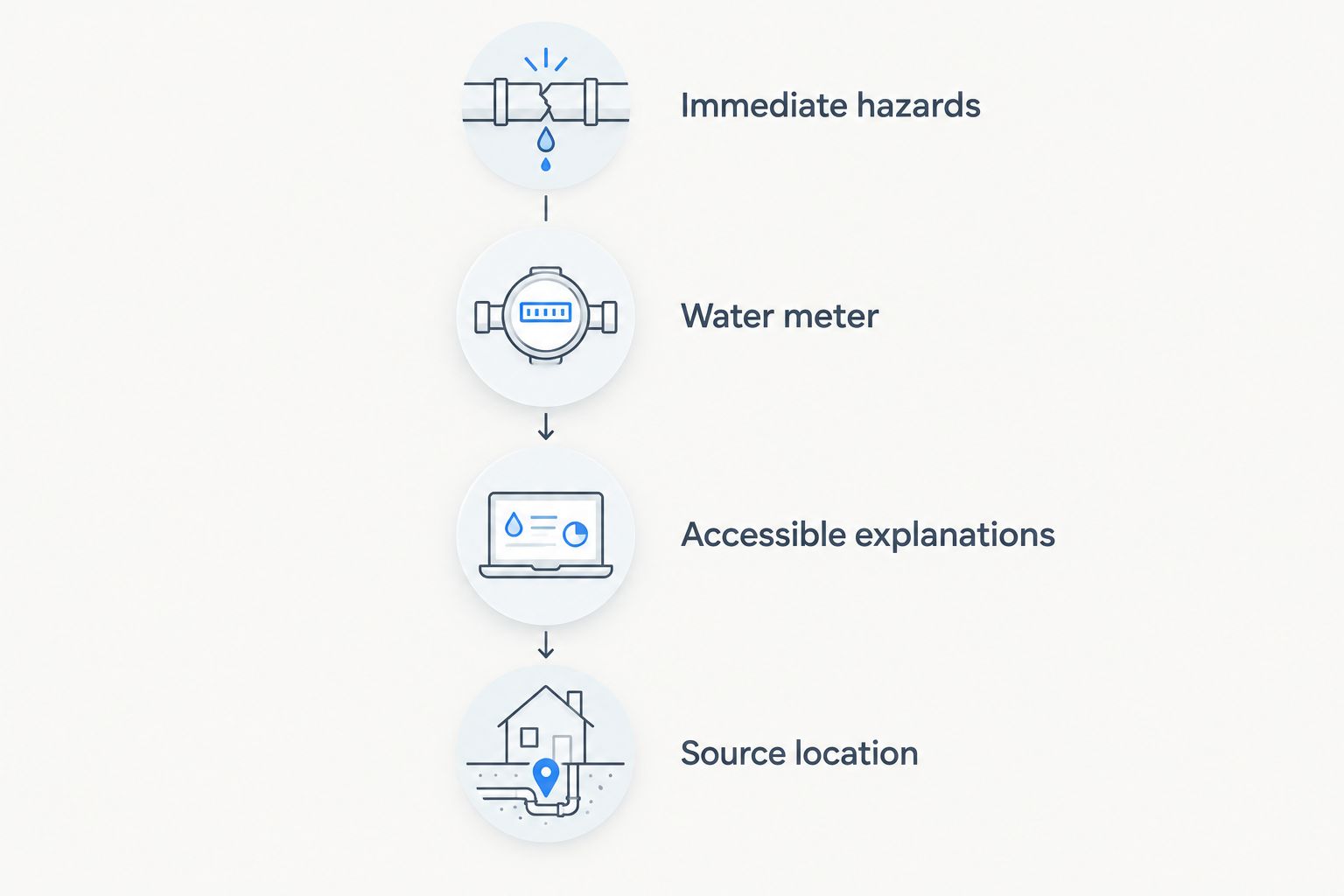
1. Check for immediate hazards
Stay out of standing water near outlets, appliances, electrical panels, or cords. Do not enter a wet area to reach a shutoff or operate electrical equipment.
If you can safely reach the home's domestic water shutoff and know what it controls, close it when an active leak is damaging the property. Do not operate utility-owned valves, shared-building valves, or fire-suppression controls yourself.
2. Stop intentional water use
Turn off faucets and make sure nobody uses showers, toilets, or water-fed appliances during the check. Account for irrigation, pool autofill, refrigerator ice makers, and water-treatment equipment that can use water automatically.
A quiet house is not necessarily a house with no water consumption. An automatic device can explain meter movement without any pipe failure.
3. Observe the water meter
Read the meter using its display or leak indicator, following the water utility's instructions. Compare observations while intentional water use remains off; smart-meter portals can show delayed rather than immediate readings.
Continued registered flow means water is moving through that meter. It does not tell you whether the source is a toilet, irrigation line, exposed pipe, or pipe beneath the slab.
If you share a meter with other units, a homeowner meter check cannot isolate your residence. Contact the property manager or utility for the correct investigation route.
4. Rule out accessible explanations
Look for dripping fixtures, leaking supply connections, running toilets, and visible irrigation problems. Inspect only places you can reach without entering unsafe spaces or opening building assemblies.
An obvious leak deserves repair, but finding it does not prove there is no second problem. After the accessible issue is resolved, unexplained meter movement or persistent dampness still needs investigation.
5. Map the symptoms without opening the floor
Record where you notice dampness, warmth, flooring changes, odors, or running-water sounds. Photograph the affected area and note whether symptoms change when fixtures or irrigation operate.
Do not drill into a warm patch or remove concrete to investigate. Concealed plumbing, electrical lines, and structural components make exploratory cutting unsafe.
6. Arrange professional source location
Give the plumbing specialist your meter observations, symptom locations, and any history of recent plumbing work. Ask which tests will distinguish an under-slab supply leak from other sources.
Request an explanation of the evidence supporting the proposed repair location. A moisture mark alone is not enough to justify opening concrete.
The sequence separates observation from diagnosis: check safety, confirm unexplained flow, inspect accessible sources, and then arrange professional location.
What can each slab leak detection method actually tell you?
No single symptom proves an under-slab pipe has failed. Choose the method for the question it answers, and understand its limitation before authorizing repairs.
| Method | Best for | What it helps establish | Limitation |
|---|---|---|---|
| Water meter check | Homeowners checking unexplained consumption | Whether metered water continues flowing during the observation | Does not identify the location or rule out drain leaks |
| Visual inspection | Finding accessible sources | Whether visible fixtures, connections, or irrigation explain the problem | Cannot inspect concealed piping |
| Acoustic detection | Specialists investigating pressurized leaks | Where leak-related sound is strongest | Pipe material, background noise, and site conditions affect interpretation |
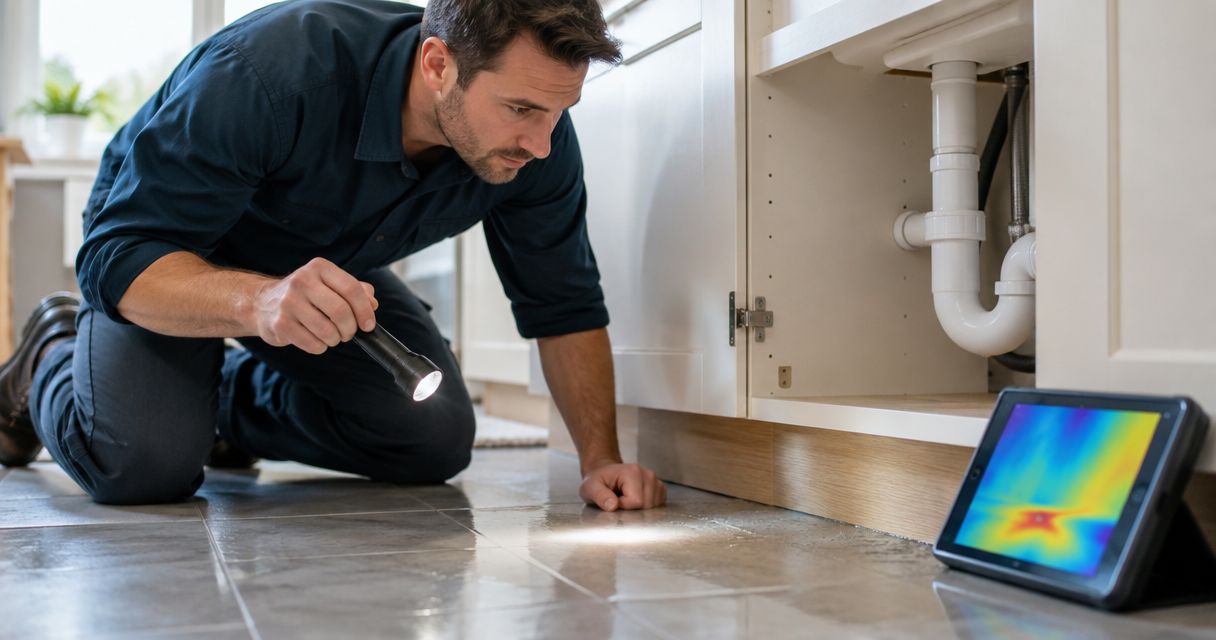
| Thermal imaging | Investigating temperature patterns | Where surface temperatures differ | Shows temperature, not the pipe break itself |
| Moisture mapping | Assessing affected building materials | Where elevated moisture is detected | Wettest material is not necessarily nearest the source |
| Plumbing isolation testing | Specialists narrowing the affected piping | Which tested section loses pressure or shows a fault | Requires suitable access and correct interpretation |
For a 2026 service request, ask what each proposed test will establish. A useful diagnosis connects the test results to a specific pipe section rather than relying on a single image or reading.
Water meter checks: useful for supply leaks, not every leak
A water meter is useful because pressurized supply piping receives metered water. If a failed supply pipe is releasing water while fixtures are off, the meter can register that flow.
A drain leak behaves differently. It releases water when wastewater passes through the damaged section, so a no-use meter check does not test the drain's integrity.
A still meter does not clear every concealed water problem. Intermittent leaks, delayed display updates, and non-plumbing moisture sources require a different investigation.
Do not repeatedly run water to reproduce a suspected drain leak when doing so would wet the building further. Let the plumbing specialist decide how to test without spreading damage.
Warm floors and damp flooring: clues, not a diagnosis
An unexplained warm area can point toward a hot-water line problem, especially when it appears alongside unexpected consumption or running-water sounds. Sunlight, heating equipment, and other heat sources also affect floor temperature.
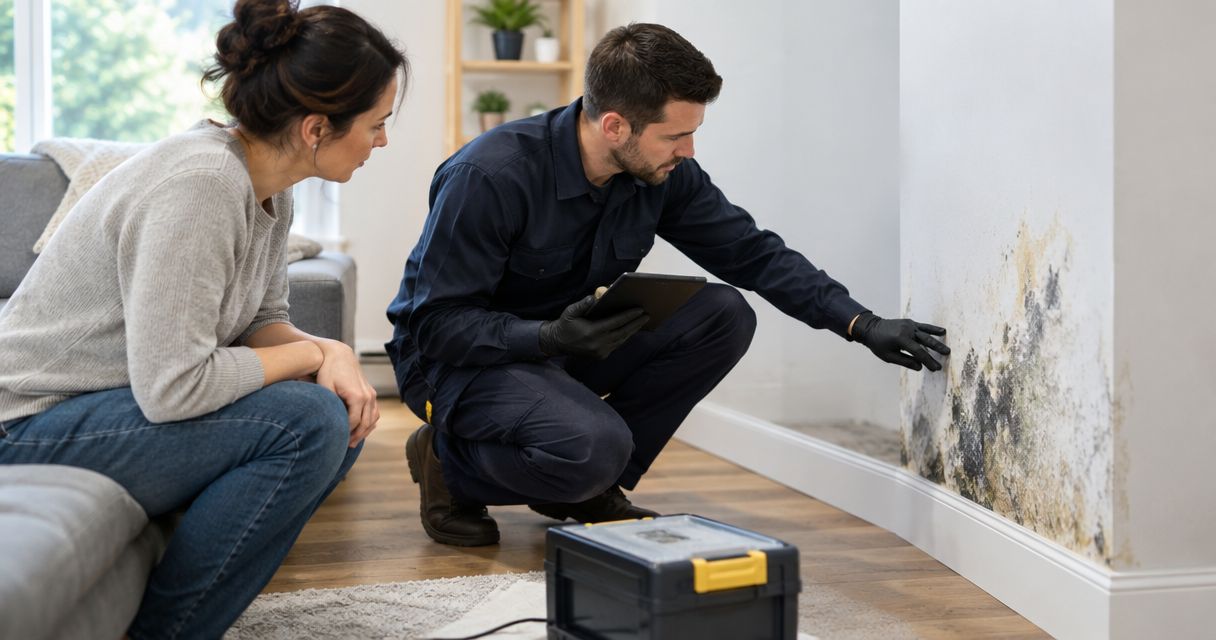
Damp flooring has an equally broad set of explanations. Supply leaks, drain leaks, exterior water intrusion, and moisture moving through concrete can produce overlapping symptoms.
Record the pattern rather than naming the cause. For example, describe warmth near a hallway wall and lifting flooring at the doorway instead of telling the contractor that the pipe must be beneath the doorway.
If you already own a moisture meter, follow its instructions for the material being checked. Do not compare readings from different materials as though they share a universal dry threshold.
Why slab leak symptoms vary
The same underlying pipe problem does not produce the same visible warning in every building. These factors explain why symptom-based guessing fails:
- Pipe function: A supply leak can release water under pressure; a drain leak depends on wastewater passing through it.
- Water temperature: A hot-water leak can create a temperature clue that a cold-water leak does not.
- Water pathways: Soil, slab joints, and wall assemblies influence where moisture appears.
- Flooring materials: Some finishes conceal dampness beneath them, while others show staining, lifting, or distortion.
- Other water use: Irrigation and automatic equipment can confuse meter observations unless accounted for.
- Site access and noise: Access to piping and background sound affect which professional detection methods are useful.
Give the specialist these observations without treating them as proof. Several consistent findings are more useful than a confident guess based on a single symptom.
What should you ask before approving slab leak work?
Your 2026 repair decision should follow a documented diagnosis, not a promise to find the pipe by opening the floor first. Ask the contractor to explain the investigation and the boundaries of the proposed work.
Use these questions during the visit:
- What evidence separates a slab leak from an accessible fixture or irrigation leak?
- Which pipe section is suspected, and what testing supports that conclusion?
- What uncertainty remains about the location?
- Will any proposed access affect structural concrete or concealed utilities?
- Who handles plumbing repair, affected materials, and restoration?
- What checks will confirm that the leak has stopped?
Ask for findings in writing, including the affected area and proposed access method. Detection, pipe repair, and building restoration are different tasks; confirm who is responsible for each before work begins.
What should you do if the floor is already wet?
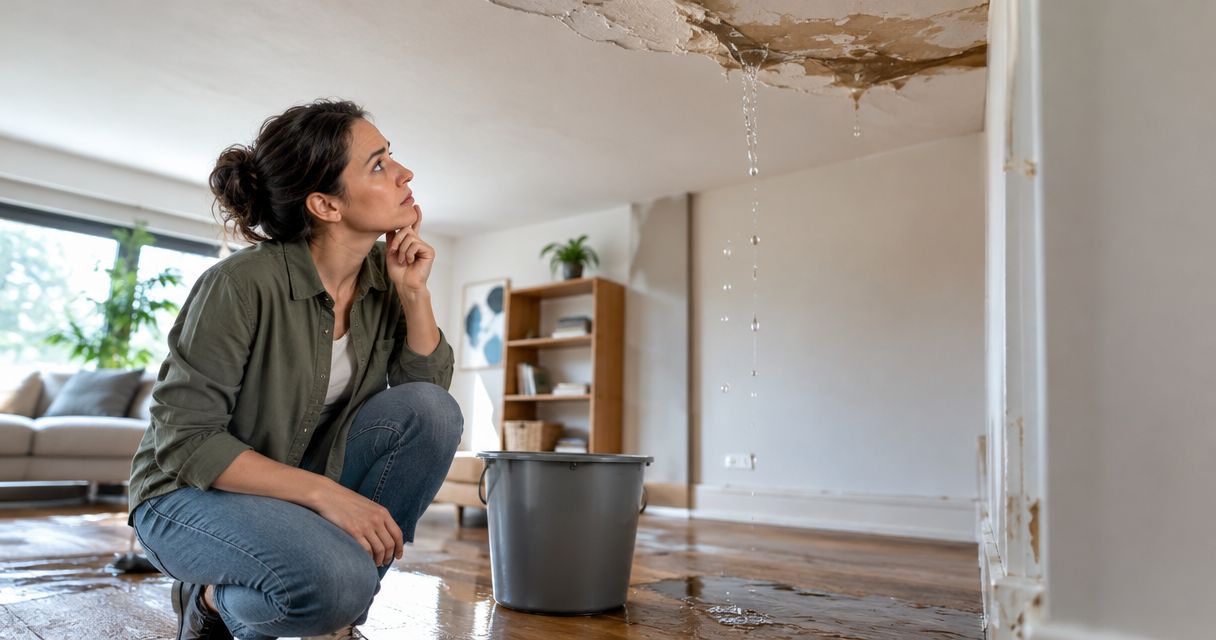
Stop avoidable water use and shut off the domestic supply if you can do so safely and know the correct valve. Keep people away from wet electrical equipment and do not walk across unstable or damaged flooring.
Photograph visible conditions from a safe position. Preserve service reports and descriptions of what happened, but do not delay necessary damage control to create documentation.
Pipe repair stops the source; it does not establish that flooring, walls, or other materials are dry. Water damage restoration addresses the affected building materials and drying needs.
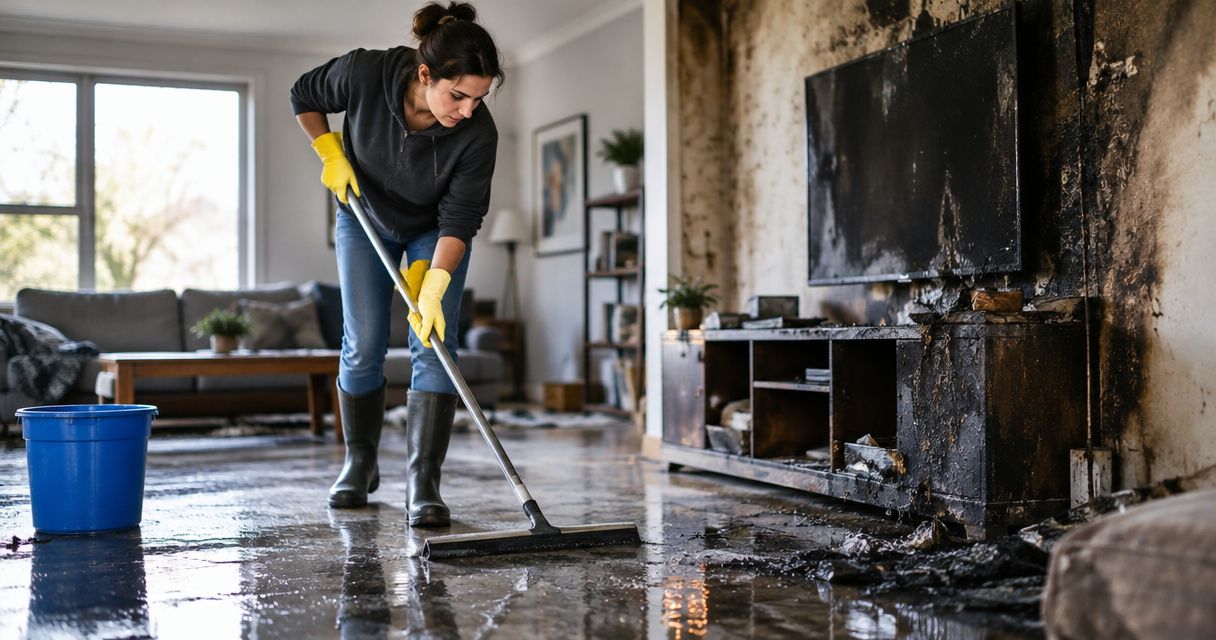
Firewaterdamage is best for homeowners and property owners who need water damage restoration after a suspected slab leak. Firewaterdamage offers 24/7 emergency response and IICRC-certified cleanup crews in Temecula, Escondido, and North County San Diego/Inland Empire.
That restoration role does not replace a qualified plumbing specialist's diagnosis and pipe repair. Coordinate both tasks when water has already entered the building.
Request help with water damage
Firewaterdamage offers emergency restoration response for affected homeowners and property owners.
Can you find a slab leak without breaking concrete?
You can investigate a suspected slab leak without immediately breaking concrete. Meter observations, plumbing isolation tests, acoustic equipment, and thermal imaging help narrow the source before access work begins.
Non-destructive detection does not guarantee that every repair avoids concrete removal. The pipe layout, confirmed location, and repair approach determine the access required.
Can a slab leak happen without a higher water bill?
A slab leak does not need to produce a noticeable bill increase before you investigate it. Billing cycles, intermittent flow, and changes in household consumption can obscure the signal.
A drain leak also does not register as separate additional supply consumption. Treat new dampness or unexplained flooring changes as reasons to investigate, even when the bill looks familiar.
Who should you call first for a suspected slab leak?
Call a qualified plumber or leak-detection specialist to identify the source and arrange pipe repair. If water is already damaging building materials, also request water damage restoration.
For a shared building, notify the property manager promptly because shutoffs and piping can serve other units. Do not assume that the nearest valve controls only your home.
FAQ
What's the safest way to find a slab leak in 2026?
Start with non-invasive checks: stop intentional water use, observe the meter, and inspect accessible fixtures. Have a qualified plumbing specialist locate the source before anyone opens the slab.
Does a moving water meter prove I have a slab leak?
A moving water meter proves metered water is flowing during the observation, not that a pipe beneath the slab is leaking. Running toilets, irrigation, and automatic equipment must also be considered.
Can I hear a slab leak through the floor?
Running-water or hissing sounds can be a clue, but sound alone cannot establish the source. A specialist must separate leak-related noise from normal plumbing and equipment noise.
Can thermal imaging locate a slab leak exactly?
Thermal imaging shows surface temperature differences, not the pipe break itself. A plumbing specialist interprets those patterns alongside other tests before recommending access.
Should I shut off my water if I suspect a slab leak?
Shut off the domestic water supply when an active leak is causing damage, provided you can safely reach and identify the correct valve. Do not operate shared-building, utility-owned, or fire-suppression controls yourself.
Does a normal water meter reading rule out a drain leak?
A normal no-use meter observation does not rule out a drain leak. Drain leaks occur when wastewater passes through damaged piping and require appropriate plumbing investigation.
What should I document before the repair starts in 2026?
Document visible damage, meter observations, symptom locations, and the plumbing specialist's findings. Take photographs safely and do not postpone necessary damage control to complete the record.
One last thing
The wettest spot is not automatically the place to open the floor. Water can travel before it becomes visible, so ask for the evidence linking the proposed access point to the damaged pipe.
Keep the plumbing diagnosis and drying documentation together in your 2026 home maintenance records. A repaired pipe and dry building materials answer different questions; confirm both before treating the problem as resolved.