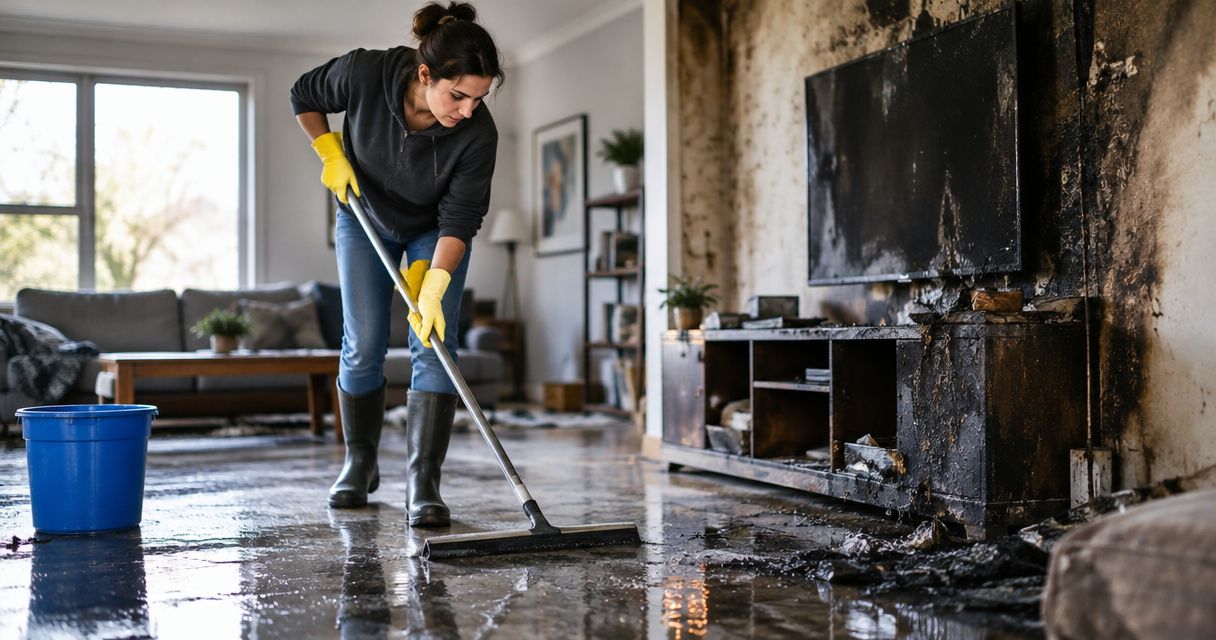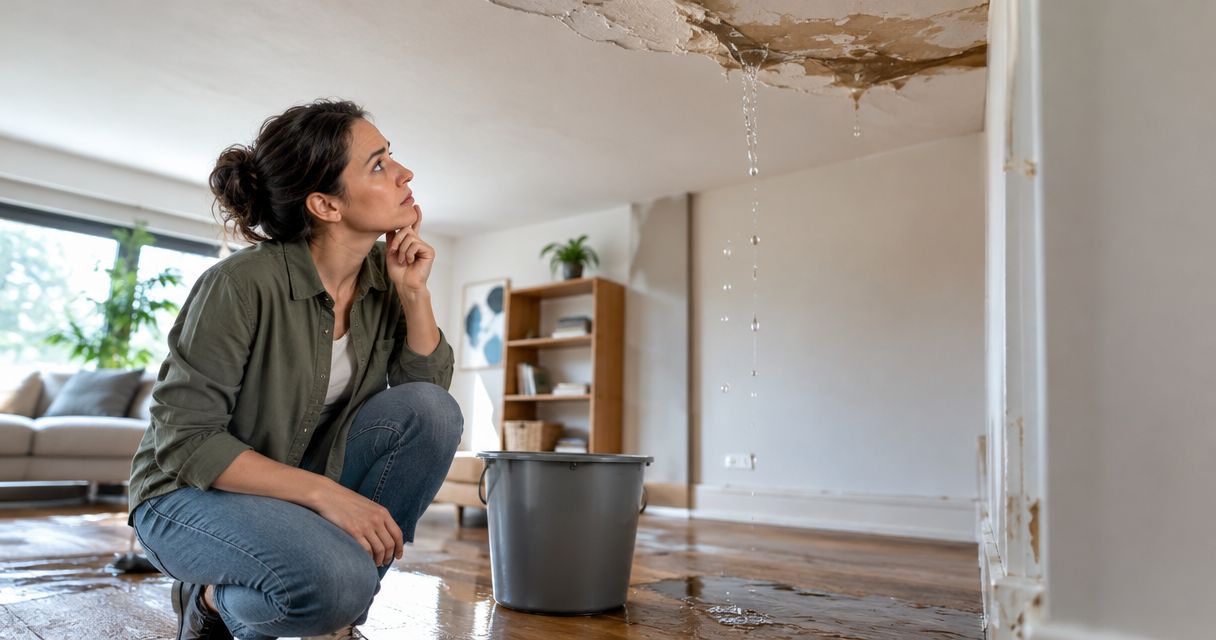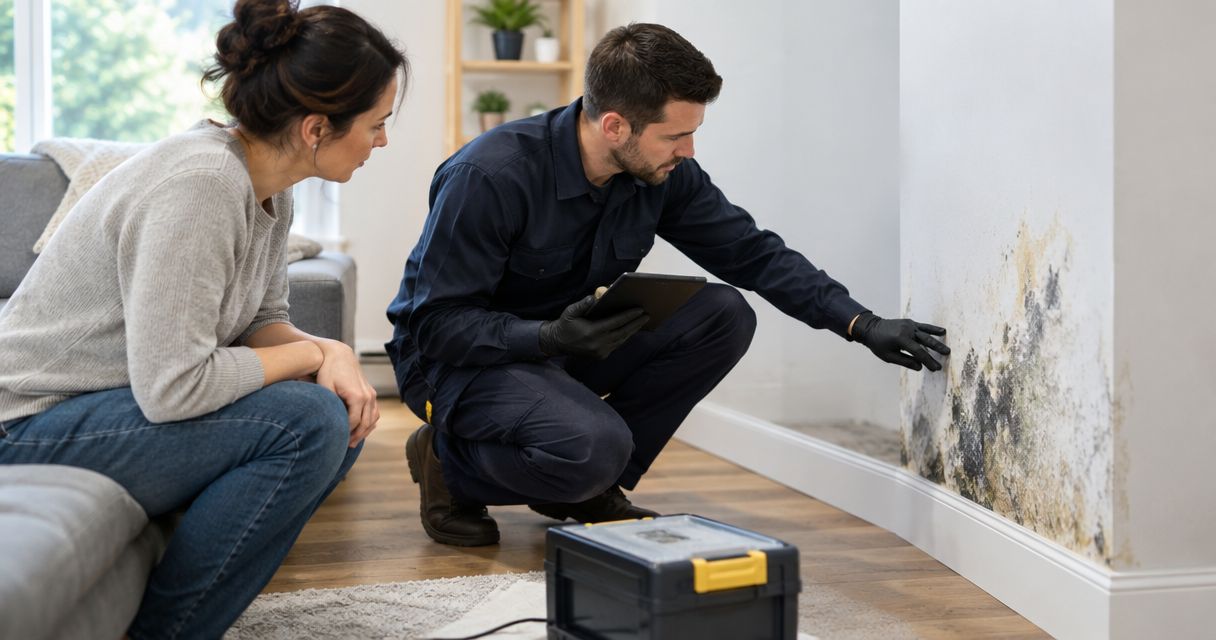
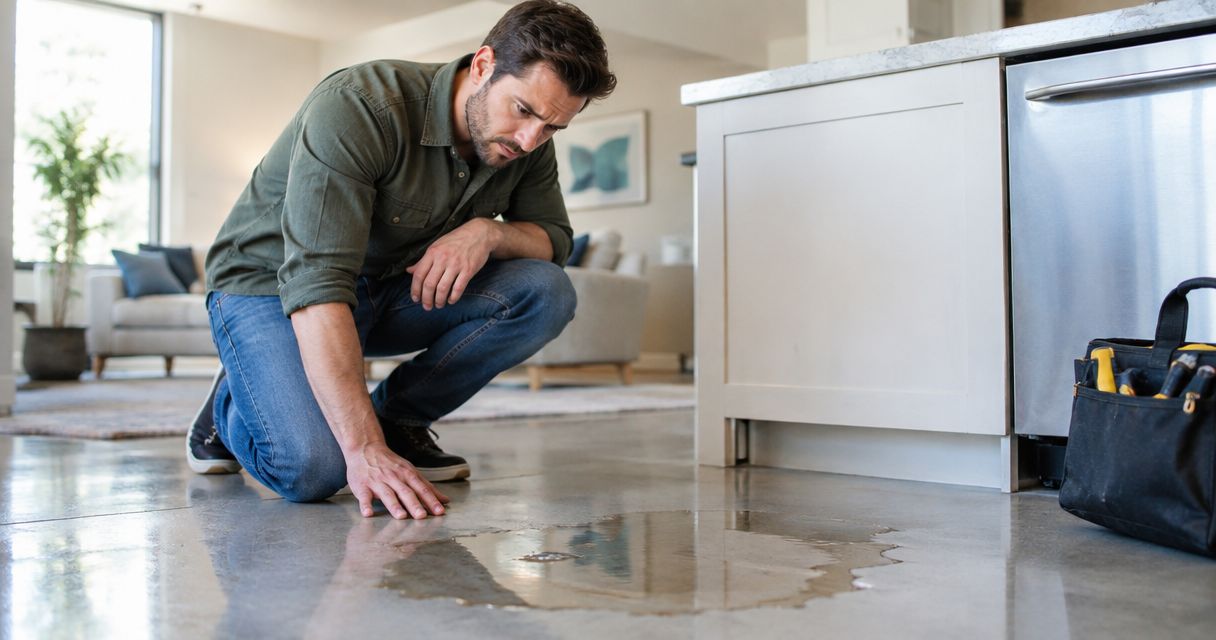
Yes—an active slab leak is an emergency when water is escaping continuously, spreading into your home, or creating an electrical or structural hazard. Shut off the main water supply if you can reach it safely, and arrange professional leak detection and repair; fixing the pipe does not dry wet flooring, walls, or concealed spaces.
- Is a slab leak an emergency? Yes—active water loss needs prompt action, even without visible flooding.
- Shut off the water safely; avoid standing water near electrical equipment or damaged flooring.
- A plumber repairs the leak; water-damage restoration addresses affected materials and hidden moisture.
- Firewaterdamage offers 24/7 emergency water-damage response in Temecula, Escondido, and North County San Diego/Inland Empire.
Why this matters
A dry-looking floor does not prove that the space beneath it is dry. Water escaping below a concrete slab can remain hidden before it appears at flooring edges, wall bases, or another opening.
Your 2026 emergency plan needs separate steps for stopping the leak and addressing the damage. Firewaterdamage provides emergency water-damage cleanup, but identifying and repairing a failed supply pipe is a plumbing task. Do not assume that arranging one service automatically covers the other.
Is a slab leak an emergency?
Treat a confirmed active slab leak as urgent, and treat immediate safety hazards as an emergency requiring you to leave the affected area. A suspected leak without visible flooding still deserves prompt investigation. A stain, warm patch, or higher water bill alone does not establish the source.
Use the conditions you can observe—not the size of the puddle—to decide what to do next.
| What you notice | Immediate response | What the sign does not establish |
|---|---|---|
| Water spreading across floors or entering rooms | Shut off the supply safely and request emergency assistance | The exact location of the failed pipe |
| Water near outlets, appliances, or electrical equipment | Stay out of the water and obtain emergency safety assistance | Whether electrical equipment is safe to touch |
| Running-water sounds when fixtures are off | Arrange prompt leak investigation; isolate the supply if safe | That the leak is definitely beneath the slab |
| A warm floor patch, damp flooring, or unexplained meter movement | Check for other water uses and request professional diagnosis | The leak's size, repair method, or damage extent |
| New significant cracking, settlement, or unstable flooring | Keep people away and request appropriate professional assessment | Whether the leak caused the movement |
A slab leak does not automatically mean your foundation is failing. Equally, the absence of a visible crack does not make ongoing water loss safe to ignore.
What should you do first?
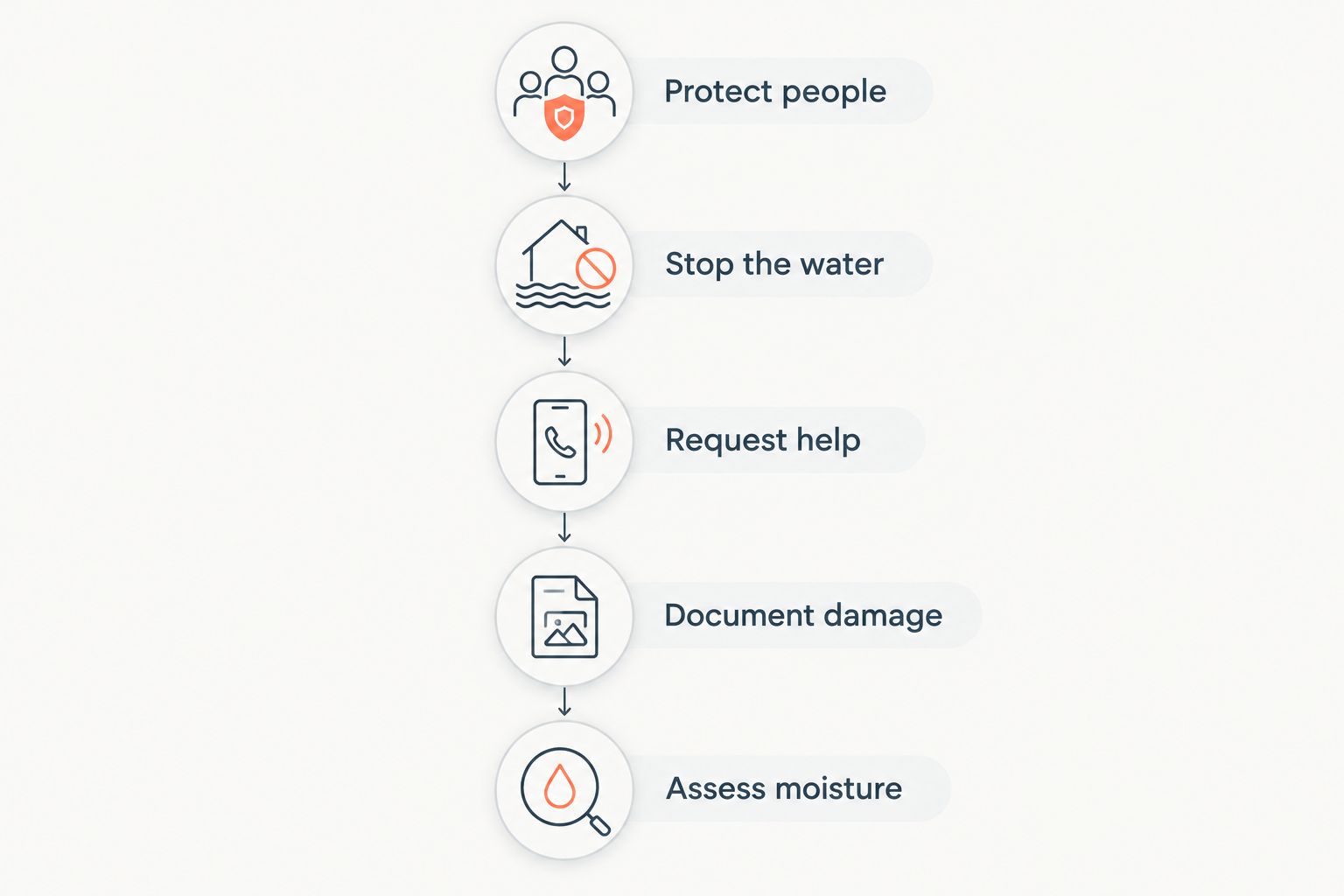
Use this 2026 response checklist to keep safety, plumbing repair, and damage control in the right order. Do not enter an unsafe area to complete any step.
- Protect people. Keep children, pets, tenants, and visitors away from wet floors, damaged surfaces, and electrical hazards. Leave the affected area if you cannot assess it safely.
- Stop the water. Close the main supply valve if it is accessible without crossing water or entering a hazardous space. Do not force a stuck valve or operate utility equipment you are not authorized to use.
- Request help. Tell the plumber whether the water is still running and whether the main valve is closed. Request water-damage assistance when water has reached building materials or occupied spaces.
- Document damage. Photograph visible water, damaged finishes, and affected rooms from a safe position. Record when you discovered the problem and when you shut off the supply.
- Assess moisture. Have affected materials checked rather than assuming that removing visible water completes the job. Concealed moisture can remain after the surface looks dry.
When you call, describe observations instead of diagnosing the failure yourself. For example, explain that water is appearing beside a wall and continues when all fixtures are off. That information is more useful than insisting the problem must be a particular pipe beneath the slab.
When is shutting off the water not enough?
Closing the main supply stops new water from entering the household supply system, but it does not remove water already released. If water continues appearing, tell the responding professional; residual water, another source, or an ineffective shutoff requires investigation.
Do not restore service simply because the visible flow has stopped. Ask the plumber what must happen before the affected system can return to use.
Water shutoff is a control measure, not proof of repair or dryness. You still need confirmation of the source and an assessment of affected materials. Moving furniture or wiping the floor helps protect belongings, but neither establishes that the building is dry.
If hot water is involved, ask the plumber about the water heater before changing its controls. Avoid experimenting with gas connections, electrical connections, or unfamiliar equipment during an emergency.
Why slab leak urgency varies
The practical question is not whether every slab leak causes identical damage. It is whether water is still escaping, where it is traveling, and what it is reaching.
- Continued water loss: An active leak keeps adding water until the source is controlled. A closed valve and a verified repair represent different stages of the response.
- Affected materials: Carpet, wood flooring, drywall, and other absorbent materials require different assessments from an exposed concrete surface.
- Concealed spread: Water beneath floor coverings or inside wall assemblies is harder to evaluate from visible staining alone.
- Electrical exposure: Water reaching energized equipment changes the safety response. Do not approach a panel through standing water to turn it off.
- Building movement: New settlement, substantial cracking, or unstable surfaces require assessment beyond routine water extraction.
- Source uncertainty: A supply leak, drain problem, and groundwater intrusion require different corrective work. Symptoms alone do not establish which source is responsible.
These factors determine the scope of the response—not a universal countdown. Do not wait for visible flooding to confirm a suspected active leak.
Who should you call: a plumber or a restoration company?
You need a plumber to investigate and repair the plumbing failure. You need a water-damage restoration professional when released water has affected building materials or spaces that require extraction, drying, or cleanup.
A plumber: best for finding and repairing the source
The plumber's role is to locate the plumbing problem and determine an appropriate repair. The benefit is source control; the limitation is that a completed pipe repair does not demonstrate that surrounding materials are dry.
Ask what testing supports the diagnosis and how the repair will be checked. Discuss access before assuming concrete must be removed: whether a slab leak can be fixed without breaking the slab depends on the plumbing layout and the proposed repair.
A restoration company: best for assessing water damage
The restoration role is to assess affected materials and address the water damage. The benefit is attention to moisture beyond the broken pipe; the limitation is that drying cannot substitute for stopping an active plumbing leak.
Firewaterdamage is best suited to homeowners and property owners seeking emergency water-damage cleanup in Temecula, Escondido, and North County San Diego/Inland Empire. Firewaterdamage offers 24/7 emergency response with IICRC-certified cleanup crews. Coordinate plumbing repair separately rather than assuming cleanup includes pipe replacement.
Request emergency water-damage help
Arrange water-damage assistance in Temecula, Escondido, and North County San Diego/Inland Empire.
How quickly should wet materials be addressed?
Address wet materials promptly after controlling the source. The U.S. Environmental Protection Agency's published mold-prevention guidance recommends drying water-damaged areas and materials within 24–48 hours to help prevent mold growth.
That guidance is not permission to leave an active leak running for 24 hours. Nor does reaching 48 hours prove that every material contains mold or must be discarded. Material type, contamination, moisture conditions, and the professional assessment determine the work required.
For your 2026 response plan, separate these milestones: the water is shut off, the pipe is repaired, affected materials are assessed, and drying is verified. They are not interchangeable.
A household fan blowing across the floor does not establish that moisture under flooring has been addressed. Ask how concealed areas will be evaluated and how drying progress will be checked before finishes are closed up or replaced.
Can you wait until morning to deal with a slab leak?
Do not leave a confirmed active leak running overnight. If it is safe, isolate the supply and contact an emergency plumbing service for instructions. Request water-damage assistance if water has reached interior materials.
If the supply is off, visible spreading has stopped, and there are no immediate hazards, explain those conditions to the responding professional. Let the actual conditions guide scheduling; a generic promise that any slab leak can wait is not a safe decision rule.
Waiting also leaves practical issues unresolved. You need to know whether you can use water, whether affected rooms are safe, and what conditions require another call.
Can you stay in the house with a slab leak?
You can stay only when the affected areas and essential systems are safe to use. A localized, isolated plumbing problem is different from water affecting electrical equipment, sanitation, or access through the home.
Ask the responding professionals which rooms must remain off limits and whether water service can be restored safely. Do not assume the whole house is unsafe, but do not treat a dry hallway as proof that every room is safe.
For rental properties, report the leak to the owner or manager promptly and document the notification. Follow emergency instructions and keep occupants away from affected spaces while the condition is assessed.
Does homeowners insurance cover an emergency slab leak?
Coverage depends on your policy and the cause and circumstances of the loss. Emergency status alone does not establish coverage for the pipe, access work, resulting water damage, or replacement finishes.
For a 2026 claim, document the discovery, your immediate mitigation actions, and the professional findings. Ask the insurer to distinguish the repair of the failed component from coverage for resulting damage and any access-related work.
Do not delay safe source control while waiting for a coverage decision. Keep invoices, photographs, and written findings, and ask your insurer what documentation it requires before damaged materials are discarded when circumstances allow.
FAQ
Is a slab leak an emergency even if I cannot see water?
An active slab leak needs prompt attention even without visible water. Running-water sounds, unexplained meter movement, or damp flooring justify investigation, but none identifies the source by itself.
Should I turn off the water if I suspect a slab leak?
Turn off the main supply if you suspect an active leak and can reach the valve safely. Do not cross standing water near electrical equipment or force a stuck valve.
Can a slab leak cause mold?
A slab leak can create moisture conditions that support mold growth in affected materials. EPA guidance recommends drying water-damaged areas and materials within 24–48 hours to help prevent mold growth.
Does repairing the pipe finish the water-damage cleanup?
Repairing the pipe does not finish cleanup when surrounding materials remain wet. Source repair and moisture assessment are separate tasks, and affected materials need appropriate drying or other treatment.
Who handles the water damage after a slab leak?
A water-damage restoration company handles assessment and cleanup of affected materials; a plumber handles the plumbing failure. Firewaterdamage offers 24/7 emergency response with IICRC-certified cleanup crews in its stated Southern California service areas.
What should I tell the plumber when I call about a slab leak?
Tell the plumber whether water is still escaping, whether you closed the main valve, and where you see damage. Describe electrical hazards, unusual sounds, warm flooring, and any significant new cracking without assuming their cause.
What should my 2026 slab leak emergency plan include?
Your 2026 slab leak emergency plan should identify the main shutoff, emergency contacts, and a safe way to document damage. Include separate arrangements for plumbing repair and water-damage assessment.
One last thing
Do not mistake a smaller water bill or a dry-looking floor for a completed recovery. Before closing the job, ask for confirmation that the plumbing repair was checked and that affected materials were assessed for remaining moisture. Those answers matter more than how quickly the visible puddle disappeared.