Mold remediation is covered by homeowners insurance when your policy covers the event that caused the mold and does not exclude the resulting cleanup. Coverage is not automatic: mold exclusions, special limits, deductibles, and maintenance-related damage can leave you responsible for part or all of the work.
- Is mold remediation covered by homeowners insurance? Sometimes: the cause, exclusions, and mold limits determine coverage.
- A sudden plumbing leak and a long-standing moisture problem can receive different coverage decisions.
- Document the water source, damage, and cleanup before materials disappear.
- Firewaterdamage provides homeowners with emergency restoration; your insurer determines whether the policy pays.
Why this matters
A covered water loss does not automatically mean every mold-related expense is covered. Your insurer evaluates the cause of the damage, the policy language, and the work requested. A cleanup estimate establishes the proposed work; it does not establish insurance coverage.
Start with the source of the water and a record of what happened. The guide to moisture readings and insurance claim documentation explains how to organize the condition evidence that supports a claim. Keep that evidence separate from assumptions about what the insurer owes.
Is mold remediation covered by homeowners insurance?
Yes, when the mold results from a covered loss and the policy includes the resulting remediation. A sudden, accidental plumbing discharge is a common example to investigate. Mold caused by persistent humidity, neglected maintenance, or excluded flooding presents a different coverage question.
For a claim reported in 2026, read the policy that applied on the loss date—not just a current renewal summary. The declarations page identifies coverage amounts, but exclusions and endorsements contain details that determine how those amounts apply.
| Mold scenario | Coverage issue to investigate | What to document |
|---|---|---|
| Mold after a sudden plumbing discharge | Whether the discharge and resulting mold fall within coverage | Discovery date, source repair, affected materials, and drying records |
| Mold after a recurring leak | Whether repeated seepage or maintenance exclusions apply | Previous repairs, earlier symptoms, and the discovery timeline |
| Mold after outside floodwater enters | Whether a separate flood policy applies | Water entry route, affected areas, and applicable policy documents |
| Mold associated with persistent indoor humidity | Whether any covered event caused the moisture | Ventilation conditions, moisture observations, and any identified leak |
These scenarios are not coverage promises. Even when the original water event qualifies, a mold endorsement can impose separate restrictions on testing, removal, or related expenses.
Read the mold wording, not just the water coverage
Search your policy for terms such as fungi, mold, wet rot, bacteria, repeated seepage, and water damage. Mold provisions are not always labeled with the word mold alone. Read the definitions and endorsements together with the exclusion they modify.
Ask the adjuster to identify the exact provision that applies to your loss. A written explanation is more useful than a general statement that your policy covers water damage.
Sudden leaks: separate the event from the resulting damage
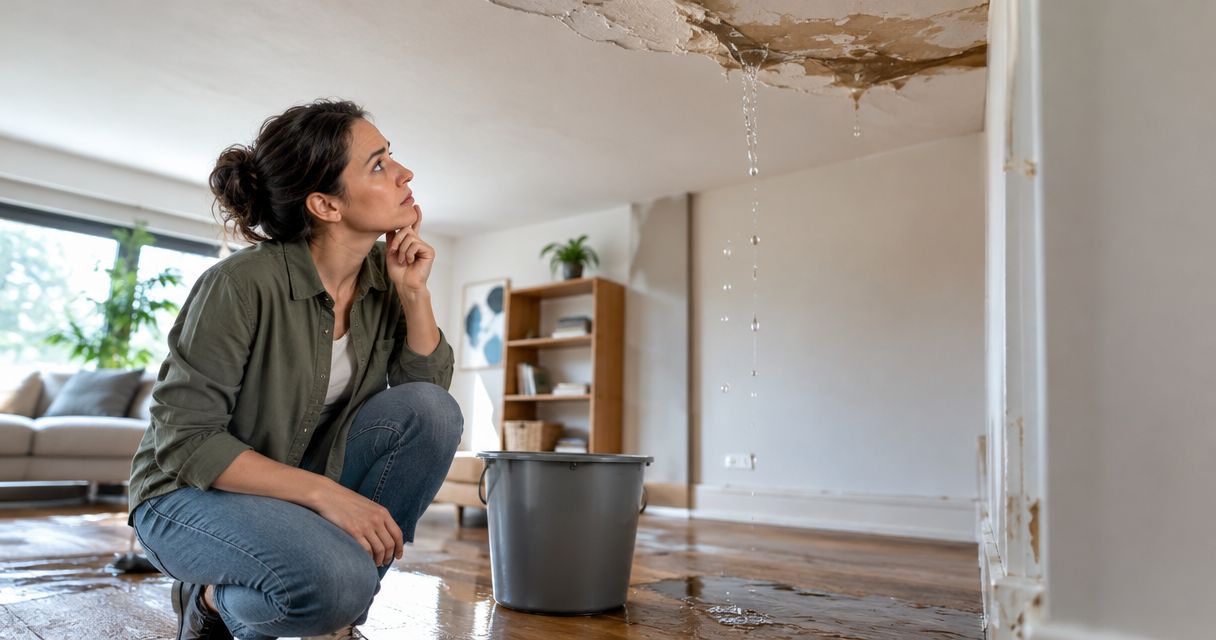
A sudden leak creates several distinct questions: what failed, what building materials became wet, and whether mold developed because of that event. Insurance can treat repairing the failed component differently from repairing resulting damage. Do not combine those expenses into a single unexplained line item.
For your 2026 claim file, preserve the plumber's findings alongside the restoration estimate. A dated description of a failed supply line is more useful than an invoice that says only plumbing repair. Photographs and moisture records help connect the source to the damaged area.
Report what you observed; do not guess how long hidden mold has existed. Record when you first noticed water, staining, odor, or visible growth. Let the relevant professionals document their findings rather than turning an uncertain history into a definite statement.
Long-term leaks and humidity: identify the exclusion
Standard homeowners policies commonly exclude deterioration and maintenance-related damage. Persistent condensation, unresolved leaks, and ongoing dampness therefore require close attention to the policy's exclusions. Discovering mold suddenly does not establish that its cause was sudden.
Hidden damage deserves a factual review, not an automatic conclusion in either direction. The location of a leak, earlier warning signs, and any policy language addressing hidden seepage can affect the analysis. Ask the insurer which facts support its decision.
If you disagree with a maintenance-based denial, collect previous repair records and photographs that clarify the timeline. Avoid claiming that mold appearance alone proves when the moisture began. A contractor's description of conditions and an insurer's coverage decision serve different purposes.
Flooding and sewer backup: check separate coverage
Standard homeowners insurance generally excludes flood damage. A separate flood policy has its own terms, and its treatment of mold requires a separate review. Do not assume that buying flood coverage makes every mold expense payable.
Sewer or drain backup also requires attention to the cause and any applicable endorsement. Water entering from a backed-up drain is not automatically handled like water discharged from a broken supply line. Describe the entry route accurately when reporting the loss.
If several policies might apply, report the facts consistently to each insurer. Keep each claim number and coverage response organized so that a discussion about one policy does not become an assumed approval under another.
Why mold remediation coverage varies
The amount of visible mold does not decide coverage by itself. These policy and loss details determine the next questions to ask:
- Cause of loss: Identify whether the moisture came from a covered event, an excluded event, or an unresolved maintenance condition.
- Mold wording: Review exclusions and any endorsement that restores limited coverage for fungi or related cleanup.
- Coverage limits: Ask whether a mold-specific limit applies and which expenses count toward it.
- Deductible: Confirm the applicable deductible before treating an approved estimate as the insurer's payment.
- Claim duties: Review requirements for notice, protecting property from further damage, and preserving evidence.
- Scope of work: Separate source repairs, drying, remediation, testing, and reconstruction so each receives a clear coverage response.
For a 2026 policy review, request the complete policy and endorsements. A coverage summary is not a substitute for the contract language that governs your claim.
What should you do before mold cleanup starts?
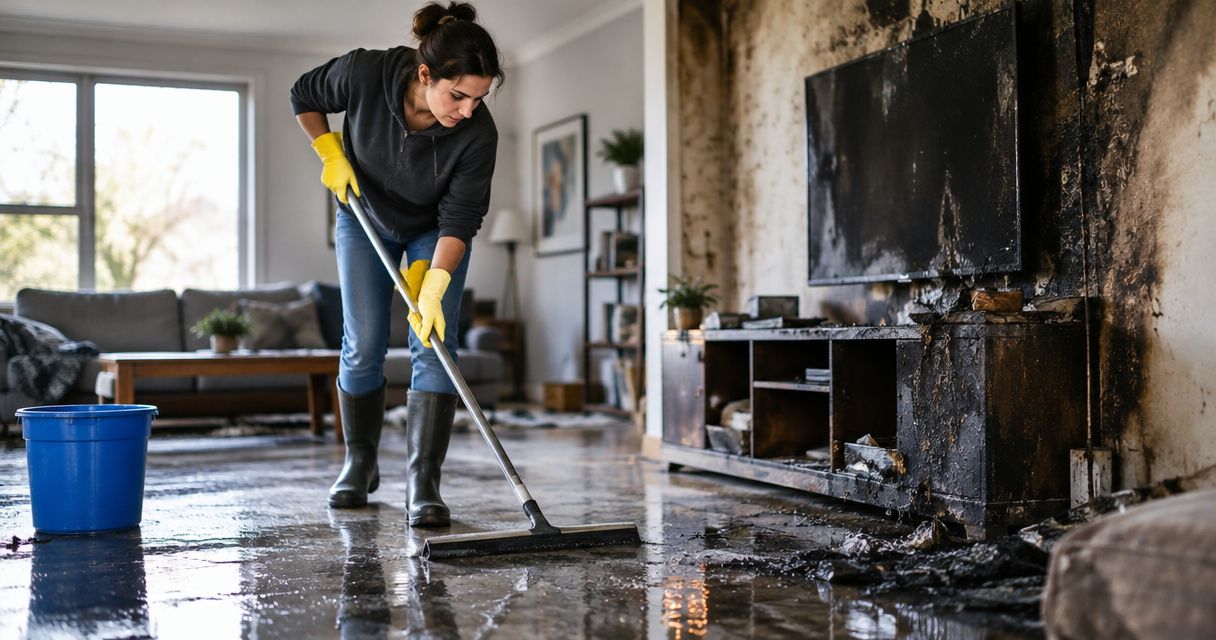
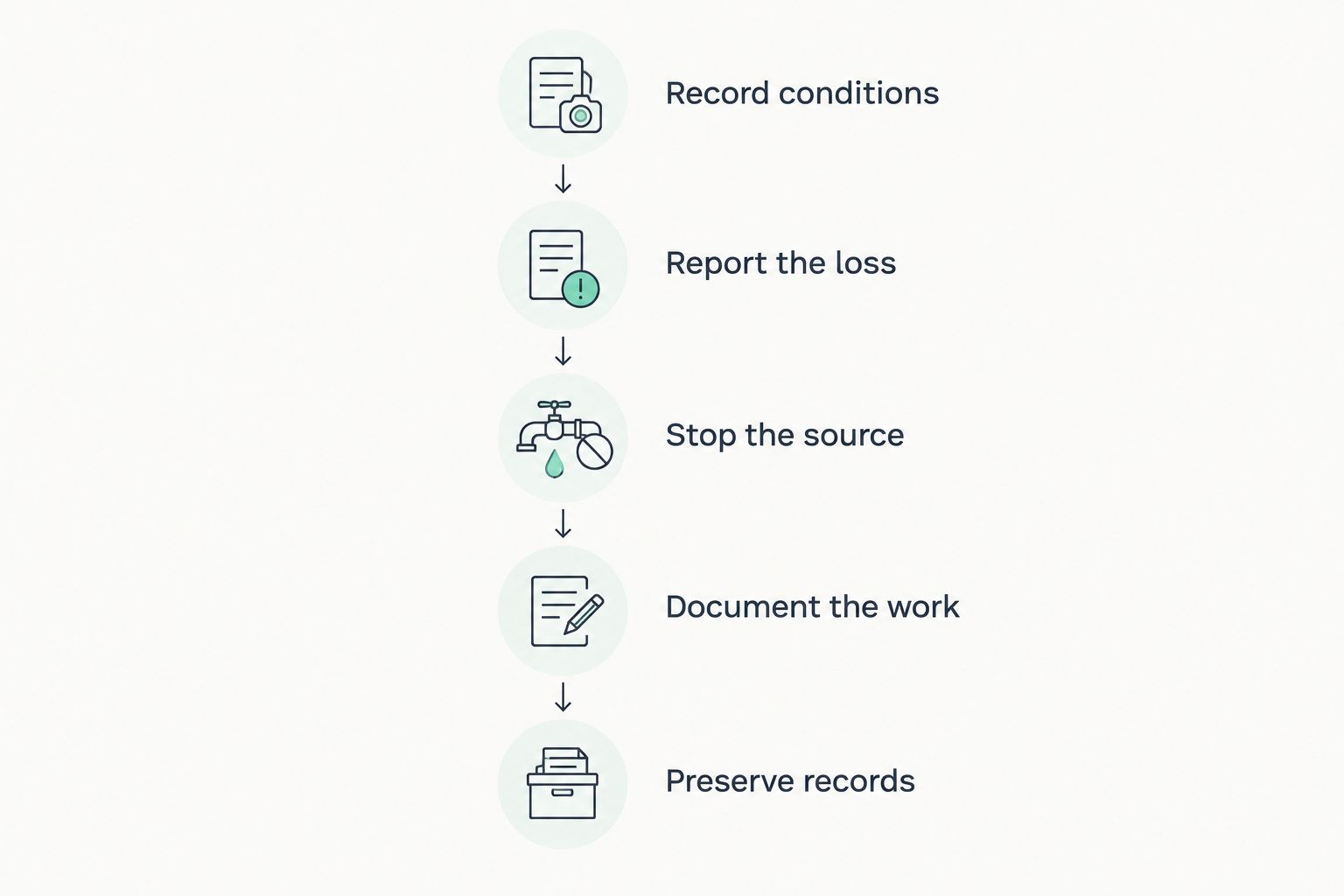
Protect people and property while preserving a usable record of the loss. Do not postpone necessary emergency action solely to obtain photographs or wait for a routine appointment. Avoid entering areas with electrical hazards, unstable materials, or contaminated water.
- Record conditions. Photograph the water source if visible, the affected rooms, damaged contents, and visible growth from a safe position. Save original files.
- Report the loss. Give the insurer the discovery date and facts you know. Request a claim number and instructions for emergency work.
- Stop the source. Arrange appropriate help to stop active water entry when it is safe. Keep source-repair findings and invoices.
- Document the work. Request an itemized scope distinguishing mitigation, mold remediation, and rebuilding. Ask which activities require insurer review.
- Preserve records. Keep communications, photographs, inspection findings, drying logs, receipts, and disposal documentation together.
The purpose is a clear sequence: what happened, what damage resulted, and what work addressed it. Documentation supports review; it does not guarantee approval.
Dry promptly without confusing guidance with coverage
The U.S. Environmental Protection Agency's residential mold guidance recommends drying wet materials within 24–48 hours to help prevent mold growth. That is a prevention target, not an insurance deadline or a guarantee that mold cannot develop. Do not wait for a coverage decision before addressing an active moisture problem safely.
EPA guidance also uses about 10 square feet of visible mold as a general point for distinguishing small homeowner cleanup situations from larger problems requiring additional guidance. Contaminated water, hidden damage, and health concerns require separate consideration. This area threshold does not determine insurance eligibility.
For cleanup decisions in 2026, keep those concepts separate: drying guidance concerns damage prevention; policy language determines coverage. Neither a small affected area nor a fast response guarantees payment.
What should a mold remediation estimate include?
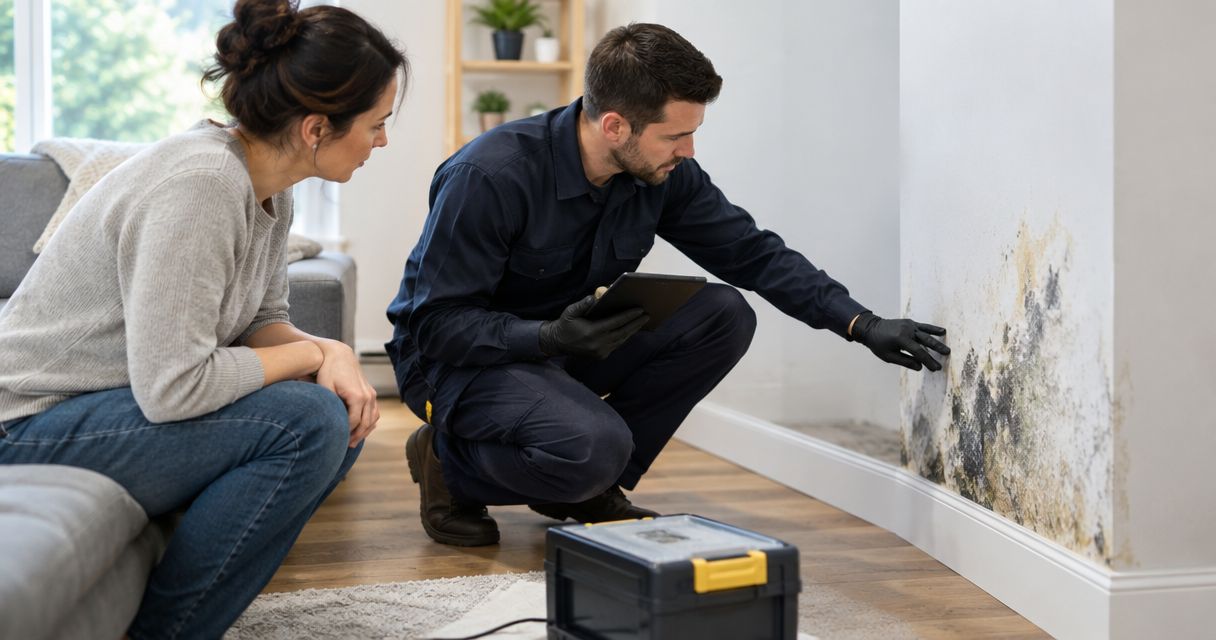
An estimate should explain where work is proposed, which materials are affected, and why each task is necessary. Request separate descriptions for containment, removal of damaged materials, cleaning, drying, and reconstruction where those tasks apply. Vague cleanup charges make it harder to compare the proposed work with a coverage decision.
Ask who will address the moisture source and how the contractor will document completion. Removing visible growth without correcting the moisture problem leaves the underlying condition unresolved. Also clarify whether testing is proposed, who performs it, and what question the testing is intended to answer.
Firewaterdamage is best for homeowners seeking emergency fire and water damage restoration in Temecula, Escondido, and North County San Diego/Inland Empire. Firewaterdamage offers 24/7 emergency response and IICRC-certified cleanup crews. Those services address the property damage; they do not replace the insurer's coverage decision or guarantee reimbursement.
Does insurance pay for mold testing?
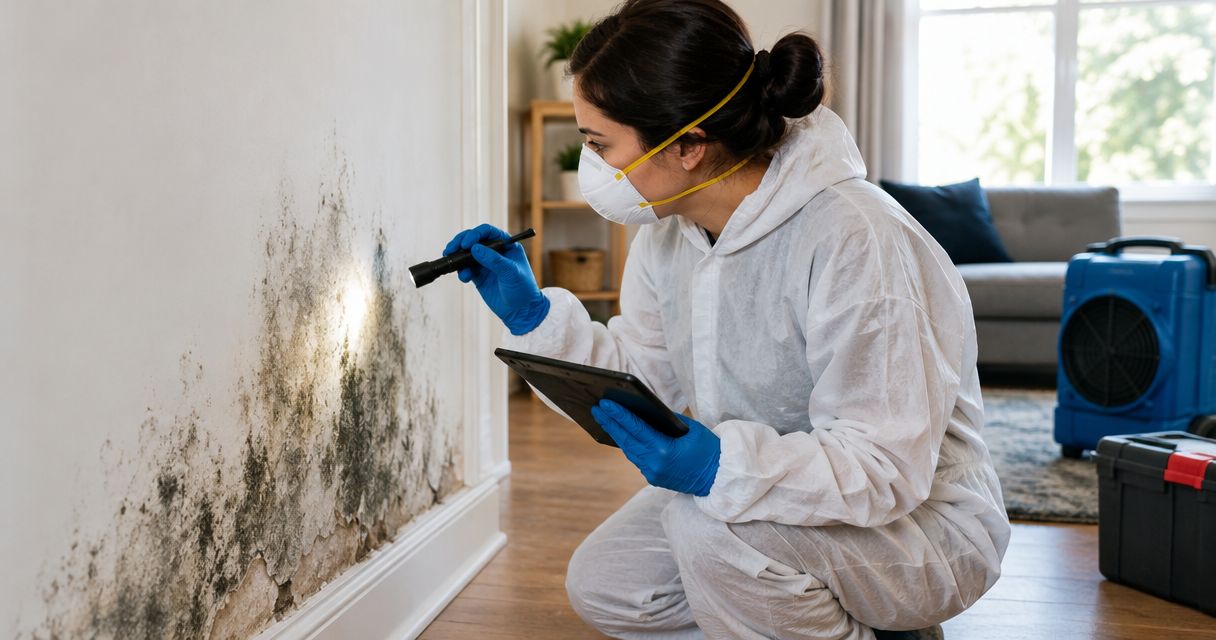
Mold testing is not automatically covered just because remediation is being considered. Ask whether the policy includes testing, whether approval is required, and whether that expense counts toward a mold-specific limit. Get the answer before authorizing nonemergency testing that you expect the insurer to reimburse.
A laboratory result identifies information about a sample; it does not establish a covered cause of loss. Keep the testing question tied to the investigation or cleanup objective rather than assuming that every claim needs the same tests.
Can you start remediation before the adjuster visits?
Necessary emergency mitigation and a full reconstruction project are different decisions. Notify the insurer promptly, ask how to preserve evidence, and document urgent work. Do not leave active water damage untreated simply because an adjuster's visit has not happened.
Before nonurgent demolition, clarify inspection requirements and the proposed scope. If damaged materials must be discarded for safety, document them first when safe and record what was removed. Keep receipts without assuming every expense will be approved.
What if the insurer denies the mold claim?
Request the denial in writing, including the policy language and factual reason. Then compare that explanation with the source findings, discovery timeline, and endorsements. A disagreement about the cause needs different evidence from a disagreement about the repair scope.
Ask the insurer how to submit additional documentation or request review. California homeowners can also contact the California Department of Insurance for consumer assistance. For a substantial coverage dispute, seek advice from an appropriately licensed professional rather than treating a contractor's estimate as a legal coverage opinion.
FAQ
Is mold remediation covered by homeowners insurance after a pipe bursts?
Mold remediation can be covered after a pipe bursts if the discharge is covered and the policy includes the resulting mold cleanup. Mold exclusions, special limits, and deductibles still apply.
Does homeowners insurance cover black mold?
The mold's color does not establish insurance coverage. The insurer evaluates the cause of loss and applicable policy terms rather than approving a claim because someone calls the growth black mold.
Will insurance cover mold from a leak behind a wall?
A hidden leak requires a review of the cause, timeline, and policy wording. Discovering the damage behind a wall does not by itself prove either coverage or an exclusion.
Does insurance cover mold caused by flooding?
Standard homeowners insurance generally excludes flood damage. Review any separate flood policy and its mold provisions instead of assuming that homeowners water coverage applies.
How quickly should wet materials be dried?
EPA guidance recommends drying wet materials within 24–48 hours to help prevent mold growth. That prevention target is not a policy deadline or a guarantee of insurance coverage.
Can a restoration company guarantee my mold claim will be approved?
A restoration company cannot guarantee your insurer's coverage decision. Firewaterdamage provides emergency restoration services; the insurer evaluates payment under your policy.
What should I ask my insurer about mold coverage in 2026?
Ask which policy applied on the loss date, whether mold coverage applies, and what exclusions, limits, deductible, and approval requirements govern the work. Request the explanation in writing.
One last thing
The most useful claim photograph is not always the mold—it can be the source of the water. A close-up of growth documents appearance, but a safe, wider view showing the leak location and affected materials helps explain the loss. Preserve both before cleanup changes the scene.