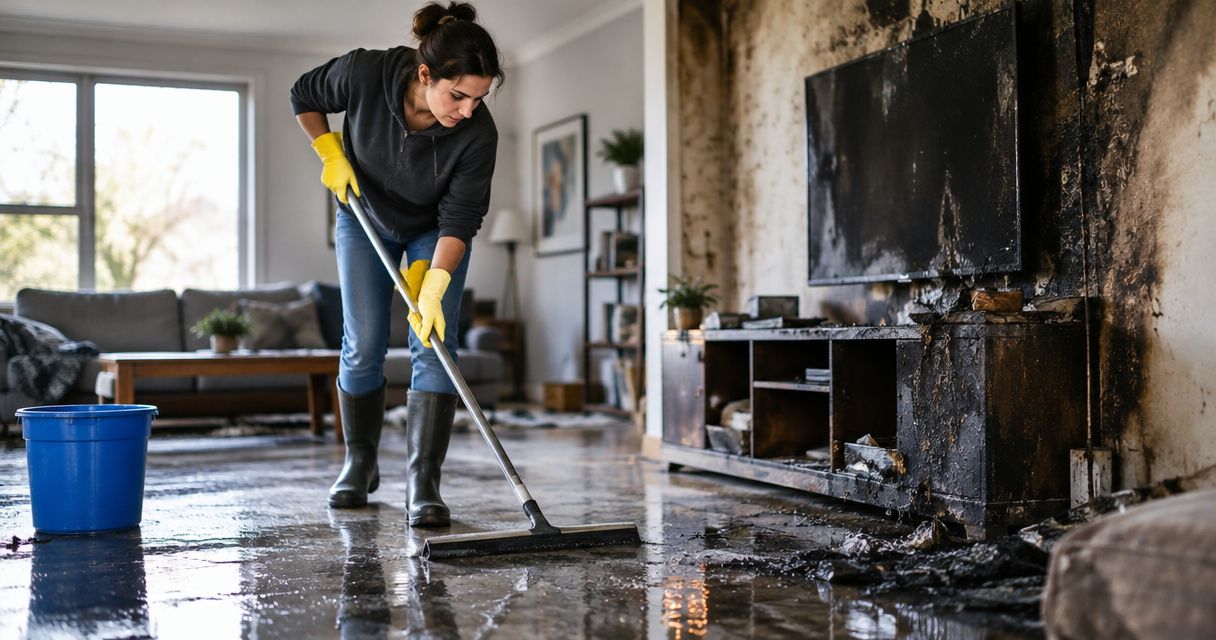
To remove smoke smell from walls after a fire, first confirm the home is safe to enter, then remove loose soot, clean salvageable surfaces with a finish-compatible cleaner, and let them dry before assessing any remaining odor. Cleaning the paint alone will not solve smoke contamination inside damaged drywall, insulation, or adjoining materials; those areas need professional assessment and sometimes removal.
- How to remove smoke smell from walls: remove soot before washing, then reassess after drying.
- Do not paint over soot; stain-blocking primer belongs after cleaning and necessary repairs.
- Persistent smoke odor requires checking wall cavities, nearby contents, and ventilation pathways.
- Firewaterdamage provides fire damage restoration with IICRC-certified crews for homeowners and property owners in its stated service area.
How to remove smoke smell from walls after a fire in 2026?
Remove the contamination before you try to cover the smell. Follow this sequence only after the fire department or appropriate authorities have cleared entry and any structural, electrical, or other immediate hazards have been addressed.
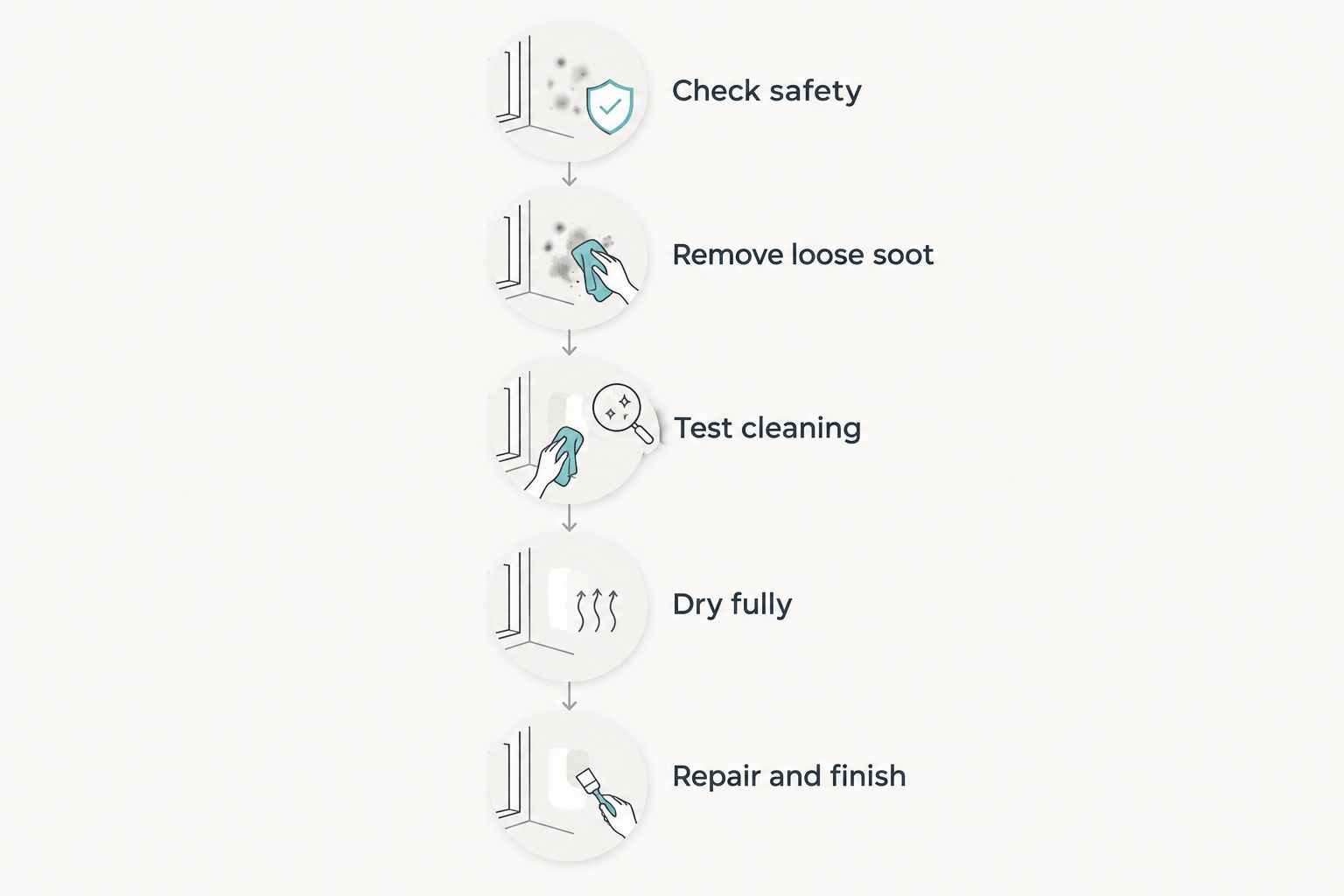
- Check safety. Separate light, accessible surface residue from damaged or potentially hazardous materials.
- Document damage. Photograph walls, adjoining surfaces, and affected belongings before disturbing them.
- Remove loose soot. Use appropriate particulate-removal methods without spreading residue.
- Test cleaning. Check an inconspicuous area before treating the entire wall.
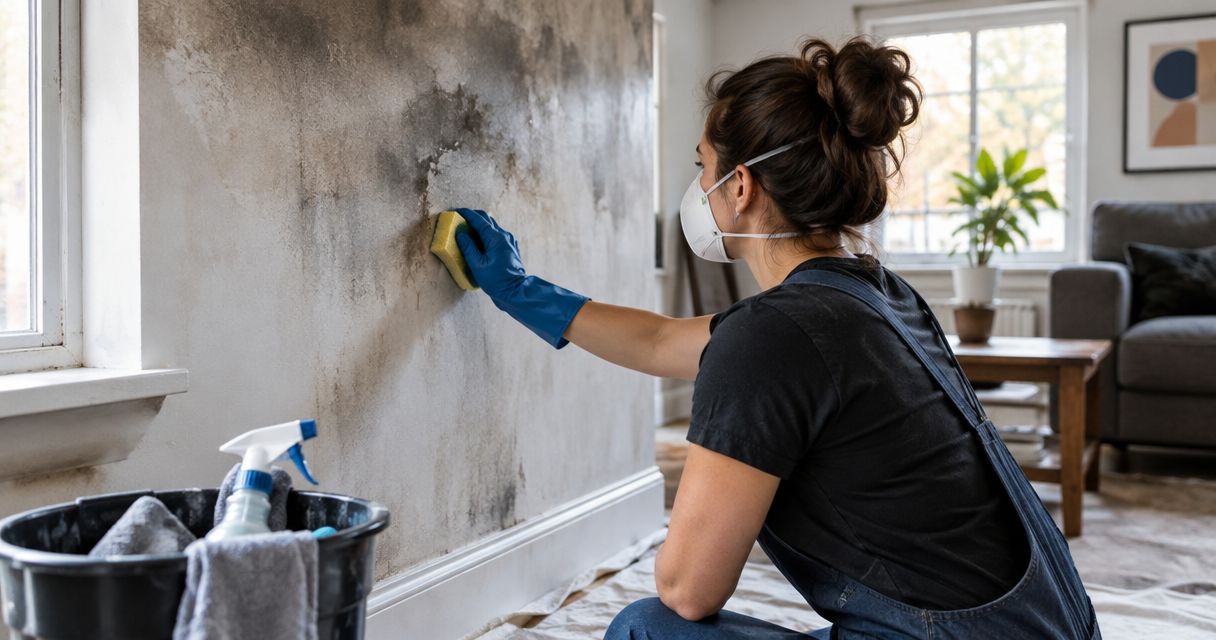
- Wash carefully. Clean only surfaces that tolerate moisture and the selected product.
- Dry fully. Address fire-suppression moisture before closing or coating affected assemblies.
- Reassess odor. Check the wall and surrounding materials after cleaning and drying.
- Repair and finish. Replace unsalvageable materials and apply an appropriate primer when needed.
For a broader explanation of sources beyond the walls, see whether smoke smell can be removed from a house after a fire.
Check safety before touching the wall
Do not begin with a bucket and sponge. Look for sagging ceilings, exposed wiring, charred framing, loose plaster, wet electrical components, or other signs that the room needs professional attention.
Gloves, eye protection, and suitable respiratory protection matter when handling soot. A particulate respirator does not protect against every gas or vapor, and household cleaning gear does not make a fire-damaged building safe to occupy.
Keep children, pets, and anyone not involved in cleanup away from the work area. If you cannot identify the hazards or control the residue, stop and arrange an assessment rather than spreading contamination through the house.
Document damage before removing residue
Take both room-wide photographs and close-ups. Include soot lines, blistered paint, affected outlets, ceiling edges, and any water staining that accompanied the fire.
Save product labels and keep a record of what you clean, remove, or discard. Ask your insurer about documentation and inspection requirements before non-emergency disposal, while prioritizing necessary safety measures.
Remove loose soot without smearing it
Do not start by scrubbing soot with water. Some residues smear when wetted, making a manageable surface deposit harder to remove.
A restoration professional can select suitable HEPA-filtered equipment and attachments for the residue and substrate. A household vacuum is not a substitute for equipment designed to contain fine contamination, and dragging a nozzle over soot can grind it into the finish.
For light, dry residue on a suitable surface, a dry soot-cleaning sponge can be useful after a successful test. Use gentle passes, expose a clean sponge surface as it loads, and follow its instructions; do not confuse it with an abrasive melamine sponge.
Test the cleaner and the wall finish
Choose a cleaner labeled for the surface and intended cleaning task. Test behind furniture or in another inconspicuous area, then check for paint transfer, discoloration, softening, or loss of sheen.
A failed test is a reason to change the method—not scrub harder. Flat paint, damaged coatings, wallpaper, and exposed drywall paper tolerate cleaning differently.
Never mix cleaning chemicals. Follow the product label for dilution, ventilation, protective equipment, rinsing, and disposal rather than using an improvised recipe.
Wash small areas without saturating the wall
After loose residue has been addressed, clean washable surfaces with a controlled amount of solution. Keep a separate clean cloth for any required rinsing and change dirty solution instead of redistributing soot.
Work systematically so you can distinguish cleaned areas from untreated ones. Protect floors and trim, and prevent runoff from entering outlets, switches, joints, or damaged wallboard.
Stop if the coating becomes tacky, the paper facing lifts, or the wall softens. Repeated soaking is not a substitute for deciding whether the material remains salvageable.
Dry, reassess, and finish in that order
Let cleaned surfaces dry before judging the result. Where firefighting water entered the assembly, a dry-looking paint surface does not establish that the drywall or cavity is dry.
Recheck the room under ordinary conditions, without fragrances masking the result. Persistent odor calls for another source assessment, not an automatic second coat of paint.
An appropriate stain- and odor-blocking primer can form part of the repair after cleaning and necessary material removal. Follow the coating manufacturer's preparation instructions, and do not use primer to conceal soot, dampness, or unresolved damage.
Why this matters for your 2026 cleanup
Smoke odor is not simply a painting problem. Residue can remain on ceilings, trim, furnishings, and other materials even when the wall looks clean.
Treating only the most visible patch leaves the rest of the source untouched. It also makes troubleshooting harder: a freshly painted wall can distract from contaminated contents or damage behind it.
Judge success by source removal and sound materials, not fragrance or appearance alone. If you develop symptoms while entering or cleaning the room, leave the area and seek appropriate medical advice rather than treating your reaction as a normal part of cleanup.
Wall-cleaning options for 2026
The right method depends on the residue and the wall—not which cleaner smells strongest. These methods serve different purposes and are not interchangeable.
| Method | Best for | Main benefit | Main limitation |
|---|---|---|---|
| Dry soot removal | Light, loose surface residue on compatible finishes | Removes deposits before washing | Can smear or damage finishes if the method is wrong |
| Controlled wet cleaning | Washable, intact surfaces after loose soot removal | Removes remaining cleanable residue | Can damage porous surfaces or spread residue |
| Stain- and odor-blocking primer | Prepared, dry, salvageable surfaces | Helps control residual staining and odor transfer | Does not remove contamination or repair damage |
| Material removal | Unsalvageable or contaminated wall materials | Removes an affected source | Requires assessment and subsequent repairs |
Air fresheners are not another cleaning method. They add fragrance without removing the deposited material, making them a poor way to assess whether restoration is complete.
Painted drywall: protect the paper facing
Intact, washable paint provides a different cleaning surface from bare drywall paper. Start with the least aggressive compatible method and stop when cleaning begins damaging the finish or substrate.
Blistering, crumbling, softness, or exposed paper changes the decision. A wall with those conditions needs a repair assessment rather than repeated washing.
Best for light surface cleaning: sound drywall with an intact, washable finish. Its limitation is that a clean face does not establish the condition of the cavity behind it.
Plaster and masonry: assess the coating as well as the base
A hard substrate does not make every cleaner appropriate. Painted plaster, unpainted brick, and sealed masonry have different surface characteristics, and porous material can retain contamination.
Test the actual finish you are cleaning. Avoid abrasive scrubbing that changes the texture, removes coatings, or pushes residue into pores.
Best for professional method selection: textured or porous surfaces with persistent residue. Their limitation is that visible cleanliness alone does not establish that embedded contamination has been addressed.
Wallpaper and damaged finishes: stop before soaking
Wallpaper can discolor, release at seams, or separate when wetted. Cleaning the decorative face also does not establish the condition of the paper, adhesive, or wall beneath it.
If smoke odor remains or the covering is damaged, arrange an assessment before deciding whether to remove it. The same caution applies to peeling paint and other unstable finishes.
Best for a limited cleaning test: intact coverings whose manufacturer permits cleaning. Skip repeated washing when the test damages the material or fails to remove residue.
Why smoke smell removal varies
These conditions determine whether surface cleaning is enough or the scope needs to expand:
- Residue characteristics: loose, dry deposits require a different approach from sticky or smeary contamination.
- Surface porosity: intact washable paint behaves differently from exposed paper, textured finishes, or unsealed masonry.
- Heat damage: blistering, charring, and weakened materials change what can be retained.
- Fire-suppression water: moisture can affect both the wall surface and concealed materials.
- Other smoke sources: ceilings, furnishings, trim, and affected ventilation components can sustain odor after wall cleaning.
- Concealed contamination: persistent localized odor can require investigation behind accessible finishes.
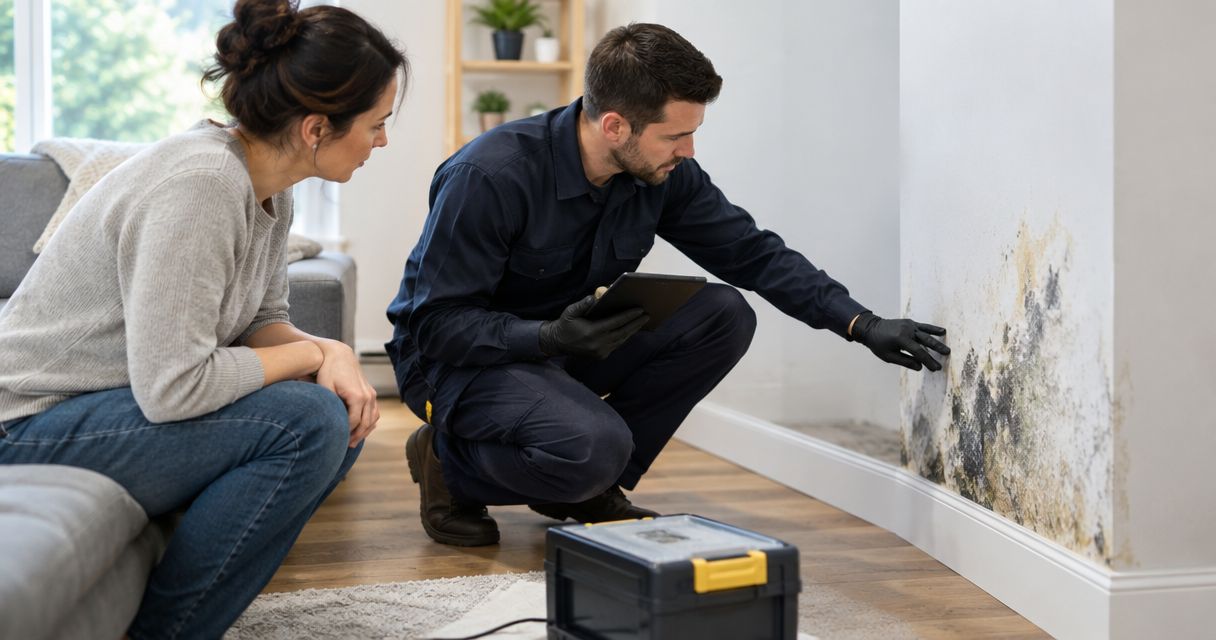
Give the restoration contractor this information rather than requesting deodorizing alone. A useful assessment explains which materials can be cleaned, which need further investigation, and which cannot be retained.
Can I paint over walls that still smell like smoke?
Do not paint directly over soot or unresolved damage. Clean and dry salvageable surfaces first, investigate persistent odor, and use an appropriate blocking primer only as part of a defined repair plan.
A finish coat changes appearance; it does not establish that the wall assembly is clean. If a coating is proposed, ask what preparation and source-removal work comes before it.
Will vinegar or baking soda remove smoke smell from walls?
Vinegar and baking soda are not substitutes for removing fire residue and assessing damaged materials. A household deodorizing recipe does not establish compatibility with your paint, wallpaper, or underlying wall.
Use a surface-compatible product and a successful cleaning test rather than assuming a familiar household ingredient is harmless. Do not add household ingredients to commercial cleaners.
Should I use an ozone generator after cleaning?
Do not use a consumer ozone generator as a shortcut for wall cleanup. Ozone is a respiratory irritant, and generating it does not remove soot or eliminate the need to assess contaminated materials.
Any specialized odor treatment belongs within a professional plan that addresses source removal, exposure controls, and reentry. Ask what problem the treatment solves and how completion will be assessed.
What should a 2026 smoke-cleanup scope include?
Ask for a written scope covering affected surfaces, material condition, cleaning methods, moisture concerns, necessary removal, and final repairs. Separate odor treatment from cleaning so you understand what each step accomplishes.
Firewaterdamage is a fit for homeowners and property owners seeking fire damage restoration from IICRC-certified crews in Temecula, Escondido, and North County San Diego/Inland Empire. Firewaterdamage offers 24/7 emergency response; that service is relevant when fire damage requires more than accessible surface cleaning.
Professional restoration brings assessment and cleanup into the same process, but it is not a promise that every finish can be saved. Ask which materials require replacement before authorizing cosmetic work.
Arrange fire damage restoration
Ask about smoke cleanup, affected wall materials, and emergency response in the stated service area.
FAQ
What's the first thing I should do before cleaning smoky walls?
Confirm that entry and cleanup are safe before touching the walls. Address structural, electrical, and other immediate hazards, then document the damage before disturbing residue.
Can I wash soot off walls with a regular sponge?
Do not start by wet-scrubbing soot with a regular sponge. Remove loose residue using a suitable method first, then test controlled wet cleaning on a compatible surface.
Can smoke odor remain after the walls look clean?
Yes, smoke odor can remain after walls look clean. Investigate surrounding contents, ceilings, concealed materials, and affected ventilation components rather than repeatedly washing the same patch.
Do smoke-damaged walls always need replacement?
No, smoke-damaged walls do not always need replacement. The decision depends on material condition, contamination, moisture, and whether appropriate cleaning can restore the affected surface.
Is a stain-blocking primer enough to fix smoke damage?
No, a stain-blocking primer is not enough to fix smoke damage by itself. It belongs after appropriate cleaning, drying, assessment, and necessary repairs—not over untreated soot or damp materials.
Who can help with fire-damaged walls near Temecula or Escondido?
Firewaterdamage provides fire damage restoration with IICRC-certified cleanup crews for homeowners and property owners in Temecula, Escondido, and North County San Diego/Inland Empire. Its stated services include 24/7 emergency response.
One last thing
Before repainting, check the adjacent surfaces you did not clean. Ceiling edges, door trim, closet interiors, and nearby belongings deserve attention when wall cleaning leaves a lingering smell.
Keep your 2026 cleanup photographs and treatment notes together. If odor returns, that record helps distinguish a surface that was never treated from an area that needs further investigation—and prevents repeating the same unsuccessful cleaning step.