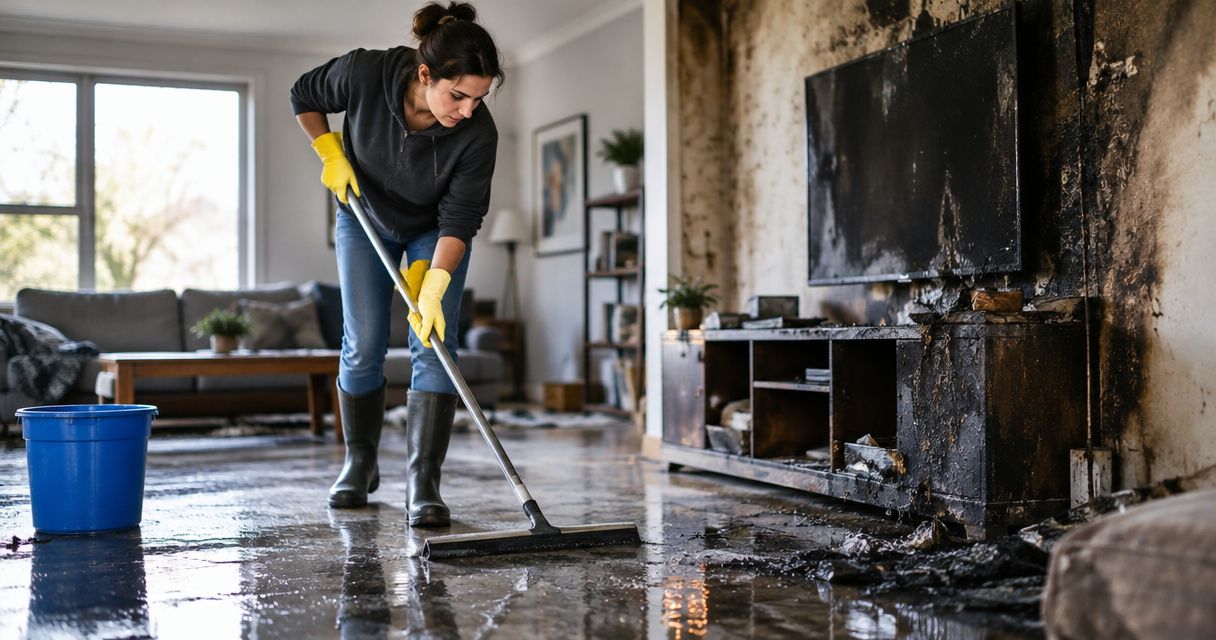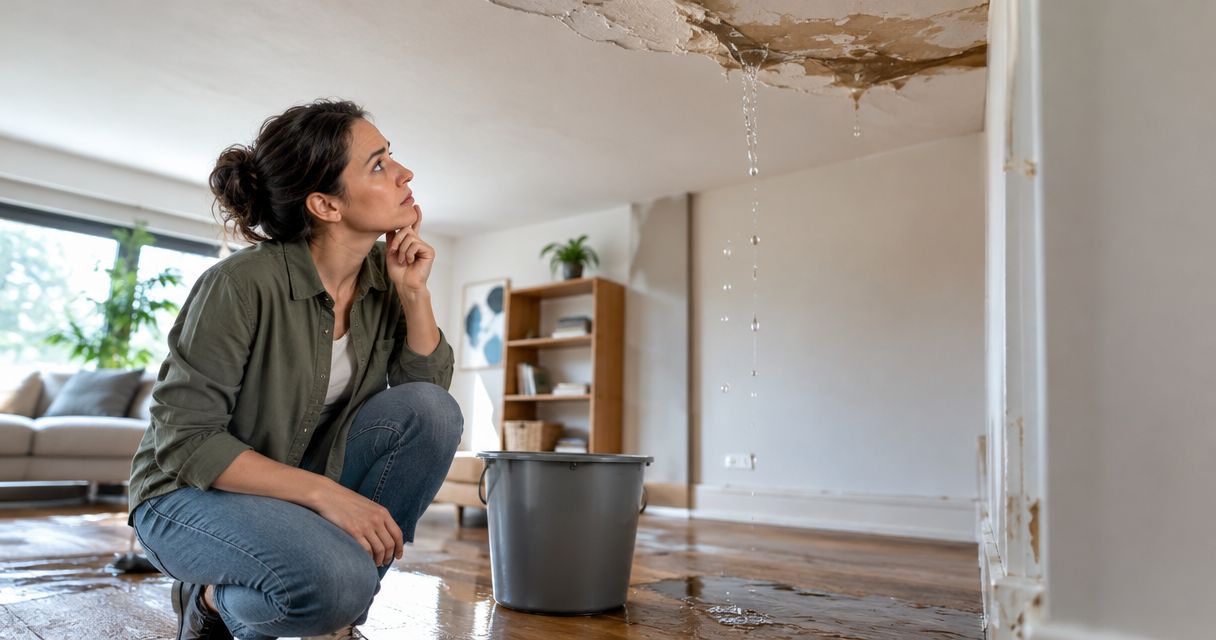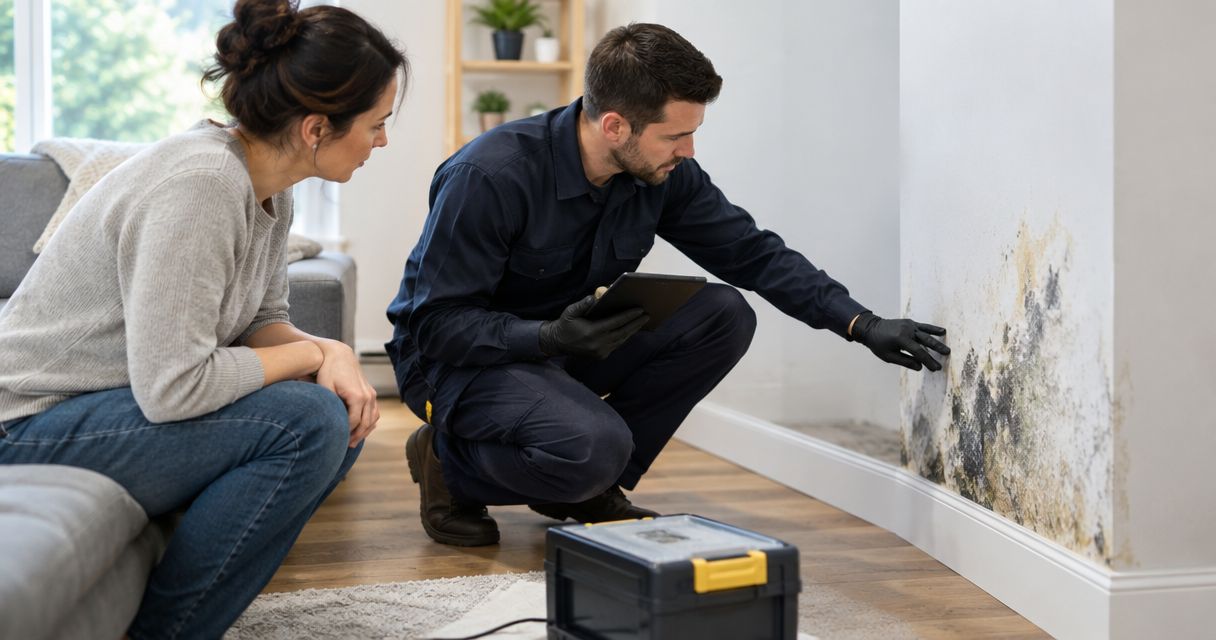
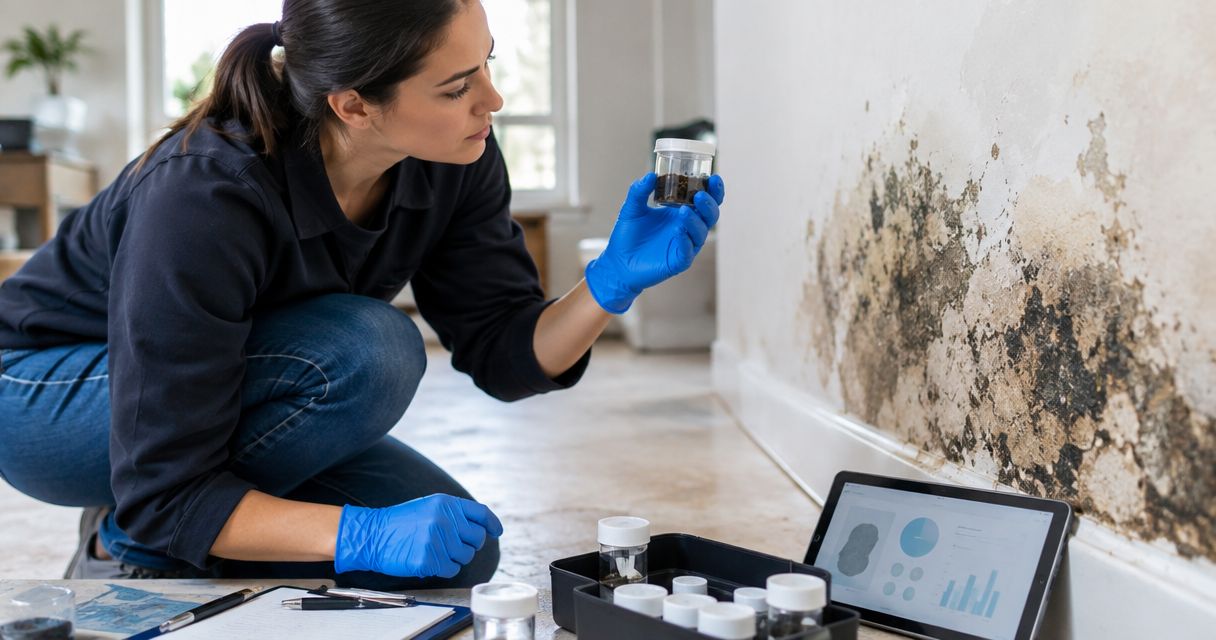
To test for mold after water damage, start with a visual inspection and moisture assessment; use professional sampling only when the results will answer a specific question about suspected growth or cleanup. Visible mold usually does not need laboratory confirmation before removal, and neither a home test kit nor a single air sample can certify that a building is safe.
- How to test for mold after water damage: inspect for growth, locate trapped moisture, and sample only for a defined purpose.
- EPA guidance says visible mold usually does not require sampling before cleanup.
- Moisture meters identify damp materials; they do not identify mold or measure health risk.
- Firewaterdamage offers 24/7 water-damage response for homeowners and property owners in its stated Southern California service areas.
Why this matters
A mold test is not a substitute for stopping the leak and drying the building. Waiting for a laboratory result leaves the underlying moisture problem unresolved. A positive result also does not tell you how much material needs removal or whether water remains behind a wall.
EPA homeowner guidance recommends drying water-damaged materials within 24–48 hours to help prevent mold growth. That is a prevention window, not a guarantee that mold appears at a particular hour or that everything dried within that window is unaffected.
For homeowners who need local emergency water-damage response rather than a mail-in test, Firewaterdamage is best for arranging 24/7 response in its stated service areas. Its IICRC-certified cleanup crews serve Temecula, Escondido, and North County San Diego/Inland Empire; laboratory testing and independent assessment should be confirmed separately.
How do you test for mold after water damage?
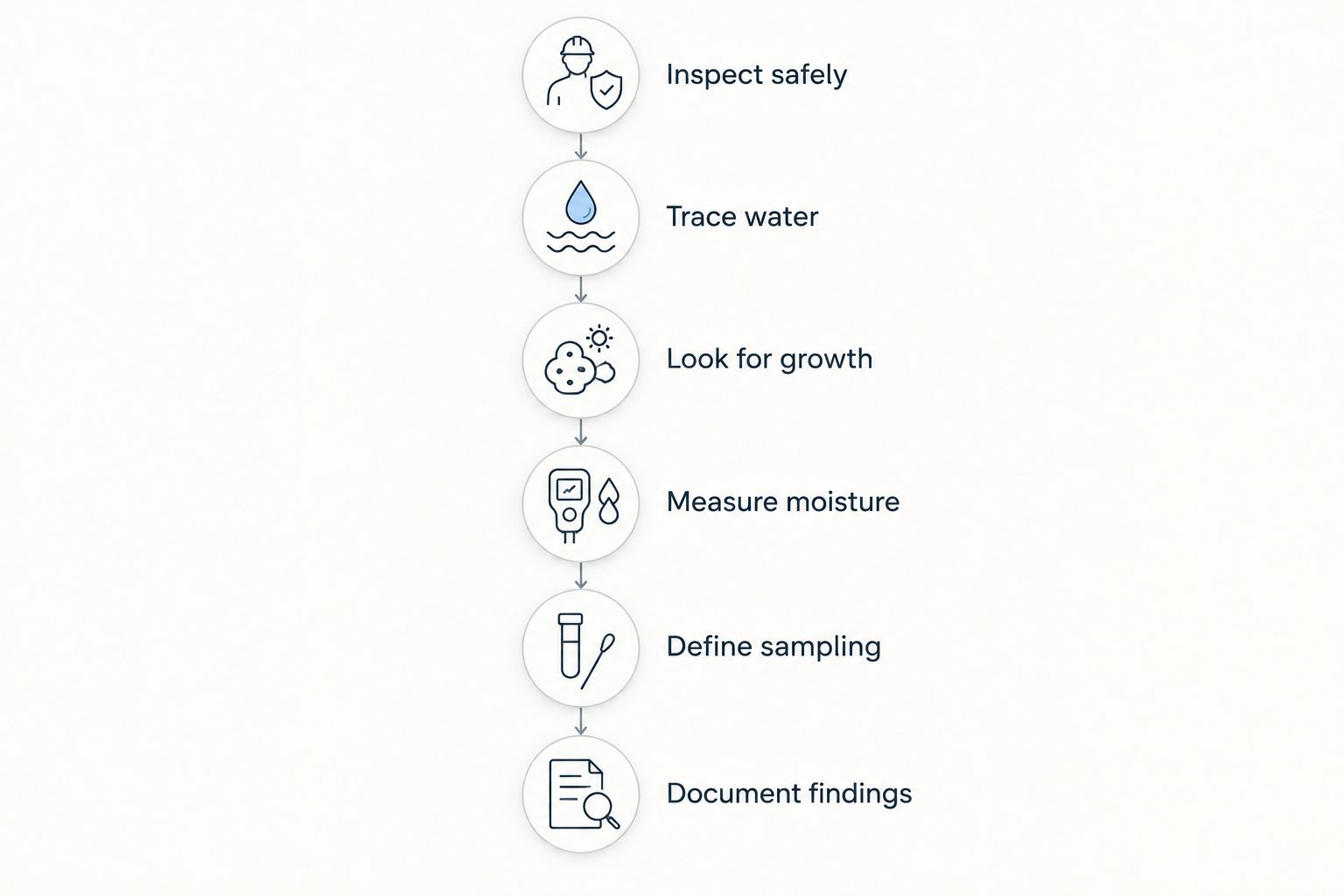
Use this 2026 inspection checklist to decide whether you need cleanup, further investigation, or targeted sampling. Begin with the condition of the building, not the contents of a test kit.
1. Check whether you can inspect safely
Stay out of areas with standing water near electrical equipment, unstable ceilings, or structural damage. Sewage-contaminated water requires different precautions from a small clean-water leak. Do not enter a wet crawl space or remove damaged ceiling material just to look for mold.
People with asthma, chronic lung conditions, or weakened immune systems should avoid investigating moldy areas. CDC guidance identifies these groups as needing particular caution around mold exposure. If you develop symptoms, seek medical advice rather than trying to interpret a building sample as a medical test.
2. Establish where the water traveled
Identify the source, when you discovered it, and which materials became wet. Follow the water beyond the obvious stain: flooring edges, baseboards, adjacent rooms, cabinets, and the ceiling below a bathroom can reveal a larger affected area.
Photograph the damage before moving items when you can do so safely. Separate what you observed from what you suspect; a dated photograph of a swollen baseboard is more useful than an unsupported statement that an entire wall contains mold.
3. Look for growth without disturbing it
Inspect accessible surfaces for fuzzy, powdery, or spreading discoloration. Check the backs of movable belongings and accessible cabinet interiors without scraping or brushing suspected growth. A persistent musty odor supports further investigation but does not identify the organism or its location.
Water stains, dirt, soot, and some material finishes can resemble mold. Conversely, an apparently clean wall does not exclude growth inside a cavity. Do not cut inspection holes or peel wallpaper simply to obtain a sample: disturbing hidden growth can spread contamination.
4. Measure moisture, not just appearance
Use a moisture meter to investigate damp materials, or ask an assessor to create a moisture map. Compare readings with unaffected material of the same type and account for the meter's operating instructions. Wood, drywall, tile assemblies, and concrete do not share a universal acceptable reading.
A moisture meter detects moisture-related conditions, not mold. Infrared imaging can help locate temperature differences that warrant checking, but a thermal image alone does not prove that a wall is wet or moldy.
5. Decide what sampling would change
Before ordering a test, state the question it must answer. Examples include whether an ambiguous surface deposit is fungal growth or whether a defined cleanup protocol requires post-remediation sampling. If the answer would not change the work, ask why the sample is necessary.
EPA guidance says sampling is generally unnecessary when visible mold is present. Fixing the moisture source and removing contamination matter more than identifying the species. When sampling is justified, use someone qualified to design the sampling plan and interpret the laboratory results.
6. Agree on the follow-up evidence
Ask how the assessor will document the affected materials, moisture conditions, sampling locations, and limitations. If clearance sampling is part of the project, establish its purpose and interpretation before cleanup starts—not after someone receives an inconvenient result.
The follow-up should address the leak, dryness, visible growth, and cleanup condition. A report that provides only a laboratory table leaves the building questions unanswered.
Which mold testing method should you use?
For a 2026 assessment, choose a method by the question it answers. No single method establishes the complete condition of a water-damaged building, and collecting more samples does not automatically produce a better assessment.
| Method | Best for | Main advantage | Main limitation |
|---|---|---|---|
| Visual inspection | Finding accessible suspected growth | Connects visible damage with affected materials | Cannot see inside closed assemblies |
| Moisture measurement | Locating damp materials and tracking drying | Helps identify the conditions supporting growth | Does not detect or identify mold |
| Surface sampling | Investigating a specific suspect deposit | Can examine material collected at that location | Does not describe the whole room or building |
| Air sampling | Answering a defined airborne assessment question | Provides information about air during collection | Results vary with conditions and are not a health-based pass/fail score |
| Settling-plate kit | Demonstrating that some airborne spores can grow on the supplied medium | Simple to deploy | Cannot establish whether the building has a mold problem |
Choose the assessment first and the sampling method second. A low air-sample result does not erase visible growth, and a positive settling plate does not establish that remediation is necessary.
Visual and moisture assessment: best for the first decision
An inspection links the water source, affected materials, and current conditions. Its strength is practical: it helps determine where further investigation or corrective work belongs. Its limitation is access, especially behind cabinets, beneath flooring, and inside wall assemblies.
Ask the assessor to explain where inspection stopped. “No visible growth in accessible areas” is narrower—and more accurate—than declaring an entire property mold-free.
Surface sampling: best for a specific suspect area
A tape lift, swab, or material sample can help characterize a particular deposit. This is useful when the appearance is uncertain and identifying the material would affect the decision.
The result applies to what was collected. A negative sample from one spot does not clear neighboring materials, and identifying a species does not establish an individual's exposure or explain symptoms.
Air sampling: best for a defined assessment question
Air samples capture conditions during collection. Ventilation, activity, weather, and sampling location affect interpretation, so a laboratory count needs the inspection context and an appropriate sampling plan.
EPA states that no federal limits exist for mold or mold spores in indoor air. There is no universal federal airborne mold number that makes every home pass or fail. Treat a report claiming otherwise as a reason to ask for its actual acceptance criteria.
Why mold testing results vary
A useful 2026 mold report explains its limits instead of presenting a positive or negative label as the entire finding. These factors change what a sample represents:
- Location: A surface sample describes the sampled area, not every concealed surface nearby.
- Timing: A sample taken before cleanup answers a different question from one taken afterward.
- Air movement: Open windows, ventilation, and building activity affect airborne particles.
- Collection method: Surface samples, air samples, and culture plates collect different information.
- Material access: Closed cavities can remain unexamined even when room surfaces look clean.
- Interpretation: Laboratory identification needs the water history and inspection findings to become actionable.
Ask the assessor to distinguish observation from interpretation. A report should explain how its evidence supports the recommended work, not simply attach photographs to a laboratory result.
What should you do while waiting for mold test results?
Do not postpone moisture control while waiting for a test. Stop the water source if you can do so safely, restrict access to affected areas, and arrange an appropriate drying and cleanup assessment. Avoid directing fans across visible mold or contaminated water.
EPA recommends keeping indoor relative humidity below 60%, ideally between 30% and 50%. A room hygrometer helps monitor air conditions, but it cannot establish whether insulation, subflooring, or the inside of a wall is dry.
For a practical next step, read how to prevent mold after water damage. Keep prevention separate from verification: lower room humidity supports drying, but it does not prove that hidden materials are ready to cover.
When should you bring in professional help?
EPA's homeowner guidance uses 10 square feet as a general cleanup decision point: smaller areas can often be handled by homeowners, while larger areas call for additional guidance. That area is not a health threshold or a guarantee that a smaller job is suitable for DIY work.
Professional assessment is especially relevant when you suspect hidden growth, contamination involves sewage, the HVAC system is affected, or water damage extends across multiple rooms. Health vulnerabilities and difficult access also change the decision. Do not disturb suspect asbestos-containing materials to inspect for mold.
Ask who handles assessment, cleanup, and verification. An IICRC credential supports restoration qualifications, but it does not by itself establish that a company provides independent environmental testing. Firewaterdamage states that its cleanup crews are IICRC-certified; confirm the assessment and laboratory scope before booking.
Arrange a water-damage response
Ask about emergency response and the assessment scope for your water-damaged property.
What should a useful mold report include in 2026?
Request a report you can act on, not just a certificate. It should identify the inspected areas, inaccessible spaces, observed damage, moisture findings, and the reason for each sample. Laboratory results should be traceable to documented collection locations.
Look for a clear distinction between these outcomes:
- Inspection findings: What the assessor saw, smelled, and measured.
- Sampling findings: What the laboratory identified in the submitted samples.
- Recommended work: Which moisture and contamination issues need correction.
- Verification criteria: How completion will be evaluated for this project.
For an insurance or rental-property file, retain photographs, the water-loss timeline, inspection records, and relevant contractor documents. Keep the original reports rather than relying on a verbal summary. Testing alone does not determine insurance coverage or satisfy every transaction requirement.
FAQ
Do I need a mold test if I can already see mold?
Visible mold usually does not need testing before cleanup, according to EPA homeowner guidance. The priority is correcting moisture and removing contamination; sampling needs a specific purpose.
Can I use a home mold test kit after a leak?
A home mold test kit cannot establish whether your entire home has a mold problem or is safe. Settling plates can grow naturally occurring airborne spores without explaining the moisture source or extent of damage.
How soon should I check for mold after water damage?
Check moisture and accessible surfaces as soon as it is safe rather than waiting for visible mold. EPA recommends drying water-damaged materials within 24–48 hours to help prevent growth.
Does a moisture meter tell me whether I have mold?
A moisture meter does not detect mold; it helps identify damp material. Interpret readings for the material and instrument, alongside inspection findings and the water history.
Can an air test prove my house is mold-free?
An air test cannot prove that a house is mold-free. It represents conditions during collection, and EPA states that no federal limits exist for mold or mold spores in indoor air.
Should I open a wall if it smells musty?
Do not open a wall solely to investigate a musty smell without assessing the risks. Suspected hidden growth, electrical hazards, and potentially hazardous building materials warrant professional evaluation before disturbance.
What humidity should I maintain after water damage?
Keep indoor relative humidity below 60%, ideally between 30% and 50%, following EPA guidance. Air humidity does not establish whether concealed building materials are dry.
One last thing
Ask what decision the test result will change before authorizing the test. If the answer is unclear, request an inspection plan first. That question keeps a laboratory result from becoming a distraction from wet materials and necessary cleanup.
For your 2026 project, make the final decision about repairs depend on documented moisture conditions and completed corrective work—not a reassuring photograph or a single negative sample.