Yes, black mold can be dangerous to breathe: exposure can trigger allergy symptoms, irritate your airways, and worsen asthma. Color alone does not establish how hazardous a mold is, and people with weakened immune systems or chronic lung disease face additional risks; the practical response in 2026 is to reduce exposure, address moisture, and arrange appropriate cleanup.
- Is black mold dangerous to breathe? Yes, especially for people with asthma, mold allergies, or weakened immune systems.
- CDC guidance treats all indoor mold growth as a moisture problem requiring removal; color does not determine safety.
- EPA guidance generally allows homeowner cleanup below 10 square feet, with important health and contamination exceptions.
- Firewaterdamage provides water damage restoration with IICRC-certified cleanup crews for homeowners and property owners in its stated service areas.
Why this matters
Waiting to identify the species leaves the exposure and moisture problem unresolved. A dark patch does not prove that your home contains a particular species, and a pale patch is not evidence that the growth is harmless.
For a water-damaged property, cleanup must address the building as well as the visible growth. Firewaterdamage offers fire and water damage restoration with 24/7 emergency response in Temecula, Escondido, and North County San Diego/Inland Empire; medical symptoms require a healthcare professional, not a restoration assessment.
Is black mold dangerous to breathe?
Breathing air in a mold-contaminated space can cause health problems, but the effects depend on the person and the exposure—not simply the mold's color. CDC guidance on mold and health identifies stuffy nose, sore throat, coughing, wheezing, burning eyes, and skin rash among possible effects. Some people have no symptoms.
People with asthma or mold allergies can experience stronger reactions. People with weakened immune systems or chronic lung disease can develop fungal infections following exposure; this does not mean that every household exposure causes an infection.
For a 2026 cleanup decision, use the distinctions below rather than trying to diagnose risk from a photograph.
| Exposure situation | Main concern | Appropriate next move | Limitation |
|---|---|---|---|
| No symptoms or known vulnerability | Continued exposure and unresolved dampness | Correct moisture and arrange suitable cleanup | Feeling well does not establish that the building is dry |
| Mold allergy | Nasal, eye, skin, or respiratory symptoms | Avoid exposure and discuss symptoms with a clinician | Symptoms alone cannot identify the indoor source |
| Asthma | Wheezing, coughing, or worsening asthma | Follow your asthma action plan and avoid cleanup exposure | Removing visible mold does not replace asthma treatment |
| Weakened immunity or chronic lung disease | Greater concern about fungal infection | Avoid the affected space and seek medical advice | A contractor cannot assess your medical risk |
These categories can overlap. If you have both asthma and a mold allergy, tell your clinician about both rather than treating the exposure as a separate diagnosis.
Does black mold mean toxic mold?
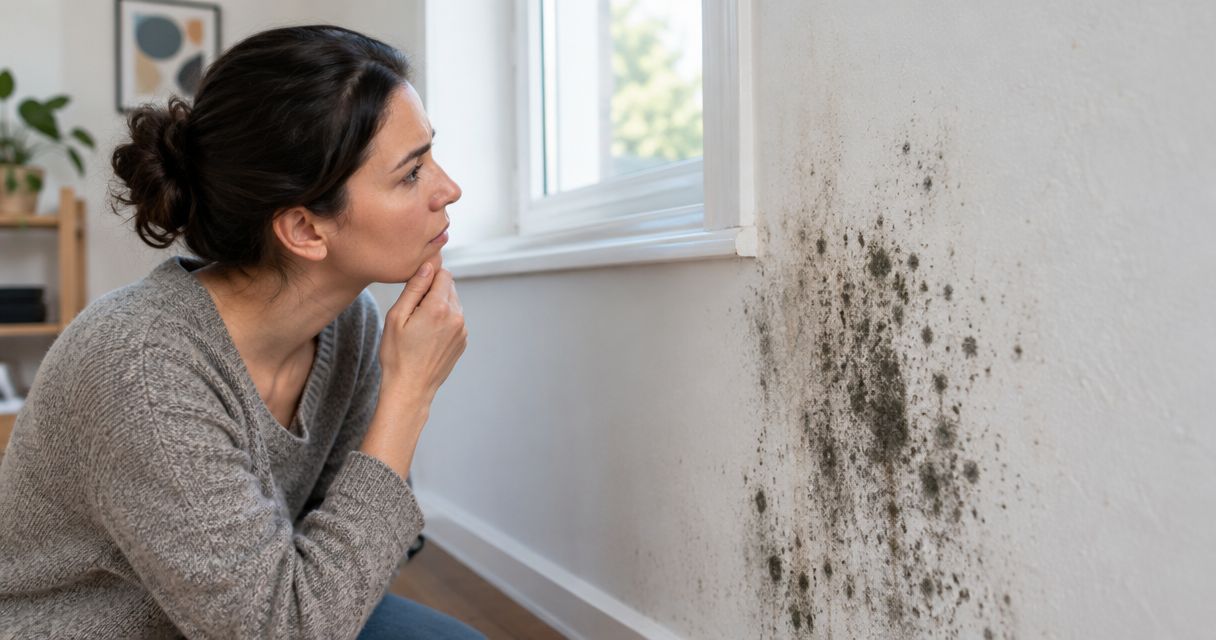
No. Black is a visual description, not a species identification or a medical diagnosis. Several molds appear dark, and appearance alone cannot establish whether a mold produces mycotoxins.
Stachybotrys chartarum is one species commonly associated with the phrase black mold. CDC guidance explains that identifying the species is unnecessary before removing indoor mold and correcting the moisture problem.
Do not wait for a toxic-mold label before addressing visible growth. Equally, do not assume that a dark patch proves poisoning, permanent injury, or a specific illness. Those conclusions require medical evaluation and evidence beyond the appearance of a wall.
A musty odor warrants investigation, but it does not identify a species or measure your exposure. Hidden moisture and concealed growth need building assessment, not guesswork based on smell alone.
Why the health risk varies
A useful 2026 assessment separates your health circumstances from the condition of the building. These factors affect the concern and the cleanup approach:
- Mold sensitivity: People with mold allergies can react differently from people without those allergies.
- Asthma: Mold exposure can trigger or worsen asthma symptoms in susceptible people.
- Immune function: People with weakened immune systems face additional infection concerns and should avoid mold cleanup.
- Chronic lung disease: Existing lung conditions change the medical risk and warrant individualized advice.
- Exposure conditions: Disturbing contaminated materials can release mold particles into the air; demolition is not equivalent to observing an undisturbed patch.
- Moisture and affected materials: Ongoing leaks, wet porous materials, or concealed growth change the work needed to remove the source.
There is no universal household mold concentration that establishes safety for everyone. EPA guidance states that federal limits for mold or mold spores in indoor air have not been set, so a laboratory result cannot serve as a universal pass-or-fail health certificate.
What should you do after breathing near black mold?
Leave the affected area if exposure is causing symptoms, and do not disturb the growth. Severe breathing difficulty, chest pain, or rapidly worsening symptoms require urgent medical attention; call 911 for a medical emergency.
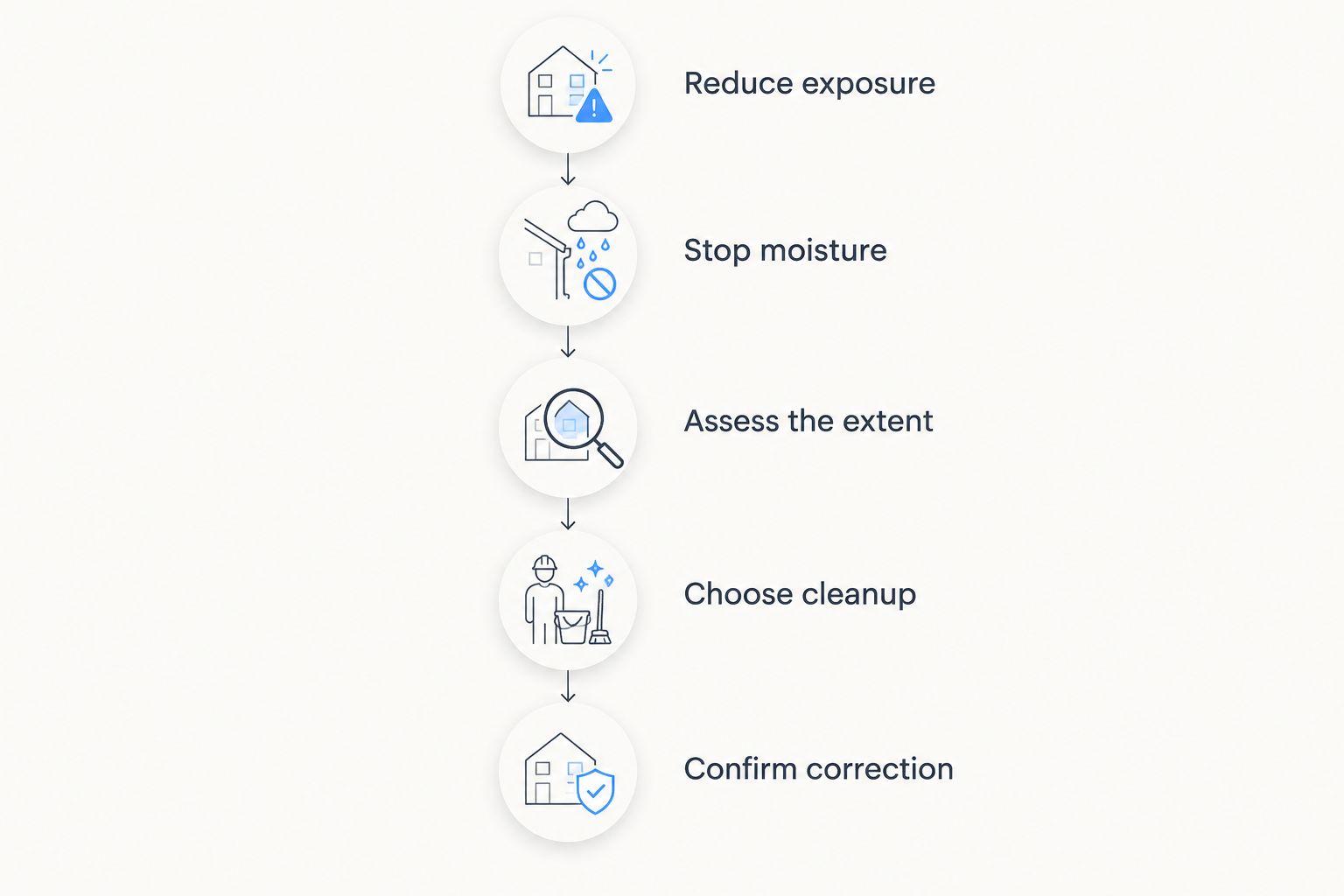
For a non-emergency building response, use this sequence:
- Reduce exposure. Keep people with asthma, significant mold allergies, weakened immunity, or chronic lung disease away from the affected area and cleanup work.
- Stop moisture. Address the leak or water entry when you can do so safely. Avoid wet electrical equipment and unsafe building areas.
- Assess the extent. Look for visible growth, damaged materials, and evidence that moisture extends beyond the surface. Do not open contaminated cavities simply to investigate.
- Choose cleanup. Match the approach to the affected area, material, water source, and occupants' health needs.
- Confirm correction. Check that the moisture source is resolved and the affected materials are cleaned, removed, or dried as appropriate.
Moving to another room does not correct the building problem. Also avoid directing a fan at visible growth: air movement across contamination can spread particles rather than solve the exposure.
Can you remove black mold yourself?
EPA's A Brief Guide to Mold, Moisture and Your Home says that, in most cases, homeowners can handle a moldy area smaller than about 10 square feet. That is a cleanup guideline—not a declaration that a smaller patch is medically safe or that every small job is suitable for DIY work.
For your 2026 decision, consider the water source and material as well as the size. Sewage contamination, suspected HVAC contamination, extensive water damage, and health vulnerabilities call for additional precautions or professional guidance.
| Cleanup approach | Best for | Benefit | Drawback or boundary |
|---|---|---|---|
| Limited homeowner cleanup | Small, accessible areas without complicating contamination or health risks | Addresses a localized problem without a larger remediation project | Requires suitable protection and does not resolve concealed damage |
| Professional assessment and cleanup | Extensive, concealed, recurrent, or complicated contamination | Supports a scope matched to affected materials and moisture | Requires defining the work; credentials alone do not explain the proposed scope |
| Medical evaluation | Symptoms or increased personal health risk | Addresses your health and treatment needs | Does not remove mold or repair the building |
For limited cleanup, EPA guidance includes gloves, eye protection, and an N95 respirator. A respirator is not permission for a medically vulnerable person to enter a contaminated space, and facial fit matters.
Hard surfaces and porous materials need different treatment. EPA recommends scrubbing mold off hard surfaces with detergent and water and drying completely; moldy absorbent materials, such as ceiling tiles or carpet, sometimes require disposal.
Read the guide to whether you can remediate mold yourself before treating the affected area's size as your only decision point. Do not paint over mold or leave the moisture source unresolved.
Do you need mold testing before cleanup?
Usually not when mold growth is already visible. EPA guidance says sampling is generally unnecessary in that situation because the visible growth already establishes a cleanup need.
Testing can answer a defined question in a more complicated investigation, but it should have a purpose. Ask what the sample will measure, how the result will change the work, and what limitations apply to the interpretation.
A negative sample does not automatically rule out concealed growth, and identifying a species does not determine whether your symptoms came from that building. Keep environmental investigation and medical diagnosis separate.
For a visible mold problem in 2026, the priority is moisture correction and removal—not buying a test solely to decide whether the color is dangerous. If a contractor recommends testing, request the reason before authorizing it.
When should you contact a restoration company?
Contact a qualified restoration or remediation professional when the problem extends beyond a small, accessible area, returns after cleaning, involves significant water damage, or requires opening contaminated building materials. Suspected contamination inside ventilation equipment also needs an appropriate assessment rather than ordinary surface cleaning.
Ask for a written scope covering moisture correction, affected materials, protection of unaffected areas, and the basis for deciding the work is complete. Ask which certification applies to the people doing the work; a general credential is not a substitute for explaining the proposed method.
Firewaterdamage is best suited to homeowners and property owners in its service areas who need fire or water damage restoration with IICRC-certified cleanup crews. For a mold-related inquiry, ask whether the proposed work covers the contamination and materials at your property; restoration services do not replace medical advice or establish a guaranteed health outcome.
Discuss the water damage
Ask about the affected materials, moisture source, and cleanup scope for your property.
How do you keep mold from returning?
Moisture control is the central requirement. Cleaning a patch without correcting the leak, condensation, or damp material leaves the conditions for regrowth in place.
EPA guidance recommends drying water-damaged materials within 24–48 hours to help prevent mold growth. That prevention window is not a guarantee: elapsed time alone cannot establish whether a material is mold-free or whether a wall cavity is dry.
EPA also recommends keeping indoor relative humidity below 60%, ideally 30–50% where possible. A room humidity reading does not establish the moisture content inside drywall, flooring, or insulation.
Use those figures as prevention guidance in 2026, not as clearance criteria for an existing contamination problem. After cleanup, investigate renewed musty odors, staining, or dampness rather than covering them with paint or fragrance.
FAQ
Is black mold dangerous to breathe for just a few minutes?
Brief exposure does not establish that you have been harmed, but black mold can trigger symptoms in susceptible people. Leave the affected area if symptoms develop, and seek urgent care for severe breathing difficulty.
Can breathing black mold make asthma worse?
Yes, mold exposure can trigger or worsen asthma symptoms. Avoid the affected area, follow your asthma action plan, and contact your clinician if symptoms worsen or treatment is not controlling them.
How can I tell whether black mold is toxic?
You cannot determine toxicity from color, smell, or a photograph. CDC guidance recommends removing indoor mold and correcting moisture regardless of the species.
Is a small patch of black mold safe to clean myself?
A small patch is not automatically safe for you to clean. EPA generally allows homeowner cleanup below about 10 square feet, but contamination, affected materials, and personal health risks can make professional guidance appropriate.
Does an air purifier make a moldy room safe?
An air purifier does not establish that a moldy room is safe or replace mold removal. Filtration does not repair a leak, dry contaminated building materials, or remove growth from surfaces.
Should I see a doctor after breathing near mold?
Seek medical advice for persistent symptoms, worsening asthma, or exposure concerns involving weakened immunity or chronic lung disease. Severe breathing difficulty is an emergency; a restoration contractor cannot diagnose the cause.
Can Firewaterdamage help when mold follows a water leak?
Firewaterdamage offers water damage restoration with IICRC-certified cleanup crews in its stated service areas. Ask whether the proposed scope includes the mold-related work your property needs; medical symptoms require a healthcare professional.
One last thing
Dead mold can still cause allergic reactions, according to EPA guidance. Killing growth is not the same as removing contaminated material, and a chemical treatment does not correct dampness.
Before closing a wall or repainting, ask what was removed, what was cleaned, and how the moisture problem was corrected. Those answers are more useful than a promise that a treatment killed everything.