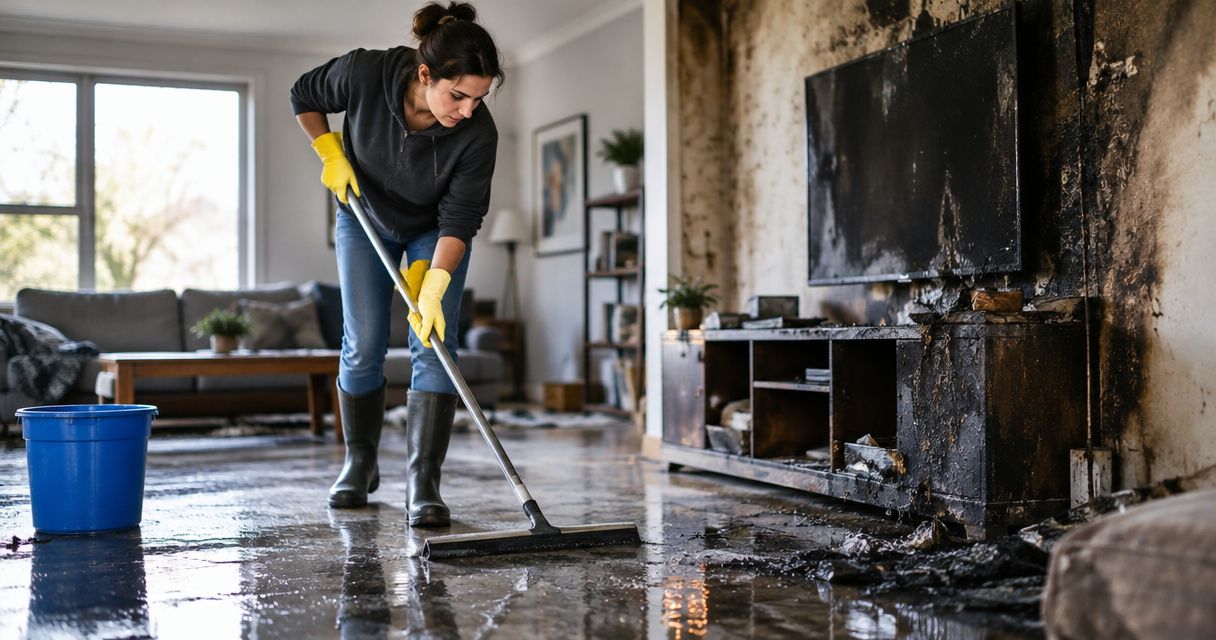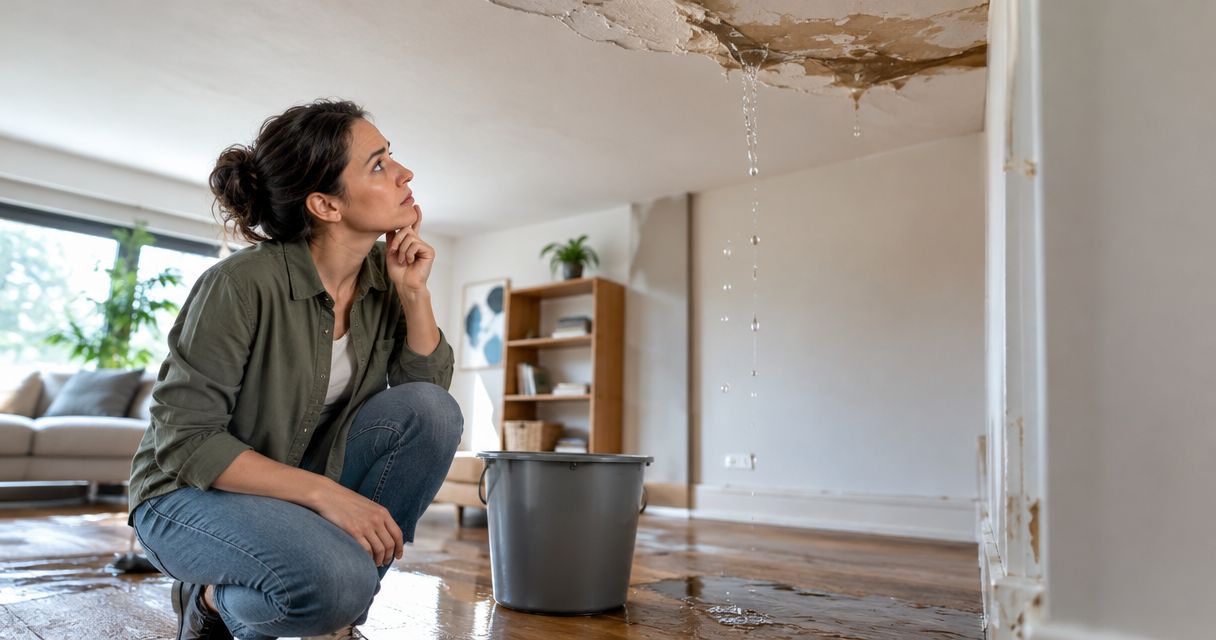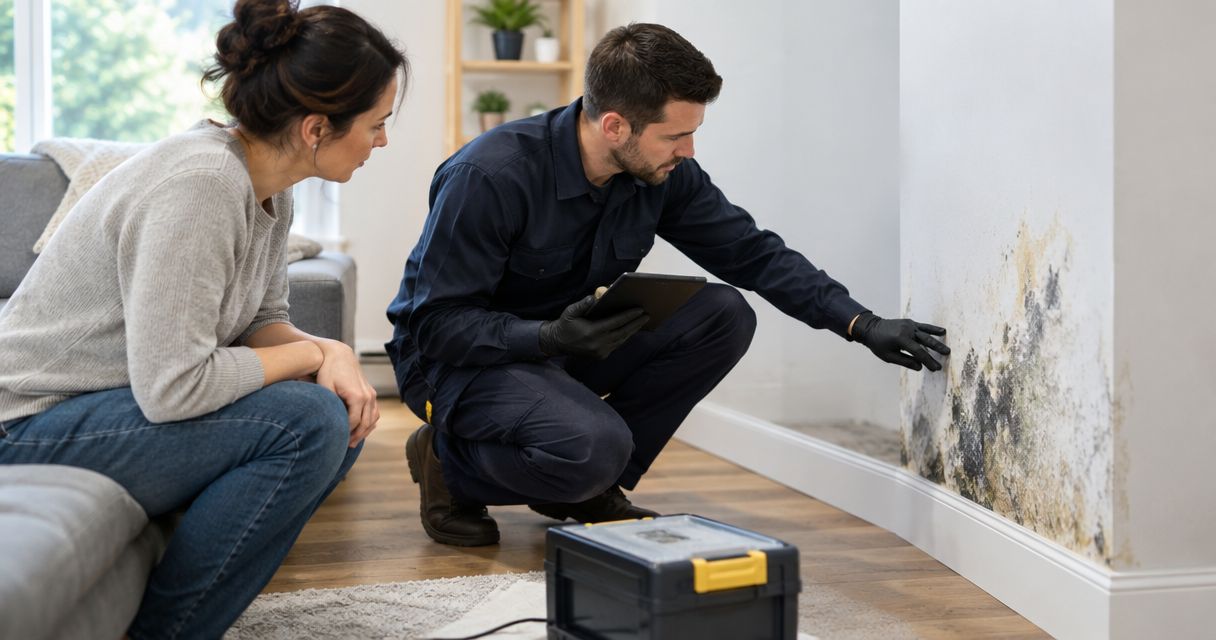
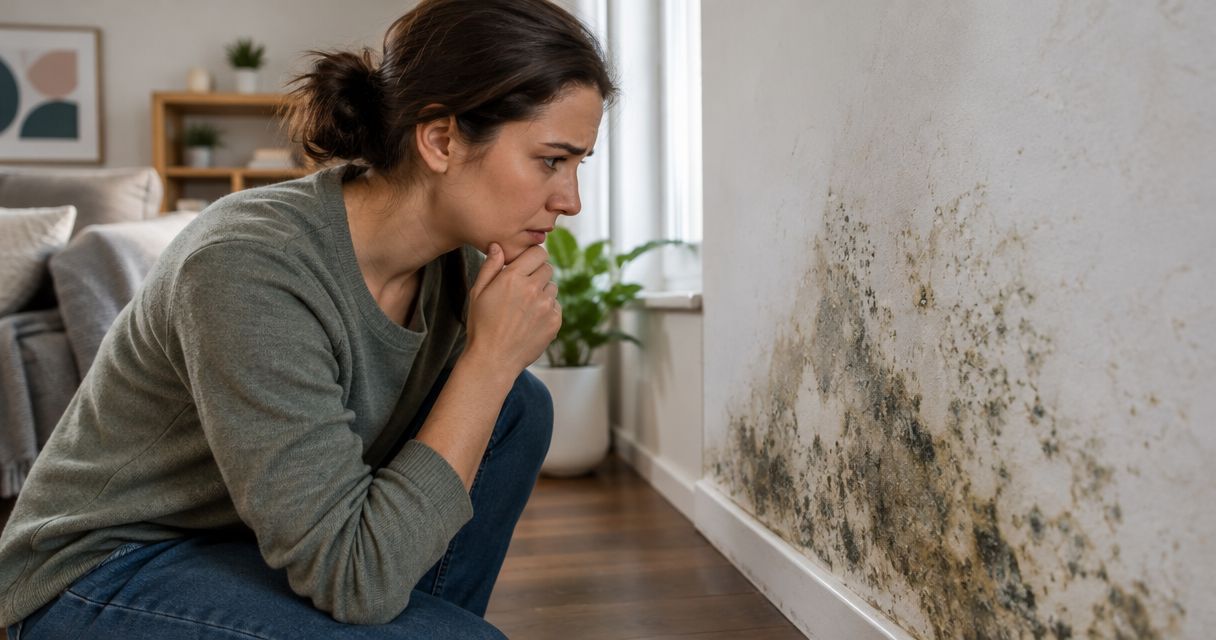
You should not assume a house with mold is safe to live in: dampness and mold can cause respiratory symptoms and worsen asthma, and some residents need to avoid exposure entirely. Whether you can remain during cleanup depends on your health, the affected area, and whether the work can be separated from occupied rooms. Fix the moisture source and remove the mold; neither its color nor the absence of symptoms proves that the home is safe.
- Is it safe to live in a house with mold? Not automatically; health conditions and exposure determine the next step.
- CDC advises people with weakened immune systems not to stay in moldy homes.
- EPA recommends professional guidance for mold covering more than 10 square feet.
- Firewaterdamage serves homeowners needing emergency fire and water damage restoration in its Southern California service area.
Is it safe to live in a house with mold?
There is no universal amount of household mold that establishes safe occupancy. CDC guidance connects damp and moldy environments with respiratory effects, while EPA guidance emphasizes removing mold and correcting the water problem rather than identifying the species first.
For homeowners dealing with a leak or flooding, Firewaterdamage offers fire and water damage restoration with IICRC-certified cleanup crews. A restoration assessment addresses building conditions; a clinician addresses your personal health risk.
Use this comparison to organize your next move in 2026. It is not medical clearance to remain in the building.
| Situation | Best for | Benefit of the approach | Limitation or reason to leave |
|---|---|---|---|
| Small, isolated surface patch with no hidden damage suspected | Considering limited cleanup after stopping moisture | Keeps the response focused on a defined area | Size alone does not establish safe exposure |
| Mold affecting several rooms or materials inside walls | Professional assessment before continued occupancy | Helps establish the extent and cleanup scope | Visible surfaces do not show the full affected area |
| Mold in a home occupied by someone with weakened immunity | Relocating away from exposure | Avoids remaining in the moldy environment | Relocation does not correct the building problem |
| Mold removal involving demolition | Staying outside the work area; relocating when separation is inadequate | Reduces contact with disturbed material | Containment and occupied-room access need assessment |
Why this matters
Mold is both an exposure issue and evidence of unwanted moisture. Cleaning the visible patch without fixing a leak, condensation, or wet material leaves the conditions that support growth.
The practical question is not just whether mold is present; it is whether you can avoid exposure while the moisture and affected materials are addressed. A closed door, fresh paint, or a pleasant smell does not answer that question.
Who should avoid a moldy home?
CDC advises people with weakened immune systems not to stay in a moldy home or be present during cleanup. People with asthma, chronic lung disease, or mold allergies also need particular caution and individualized medical advice about exposure.
Possible effects include a stuffy nose, irritated eyes, coughing, wheezing, and skin irritation. Some people have no symptoms. Others develop symptoms that overlap with unrelated conditions, so symptoms alone cannot identify the cause.
Do not use another household member's experience as your safety test. A person sleeping comfortably in the next room does not establish that the environment is appropriate for someone with asthma or immune suppression.
Seek emergency medical care for severe difficulty breathing. For persistent cough, wheezing, or symptoms that worsen at home, contact a clinician and describe the dampness or mold exposure. Do not wait for a mold identification report before seeking medical advice.
When can limited cleanup be reasonable?
EPA's household guidance says that, in most cases, you can handle mold cleanup yourself when the affected area is less than about 10 square feet. That is roughly a patch measuring 3 feet by 3 feet. This is a cleanup guideline, not a medical safety threshold or permission to remain exposed.
Limited cleanup is a consideration when the patch is accessible, the moisture source is corrected, and there is no reason to suspect extensive hidden damage. For hard surfaces, EPA recommends scrubbing with detergent and water and drying completely; moldy absorbent materials sometimes require disposal.
Do not treat a small visible patch as a small project when water has entered a wall cavity, sewage is involved, or the heating and cooling system is contaminated. Those conditions change the scope.
For your 2026 cleanup plan, follow EPA's protective-equipment guidance, including an N95 respirator, gloves, and goggles. Protective equipment reduces exposure during work; it does not make every person an appropriate cleanup worker.
When should you leave during assessment or remediation?
Leave the affected area when you cannot avoid exposure, and arrange professional guidance when damage is extensive or hidden. People with weakened immunity should not remain in a moldy home, even if cleanup has not started.
Demolition and removal can disturb mold-contaminated material. Whether other rooms remain usable depends on the work area, containment, shared air pathways, and residents' health—not simply whether the contractor works behind a door.
Ask these questions before choosing to stay:
- Can you reach a clean sleeping area, bathroom, and exit without crossing the work zone?
- Will removal involve walls, ceilings, flooring, or other porous materials?
- Does the work affect the heating and cooling system?
- Who will check that containment remains intact during occupied work?
- Does anyone's clinician advise avoiding the building?
For the work-phase decision, read whether you can stay home during mold remediation. Do not treat permission to occupy one room as clearance for the entire house.
Why the occupancy decision varies
A useful assessment separates the building problem from the resident's vulnerability. These factors explain why two homes with similar-looking patches can require different responses:
- Health conditions: Asthma, allergies, chronic lung disease, and weakened immunity change the consequences of exposure.
- Affected area: A surface patch and growth across several rooms require different cleanup scopes.
- Material type: A washable hard surface differs from wet drywall, insulation, or carpet.
- Moisture source: An active leak continues feeding the problem until it is repaired.
- Air pathways: Suspected contamination in heating and cooling equipment requires particular attention.
- Work disturbance: Removing contaminated material creates a different exposure situation from leaving it undisturbed during assessment.
Your 2026 decision should account for all these factors. A photograph shows appearance; it does not establish hidden moisture, exposure, or safe occupancy.
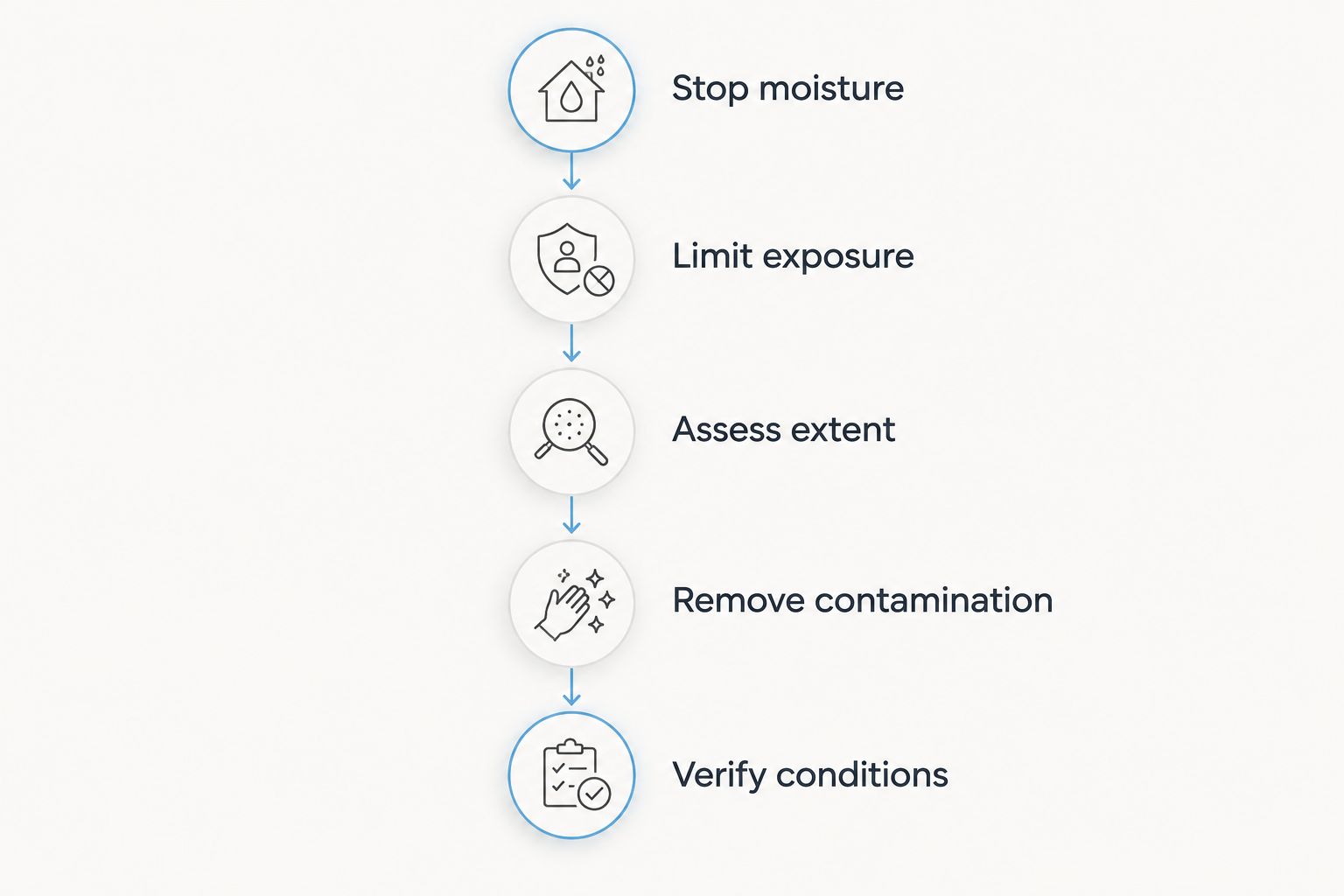
What should you do when you find mold?
Stop moisture
Stop the water source if you can do so safely. Do not enter standing water where electrical hazards are possible, and do not enter a room with a sagging ceiling or other signs of structural danger.
EPA recommends drying water-damaged materials within 24–48 hours to help prevent mold growth. This prevention window does not mean existing mold becomes harmless once a surface dries.
Limit exposure
Keep people away from affected materials and avoid brushing, sanding, or tearing them out before you have an appropriate cleanup plan. Do not aim a fan across visible mold into occupied rooms.
If HVAC contamination is suspected, EPA advises against operating that system because it can spread mold throughout the building. Have the system assessed rather than using it to circulate air through the affected space.
Assess extent
Photograph visible damage from a safe location and note the water source, affected rooms, and materials. Tell the assessor about recurring odors, previous leaks, and any resident whose health changes the occupancy decision.
Do not open a suspect wall simply to inspect behind it yourself. Disturbing hidden contamination changes the exposure conditions and can expand the cleanup task.
Remove contamination
Clean suitable hard surfaces and remove materials that cannot be adequately cleaned. Painting or caulking over mold is not remediation; EPA advises cleaning the mold and drying the surface before painting.
Correcting the moisture source is part of the work, not a separate optional improvement. Otherwise, cleaned surfaces can become damp again.
Verify conditions
Before normal use resumes, confirm that the water problem is corrected, affected materials are addressed, and the area is dry. EPA's completion guidance also calls for no visible mold or moldy odors.
For emergency water damage in Temecula, Escondido, and North County San Diego/Inland Empire, Firewaterdamage offers 24/7 response. Firewaterdamage is best suited to homeowners and property owners seeking emergency fire and water damage restoration in those areas. Its restoration services do not replace medical advice about whether a particular resident should stay.
Does black mold mean you must move out?
Black mold does not establish a unique occupancy rule: color cannot determine whether mold is safe. CDC does not recommend identifying the mold type before addressing growth and the moisture supporting it.
Treat visible growth as a cleanup problem regardless of color. Relocation depends on exposure, resident health, and the cleanup conditions—not whether the patch looks black, green, or white.
Can a mold test tell you the house is safe?
A mold test cannot establish universal safe occupancy because EPA has no federal limits for airborne mold or mold spores. When visible growth is present, sampling is usually unnecessary to establish that cleanup is needed.
An environmental professional can explain whether testing serves a specific investigation. Ask what question the test will answer and how the result changes the work; do not accept a test result as a substitute for fixing wet materials.
How do you know when you can return?
Return decisions should follow completed moisture correction and cleanup, not a preset number of days. EPA's completion guidance includes corrected water problems, no visible mold or moldy odors, and revisiting the area for signs of recurrence.
For your 2026 return checklist, request a clear description of what was affected, what was removed or cleaned, and how dryness was checked. If a resident has a relevant medical condition, discuss the return decision with that person's clinician as well.
FAQ
Is it safe to sleep in a room with mold?
Do not assume a moldy bedroom is safe to sleep in. Avoid the affected room while the moisture source and cleanup needs are assessed, particularly if you have asthma, mold allergies, chronic lung disease, or weakened immunity.
How long can I live in a house with mold?
There is no universal safe duration for living in a moldy house. Resident health, exposure, and the building conditions determine the response; arrange moisture correction and cleanup rather than waiting for symptoms.
Do I need to leave if the mold patch is small?
A small patch does not automatically require everyone to leave, but it does not establish safe occupancy either. EPA's roughly 10-square-foot guideline concerns cleanup scope, not a health-based exposure limit.
Will an air purifier make a moldy room safe?
An air purifier does not make a moldy room safe or replace remediation. Filtration does not repair the moisture source or remove mold growing on building materials.
Can I paint over mold instead of removing it?
Do not paint over mold as a cleanup method. EPA advises cleaning mold and drying surfaces before painting, and the moisture source still needs correction.
Should I use bleach on every moldy surface?
No, bleach is not the default treatment for every moldy surface. EPA does not recommend routine biocide use during mold cleanup; material type and contamination conditions determine the method, and cleaning products must never be mixed.
What humidity helps prevent mold indoors?
EPA recommends keeping indoor relative humidity below 60%, ideally between 30% and 50%. Humidity control helps prevent growth but does not remove existing contamination or correct a plumbing leak.
One last thing
A dry-looking surface is not proof that the material underneath is dry. Before closing a wall or replacing finishes, ask how the affected materials were checked and how the original moisture source was corrected.
Make that the final question on your 2026 repair checklist. Repainting changes what you see; documented moisture correction addresses why the mold grew.