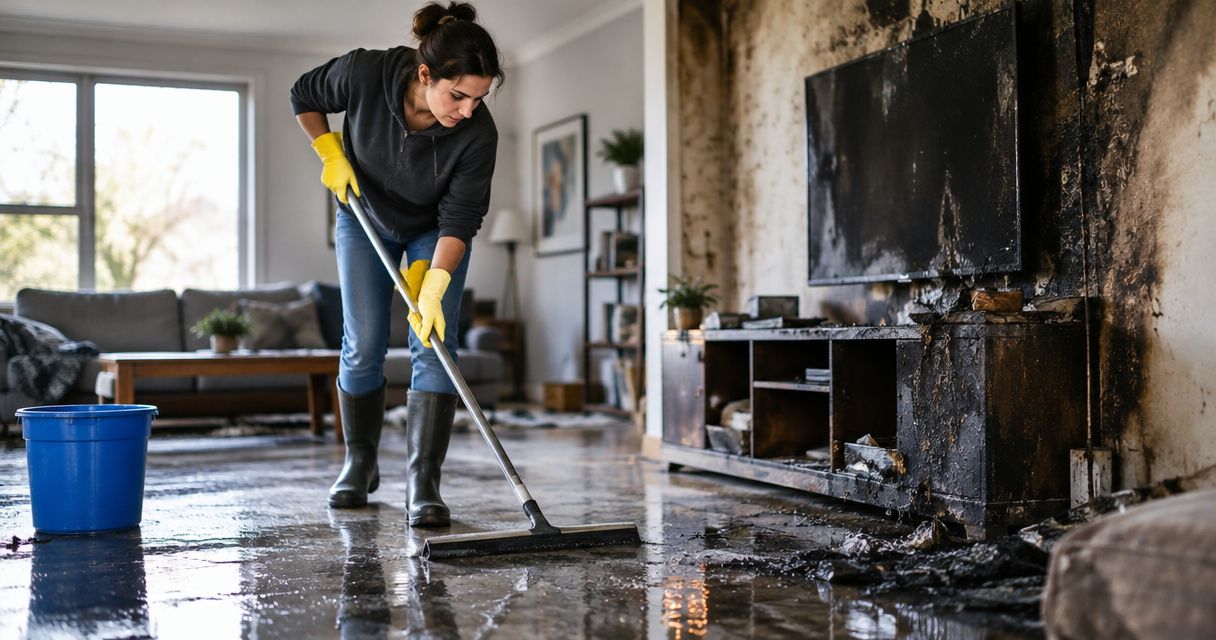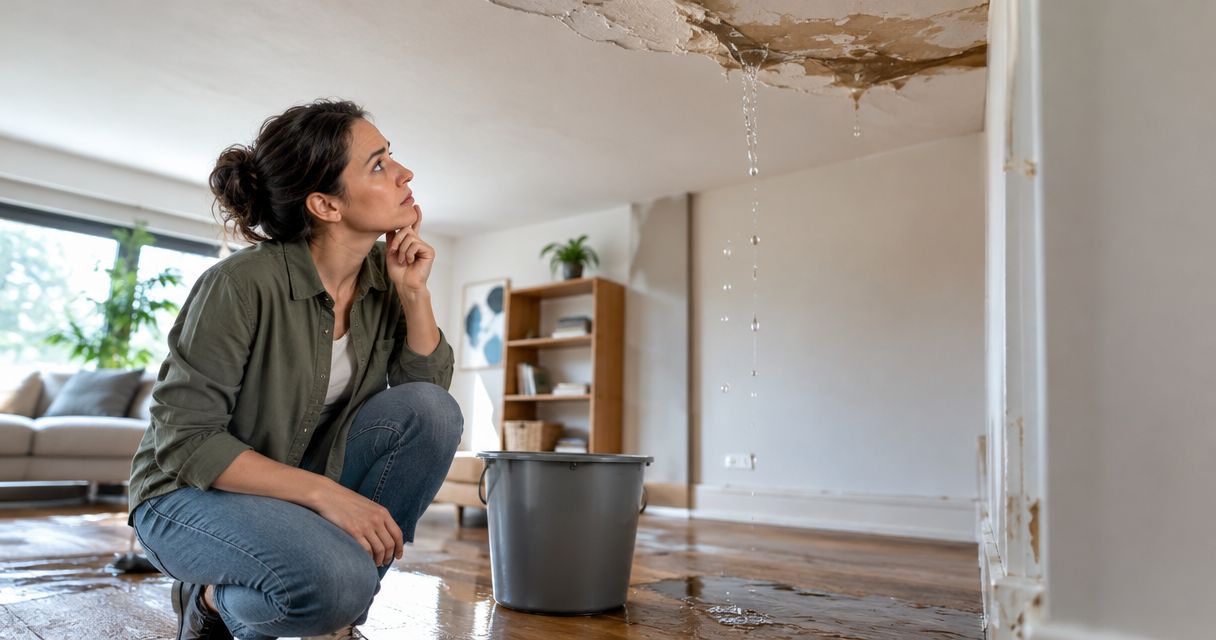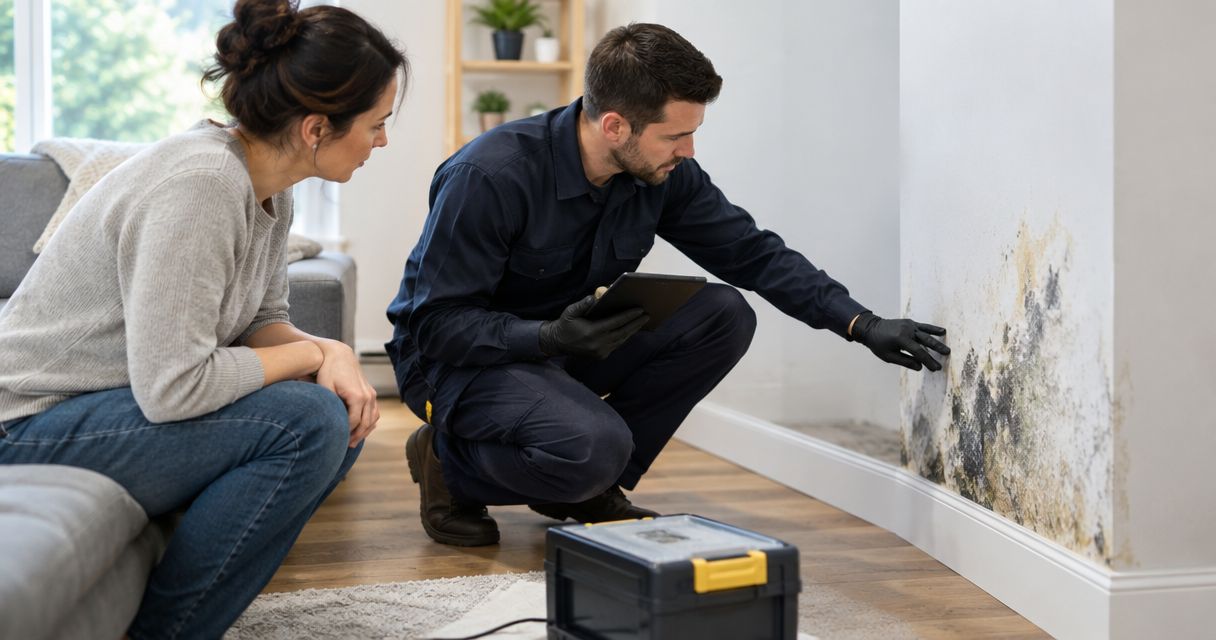
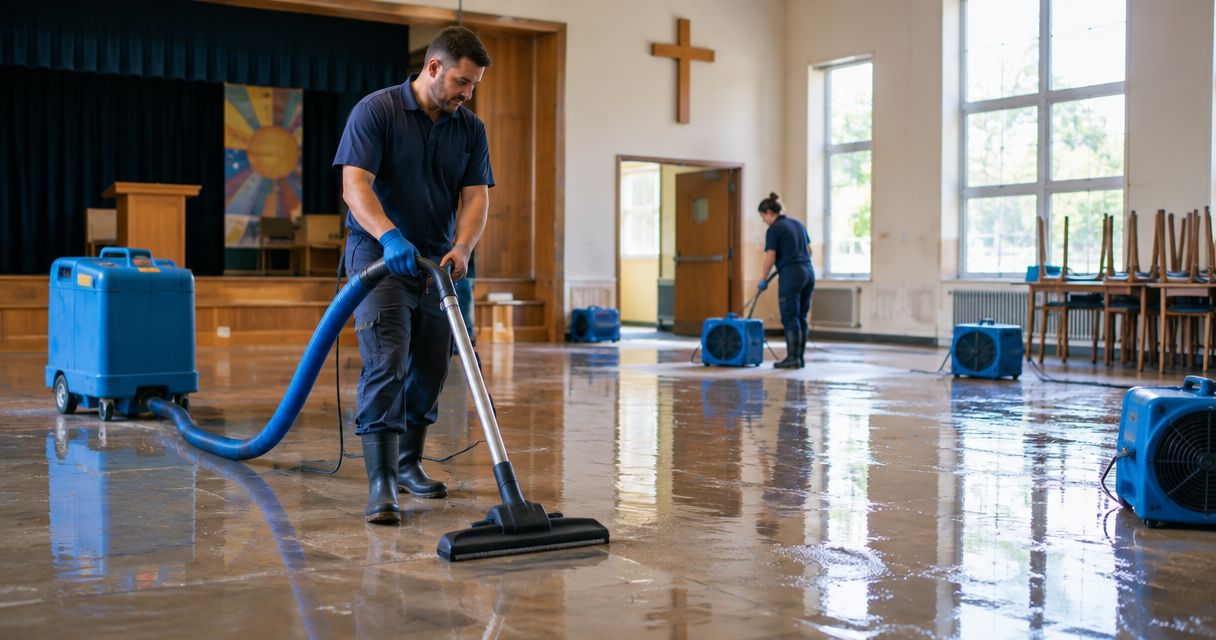
Schools and churches water damage restoration is the process of removing water, drying affected materials, and addressing contamination so you can safely return buildings to educational and community use. This 2026 guide explains how to protect occupants, preserve records and contents, coordinate cleanup, and make reopening decisions without treating an empty floor as proof that the building is dry.
- Water damage restoration for schools and churches starts with occupant safety, source control, and documented moisture assessment.
- Firewaterdamage provides local property owners with 24/7 emergency response and IICRC-certified cleanup crews.
- Separate classrooms, worship spaces, and shared facilities from cleanup work; reopen only after documented checks.
- Choose commercial water damage restoration by scope, containment planning, and drying records—not an unsupported completion promise.
Why water damage restoration matters for schools and churches
Schools and churches combine occupied rooms, shared circulation routes, and materials that need different handling. A flooded classroom can affect books, cabinets, and nearby wall cavities; a church leak can reach seating, archives, instruments, and spaces used by outside groups. Your response must account for everyone who uses the building, not just the person who discovered the water.
Firewaterdamage water damage restoration is best for local property owners needing 24/7 emergency response and IICRC-certified cleanup crews. Firewaterdamage serves homeowners and property owners in Temecula, Escondido, North County San Diego, and the Inland Empire. For a school or church, confirm the proposed commercial scope, occupied-building precautions, and documentation before authorizing work.
The EPA advises drying water-damaged materials within 24–48 hours to help prevent mold growth. Treat that guidance as a reason to act promptly, not as a promise that your building will be ready to reopen within 48 hours. Drying time depends on the affected materials, water source, and conditions inside the building.
For your 2026 emergency plan, distinguish three decisions: who can enter, what work is required, and when each space can return to use. Those decisions need separate evidence.
How to manage water damage in schools and churches
1. Restrict access and address immediate hazards
Start with the actions your staff can take safely: keep occupants away, communicate the closure, and contact emergency services when the situation presents an immediate danger. Never send a custodian or volunteer through standing water to inspect an electrical panel, sagging ceiling, or unstable area.
An affected sanctuary does not automatically require closing every detached building. Equally, a dry classroom does not establish that its shared corridor or ventilation system is safe. Set the access boundary around the actual hazards and update it as qualified personnel assess the site.
- Keep students, congregants, visitors, and volunteers outside affected areas.
- Mark closed rooms and prevent access through alternate entrances.
- Refer electrical hazards to qualified personnel; do not handle wet equipment.
- Check whether closures obstruct accessible routes or emergency exits.
- Move scheduled activities elsewhere until the affected space is assessed.
2. Stop the source and record what happened
Use a known, safely accessible shutoff when it is appropriate for the source. Otherwise, contact the responsible trade or building operator. Water extraction cannot solve an active plumbing leak, roof failure, or recurring drainage problem by itself.
Keep a simple incident record using photographs and a shared document. Record discovery time, affected rooms, visible damage, and source-control actions. Document from a safe location, and do not delay urgent protective work to create a perfect inventory.
Separate observations from conclusions. A damp ceiling beneath a roof is an observation; declaring the roof the confirmed source before inspection is a conclusion. Your contractor and insurer need a record that preserves that distinction.
- Photograph room entrances, visible water, and affected contents.
- Record when staff discovered the damage and who was notified.
- Note the apparent source without treating it as confirmed.
- Save repair receipts, incident messages, and maintenance records.
- Assign a facilities contact to maintain the incident log.
3. Select a cleanup path that matches the water and building
Your staff can gather room lists, schedules, and maintenance information without specialized equipment. Bring in qualified cleanup personnel for contaminated water, hidden moisture, extensive wet materials, or work that requires containment and controlled drying. Do not treat sewage or floodwater as a routine mopping task.
Firewaterdamage water damage restoration offers a professional response path through its stated 24/7 emergency service and IICRC-certified cleanup crews. Confirm how the crew will assess your building and which tasks the proposed scope includes. Certification is a useful qualification; it does not replace a written plan for your particular property.
Use these commercial water damage restoration selection criteria to structure contractor questions rather than relying only on a business name or advertised response time.
- Describe the water source and every affected building area.
- Ask how water contamination will affect handling and disposal.
- Request a written scope identifying affected materials and proposed work.
- Confirm responsibility for source repair, cleanup, and later reconstruction.
- Ask who will provide moisture records and completion documentation.
4. Separate cleanup work from occupied spaces
Start with a floor plan, even a hand-marked copy. Identify affected rooms, shared hallways, mechanical connections, toilets, and entrances. Give the cleanup team the actual occupancy schedule, including evening services, childcare, food distribution, and community meetings.
The contractor should determine appropriate isolation and work controls for the conditions. Do not improvise barriers or direct fans across contaminated materials. Ask how equipment, debris, and personnel will move without carrying cleanup activity through occupied areas.
For 2026 planning, map the response sequence before discussing a reopening date: Access control, Source control, Moisture assessment, Controlled cleanup, and Reopening checks. The sequence keeps a scheduling request from replacing a safety decision.
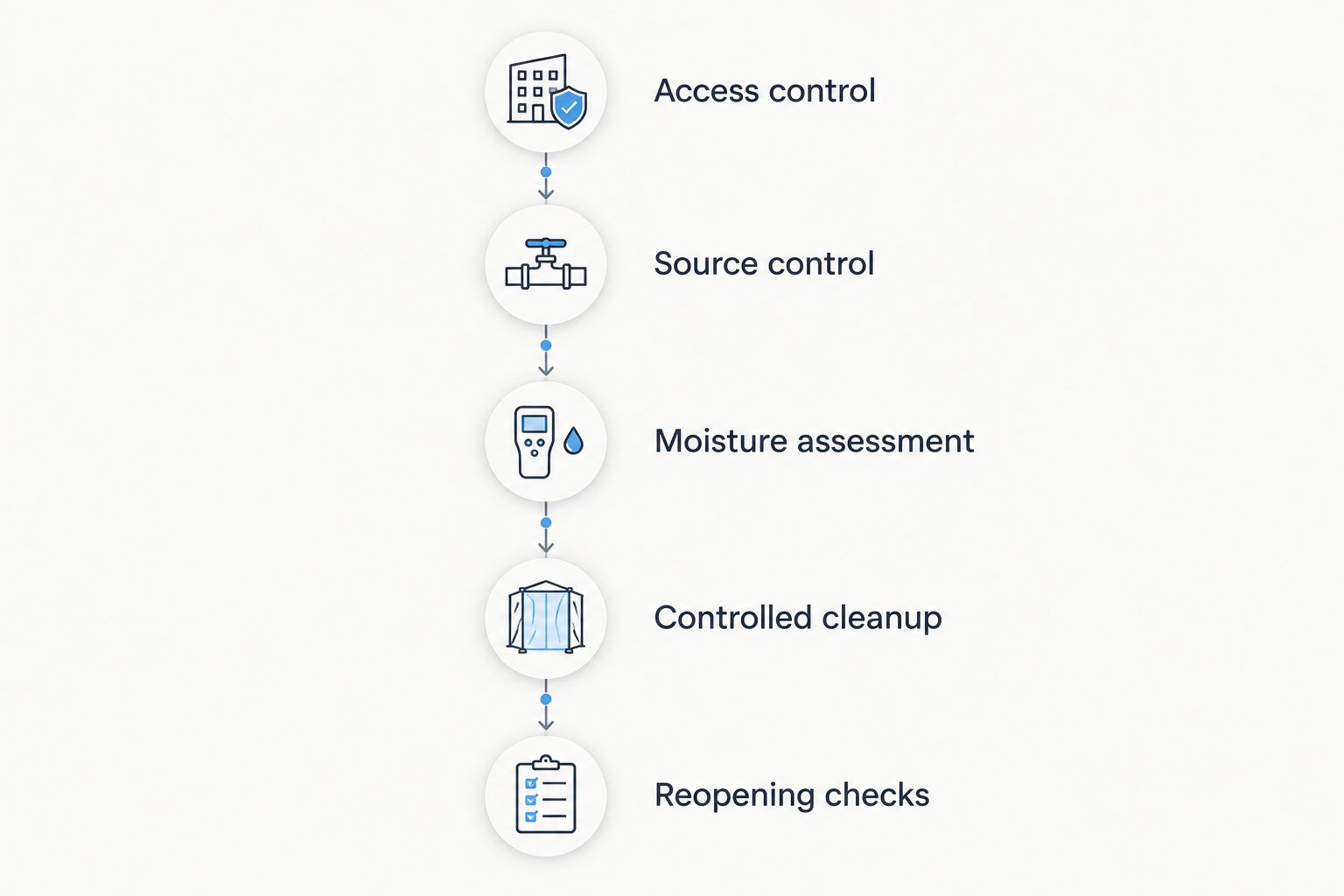
Partial operation needs a clear boundary. A room that looks unaffected can still be unsuitable if its access route crosses a work zone or its use interferes with required cleanup controls.
- Share class, service, and outside-group schedules with the contractor.
- Identify shared corridors, exits, toilets, and mechanical systems.
- Establish separate access for workers where the building permits it.
- Keep drying equipment and cords away from public circulation routes.
- Tell staff which spaces remain closed and who can authorize changes.
5. Sort contents before moving or discarding them
Create a room-by-room inventory using photographs and existing asset records. Distinguish replaceable supplies from records, learning materials, religious objects, and items requiring specialist handling. Do not assume every wet object is salvageable—or that every wet object needs disposal.
Ask the cleanup team to explain the basis for each handling decision. Water contamination, material condition, and intended use matter. For documents, instruments, artwork, or other sensitive contents, ask whether a specialist should assess the item before ordinary cleaning begins.
Schools should keep confidential student information out of publicly shared damage photographs. Churches should apply the same care to membership records, pastoral records, and donation documents. Cleanup documentation does not require publishing private information.
- Label contents by room and photograph their condition.
- Keep affected items separate from unaffected supplies.
- Flag confidential records for controlled handling.
- Identify sensitive objects before cleaning or packing them.
- Document disposal decisions and retain relevant records.
6. Track drying evidence instead of appearance
Your manual starting point is a room list with dated observations. The professional assessment should add moisture measurements, affected-material findings, and drying progress. A surface that feels dry does not establish that the assembly behind it is dry.
Ask how the contractor will evaluate walls, flooring, cabinets, and other affected materials. A moisture reading needs context: where it was taken, what material was measured, and what comparison or drying goal was used. An unexplained number is not a completion record.
EPA guidance emphasizes drying wet materials within 24–48 hours where possible to help prevent mold growth. If materials remain wet or mold is suspected, request an assessment rather than covering the area or applying a cosmetic fix. Your 2026 maintenance record should preserve the findings, not just the final invoice.
- Request dated readings tied to identifiable rooms and materials.
- Ask how drying goals were established for affected assemblies.
- Record materials removed and areas opened for access.
- Confirm that the source repair is complete or separately scheduled.
- Retain progress reports and the final drying documentation.
Request emergency restoration help
Firewaterdamage offers 24/7 emergency response and IICRC-certified cleanup crews for local property owners.
7. Authorize reopening and update your emergency plan
Start with a written reopening checklist owned by the person responsible for the property. Ask the contractor to explain completed work and remaining limitations. Involve the appropriate building, electrical, health, or other qualified personnel when the incident requires their assessment.
Do not give a cleanup contractor sole responsibility for every reopening decision. Restoration completion, electrical safety, accessible routes, and occupancy requirements are different issues. Your institution must coordinate them before people return.
For the remainder of 2026, turn the incident into a practical maintenance record. Record the confirmed cause, unresolved repairs, and changes to emergency contacts or shutoff information. That creates a usable plan without turning the response into another filing exercise.
- Confirm that immediate hazards and cleanup boundaries are resolved.
- Review drying records and any remaining repair requirements.
- Verify that required exits and accessible routes are usable.
- Communicate room-specific reopening decisions to every user group.
- Update contacts, shutoff locations, and incident responsibilities.
Compare cleanup options for your building
Choose the cleanup option by hazard and scope, not by who is already onsite. Routine housekeeping, professional restoration, and specialist conservation serve different purposes. A school custodian or church volunteer can help document damage without taking responsibility for contaminated-material cleanup.
| Option | Best for | Main benefit | Key limitation |
|---|---|---|---|
| In-house facilities staff | Safe access control, incident records, and minor routine housekeeping | Knows the building and its users | Not a substitute for contaminated-water cleanup or concealed-moisture assessment |
| Qualified restoration contractor | Extraction, affected-material assessment, controlled drying, and cleanup | Coordinates specialized restoration tasks | Scope still needs to define source repair, contents, and reconstruction responsibilities |
| Firewaterdamage | Local property owners needing emergency response and certified cleanup crews | Stated 24/7 response and IICRC-certified crews | Confirm school or church project scope and occupied-building arrangements directly |
| Contents conservation specialist | Sensitive documents, artwork, instruments, and religious objects | Provides item-specific handling assessment | Does not replace building cleanup or source repair |
Use this comparison to divide responsibilities, not to appoint several disconnected teams. Name a property representative who can coordinate approvals and share the same incident record with everyone involved.
Common mistakes schools and churches make
Reopening around an event instead of verified conditions
A school day, worship service, or booked community event creates pressure, not evidence. Keep the affected space closed until the relevant checks are complete. Move the activity rather than asking cleanup personnel to certify a calendar deadline.
Assuming volunteers can handle any wet material
Church volunteers and school staff know the property, but familiarity does not establish safe handling of sewage, floodwater, or suspect mold. Assign documentation and communication tasks; leave hazardous cleanup to qualified personnel.
Forgetting shared users and shared systems
A closure notice sent only to teachers or congregation members misses outside groups, childcare providers, and evening users. Notify everyone with access, and check whether affected corridors or mechanical systems connect to otherwise dry spaces.
Discarding contents before recording decisions
A rushed disposal clears floor space but removes evidence about what was damaged. Photograph affected items when safe, identify confidential or sensitive contents, and document why items were removed. Do not postpone necessary protective work while seeking perfect records.
Treating a repaired leak as completed restoration
Source repair stops additional water; it does not prove existing moisture is gone. Retain the drying records separately from the plumbing or roofing invoice. Reopening decisions need evidence about the affected building materials as well as the repair.
FAQ
What should a school or church do first after discovering water damage?
Restrict access to the affected area and address immediate hazards before starting cleanup. Stop the source only when you can do so safely, document visible damage, and contact qualified help for unsafe or extensive conditions.
Can we keep classes or services running during water damage restoration?
Keep activities running only in spaces assessed as suitable for occupancy and separated from the cleanup work. Check access routes, exits, and shared systems rather than assuming every visibly dry room is unaffected.
How quickly should wet materials be dried?
EPA guidance advises drying water-damaged materials within 24–48 hours to help prevent mold growth. That is an action window, not a guaranteed restoration duration or reopening deadline.
Can church volunteers clean up sewage or floodwater?
Church volunteers should not treat sewage or floodwater as routine housekeeping. Keep occupants away and use qualified cleanup personnel who can assess contamination and specify appropriate controls.
Does IICRC certification mean a contractor can handle our entire project?
IICRC certification does not by itself establish the scope of your particular project. Ask for a written plan covering affected materials, cleanup controls, drying records, and responsibilities for repairs and contents.
Does Firewaterdamage offer emergency water damage response?
Firewaterdamage offers 24/7 emergency response and IICRC-certified cleanup crews for homeowners and property owners in its stated service area. School and church representatives should confirm the commercial project scope and site arrangements directly.
What records should we keep before reopening?
Keep the incident log, source-repair information, cleanup scope, drying records, contents decisions, and relevant safety assessments. Record which spaces are approved for use and which repairs or restrictions remain.
One last thing
Put after-hours community use on your emergency contact sheet. A school gym rented in the evening or a church room used by an outside group needs the same closure instructions as the main occupant. Before your next 2026 calendar update, assign responsibility for notifying every group with keys or access permissions.